
Take Medicine with Food: What You Need to Know About Timing and Absorption
When you take medicine with food, the presence of food in your stomach can change how your body absorbs the drug. Also known as taking meds with meals, this simple choice can make the difference between a drug working as it should or causing stomach upset, poor results, or even dangerous side effects. It’s not just about avoiding nausea—it’s about science. Some drugs need fat to dissolve properly. Others are blocked by calcium in dairy or broken down too fast on an empty stomach. The label doesn’t always say why, but knowing the rules helps you stay safe.
For example, proton pump inhibitors, like omeprazole, work best when taken 30 minutes before a meal. Also known as PPIs, they need acid in the stomach to activate, and eating triggers that acid production. On the other hand, antibiotics like tetracycline, should never be taken with dairy or antacids. Also known as broad-spectrum antibiotics, they bind to calcium and magnesium, making them useless. Then there are drugs like statins, which absorb better when taken at night with a snack. Also known as cholesterol-lowering drugs, their timing ties directly to how your liver makes cholesterol. These aren’t random rules—they’re based on how your body processes chemicals when food is present.
Food can also protect your stomach. Many painkillers, like ibuprofen or naproxen, cause irritation when taken on an empty stomach. A small snack or meal reduces that risk without hurting the drug’s effect. But don’t assume all meds are the same—some, like thyroid hormone or certain antibiotics, need a completely empty stomach to work right. Missing this detail can mean your treatment fails, even if you’re taking the right pill.
And it’s not just about what you eat—it’s when. A big, greasy meal might slow down absorption of one drug but boost another. A glass of grapefruit juice can interfere with over 85 medications, including some heart and cholesterol drugs. Even your morning coffee can affect how fast your body takes in certain pills. The key is consistency: if your doctor says take it with food, do it the same way every time. Don’t skip meals to make pills easier—unless they specifically say to.
That’s why pharmacists ask you to bring your full list of meds and supplements. They’re not just checking for interactions—they’re looking at your eating habits too. A pill that works fine with toast might cause problems with a high-fiber breakfast. A vitamin that helps with iron absorption might clash with your calcium supplement if you take them together. Small choices add up.
Below, you’ll find real-world advice from experts who’ve seen what happens when people ignore these rules. From patients who thought "it doesn’t matter" to those who avoided side effects by simply changing when they ate, the stories matter. You’ll learn which drugs absolutely need food, which ones should be kept far away from it, and how to build a routine that keeps your treatment on track—without guesswork.
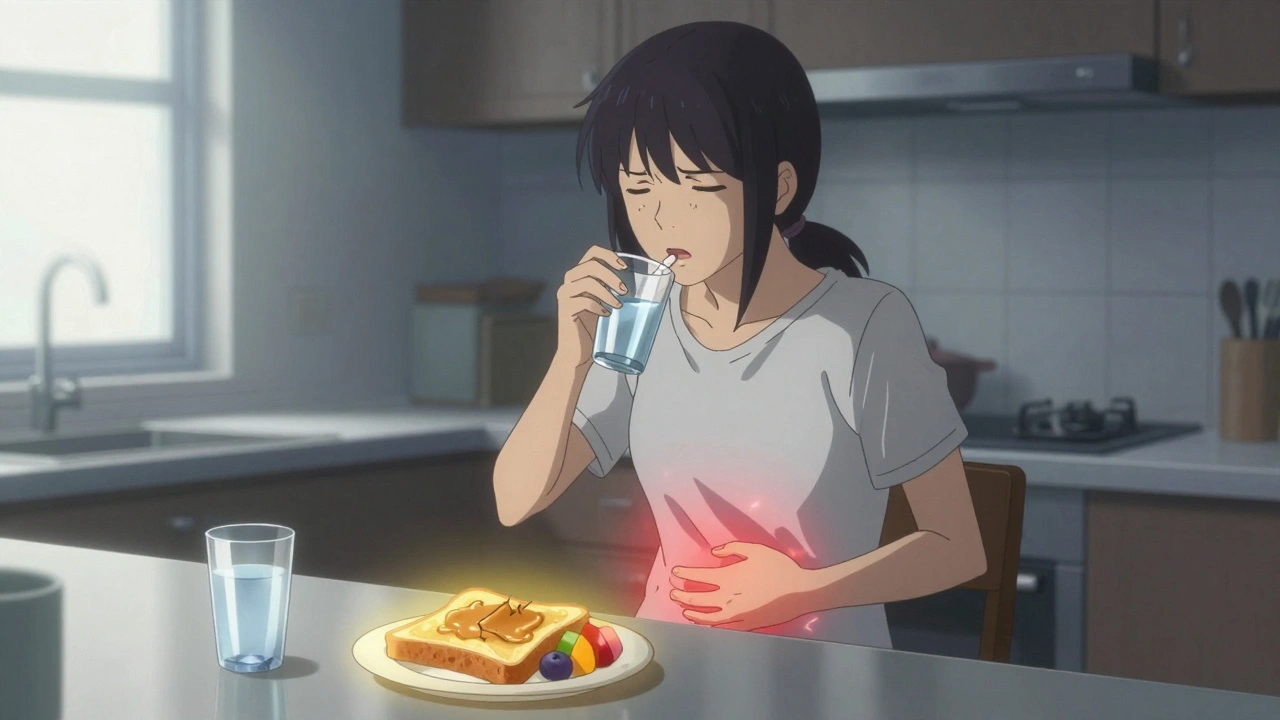
Taking Medication with Food: When and Why It Reduces Side Effects
Taking medication with food can reduce side effects like nausea and stomach damage - or make drugs ineffective. Learn which meds need food, which to avoid with meals, and how to get it right every time.