
Sterile Compounding: What It Is, Why It Matters, and How It Keeps Patients Safe
When a patient needs a custom IV bag, an eye drop without preservatives, or a chemotherapy dose tailored to their weight, sterile compounding, the process of preparing medications in a contamination-free environment to meet specific patient needs. Also known as aseptic preparation, it’s not just mixing liquids—it’s a high-stakes science that happens behind closed doors in cleanrooms, not on pharmacy counters. One mistake—a speck of dust, a contaminated needle, a poorly trained hand—and a patient can get sick, even die. This isn’t theoretical. In 2012, a fungal meningitis outbreak linked to contaminated steroid injections killed 64 people and sickened over 750. That disaster didn’t come from a drug factory. It came from a compounding pharmacy that skipped basic sterile procedures.
Sterile compounding isn’t optional for patients with allergies, kids who can’t swallow pills, or cancer patients needing precise doses. It’s a lifeline. But it’s not simple. It requires aseptic technique, a set of strict practices to prevent microbial contamination during drug preparation. That means wearing gloves, gowns, masks, and hairnets. It means cleaning surfaces with alcohol before every step. It means working in a room with filtered air, where the number of particles per cubic meter is controlled down to the single digits. Even the way you move your hands matters—no sudden gestures, no talking over the work area, no reaching across clean surfaces. This isn’t about being neat. It’s about survival.
And it’s regulated. In the U.S., the USP <797>, a set of national standards for sterile compounding published by the United States Pharmacopeia spells out exactly how pharmacies must operate. From the type of airflow systems used to how often staff must be retrained, USP <797> leaves nothing to chance. But not every pharmacy follows it. Some cut corners to save time or money. Others just don’t know better. That’s why knowing where your compounded meds come from matters. If your doctor prescribes a custom injection, ask: Is this made in a certified cleanroom? Are the staff trained and tested? Is the facility inspected?
What you’ll find in the posts below isn’t just theory. It’s real-world guidance from pharmacists who’ve seen what happens when sterile compounding goes right—and when it doesn’t. You’ll learn how to spot unsafe practices, what questions to ask your pharmacy, and how medications like IV antibiotics, hormone therapies, and pediatric doses are made safely. These aren’t abstract rules. They’re the difference between healing and harm.
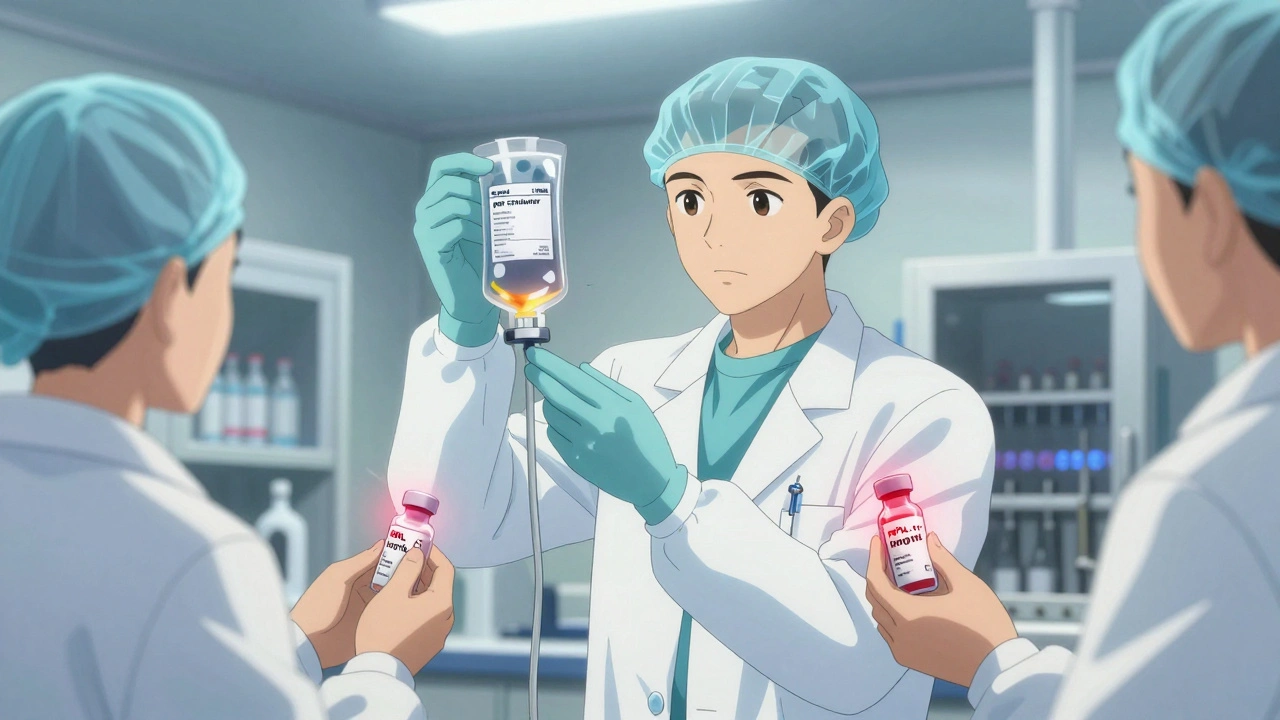
How to Prevent Compounding Errors for Customized Medications
Learn how to prevent dangerous errors in customized medications through strict protocols, dual verification, USP standards, and technology. Essential reading for patients and pharmacists alike.