
SGLT2 Inhibitors Sick Day: What You Need to Know When You're Ill
When you're taking SGLT2 inhibitors, a class of diabetes medications that help the kidneys remove excess sugar through urine. Also known as gliflozins, these drugs include empagliflozin, dapagliflozin, and canagliflozin. They work well for long-term blood sugar control—but when you're sick, they can turn from helpful to dangerous. If you have diabetes and get sick with the flu, an infection, or even just a bad cold, your body starts releasing stress hormones. These hormones raise blood sugar, and SGLT2 inhibitors can make it harder for your body to adapt. That’s why sick day rules for these medications aren’t optional—they’re life-saving.
One of the biggest risks with SGLT2 inhibitors during illness is diabetic ketoacidosis, a serious condition where your body breaks down fat for energy, creating toxic acids called ketones. Unlike typical DKA, which happens when blood sugar is sky-high, this version can occur even with normal or only slightly elevated sugar levels. It’s called euglycemic DKA, and it’s sneaky. You might feel nauseous, tired, or have trouble breathing—but your glucose monitor looks fine. That’s why checking for ketones with urine strips or a blood meter is critical when you’re sick. If you’re vomiting, can’t keep fluids down, or your ketones are moderate to high, call your doctor immediately. Don’t wait.
SGLT2 inhibitors don’t work the same way when you’re dehydrated. Illness often leads to less fluid intake, and these drugs make you pee more. Combine that with fever, sweating, or diarrhea, and you’re at risk for low blood pressure, kidney stress, or even acute kidney injury. That’s why most guidelines say: stop your SGLT2 inhibitor when you’re acutely ill. Hold it until you’re eating and drinking normally again. Your doctor might also tell you to monitor blood sugar more often, skip your dose if you’re not eating, or switch to insulin temporarily. There’s no one-size-fits-all plan—but ignoring the rules is risky.
People on SGLT2 inhibitors often don’t realize how much their illness changes their medication needs. They think, "I’m still taking my pills, so I’m doing the right thing." But that’s exactly when you need to do less, not more. The same goes for other diabetes meds. Metformin, for example, can also cause lactic acidosis during illness. Even insulin doses might need adjustment. This isn’t about being perfect—it’s about being smart. Keep a sick day plan written down. Know your ketone testing method. Have contact info for your pharmacy and doctor saved in your phone. These small steps can prevent hospital visits.
Below, you’ll find real-world advice from patients and pharmacists who’ve been there. From how to recognize early warning signs to what to say to your doctor when you’re too sick to explain clearly, these posts give you the tools to act fast and stay safe. No fluff. Just what works when your body is under stress and your meds need a pause.
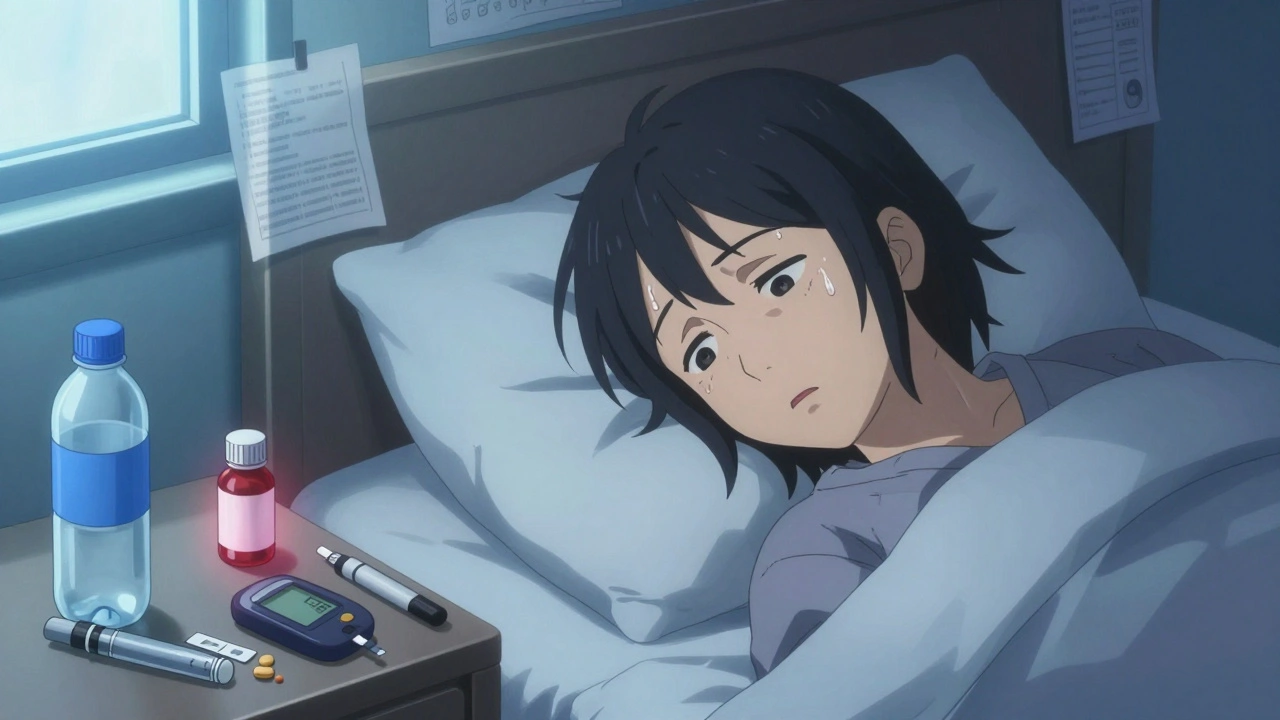
Sick Day Rules for Diabetes Medications: What to Stop, Start, or Keep When You're Ill
Learn exactly which diabetes medications to stop, adjust, or keep during illness to prevent life-threatening DKA and AKI. Clear, evidence-based rules for metformin, SGLT2 inhibitors, insulin, and blood pressure meds.