
Diabetes Medication Safety Checker
Sick Day Medication Guide
Based on the latest ADA guidelines. Check your specific medications when you're sick to avoid dangerous complications like DKA and kidney injury.
When you’re sick-whether it’s a cold, flu, stomach bug, or even a fever-your body is under stress. For people with diabetes, that stress can turn a simple illness into a medical emergency. Diabetic ketoacidosis (DKA) and acute kidney injury (AKI) are two life-threatening complications that can strike fast when diabetes medications aren’t managed correctly during illness. And here’s the scary part: you don’t need to be severely ill for this to happen. Even a mild stomach virus can trigger it if you keep taking the wrong meds or skip checking your numbers.
Most people assume that if they’re not eating, they should stop their diabetes meds. That’s not true-and in many cases, it’s dangerous. The key isn’t stopping everything. It’s knowing exactly which meds to pause, which to adjust, and which to keep taking. The rules change depending on what medication you’re on, how sick you are, and whether you have type 1 or type 2 diabetes.
Why Illness Is So Dangerous for People with Diabetes
When you’re sick, your body releases stress hormones like cortisol and adrenaline. These hormones make your liver pump out more glucose, even if you’re not eating. At the same time, your body may not be able to use insulin properly. That’s a recipe for high blood sugar. And if you’re vomiting, not drinking enough, or running a fever, your kidneys struggle to flush out ketones and waste products. That’s when DKA and AKI creep in.
Studies show people with diabetes are 300% more likely to develop DKA during illness, and 200% more likely to suffer acute kidney injury. In 2023, over 1.2 million diabetes-related hospitalizations in the U.S. were tied to poor medication management during sickness. And nearly 13% of those cases were preventable.
Metformin: Stop It Immediately If You’re Vomiting or Dehydrated
If you take metformin for type 2 diabetes, this is one of the most critical rules to remember: stop taking it the moment you start vomiting, have diarrhea, or can’t keep fluids down. Why? Because metformin builds up in your blood when your kidneys aren’t working well-and that can cause lactic acidosis, a rare but deadly condition.
Research from the New England Journal of Medicine tracked over 18,000 patients and found that the risk of lactic acidosis jumps 8.3 times when creatinine levels rise above 1.5 mg/dL, which often happens during dehydration. You don’t need to wait for lab results. If you’re sick and can’t keep water down, pause metformin. Don’t restart it until you’ve been eating and drinking normally for at least 24 hours-and only after checking with your doctor.
Some providers still tell patients to keep taking metformin if they’re not vomiting. That’s outdated advice. The American Diabetes Association (ADA) and International Diabetes Federation (IDF) both now recommend stopping it during any acute illness with fluid loss.
SGLT2 Inhibitors: Discontinue at the First Sign of Fever or Nausea
Drugs like empagliflozin, dapagliflozin, and canagliflozin help lower blood sugar by making your kidneys flush out glucose. But during illness, that same mechanism can cause a dangerous condition called euglycemic DKA.
Unlike classic DKA, where blood sugar is sky-high, euglycemic DKA can happen even when your glucose is only 180-250 mg/dL. That’s deceptive. You might think you’re fine because your numbers aren’t extreme-but ketones are building up fast. The FDA reviewed over 1,200 adverse events and found SGLT2 inhibitors increase DKA risk by 7.2 times during illness.
Stop these medications immediately if you have:
- Fever above 100.4°F (38°C)
- Vomiting or nausea
- Diarrhea
- Reduced fluid intake
Don’t wait 24 hours. Don’t wait until you feel worse. The moment you notice any of these signs, stop the pill. Dr. Anne Peters from USC says, “Waiting 24 hours increases DKA risk by 300%.” That’s not a risk worth taking.
ACE Inhibitors and ARBs: Pause Them If You’re Not Drinking Enough
If you take blood pressure meds like lisinopril, ramipril, losartan, or valsartan, you might not realize they’re linked to kidney injury during illness. These drugs help protect your kidneys long-term-but when you’re dehydrated, they can make your kidneys shut down faster.
A 2022 meta-analysis found that when fluid intake drops below 1,500 mL per day (about 6 cups), the risk of AKI rises by 40%. And if your creatinine climbs more than 0.3 mg/dL in 48 hours, you’re in danger.
Pause these medications if:
- You’re vomiting or have diarrhea
- You’re drinking less than 1,500 mL of fluid in 24 hours
- You notice swelling in your legs or ankles
- Your urine output drops significantly
Don’t stop them permanently. Restart them only after you’re hydrated, eating normally, and your doctor checks your kidney function.

Insulin: You Almost Always Need It-Even If You’re Not Eating
This is where people get it wrong. If you’re on insulin, especially with type 1 diabetes, you never stop it. Even if you’re not eating, your body still needs basal insulin to stop ketone production.
For type 1 diabetes: Increase your basal insulin by 10-20% every 4 hours if your blood sugar stays above 15 mmol/L (270 mg/dL). Check ketones every time your sugar is over 240 mg/dL. If ketones are above 0.6 mmol/L (blood) or 1.5 mmol/L (urine), call your doctor or go to the ER.
For type 2 diabetes on insulin: About 68% of patients need to increase their dose during illness, according to a 2023 Diabetes Care trial. But there’s no one-size-fits-all rule. Some people need more, some need less. Work with your provider to set up a personalized plan ahead of time.
Here’s a simple rule: If you’re on insulin, check your blood sugar every 2-4 hours. Don’t skip it because you’re not eating. Your body is still burning fat-and that produces ketones.
What to Do: The Sick Day Action Plan
Don’t wait until you’re sick to figure this out. Prepare now. Here’s your step-by-step plan:
- Build a sick-day kit by October 1 each year. Include: glucose meter + 50+ test strips, ketone strips (10+), 7-day supply of all meds, 6 bottles of sugar-free drinks, electrolyte packets (like Nuun), and a printed copy of your sick-day plan.
- Set alarms to check blood sugar every 2-4 hours. Write down each reading. Use the ADA’s free Sick Day Log.
- Drink fluids even if you’re not hungry. Aim for 150-200 mL every hour. Water, broth, sugar-free electrolyte drinks. Avoid soda and juice unless you’re low.
- Test for ketones if your blood sugar is above 240 mg/dL. Use blood ketone strips if you have them-they’re more accurate than urine strips.
- Know your emergency signs: vomiting for more than 4 hours, diarrhea over 6 hours, ketones above 1.5 mmol/L for more than 2 hours, blood sugar below 70 mg/dL that won’t rise after 15g carbs, or confusion.
- Call your doctor if any of those happen. Don’t wait. Emergency rooms see too many preventable DKA cases.
Common Mistakes and Confusing Advice
Not all advice is created equal. You might hear conflicting things from your doctor, online forums, or even your pharmacist.
Here’s what’s wrong:
- “Just keep taking everything.” That’s what Joslin Diabetes Center says-but it’s risky. Their 2023 guideline says “always take your medicine unless told otherwise.” But that’s dangerous for SGLT2 inhibitors and metformin.
- “Stop all meds if you’re not eating.” That’s a myth. You need insulin. You might need your blood pressure meds. Stopping everything can cause worse problems.
- “I feel fine, so my numbers must be okay.” Euglycemic DKA doesn’t show up on your glucose meter the way you expect.
A 2024 survey found that 41% of patients got conflicting advice from their primary care doctor and endocrinologist. That’s why having a written plan is essential. Print it. Keep it in your wallet. Show it to ER staff if you go in.
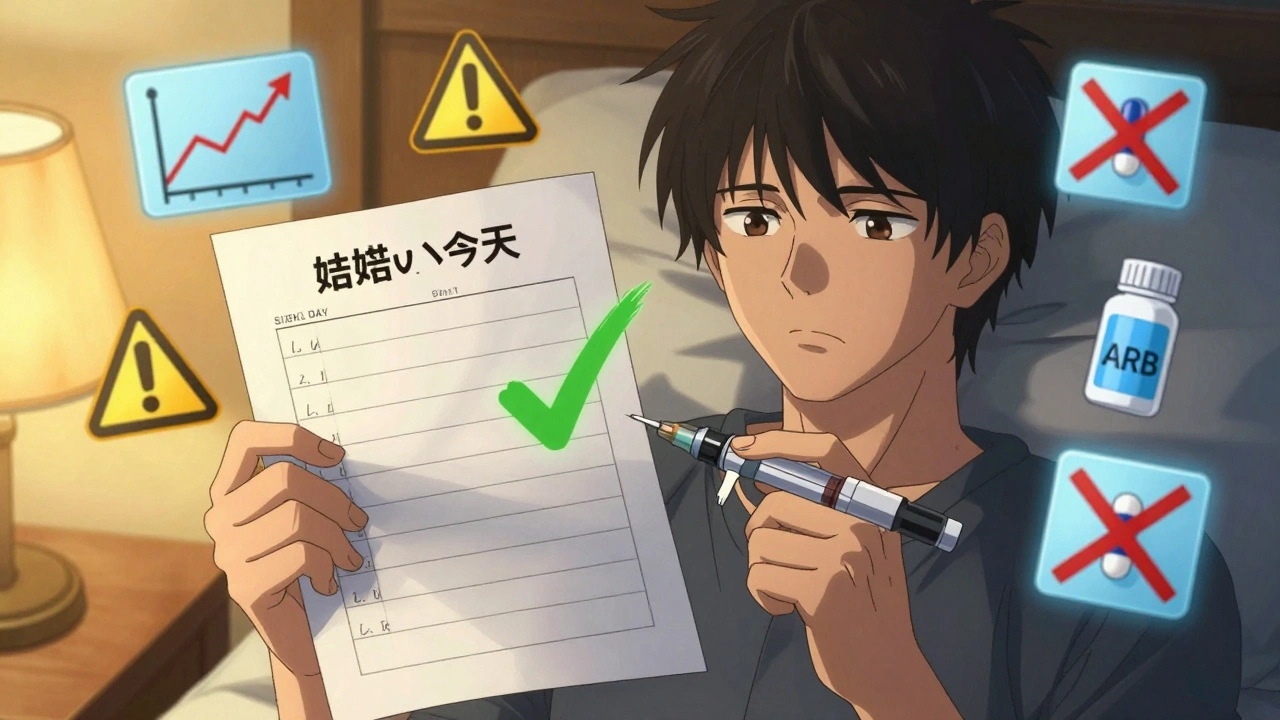
What to Do If You’re Already Sick and Confused
If you’re already sick and unsure what to do:
- Check your blood sugar and ketones now.
- Drink fluids-even if you’re nauseous. Sip slowly.
- Stop metformin and SGLT2 inhibitors if you’re vomiting or have a fever.
- Don’t stop insulin unless your doctor tells you to.
- If your ketones are above 0.6 mmol/L, call your provider immediately.
- If you can’t keep fluids down for more than 4 hours, go to urgent care or the ER.
Don’t rely on Google. Call the ADA helpline: 1-800-DIABETES. They’re staffed 24/7 and answer 92% of calls within 3 minutes.
Why Most People Fail at Sick Day Rules
The problem isn’t lack of knowledge. It’s lack of preparation. A 2023 survey found 62% of patients had at least one medication error during illness. Nearly 3 in 10 needed emergency care.
People who succeed? They prepared ahead. They had a kit. They knew their numbers. They had a printed plan. They didn’t wait until they were too sick to think clearly.
And here’s the good news: If you follow these rules, your risk of DKA drops by 73%. That’s not just a number. That’s avoiding the hospital. That’s avoiding ICU. That’s staying home with your family.
What’s Coming Next
Guidelines are changing. New drugs like GLP-1 receptor agonists (semaglutide, tirzepatide) are now used by over 22 million Americans. But right now, there are no standardized sick day rules for them. The ADA is working on it for 2025.
Apps like Glooko’s Illness Advisor (in beta as of late 2024) are starting to personalize advice based on real-time glucose data. But for now, the best tool you have is your own awareness-and a plan you’ve already written down.
Don’t wait until you’re sick to learn this. Sit down with your doctor now. Print out the ADA’s Sick Day Guide. Make a list of your meds and what to do with each. Keep it in your phone and your wallet. You might not need it this year. But if you do, it could save your life.
iswarya bala
December 8, 2025 AT 22:46omg i just realized i was gonna keep taking my metformin even if i puked bc i thought skipping meds = good? like nooooo 😭 this post saved me. im printing this and taping it to my fridge.
om guru
December 10, 2025 AT 01:47It is imperative that individuals with diabetes adhere strictly to evidence based protocols during periods of acute illness. Failure to discontinue metformin and SGLT2 inhibitors in the presence of dehydration or fever constitutes a significant clinical risk.
Jennifer Blandford
December 10, 2025 AT 04:59YALL. I just got off the phone with my endo after reading this and she was like ‘why didn’t you call sooner?’ 😭 I’ve been on Jardiance for 2 years and never knew I had to stop it if I got a fever. I’m making a sick day kit RIGHT NOW. I’m gonna put glitter on the folder because if I’m dying of DKA I’m gonna do it with style 💅🫶
Iris Carmen
December 10, 2025 AT 12:08im so glad i read this before i got sick again last year. i stopped my metformin when i had the stomach flu and my sugar went nuts but at least i didnt end up in the er. still dont trust my doc tho. they told me to keep taking everything.
Delaine Kiara
December 11, 2025 AT 22:58Let me get this straight. You’re telling me that if I’m sick, I have to stop taking my SGLT2 inhibitor but keep insulin? That’s it? That’s the whole plan? No fancy app? No doctor’s note? Just… read this Reddit post? I’m 42 and I’ve been diabetic since I was 19 and this is the most organized advice I’ve ever gotten. I feel like I’ve been lied to my whole life.
Also, why is no one talking about GLP-1s? I’m on Ozempic and my doctor says ‘just keep going’ but what if I vomit? What if I’m dehydrated? Is my pancreas gonna explode? Someone better write a follow-up or I’m filing a class action.
And can we talk about how the ADA has a ‘Sick Day Log’ but no one ever tells you about it? I found it by accident. It’s like they want us to suffer.
I’m printing this. I’m laminating it. I’m putting it in my purse next to my ketone strips and my emergency contact list. If I die, I want my obituary to say: ‘She followed the rules.’
Katherine Rodgers
December 13, 2025 AT 14:52Wow. Someone finally said the truth. All my doctors say ‘just take everything’ like I’m a robot. ‘Oh you have a fever? Great, take your dapagliflozin and call me in 3 days.’ I’ve had 3 near DKA episodes and they all said ‘you’re fine, your sugar isn’t that high.’ DUH. Euglycemic DKA exists. Google it. I did. You’re welcome.
Also, why is the ADA’s sick day guide buried under 3 layers of PDFs? Why isn’t it a pop-up when you log into your portal? I swear, diabetes care is designed to make you fail.
Darcie Streeter-Oxland
December 15, 2025 AT 05:54It is regrettable that such a comprehensive and clinically accurate resource is disseminated through informal channels. The dissemination of medical guidance via social media platforms, while well-intentioned, undermines the formal regulatory and educational infrastructure established by professional medical societies.
That said, the content presented here is largely consistent with current guidelines. I commend the author for clarity and precision.
Mona Schmidt
December 15, 2025 AT 11:38This is one of the most important posts I’ve read in years. Thank you. I’m a nurse and I’ve seen too many patients come in with DKA because they thought ‘no food = no insulin needed.’ I’ve also seen patients stop metformin too late and end up in the ICU with lactic acidosis. The advice here is spot on. I’m sharing this with every patient I have on SGLT2 inhibitors. And yes - print the plan. Keep it in your wallet. Show it to the ER nurse. They don’t always know. I’ve had to educate them too.
For those on GLP-1s: yes, this is a gap. But the general principle holds - if you’re vomiting, dehydrated, or febrile, hold the med, hydrate, check ketones, and call your provider. Don’t assume it’s safe because it’s ‘new.’ We’re still learning. Stay vigilant.
Guylaine Lapointe
December 16, 2025 AT 16:17Wow. Just… wow. This post is so well-researched, so meticulously detailed, and so clearly written that it makes me question why I ever trusted my own doctor’s vague advice. I’ve been on metformin for 8 years and no one ever told me to stop it if I couldn’t keep water down. I thought dehydration was just ‘drink more tea.’ I’m 35, I’m a mom, and I nearly died once because I followed ‘common sense’ instead of science. This isn’t just helpful - it’s a moral imperative. If you’re reading this and you have diabetes, stop scrolling. Print this. Laminate it. Tape it to your bathroom mirror. Your life depends on it. I’m not being dramatic. I’m being real.