
QTc Interval: What It Is, Why It Matters, and Which Medications Affect It
When your heart beats, it goes through a cycle of electrical activity — firing, contracting, then resetting. The QTc interval, the corrected time it takes for the heart’s ventricles to depolarize and repolarize. Also known as corrected QT interval, it’s measured on an ECG and tells doctors if your heart is resetting properly. If the QTc interval is too long, your heart can slip into a dangerous rhythm called torsades de pointes — a type of heart arrhythmia that can lead to sudden cardiac arrest. It’s not something you feel until it’s too late, which is why doctors watch it closely, especially when you’re on certain medicines.
Many common drugs can stretch the QTc interval, and one of the biggest culprits is macrolide antibiotics, a class of antibiotics including azithromycin and clarithromycin. These are often prescribed for sinus infections, bronchitis, or pneumonia, but they’re also linked to a higher risk of irregular heartbeats, especially in people over 65, those with existing heart conditions, or anyone taking other QT-prolonging meds. Even something as simple as an antidepressant, like certain SSRIs or trazodone. or a common anxiety medication, like a benzodiazepine. can add to the risk when stacked together. It’s not about avoiding these drugs entirely — it’s about knowing your combo and getting checked if you’re at higher risk.
That’s why so many of the posts here focus on medication safety, drug interactions, and hidden risks. You’ll find guides on how azithromycin can throw off your heart rhythm, how to spot early signs of trouble, and what safer alternatives exist. You’ll also see how pharmacists catch these risks during consultations, how patient medication lists help prevent dangerous mixes, and why real-world side effects often show up long after a drug hits the market. This isn’t just theory — it’s about real people, real prescriptions, and real consequences. Below, you’ll find clear, practical advice from people who’ve been there — whether you’re managing your own meds, caring for an older loved one, or just trying to understand what’s really in your pill bottle.
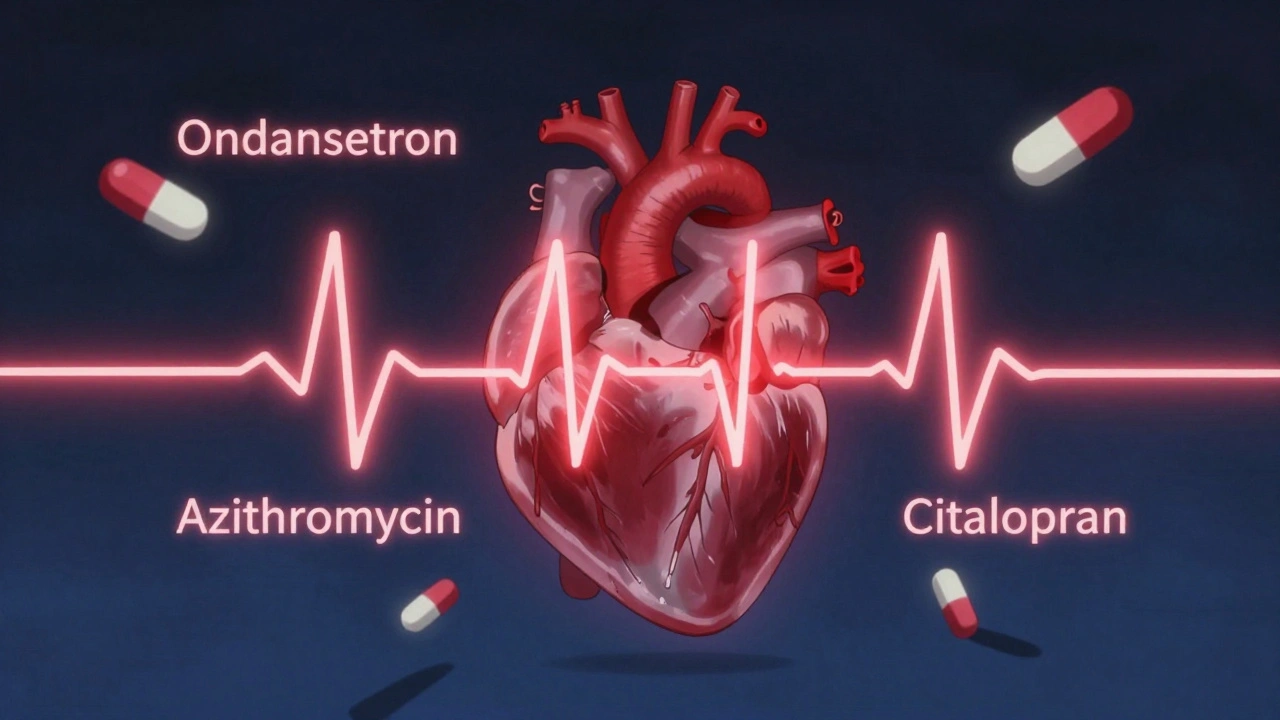
QT Prolongation: Medications That Raise Arrhythmia Risk
QT prolongation is a hidden heart rhythm risk caused by many common medications. Learn which drugs raise arrhythmia risk, who’s most vulnerable, and how to prevent life-threatening complications with simple checks and smart prescribing.