
PopPK: What It Is and How It Shapes Medication Safety and Dosing
When you take a pill, your body doesn’t treat it the same way everyone else does. That’s where PopPK, population pharmacokinetics, which studies how drugs move through different people based on age, weight, liver function, and more. Also known as population PK, it’s the science behind why one dose doesn’t fit all. Unlike clinical trials that test drugs on healthy volunteers under perfect conditions, PopPK looks at real people—older adults, kids, people with kidney disease, or those taking five other meds. It answers the question: Why does this drug work great for some and cause side effects in others?
PopPK doesn’t just track how fast a drug leaves your body—it connects that data to outcomes. For example, if a heart medication builds up in elderly patients with reduced kidney function, PopPK models show exactly how much to lower the dose. This isn’t guesswork. It’s built from thousands of real patient measurements, often using data from electronic health records, not just controlled studies. That’s why it’s behind safer dosing for drugs like antibiotics, antidepressants, and chemotherapy agents. It also explains why some generics behave differently than brands in certain populations, even when they’re chemically identical. PopPK helps uncover those hidden differences before they cause harm.
It’s not just about avoiding bad reactions—it’s about making treatments work better. If you’re on a drug that’s been flagged for wide variability in response, chances are PopPK studies helped fine-tune the label. You’ll see it in action when a doctor adjusts your dose based on your weight or kidney test results. That’s PopPK guiding clinical decisions. And it’s why telepharmacy and automated dispensing systems now integrate PopPK rules to flag risky prescriptions before they’re filled. The posts below dive into how this science connects to real-world safety: from how drug interactions show up in real patients, to why some people need lower doses of PPIs or benzodiazepines, and how clinical trial data often misses what PopPK catches. You’ll find guides on medication lists, overdose antidotes, and drug alternatives—all rooted in the same principle: your body is unique, and your meds should be too.
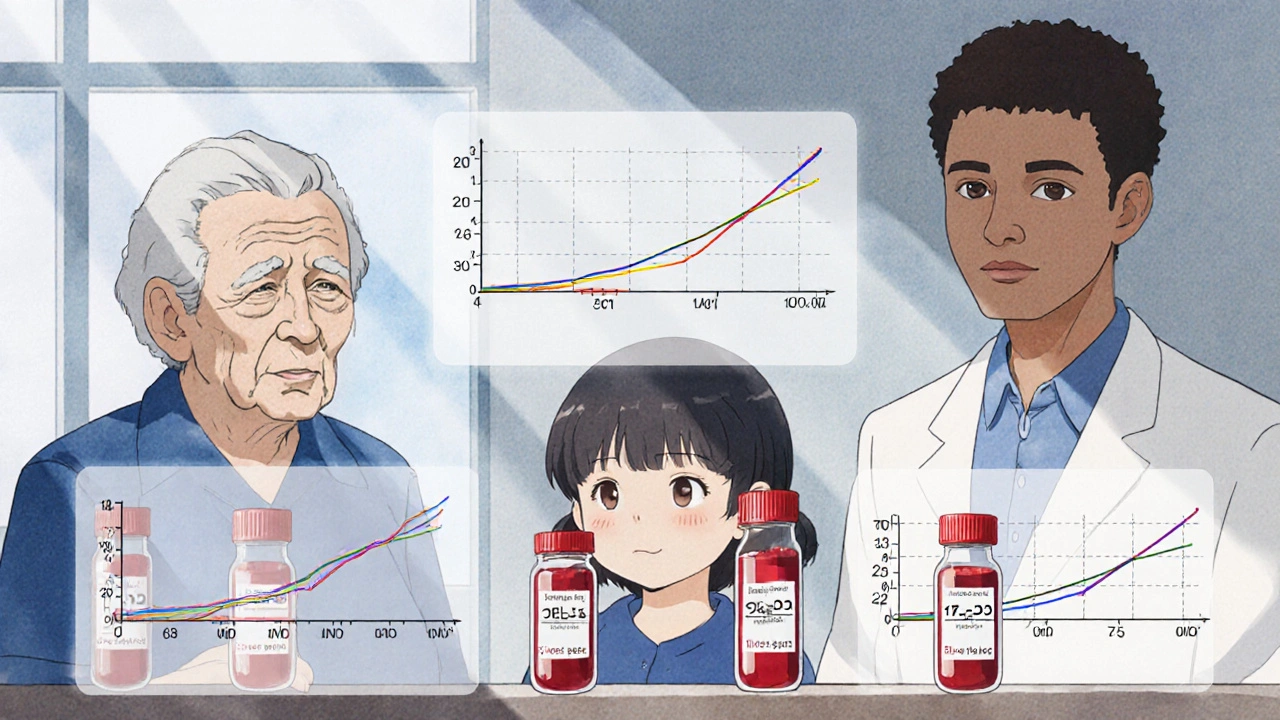
Population Pharmacokinetics: How Data Proves Drug Equivalence Beyond Traditional Bioequivalence Studies
Population pharmacokinetics uses real-world patient data to prove drug equivalence across diverse populations, offering a more accurate and ethical alternative to traditional bioequivalence studies.