
Language Access in Healthcare: Why Clear Communication Saves Lives
When you can’t clearly understand your doctor, pharmacist, or instructions on your pill bottle, language access, the ability to receive health information in a language you fully understand. Also known as health literacy support, it’s not a luxury—it’s a safety requirement. Every year, thousands of people end up in the ER not because their condition got worse, but because they misunderstood their prescription, skipped a dose, or took the wrong drug. This isn’t about accents or dialects—it’s about whether the information was delivered in a way that actually stuck.
Real language access means more than handing someone a translated pamphlet. It means having a trained medical interpreter during consultations, not a family member or a Google Translate app. Studies show that patients who get care through professional interpreters are 40% less likely to have medication errors. That’s not a small number—it’s the difference between managing diabetes safely and ending up in the hospital with DKA. It’s the difference between knowing when to stop metformin when you’re sick and guessing. It’s the difference between understanding that your blood pressure pill can’t be taken with grapefruit juice and thinking it’s just a rumor.
And it’s not just about Spanish or Mandarin. Think about the elderly patient who speaks only Hmong and gets a new heart medication. Or the refugee who can’t read any language but needs to know how to use an inhaler. patient safety, the system of practices designed to prevent harm during medical care fails when language is ignored. healthcare communication, the exchange of health information between providers and patients breaks down when people are too embarrassed to say they don’t understand, or too rushed to ask. That’s why pharmacies with interpreter services see fewer returns, fewer calls to the hotline, and fewer bad outcomes.
Some states now require interpreter services by law. Others still leave it up to the clinic’s budget. But the truth is simple: if you can’t communicate, you can’t care. That’s why the posts below aren’t just about pills and procedures—they’re about how people actually use them. You’ll find real stories on how misunderstanding a label led to a compounding error, how a non-English-speaking elder missed a critical dose of insulin, and how telepharmacy is finally starting to fix this gap. You’ll see how drug labels, consultation services, and even OTC supplement warnings fail without clear language support. This isn’t theory. It’s happening in clinics, pharmacies, and homes across the country. And it’s fixable—if we stop treating language as an afterthought and start treating it like the lifeline it is.
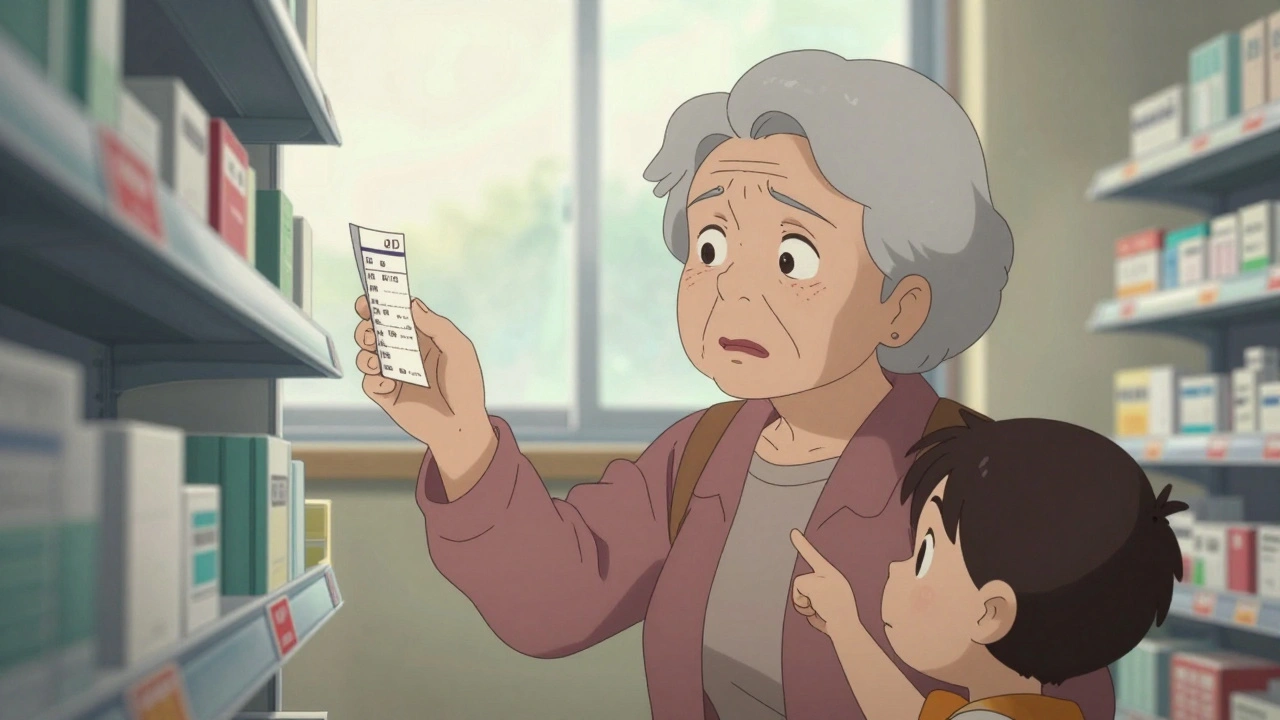
Medication Safety for Non-English Speakers: How to Get Clear, Understandable Instructions
Non-English speakers face dangerous risks when taking medication due to unclear labels. Learn how properly translated instructions, pictograms, and certified interpreters can prevent errors and save lives.