
Food-Drug Interactions: What You Need to Know Before You Eat
When you take a pill, it doesn’t just disappear into your body—it talks to everything else you’ve eaten, drunk, or swallowed. This is where food-drug interactions, the unintended effects that happen when food, drinks, or supplements change how your medications work. Also known as dietary interactions, it can make your blood pressure drop too low, your heart race, or your antibiotic fail completely. These aren’t rare glitches. They’re everyday risks hiding in your breakfast cereal, grapefruit juice, or evening vitamin.
Take grapefruit, a common fruit that blocks enzymes your liver uses to break down over 85 medications. If you’re on statins, blood pressure pills, or some anti-anxiety drugs, one glass can turn a safe dose into a dangerous overdose. Then there’s vitamin K, a nutrient in leafy greens that directly fights the blood-thinning power of warfarin. Eat more spinach one week and your INR drops. Eat less the next and you risk a clot. It’s not about being perfect—it’s about being consistent. And don’t forget dietary supplements, products sold as "natural" but often packed with hidden chemicals that clash with prescriptions. St. John’s wort, garlic pills, or even high-dose vitamin E can cancel out antidepressants, blood thinners, or chemo drugs. Many people don’t even tell their doctor they’re taking them.
These aren’t theoretical warnings. They show up in ERs, in pharmacy consultations, and in the fine print of drug labels you never read. The same people who check expiration dates on pills often ignore what’s on their plate. But your meds don’t care if you think kale is healthy—they only care if it changes how they work. That’s why your pharmacist asking, "What else are you taking?" isn’t just being thorough. It’s saving your life.
What follows is a collection of real, practical guides on how to spot, avoid, and manage these hidden conflicts. From how to read supplement labels that hide dangerous ingredients to why your morning coffee might be messing with your thyroid med, you’ll find clear, no-fluff advice from people who’ve seen the damage these interactions cause. You don’t need to be a scientist to stay safe—you just need to know what to ask, what to watch, and what to avoid.
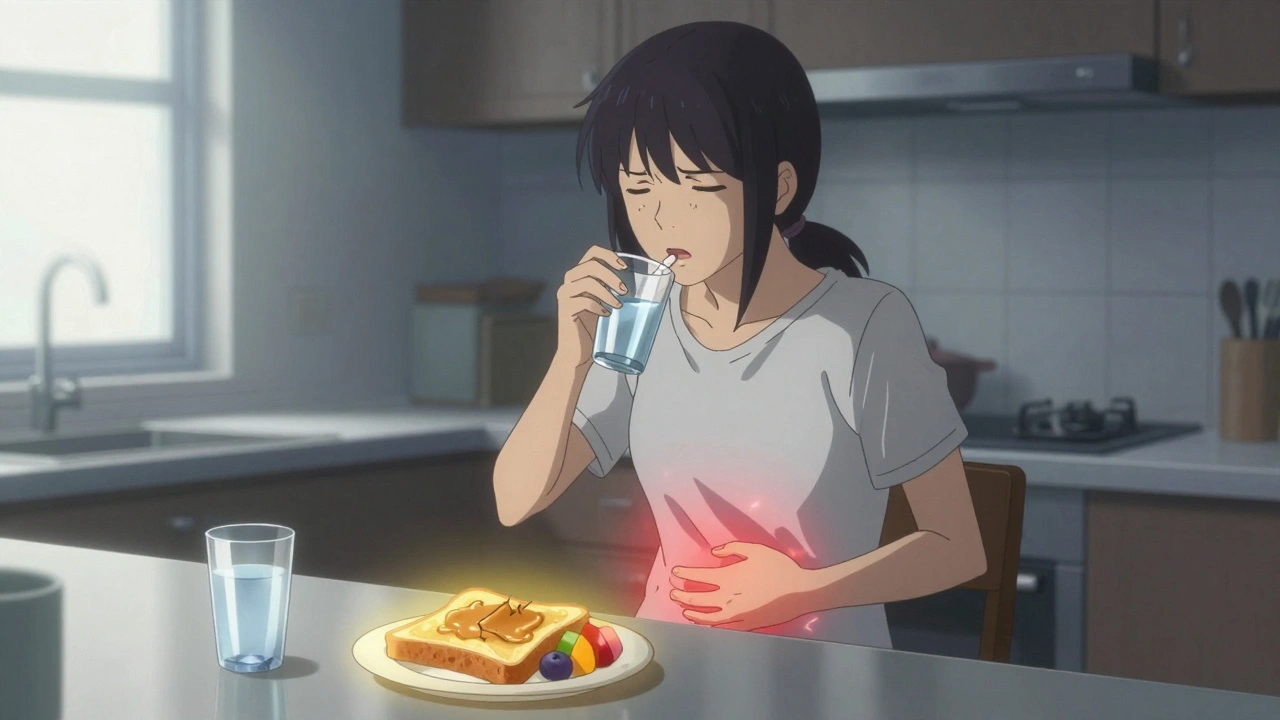
Taking Medication with Food: When and Why It Reduces Side Effects
Taking medication with food can reduce side effects like nausea and stomach damage - or make drugs ineffective. Learn which meds need food, which to avoid with meals, and how to get it right every time.