
FDA Regulations: What You Need to Know About Drug Safety and Approval
When you take a pill, whether it’s a brand-name drug or a generic, FDA regulations, the set of rules enforced by the U.S. Food and Drug Administration to ensure drugs are safe, effective, and properly labeled. These rules shape everything from how a drug is tested to how it’s sold on your pharmacy shelf. It’s not just about approval—it’s about ongoing safety, transparency, and accountability. If a drug makes it to market, it’s because it passed through a system designed to catch risks before they hurt people.
But generic drug approval, the process that lets cheaper versions of brand-name drugs enter the market after patents expire. Also known as ANDA submissions, it’s not a shortcut—it’s a strict science test. The FDA doesn’t just check if the pill looks the same. It demands proof that the generic delivers the same amount of active ingredient at the same speed as the original. And when companies try to cut corners, like with compounding errors or fake bioequivalence data, the FDA steps in. That’s why you see warnings about drug labeling, the official information on a medication’s risks, uses, and side effects, updated regularly through DailyMed. Also known as SPL labeling, it’s the only source that reflects the latest safety findings after a drug hits the market. A label might say "rare side effect," but real-world use can reveal something far more common. That’s why medication safety, the ongoing effort to prevent harm from drugs through proper prescribing, patient education, and monitoring. Also known as adverse drug reaction management, it’s not just the doctor’s job—it’s yours too. Your personal medication list, knowing your allergies, asking your pharmacist about interactions—all of it ties back to how FDA regulations empower you to stay safe.
FDA regulations don’t just cover new drugs. They govern how companies handle recalls, how clinical trial data is reported, and even how authorized generics—made by the original brand manufacturer—are labeled and priced. They’re behind the rules that stop a drug like azithromycin from being sold without a clear warning about QT prolongation. They’re why you can look up your pill on DailyMed and see exactly when a new risk was added. And they’re why tentative approval exists: letting generic makers prepare to launch the moment a patent expires, even while lawsuits drag on. These aren’t bureaucratic hoops. They’re guardrails. The system isn’t perfect, but without it, you’d be guessing whether your meds are safe. Below, you’ll find real-world examples of how these rules play out in daily life—from contrast dye safety to opioid antidotes, from compounding errors to how biologics replace risky steroids. These aren’t abstract policies. They’re the invisible framework keeping your medicine safe.
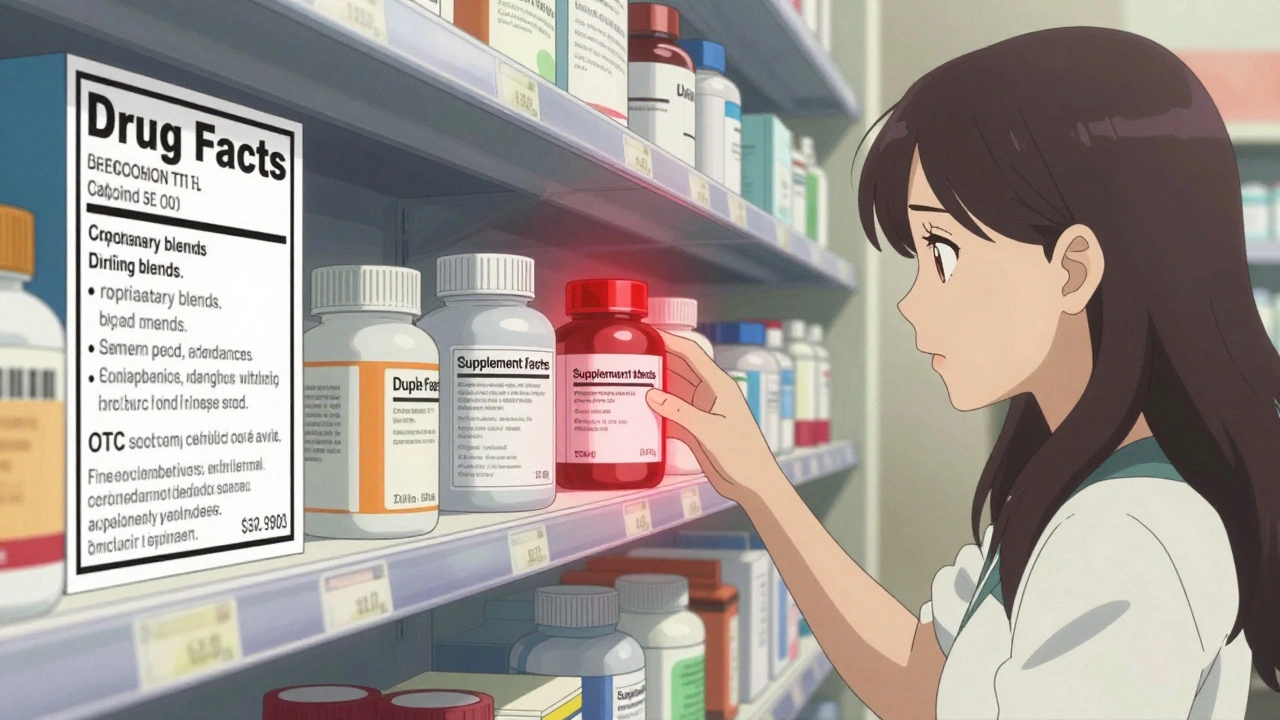
OTC Vitamins and Supplements: What the Drug Facts Label Doesn't Tell You
OTC vitamins and supplements don't follow the same labeling rules as medications. Learn what the Supplement Facts panel hides - from dangerous interactions to undeclared ingredients - and how to protect yourself.