
Drug-Induced Arrhythmia: Causes, Risks, and How to Stay Safe
When a medication throws off your heart’s rhythm, it’s called drug-induced arrhythmia, an abnormal heartbeat triggered by a drug, not an underlying heart condition. Also known as medication-related arrhythmia, it’s not rare—and it’s often preventable.
Many everyday drugs can cause this, especially those that stretch out the QT interval on an ECG. macrolide antibiotics, like azithromycin and clarithromycin, are common culprits. So are certain antidepressants, antifungals, and even some anti-nausea pills. It’s not about taking too much—it’s about how your body reacts. People over 65, those with existing heart issues, or anyone on multiple meds are at higher risk. Even if you feel fine, your heart might be sending warning signals you can’t feel.
QT prolongation, a measurable delay in the heart’s electrical recovery phase is the hidden red flag. It doesn’t always cause symptoms, but when it does, you might feel dizzy, faint, or notice your heart skipping or racing. These aren’t just "bad days"—they could be early signs of something dangerous. The good news? Most cases are caught before they turn serious. Pharmacists, doctors, and even your own medication list can help spot the risks.
Drug-induced arrhythmia isn’t just about one pill. It’s often the combo. Mixing a common antibiotic with a painkiller or a supplement you picked up online? That’s where things get risky. That’s why knowing exactly what you’re taking matters more than ever. A simple medication review can catch a dangerous mix before it hits your bloodstream.
What you’ll find below are real, practical guides from people who’ve been there—whether it’s spotting the hidden dangers in antibiotics, understanding how your pharmacy can help you avoid a bad reaction, or learning which over-the-counter products might be quietly affecting your heart. No fluff. No theory. Just what you need to know to keep your rhythm steady and your health on track.
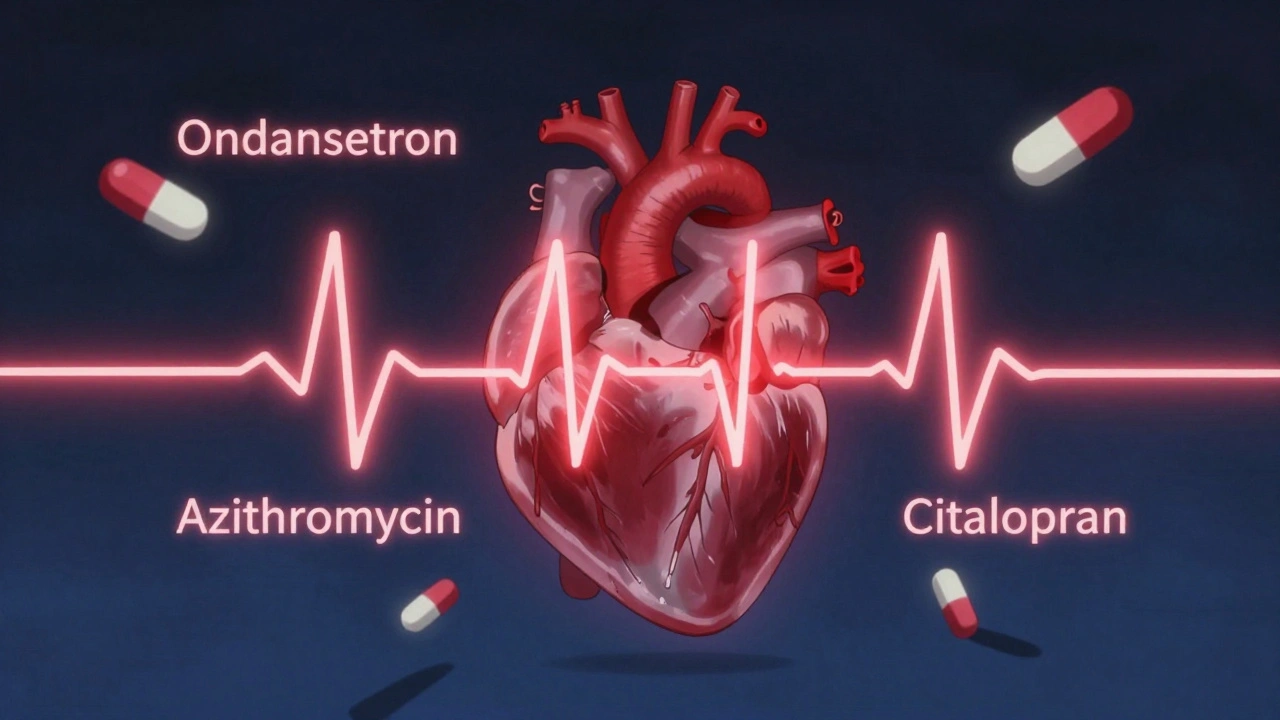
QT Prolongation: Medications That Raise Arrhythmia Risk
QT prolongation is a hidden heart rhythm risk caused by many common medications. Learn which drugs raise arrhythmia risk, who’s most vulnerable, and how to prevent life-threatening complications with simple checks and smart prescribing.