
Drug Facts Label: What You Need to Know About Medication Safety Info
When you pick up a bottle of medicine, whether it’s prescription or over-the-counter, the Drug Facts label, the standardized information panel required by the FDA on all OTC and many prescription medications. Also known as medication labeling, it’s your single most important tool for using drugs safely. This isn’t fine print—it’s the law. Every active ingredient, dosage, warning, and side effect you need to know is right there in plain language. Yet most people glance at it once and never look again. That’s how mistakes happen.
The Drug Facts label, the standardized information panel required by the FDA on all OTC and many prescription medications. Also known as medication labeling, it’s your single most important tool for using drugs safely. isn’t just about what’s in the bottle. It’s about what’s not said elsewhere. For example, if you’re taking a painkiller and also use a sleep aid, the label will warn you about drowsiness. But your doctor might not mention it. Your pharmacist might not bring it up unless you ask. The label doesn’t care who you are—it just tells you what the science says. That’s why it’s your last line of defense. It also tells you when to stop taking the drug, what to do if you miss a dose, and which other medicines could cause a dangerous reaction. These aren’t suggestions. They’re instructions written by experts who’ve studied every possible interaction.
Related entities like FDA drug information, the official source for approved drug labeling and safety updates from the U.S. Food and Drug Administration, and pill information, the specific details about dosage, timing, and side effects printed on medication packaging are built directly into the Drug Facts label. You’ll find links to DailyMed and other official sources in many of the posts below—because real safety comes from cross-checking. The label tells you what to watch for; the posts below show you how to act on it. From QT prolongation risks with common antibiotics to how anticoagulants interact with herbal supplements, every post here is grounded in what the label says—and what it leaves out.
People think they know their meds because they’ve taken them for years. But dosages change. New warnings get added. Ingredients get reformulated. That’s why you need to read the label every single time—even if it’s the same bottle. The Drug Facts label isn’t just a legal requirement. It’s your personal safety manual. And if you don’t know how to read it, you’re flying blind.
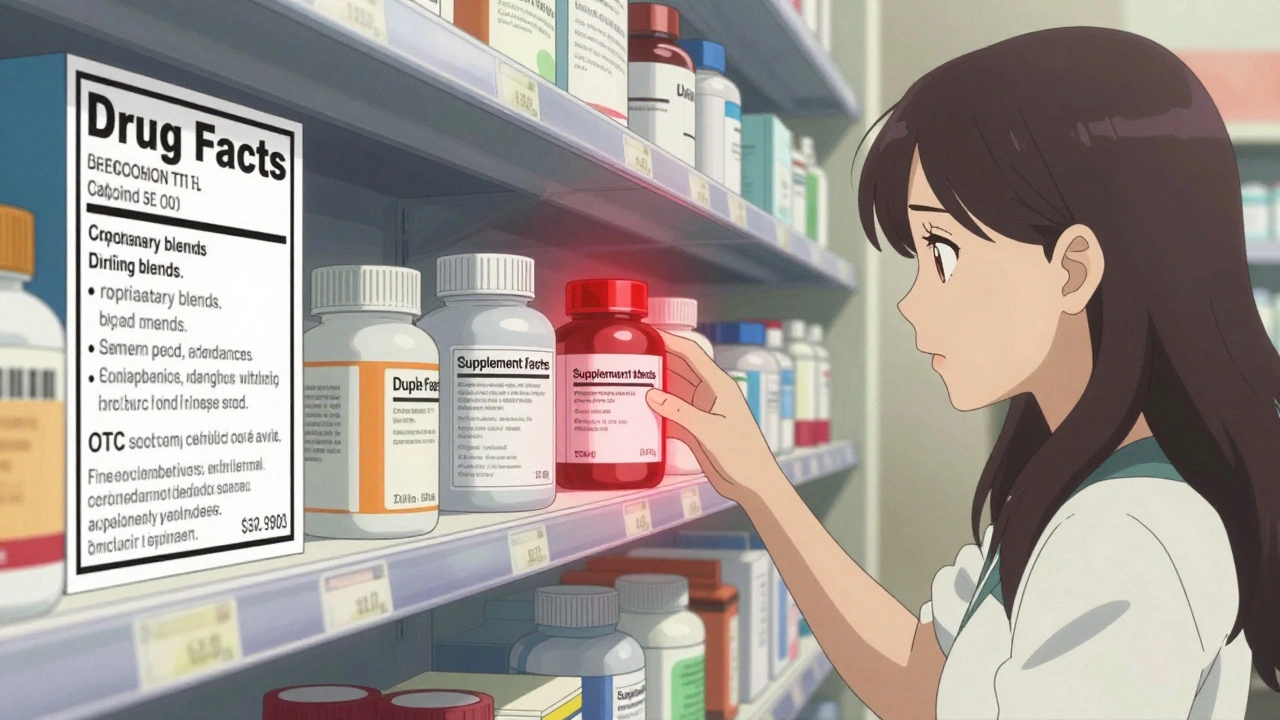
OTC Vitamins and Supplements: What the Drug Facts Label Doesn't Tell You
OTC vitamins and supplements don't follow the same labeling rules as medications. Learn what the Supplement Facts panel hides - from dangerous interactions to undeclared ingredients - and how to protect yourself.