
Drug Absorption: How Your Body Takes in Medication and Why It Matters
When you take a pill, drug absorption, the process by which a medication enters your bloodstream from its site of administration. Also known as bioavailability, it’s not just about swallowing a tablet—it’s about whether your body can actually use it. Two pills with the same active ingredient can work completely differently if one dissolves slowly, gets blocked by food, or interacts with your gut bacteria. That’s why drug absorption isn’t just a lab term—it’s the difference between your medicine helping or doing nothing.
Drug absorption connects directly to bioequivalence, how similar two versions of the same drug perform in the body. A generic drug might have the same active ingredient as the brand name, but if it absorbs slower or unevenly, it won’t give you the same results. This matters most with narrow therapeutic index drugs, medications where small changes in blood levels can cause serious side effects or treatment failure—like blood thinners, seizure meds, or thyroid pills. Even small shifts in absorption can push you into danger. And it’s not just about generics. Your stomach acid, what you ate, other drugs you’re taking, or even your age can change how well your body pulls in the medicine.
That’s why pharmacokinetics, the science of how drugs move through your body over time is so important. It’s not enough to know what’s in the pill—you need to know how fast it gets in, how long it lasts, and where it goes. This is why some meds must be taken on an empty stomach, why extended-release versions exist, and why mixing certain drugs can cancel each other out. Studies show that up to 20% of medication failures in older adults trace back to absorption issues, not non-adherence. If your blood pressure meds aren’t working, or your antidepressant suddenly feels less effective, the problem might not be your dose—it’s your body’s ability to absorb it.
What you’ll find below are real-world stories and science-backed breakdowns of how drug absorption impacts safety, cost, and outcomes. From how generic drugs are tested to why contrast dye reactions happen, from compounding errors that mess with absorption to how population data reveals hidden gaps in drug performance—you’ll see how this invisible process shapes everything from your prescription to your health.
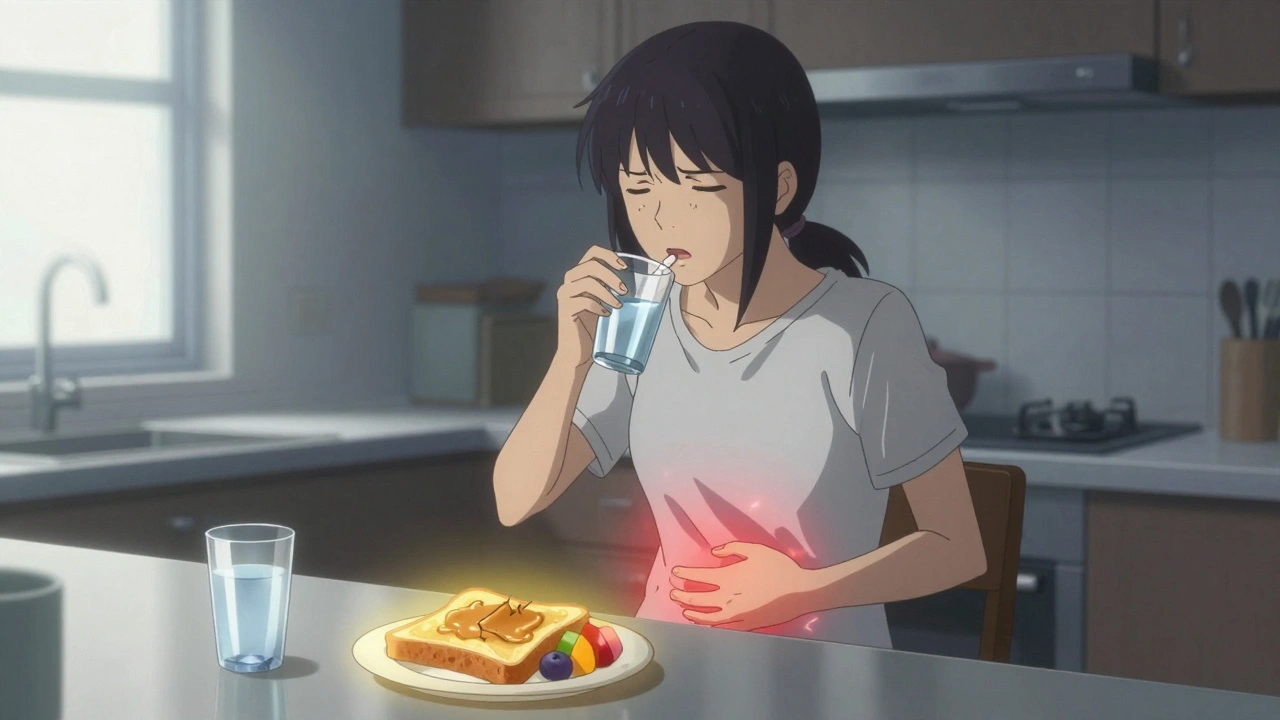
Taking Medication with Food: When and Why It Reduces Side Effects
Taking medication with food can reduce side effects like nausea and stomach damage - or make drugs ineffective. Learn which meds need food, which to avoid with meals, and how to get it right every time.