
DKA Prevention: How to Avoid Diabetic Ketoacidosis with Smart Medication and Lifestyle Choices
When your body can’t use glucose for energy, it starts breaking down fat—and that produces dangerous acids called ketones. This is diabetic ketoacidosis, a life-threatening complication of diabetes caused by severe insulin deficiency and high blood sugar. Also known as DKA, it doesn’t happen overnight, but it can turn deadly fast if ignored. DKA prevention isn’t about avoiding sugar alone—it’s about managing insulin, spotting early warning signs, and knowing when to act.
Most cases of DKA happen because insulin is missed, ran out, or isn’t working right. People with type 1 diabetes are most at risk, but type 2 users can get it too—especially during illness, infection, or stress. insulin management, the consistent and correct use of insulin to keep blood sugar in range is the single biggest shield against DKA. Missing even one dose during sickness can push your body into ketosis. And if you’re using an insulin pump, a clogged catheter or faulty site can be just as dangerous as skipping an injection.
High blood sugar is the red flag, but it’s not always obvious. You might feel unusually thirsty, need to pee more than usual, or get a fruity smell on your breath. Nausea, stomach pain, and confusion come later—when it’s already serious. blood sugar control, the daily practice of monitoring glucose levels and adjusting insulin, food, or activity to stay in target range is your early warning system. Testing ketones when your blood sugar is over 240 mg/dL isn’t optional—it’s a lifesaver. Cheap urine strips or blood ketone meters can catch DKA before you end up in the ER.
Illnesses like the flu, pneumonia, or even a bad cold can trigger DKA because your body fights infection by releasing stress hormones that raise blood sugar. That’s why you need a sick-day plan—something your doctor should help you build. It includes checking glucose every 2-4 hours, taking insulin even if you can’t eat, drinking fluids to avoid dehydration, and knowing when to call for help. Many people wait too long because they think, "I’m not eating, so I don’t need insulin." That’s exactly when you need it most.
And don’t forget about your meds. Some drugs, like SGLT2 inhibitors (Jardiance, Farxiga), increase DKA risk—even if your blood sugar looks normal. If you’re on one of these, your doctor should warn you. DKA prevention also means knowing your limits. Skipping checkups, not refilling prescriptions, or ignoring symptoms because "it’s just a bad day" adds up. Real prevention isn’t perfect control—it’s consistent awareness.
What you’ll find below are real, practical guides from people who’ve been there. From how to read ketone test results correctly, to what to do when your insulin runs out at 2 a.m., to how to talk to your pharmacy about emergency supplies—these posts cut through the noise. No fluff. No theory. Just what works when your body is screaming for help.
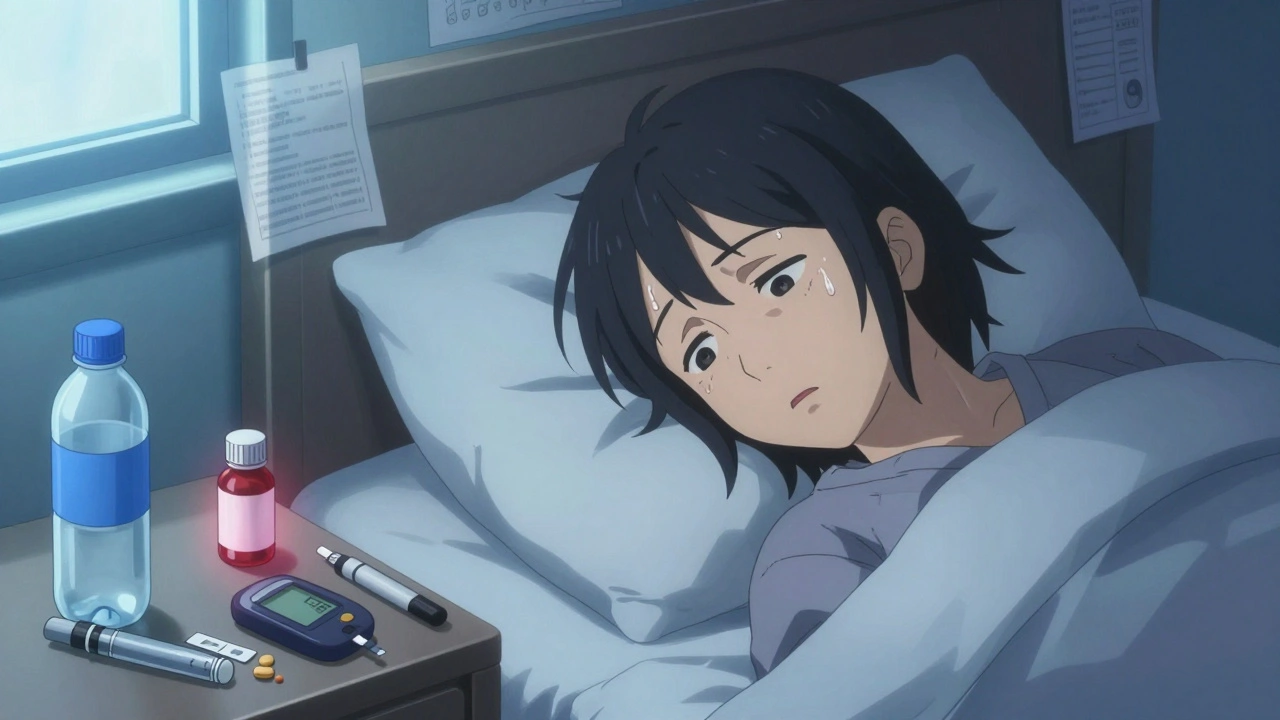
Sick Day Rules for Diabetes Medications: What to Stop, Start, or Keep When You're Ill
Learn exactly which diabetes medications to stop, adjust, or keep during illness to prevent life-threatening DKA and AKI. Clear, evidence-based rules for metformin, SGLT2 inhibitors, insulin, and blood pressure meds.