
Diabetes Sick Day Rules: What to Do When You're Ill and Blood Sugar Spikes
When you have diabetes, a chronic condition where the body struggles to manage blood sugar. Also known as hyperglycemia, it requires constant attention—even more so when you're sick. Getting a cold, flu, or even a stomach bug can throw your blood sugar out of whack. That’s where diabetes sick day rules, a set of practical actions to follow when illness disrupts your normal routine come in. These aren’t suggestions. They’re survival steps backed by years of real-world data from people who’ve learned the hard way that skipping checks or ignoring symptoms can lead to hospitalization.
When you’re sick, your body releases stress hormones like cortisol and adrenaline. These hormones fight infection—but they also push glucose into your bloodstream. If you’re on insulin, your usual dose might not cut it. If you’re on oral meds, your body might not absorb them properly. That’s why blood sugar management, the daily practice of monitoring and adjusting glucose levels becomes non-negotiable during illness. You need to check your levels every 2 to 4 hours, even if you’re not eating. You need to test for ketones if your sugar stays above 240 mg/dL. And you need to know when to call your doctor—because waiting too long can turn a bad day into a diabetic ketoacidosis emergency.
It’s not just about numbers. It’s about what you do when you feel too sick to eat. Can you drink broth? Should you take your metformin if you’re vomiting? What if your insulin pen is out of juice? These are the real questions that come up when you’re feverish and shaky. The insulin adjustment, the process of changing your insulin dose based on illness, food intake, and blood sugar trends isn’t guesswork. There are clear guidelines: keep taking your long-acting insulin even if you skip meals, use correction doses for high numbers, and never stop insulin cold turkey. And if you’re unsure? Call your pharmacy. Pharmacists see these cases every day—they can walk you through what to do before you end up in the ER.
There’s no one-size-fits-all plan. Someone with type 1 diabetes has different needs than someone with type 2 on insulin. But the core rules stay the same: stay hydrated, monitor closely, don’t skip meds, and know your warning signs. Below, you’ll find real advice from people who’ve been there—how to handle nausea, what to stock in your sick day kit, why some OTC meds can be dangerous, and how to talk to your doctor when you’re too weak to make the call yourself. This isn’t theory. It’s what works when you’re sweating, shaky, and scared.
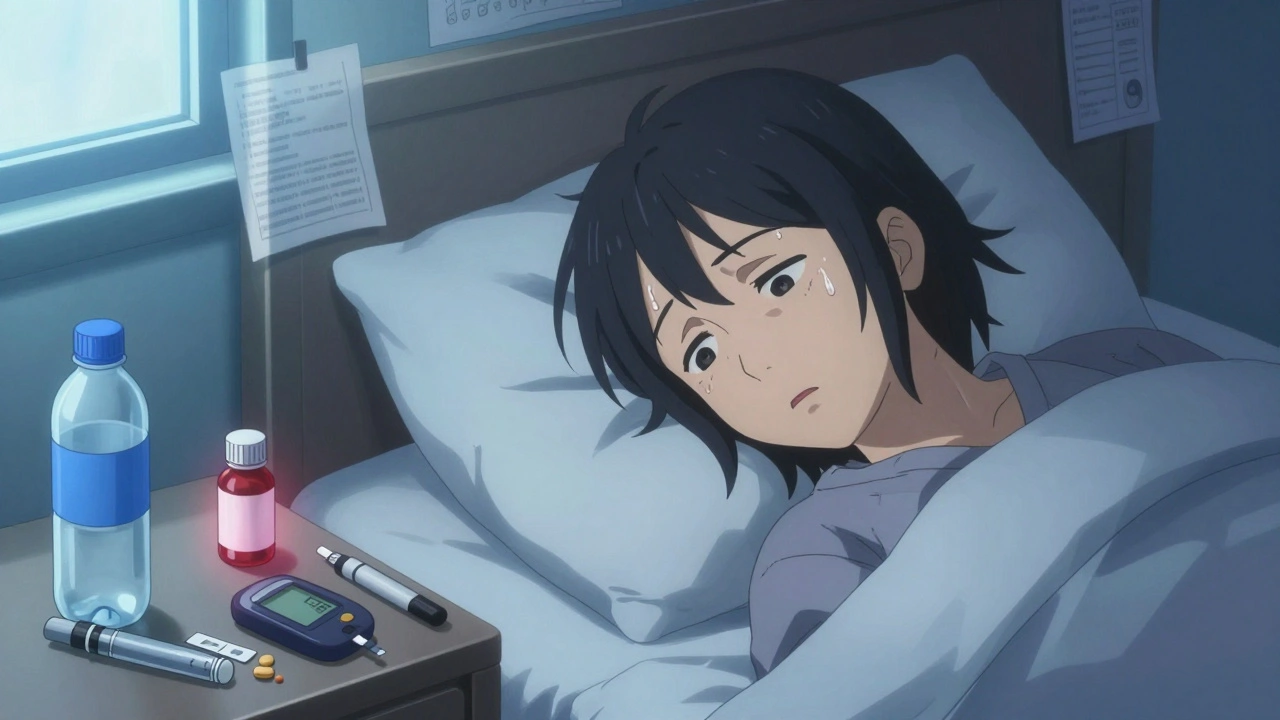
Sick Day Rules for Diabetes Medications: What to Stop, Start, or Keep When You're Ill
Learn exactly which diabetes medications to stop, adjust, or keep during illness to prevent life-threatening DKA and AKI. Clear, evidence-based rules for metformin, SGLT2 inhibitors, insulin, and blood pressure meds.