
Contact Dermatitis: Causes, Triggers, and How to Manage Skin Reactions
When your skin suddenly turns red, itchy, or blistered after touching something harmless—like soap, jewelry, or even your own lotion—you’re likely dealing with contact dermatitis, a common skin reaction triggered by direct contact with an irritant or allergen. Also known as allergic contact dermatitis or irritant dermatitis, it’s not contagious, but it can be relentless—and it’s often mistaken for eczema or fungal infections. Unlike systemic allergies, this isn’t about what you eat or inhale. It’s about what touches your skin. And the culprits? They’re everywhere: nickel in your watchband, fragrances in your shampoo, poison ivy on a hike, or even the preservatives in your hand sanitizer.
There are two main types: irritant contact dermatitis, which happens when something physically damages your skin barrier—like bleach or frequent handwashing—and allergic contact dermatitis, where your immune system overreacts to a substance it’s learned to see as a threat. Poison ivy is the classic example, but so are cosmetics, latex gloves, and certain topical antibiotics. The reaction can show up hours later, or even days after exposure, which makes it tricky to trace. That’s why so many people think they’re reacting to something new, when it’s actually something they’ve used for years.
What makes this even more confusing is that your skin can change over time. You might use the same lotion for years with no problem, then suddenly develop a rash. Or you might not react to a metal ring until after you’ve worn it for months. This isn’t random—it’s your skin’s tolerance breaking down, or your immune system finally recognizing the substance as a threat. The good news? Once you identify the trigger, avoiding it usually clears things up. But figuring out what it is takes patience. Patch testing, done by a dermatologist, is the gold standard for confirming allergic triggers.
And while many turn to creams and ointments, the real fix often starts with what you stop using. Fragrance-free, dye-free, and hypoallergenic products aren’t just marketing—they’re medical necessities for sensitive skin. Even natural ingredients like tea tree oil or essential oils can cause reactions. Your skin doesn’t care if it’s ‘natural’—it only cares if it’s irritating.
What you’ll find below are real, practical guides that cut through the noise. From how to build a safe skincare routine that avoids hidden triggers, to understanding why some medications can make your skin more reactive, to how to read product labels like a pro—you’ll get clear, no-fluff advice from people who’ve been there. These aren’t theoretical tips. They’re the steps that actually help people regain control of their skin.
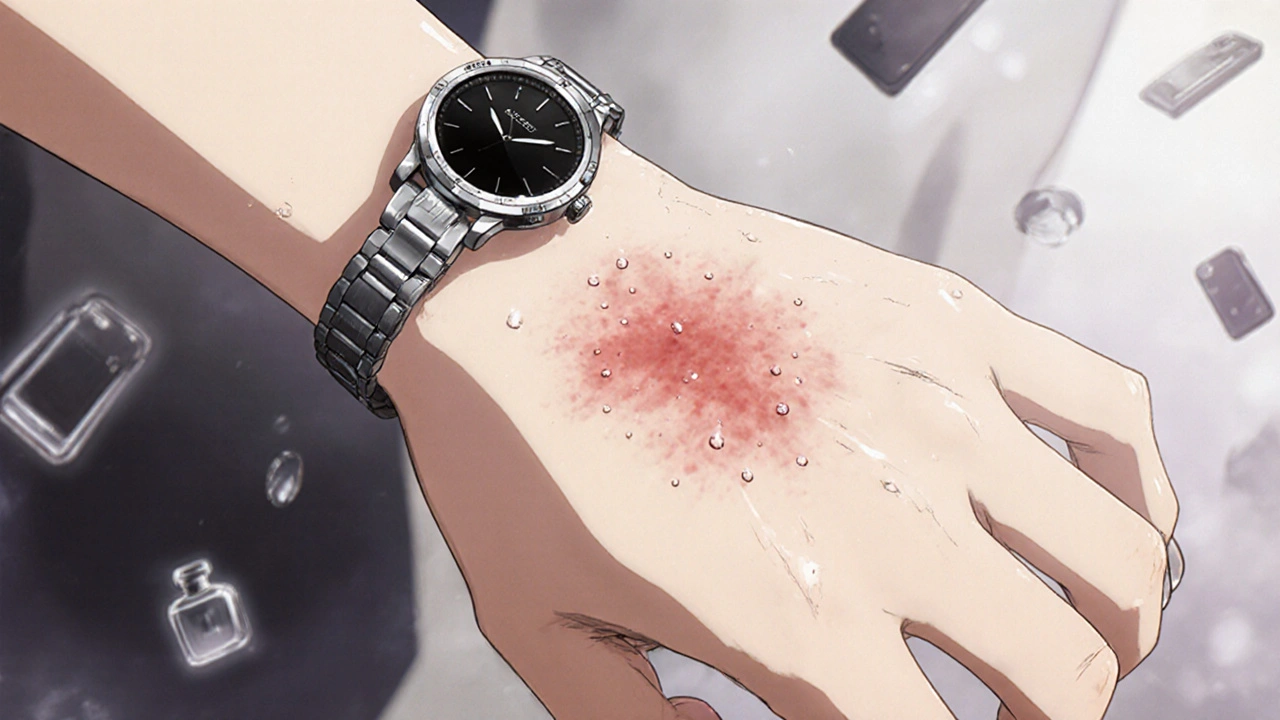
Contact Dermatitis: How to Identify and Avoid Allergens That Trigger Skin Reactions
Learn how to identify and avoid the hidden allergens causing your skin rash. From nickel in jewelry to fragrance in shampoo, discover how patch testing works and what steps to take for lasting relief.