
Bioequivalence: What It Means for Generic Drugs and Your Health
When you pick up a generic pill, you might wonder: bioequivalence, the scientific standard proving a generic drug performs the same way in the body as its brand-name counterpart. Also known as therapeutic equivalence, it’s the quiet guarantee that your $5 pill does exactly what the $50 one does — no more, no less. This isn’t marketing fluff. It’s a strict, measurable process the FDA requires before any generic drug hits the shelf. Without bioequivalence, you’d be taking a gamble every time you switch from brand to generic. But with it, you’re getting the same active ingredient, in the same dose, absorbed at the same rate and to the same extent.
Bioequivalence doesn’t just apply to any old copycat pill. It’s tied directly to generic drugs, medications approved as safe and effective substitutes for brand-name products. These aren’t cheaper versions made with lower-quality ingredients — they’re chemically identical in their active components. The differences? The shape, color, or filler materials. Nothing that affects how your body uses the drug. This is why FDA approval, the official process that validates a drug’s safety, strength, and performance for generics hinges on bioequivalence studies. These studies compare blood levels of the drug in healthy volunteers, measuring peak concentration and total exposure. If the generic falls within 80% to 125% of the brand’s numbers, it’s approved. That’s the gold standard.
And here’s the thing: bioequivalence isn’t just about saving money. It’s about trust. When your doctor switches you from a brand to a generic, they’re relying on this science. You’re relying on it too. That’s why you’ll find bioequivalence mentioned in posts about authorized generics, where the brand company itself makes the generic version, and in discussions about Hatch-Waxman Act, the law that created the modern pathway for generic drug approval. It’s the reason why some people worry about switching between different generic brands — because while each one meets bioequivalence standards individually, slight differences in fillers can affect how some people feel. That’s why your pharmacist’s advice matters, and why keeping a personal medication list, a detailed record of all drugs and supplements you take helps track any subtle changes.
What you’ll find in these posts isn’t theory — it’s real-world insight. From how patent battles delay generic access, to why some people notice differences between generics, to how clinical trials don’t always catch what happens in daily life — every article connects back to this core idea: bioequivalence is the invisible hand ensuring your meds work as they should. You don’t need to understand the math behind it. But you do need to know it’s there. And when you do, you can ask the right questions, spot the red flags, and take control of your treatment without overpaying.
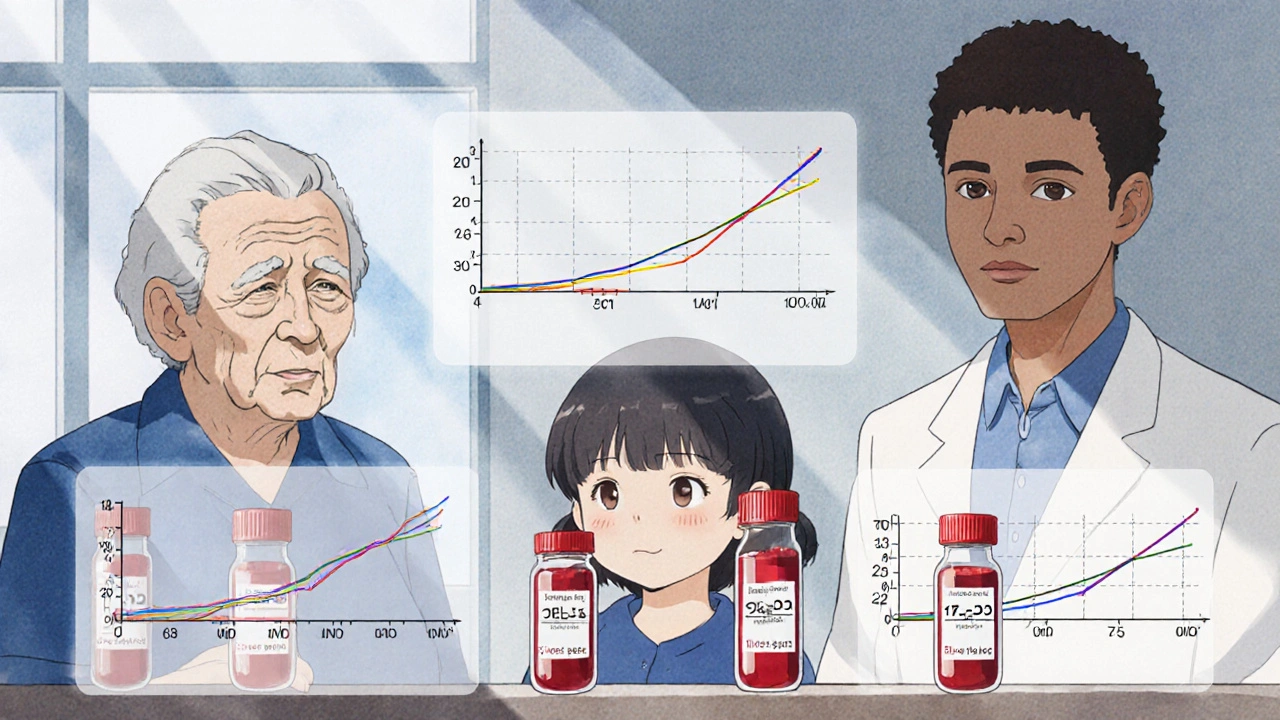
Population Pharmacokinetics: How Data Proves Drug Equivalence Beyond Traditional Bioequivalence Studies
Population pharmacokinetics uses real-world patient data to prove drug equivalence across diverse populations, offering a more accurate and ethical alternative to traditional bioequivalence studies.