
Arrhythmia Risk: What Causes It and How Medications Can Trigger Dangerous Heart Rhythms
When your heart doesn’t beat in a steady rhythm, you’re dealing with an arrhythmia risk, a condition where the heart’s electrical signals go off-track, causing it to beat too fast, too slow, or irregularly. Also known as cardiac arrhythmia, it’s not always dangerous—but when it’s triggered by everyday drugs, it can be life-threatening. Many people assume arrhythmias only happen to older adults with heart disease. But the truth? Even healthy people can develop dangerous rhythms from medications they take for something completely unrelated—like a sinus infection or anxiety.
One of the biggest hidden triggers is QT prolongation, a delay in the heart’s electrical recovery phase that can lead to a specific, often fatal arrhythmia called torsades de pointes. This isn’t just a lab result—it’s a real, measurable danger. Drugs like macrolide antibiotics, commonly prescribed for respiratory infections, including azithromycin and clarithromycin are known to stretch the QT interval. People with low potassium, existing heart conditions, or those taking other QT-prolonging drugs are at higher risk. And here’s the catch: you might not feel anything until it’s too late. No chest pain. No dizziness. Just a sudden, silent heart stop.
Arrhythmia risk doesn’t stop with antibiotics. Antidepressants, anxiety meds like benzodiazepines, even some OTC supplements can interfere with your heart’s rhythm. It’s not about being weak or careless—it’s about hidden interactions. A simple prescription for a sore throat could be the spark if you’re also on a statin, a diuretic, or a sleep aid. That’s why knowing your full medication list and sharing it with your pharmacist isn’t just smart—it’s a lifesaver. Pharmacists catch what doctors miss because they see the whole picture: every pill, every herb, every dose timing.
You don’t need to avoid all meds. You need to understand which ones carry hidden risks and how to use them safely. The posts below break down exactly which drugs are most likely to cause trouble, who’s most vulnerable, and what alternatives actually work. From spotting early warning signs to knowing when to ask for a different antibiotic, you’ll find clear, no-fluff guidance based on real patient data and clinical studies—not theory. This isn’t fear-mongering. It’s about taking control before your heart does something it shouldn’t.
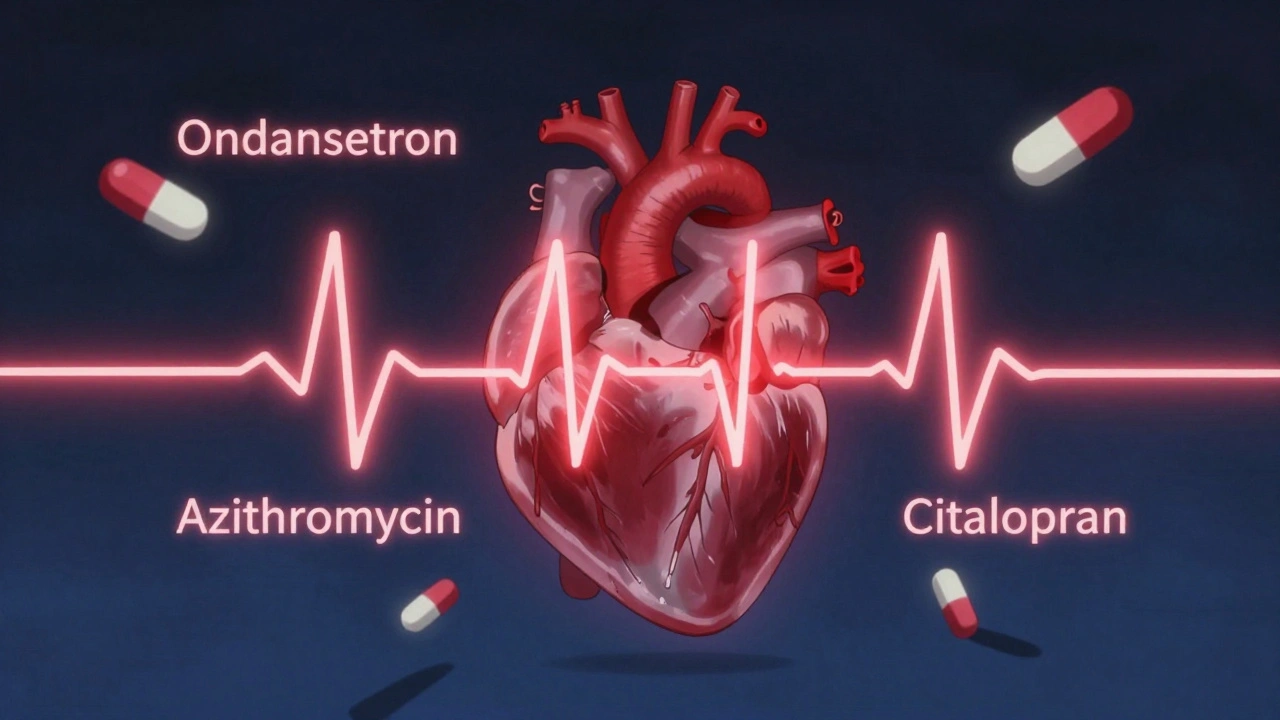
QT Prolongation: Medications That Raise Arrhythmia Risk
QT prolongation is a hidden heart rhythm risk caused by many common medications. Learn which drugs raise arrhythmia risk, who’s most vulnerable, and how to prevent life-threatening complications with simple checks and smart prescribing.