
AKI Risk: What Medications, Conditions, and Actions Increase Acute Kidney Injury Danger
When your kidneys suddenly stop working well, it’s called acute kidney injury, a rapid loss of kidney function that can happen over hours or days. Also known as acute renal failure, it’s not rare—especially in older adults, hospital patients, or those taking multiple drugs. This isn’t just a lab result; it’s a medical emergency that can lead to long-term damage or even death if missed. AKI risk doesn’t come out of nowhere. It’s often triggered by things you can control: the meds you take, how much water you drink, or an infection you ignore.
Many common drugs raise AKI risk, the chance your kidneys will suddenly fail due to medication or other stressors. NSAIDs like ibuprofen, certain antibiotics, and even some blood pressure pills can reduce blood flow to your kidneys or cause direct toxicity. People with diabetes or heart failure are already at higher risk, and adding a new med can push them over the edge. Even contrast dye used in CT scans can cause drug-induced kidney injury, kidney damage caused by medications or medical imaging agents, especially if you’re dehydrated or have pre-existing kidney issues. The scary part? Many of these reactions show up after you’ve already left the doctor’s office.
It’s not just about pills. Dehydration from vomiting, diarrhea, or just not drinking enough water is one of the top causes. Infections like sepsis can also trigger acute kidney injury, a rapid loss of kidney function that can happen over hours or days by dropping blood pressure and starving the kidneys of oxygen. And if you’re on five or more medications—common in older adults—each one adds another layer of risk. That’s why checking your meds with a pharmacist isn’t just smart; it’s lifesaving. They catch interactions doctors miss, especially when it comes to kidney safety.
The posts below don’t just talk about theory—they show you real cases, real drugs, and real actions that protect your kidneys. You’ll find guides on how contrast dye can harm your kidneys and how to prevent it, how common painkillers quietly damage kidney function, and why some meds need to be stopped before surgery. You’ll learn what questions to ask your doctor, how to spot early signs of trouble, and how to build a medication list that keeps your kidneys safe. This isn’t about fear—it’s about awareness. And with the right info, you can avoid a hospital visit before it even starts.
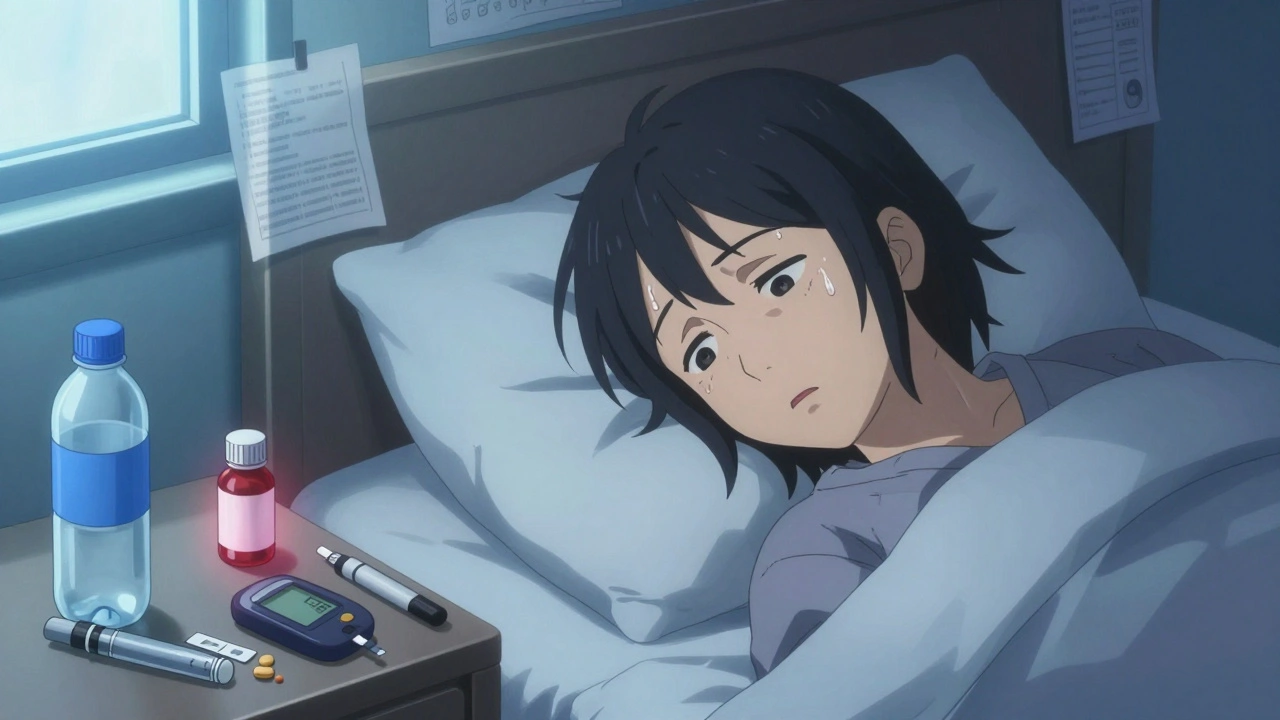
Sick Day Rules for Diabetes Medications: What to Stop, Start, or Keep When You're Ill
Learn exactly which diabetes medications to stop, adjust, or keep during illness to prevent life-threatening DKA and AKI. Clear, evidence-based rules for metformin, SGLT2 inhibitors, insulin, and blood pressure meds.