

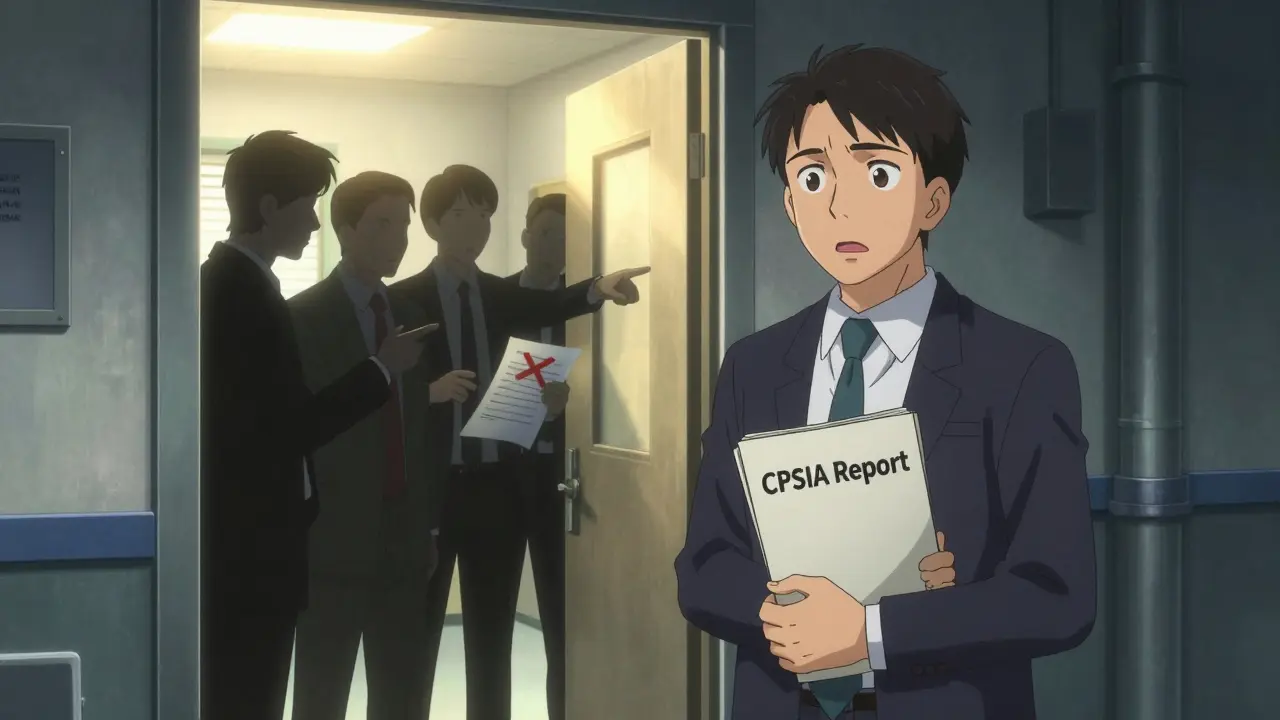
When you work in manufacturing and spot a serious quality problem-like faulty brakes in a car part, lead paint on a children’s toy, or unsanitary conditions in a food processor-speaking up can feel risky. You know it’s the right thing to do. But what happens if your boss finds out? Will you get fired? Demoted? Blacklisted? The truth is, whistleblower protections exist for exactly this reason. They’re not just legal fine print-they’re your shield when you report safety or quality violations in manufacturing.
What Exactly Is Protected Under the Law?
You don’t need to be a manager or engineer to be protected. If you’re an hourly worker, a contractor, a temp, or even a subcontractor, and you report a manufacturing defect that could harm consumers or workers, federal law has your back. The key laws covering this include the Consumer Product Safety Improvement Act (CPSIA), the FDA Food Safety Modernization Act (FSMA), and the Moving Ahead for Progress in the 21st Century Act (MAP-21). Under CPSIA, you’re protected if you report issues like unsafe levels of lead, flammable fabrics, or choking hazards in toys or household goods. FSMA covers food and drug manufacturers-if you see mold in a production line, unclean equipment, or falsified lab results, you can report it without fear. MAP-21 protects those in auto manufacturing who report defective airbags, faulty steering systems, or brake failures. These laws don’t just cover reports to the government. They also protect you if you tell your supervisor, HR, or a safety officer inside your company first. The law doesn’t care if you’re angry, scared, or just trying to do the right thing. It doesn’t matter if someone else already reported the same issue. Even if you’re reporting something that happened months ago, you’re still covered. The Whistleblower Protection Enhancement Act of 2012 made this crystal clear.What Counts as Retaliation?
Retaliation isn’t always obvious. It’s not always a termination letter. Sometimes it’s quieter-and just as damaging. - Being moved to a night shift with no notice- Being denied overtime or promotions
- Being isolated from team meetings
- Having your performance reviews suddenly drop without cause
- Being forced to resign (called constructive discharge)
- Being blacklisted from future jobs in the industry
According to U.S. Department of Labor data, 68% of manufacturing whistleblowers still face some kind of retaliation-even with the law on their side. That’s why documentation is critical. Keep records: emails, dated notes, photos of defective products, witness names, shift logs. If you report a faulty component on March 5, write it down. Include the part number, batch ID, and who you told. This isn’t paranoia-it’s protection.
Deadlines Matter-And They’re Tight
You have a limited window to file a complaint. Miss it, and your case can be thrown out, no matter how valid your claim. - For CPSIA (toys, household goods): 180 days- For FSMA (food, drugs): 180 days
- For MAP-21 (vehicles and parts): 30 days
- For environmental violations: 45 days
OSHA handles these complaints. You file with them, not your company’s legal team. The clock starts ticking the moment you experience retaliation-or when you’re told you’ll be punished for speaking up. If you report a defect on January 1 and get demoted on January 10, your 180-day clock starts on January 10. Don’t wait. File within 10 days if you’re worried about retaliation. OSHA’s Whistleblower Protection Program (1-800-321-OSHA) can guide you through the process.
What Happens After You File?
Once you file, OSHA investigates. They’ll interview you, your employer, and possibly coworkers. They might inspect your workplace. You’ll get a preliminary decision in 60 to 90 days. If they find retaliation happened, they can order your job back, back pay with interest, and even compensation for emotional distress. In 2022, the average remedy awarded to a successful whistleblower was $287,500. That’s not just about money-it’s about restoring dignity. But here’s the catch: if your employer disagrees with the decision, they can demand a full hearing before a Department of Labor judge. That can take months. That’s why many whistleblowers hire a lawyer. Fortunately, if you win, the employer pays your legal fees.What’s Not Protected?
Not every complaint counts. The law only protects disclosures about violations of specific federal laws. If you say, “I think this product is ugly,” that’s not protected. But if you say, “This pacifier contains phthalates above the legal limit,” that is. Also, posting complaints on social media without tying them to safety or legal violations can lose you protection. The National Labor Relations Board ruled in 2022 that a factory worker who posted about “bad quality control” on Facebook without mentioning safety risks wasn’t covered. Be specific. Use terms like “unsafe,” “non-compliant,” or “violates FDA standards.” And here’s another trap: confidentiality agreements. Some companies make you sign papers saying you can’t talk about internal issues. But since January 2023, the Department of Energy clarified that these agreements can’t block whistleblower reports for government contractors. If you work on defense, medical devices, or nuclear components, your right to report overrides any contract clause.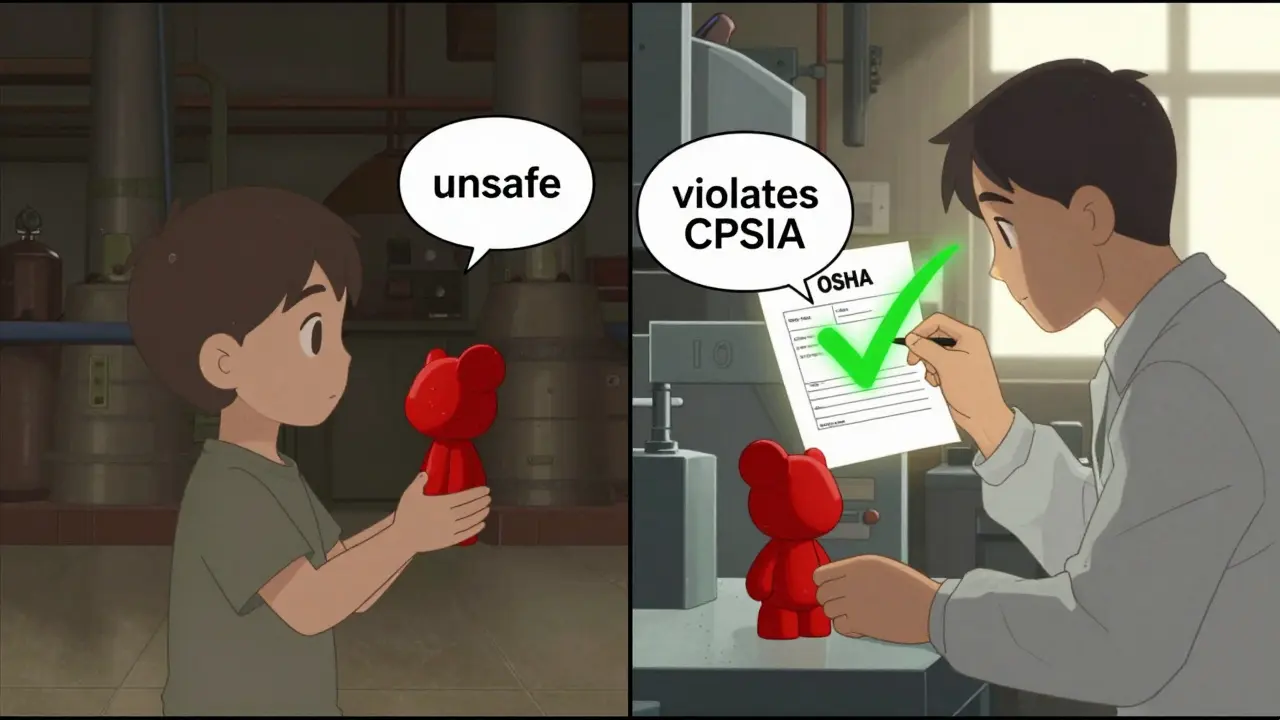
Real-World Impact: Why This Matters
Whistleblowers don’t just protect jobs-they save lives. The Consumer Product Safety Commission found that 72% of product recalls in 2021 started because an employee spoke up. In 2022, 41% of all vehicle recalls came from whistleblower tips. Without those reports, defective car parts would keep rolling off assembly lines. Contaminated baby food would stay on shelves. Faulty medical devices would reach hospitals. The National Whistleblower Center says medical device and automotive manufacturers require the most evidence to prove a case-often 14 weeks of documentation. That’s because these products involve complex engineering specs. But that doesn’t mean you can’t do it. If you’re in that industry, start early. Take photos. Save emails. Write down conversations. You’re not just reporting a defect-you’re preventing a tragedy.What Should You Do Before Speaking Up?
1. Document everything. Date, time, product ID, defect description, who you told. Use your phone to take pictures of defective parts. Keep copies of emails. 2. Use internal channels first. Sixty-two percent of CPSIA protections apply to internal reports. Talk to your supervisor, safety officer, or QA team. Give them a chance to fix it. But keep a record of your report. 3. Know your deadline. Write it on your calendar. Set a reminder. If you’re unsure which law applies, call OSHA’s hotline. They’ll tell you. 4. Don’t rely on HR alone. HR works for the company. Their job is to protect the company. If you feel pressured, go straight to OSHA. 5. Connect with support. The Department of Labor offers free legal help through regional offices. Yet 47% of whistleblowers don’t know this exists. You’re not alone.The Bigger Picture
Only 34% of manufacturing companies have formal whistleblower protocols. That’s a gap. If your workplace doesn’t have a safe way to report quality issues, you’re not just at risk-you’re part of a system that’s failing. The Society of Manufacturing Engineers found that 79% of professionals believe these protocols are essential. If you’re in a leadership role, start one. If you’re a worker, demand one. It’s not just about fairness-it’s about safety. The system isn’t perfect. Some cases get dismissed because the issue wasn’t clearly tied to a federal law. Some whistleblowers still lose their jobs. But the law has teeth-and it’s getting stronger. OSHA cut its average investigation time from 192 days to 147 days in 2023. A dedicated whistleblower ombudsman was created at the CPSC to help people navigate the process. These aren’t small wins. They’re progress. If you see something wrong in manufacturing, you don’t have to stay silent. You have rights. You have tools. And you’re not the first person to do this. Thousands have done it before you-and they kept the public safe because they spoke up.Can I be fired for reporting a manufacturing quality issue?
No, federal law prohibits retaliation for reporting manufacturing quality issues that violate safety regulations. If you’re fired, demoted, or punished after reporting, you can file a whistleblower complaint with OSHA. Employers who retaliate can be forced to reinstate you, pay back wages, and cover legal fees.
How long do I have to file a whistleblower complaint?
Deadlines vary by law: 30 days for vehicle safety issues under MAP-21, 180 days for consumer products under CPSIA and food/drugs under FSMA. Missing the deadline means your case may be dismissed. File as soon as you experience retaliation or fear it’s coming.
Do I need to report to the government first?
No. You’re protected whether you report internally to your supervisor or externally to OSHA or the CPSC. In fact, 62% of CPSIA protections cover internal reports. Always document your internal report, but you don’t have to go public to be protected.
What if I signed a confidentiality agreement?
Confidentiality agreements cannot legally block you from reporting safety or quality violations to government agencies. Since January 2023, the Department of Energy confirmed this applies to all government contractors, including those in medical device and nuclear manufacturing. Your right to report overrides any contract clause.
Can I report anonymously?
OSHA allows anonymous complaints, but it makes investigation harder. If you want the strongest protection, provide your name and contact info. You can request confidentiality, and OSHA will keep your identity secret from your employer during the process.
What if my complaint is dismissed?
If OSHA dismisses your complaint, you can request a hearing before a Department of Labor administrative law judge. You have 30 days to appeal. You can also file with another agency if your issue falls under a different law. Legal aid is free through OSHA’s whistleblower program.
Is social media a safe way to report quality issues?
Not unless you connect the post to a specific safety or legal violation. Posting “this factory makes bad products” isn’t protected. But posting “I reported lead paint on toy parts to HR and was fired” is. Always tie your report to a regulated standard-like CPSIA or FDA rules-to stay protected.
Can contractors and temps be whistleblowers?
Yes. The law protects employees of contractors, subcontractors, and temporary agencies working in manufacturing. If you’re hired through a staffing firm but work on a production line, you’re covered under CPSIA, FSMA, and MAP-21 just like full-time employees.
Do I need a lawyer to file a complaint?
No. You can file a whistleblower complaint yourself with OSHA for free. But if your case goes to a hearing or involves complex technical details (like medical device defects), a lawyer can help you prove your claim. If you win, your employer pays your legal fees.
Where can I get help if I’m afraid to report?
Call OSHA’s Whistleblower Protection Program at 1-800-321-OSHA (6742). They offer free, confidential advice. You can also contact the National Whistleblower Center or your local Department of Labor office. You’re not alone-thousands have walked this path before you.
lokesh prasanth
January 20, 2026 AT 21:28MARILYN ONEILL
January 22, 2026 AT 20:44Rod Wheatley
January 23, 2026 AT 00:35Ashok Sakra
January 24, 2026 AT 01:55Andrew Rinaldi
January 25, 2026 AT 21:24Gerard Jordan
January 27, 2026 AT 01:25michelle Brownsea
January 27, 2026 AT 06:54Malvina Tomja
January 29, 2026 AT 05:45Glenda Marínez Granados
January 30, 2026 AT 04:22Yuri Hyuga
January 30, 2026 AT 17:05Coral Bosley
January 31, 2026 AT 23:43MAHENDRA MEGHWAL
February 1, 2026 AT 17:32Kevin Narvaes
February 2, 2026 AT 23:03