
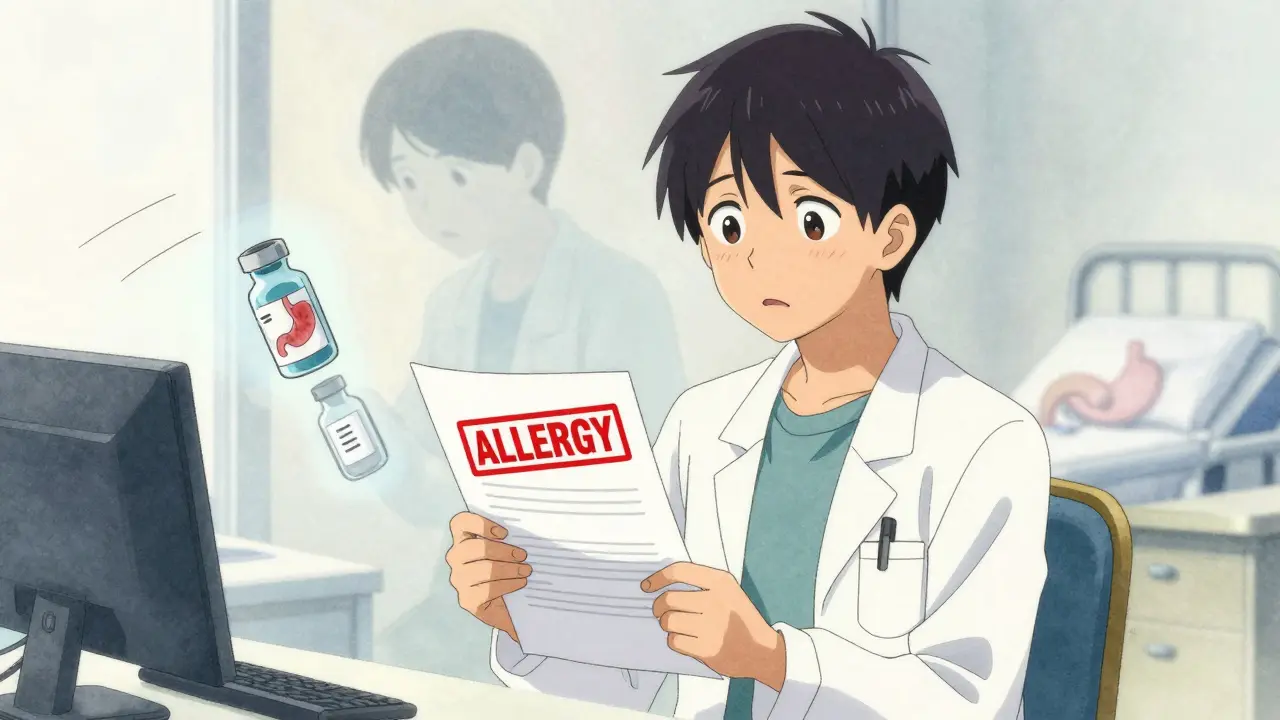
When you’ve had a bad reaction to a medication, it’s natural to want to avoid anything similar. But not all reactions mean you need to avoid an entire drug family. Many people are told to steer clear of penicillin, sulfa drugs, or NSAIDs after a rash or stomach upset-only to later find out they could have safely taken them. The truth is, severe drug reaction doesn’t always mean lifelong avoidance. Knowing when to stop a whole class of drugs-and when you don’t have to-can save you from unnecessary treatment delays, limited options, and even worse health outcomes.
What Counts as a Severe Drug Reaction?
Not every side effect is a red flag. If you got a little nausea after taking ibuprofen, that’s not the same as breaking out in hives, swelling your throat, or losing large patches of skin. The FDA defines a severe reaction as one that’s life-threatening, requires hospitalization, causes lasting disability, or leads to birth defects. In real terms, that means:- Anaphylaxis-trouble breathing, dropping blood pressure, swelling of the tongue or throat
- Stevens-Johnson syndrome or toxic epidermal necrolysis-widespread blistering and peeling skin
- DRESS syndrome-rash, fever, swollen lymph nodes, and organ damage (like liver or kidney failure)
- Severe low blood cell counts or liver failure tied directly to the drug
These are rare, but deadly. If you’ve had one of these, you need to avoid the drug class that caused it-no exceptions. But if your reaction was just a mild rash, upset stomach, or headache? That’s likely not an immune response. It’s a side effect. And side effects don’t always mean you can’t try another drug in the same family.
Not All Drug Reactions Are Allergies
Most people think a drug reaction means they’re "allergic." But true drug allergies involve your immune system. That’s when your body mistakes the drug for a threat and attacks it-leading to hives, swelling, or anaphylaxis. These reactions usually happen within minutes to hours after taking the drug.But here’s the catch: 80-90% of reported drug reactions aren’t allergies at all. They’re side effects. For example:
- A rash from amoxicillin? Often just a non-allergic reaction, especially in kids with mono.
- Stomach pain from naproxen? That’s because NSAIDs irritate the stomach lining-not an immune response.
- Dizziness from a blood pressure pill? That’s pharmacology, not allergy.
When doctors label you "allergic" to penicillin because you got a rash as a kid, they’re often wrong. Studies show that 95% of people who think they’re allergic to penicillin can actually take it safely after proper testing. Yet most never get tested. They just live with the label-and miss out on better, cheaper, more effective treatments.
When You Must Avoid the Whole Family
There are some drug families where cross-reactivity is real-and dangerous. If you’ve had a severe reaction, you should avoid the entire group. Here’s where it matters most:- Beta-lactam antibiotics (penicillins, cephalosporins, carbapenems): Cross-reactivity is low (0.5-6.5%), but if you had anaphylaxis to penicillin, avoid all beta-lactams until tested. The risk isn’t high, but the consequences are.
- Sulfa antibiotics (like Bactrim or Septra): If you had Stevens-Johnson syndrome or DRESS from a sulfa antibiotic, avoid all sulfonamide antibiotics. But note: sulfa-containing diuretics (like furosemide) or diabetes drugs (like glipizide) are chemically different and usually safe.
- NSAIDs: If you have aspirin-exacerbated respiratory disease (AERD)-think asthma flare-ups, nasal polyps, and congestion after taking aspirin or ibuprofen-you need to avoid all traditional NSAIDs. But COX-2 inhibitors like celecoxib may be safe.
- Anticonvulsants (like carbamazepine, phenytoin): If you had SJS or DRESS from one, avoid the entire class. The risk of recurrence is high.
- Allopurinol: If you had DRESS or TEN from this gout drug, never take it again. It’s one of the most common causes of fatal skin reactions.
For these, avoidance isn’t just cautious-it’s life-saving. The mortality rate for toxic epidermal necrolysis (TEN) is 30-50%. Once you’ve had it, you don’t risk it again.
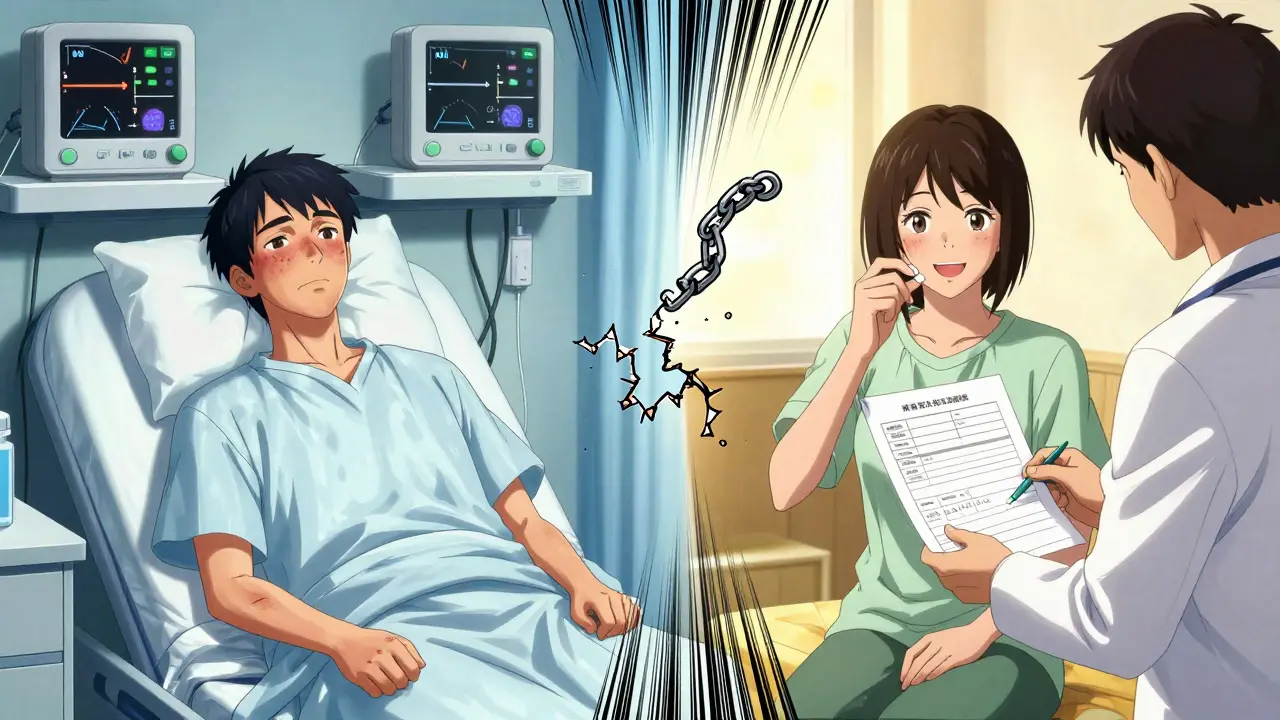
When You Don’t Have to Avoid the Whole Family
Many people are told to avoid entire drug classes based on mild reactions. That’s often unnecessary-and harmful.- Penicillin rash without other symptoms: If you only got a flat, non-itchy rash as a child, you likely aren’t allergic. Many people outgrow it. Skin testing or an oral challenge can confirm safety.
- Statins: If you got muscle aches from one statin (like atorvastatin), you can often switch to another (like rosuvastatin). Cross-reactivity is only 10-15%.
- SSRIs: If fluoxetine gave you nausea, sertraline or escitalopram might not. Side effects vary by drug, not class.
- Sulfa non-antibiotics: Furosemide (a water pill), sulfonylureas (for diabetes), and celecoxib (a painkiller) are not the same as sulfonamide antibiotics. They’re chemically different. Avoiding them all is outdated.
One patient in Perth told me she avoided all antibiotics for 15 years after a mild rash from amoxicillin as a child. When she finally got tested, she was cleared to take penicillin. She got her first full course of antibiotics for a sinus infection in decades-and it worked perfectly.
How to Know What to Avoid-Step by Step
If you’ve had a serious reaction, here’s how to figure out your next move:- Write down exactly what happened: When did the reaction start? What symptoms? Did you need epinephrine? Were you hospitalized? The more detail, the better.
- Find out what drug caused it: Was it a single drug or a class? Penicillin? Amoxicillin? Bactrim? Don’t guess.
- Ask for a referral to an allergy specialist: Not all doctors know how to test for drug allergies. An allergist can do skin tests, blood tests, or even a controlled drug challenge to confirm if you’re truly allergic.
- Get your records updated: If you’re not allergic, have your doctor remove the "allergy" label from your medical file. Many hospitals still flag you based on outdated info.
- Consider a medical alert bracelet: If you truly have a life-threatening allergy, wear one. But don’t wear one if you don’t need to-it can lead to unnecessary treatment delays.
Most people don’t realize that drug allergy alerts in hospital systems are often wrong. A 2021 study found that only 28% of allergy entries in electronic records had enough detail to be useful. That means doctors are guessing. Don’t let that be you.
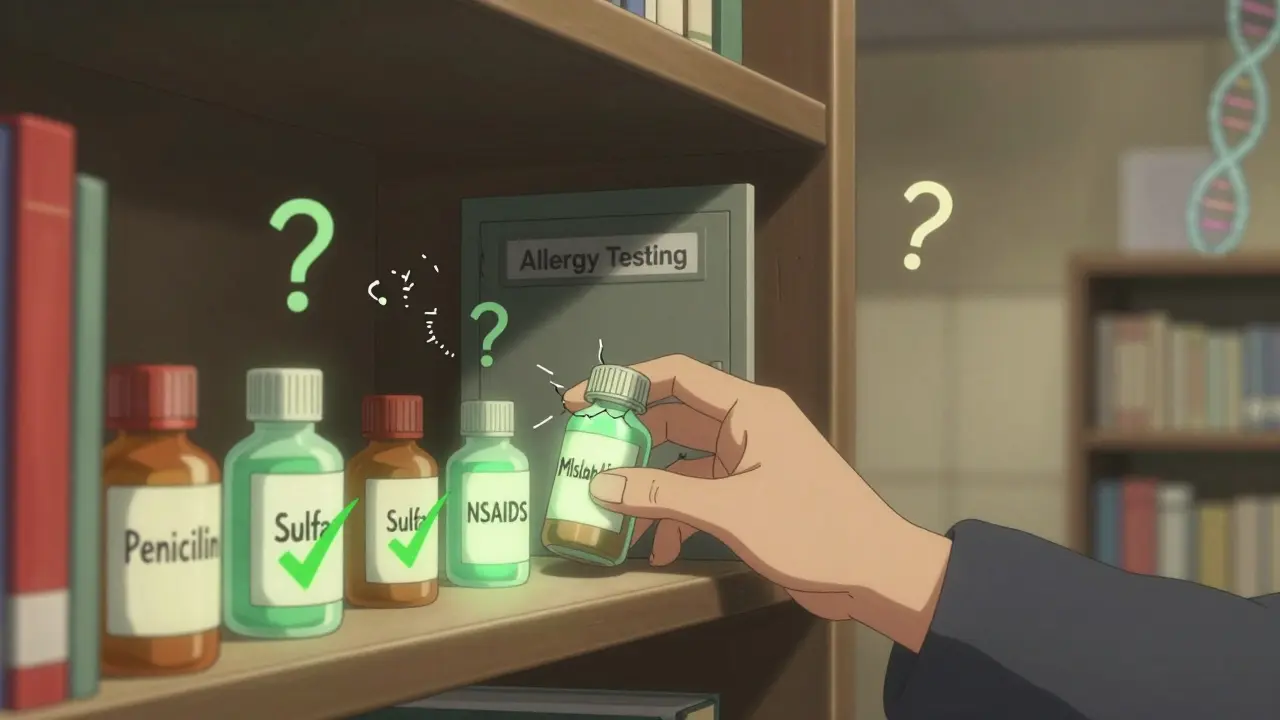
What’s Changing in Drug Safety
The field is shifting fast. Five years ago, doctors assumed you were allergic if you’d ever had a rash. Now, they’re testing. Here’s what’s new:- Genetic testing: For drugs like abacavir (used for HIV), doctors test for the HLA-B*57:01 gene before prescribing. If you don’t have it, you can take it safely-no fear of reaction.
- Component-resolved diagnostics: New blood tests can now pinpoint exactly which part of a drug triggers your immune system. This means you might avoid one penicillin derivative but safely take another.
- AI tools: Hospitals in the U.S. and Australia are using AI to predict cross-reactivity risks. One trial at Mayo Clinic cut inappropriate avoidance by 41%.
- De-labeling programs: Over 87% of major hospitals now have formal penicillin allergy assessment programs. You can get tested, often for free, through your GP or hospital.
The goal isn’t to avoid drugs. It’s to avoid unnecessary avoidance.
What Happens If You Avoid Too Much?
Avoiding entire drug classes without reason has real consequences:- You get less effective drugs
- You pay more (alternative antibiotics can cost 3-5x more)
- You face longer hospital stays
- You’re more likely to get antibiotic-resistant infections
A 2022 survey found that patients with incorrect drug allergy labels waited an average of 3.2 days longer for proper treatment. That delay can turn a simple infection into a serious one.
And here’s the kicker: the drugs you’re switched to instead? They’re often broader-spectrum antibiotics. That means more harm to your gut microbiome, more risk of C. diff infection, and more antibiotic resistance down the line.
Bottom Line: Don’t Assume-Find Out
If you’ve had a severe drug reaction, don’t panic. Don’t assume you’re allergic for life. Don’t let a label from 20 years ago control your health today.Ask yourself:
- Was it a true allergic reaction-or just a side effect?
- Did I need emergency treatment?
- Was it a skin reaction, or something life-threatening?
- Has anyone ever tested me?
If the answer to any of those is "I don’t know," it’s time to see an allergy specialist. You might be avoiding a whole class of safe, effective drugs for no reason. And that’s not just inconvenient-it’s dangerous.
Don’t let outdated labels keep you from the care you need. Get tested. Get informed. Get back to living without fear.
Can I ever take a drug from a family I had a reaction to?
Yes, in many cases. If your reaction was mild (like a rash without breathing issues), you may not be truly allergic. An allergist can perform skin tests, blood tests, or a supervised drug challenge to see if you can safely take the drug again. Up to 85% of people with low-risk histories pass these tests.
Is a sulfa allergy the same for all sulfa drugs?
No. Sulfa antibiotics like Bactrim and Septra are the main culprits in severe reactions. But sulfa-containing drugs for diabetes (glipizide), water retention (furosemide), or pain (celecoxib) have a different chemical structure. You can usually take these safely-even after a severe reaction to a sulfa antibiotic.
How common are true drug allergies?
True IgE-mediated drug allergies are rare-only about 5-10% of reported reactions. Most people labeled "allergic" aren’t. Penicillin is the most mislabeled drug: 95% of people who think they’re allergic to it can actually take it safely after testing.
What should I do if my doctor refuses to test me?
Ask for a referral to an allergist or immunologist. Many hospitals now have dedicated drug allergy clinics. If your doctor won’t refer you, go to a walk-in clinic or urgent care and ask for a specialist referral. You have the right to be properly evaluated-not just labeled.
Can I outgrow a drug allergy?
Yes, especially with penicillin. Studies show that 80% of people who had a penicillin allergy as a child lose it within 10 years. The immune system changes over time. If you haven’t taken the drug in over a decade, testing is safe and recommended.
Are there tests for drug allergies?
Yes. Skin tests (like for penicillin) and blood tests (like ImmunoCap) can detect true IgE-mediated allergies. For non-IgE reactions (like DRESS or SJS), there’s no blood test yet-but doctors use detailed history and sometimes controlled drug challenges under supervision to confirm safety.
What if I need a drug from a family I’m allergic to?
If you have a life-threatening condition and no safe alternative exists (like needing penicillin for endocarditis), doctors may use desensitization. This is a controlled process where you get tiny, increasing doses of the drug over hours under close monitoring. It’s not for everyone, but it can be life-saving.
Hakim Bachiri
December 28, 2025 AT 21:05They're testing you? Sure. After they've already made $2 billion off your unnecessary prescriptions. Don't be fooled.
Celia McTighe
December 29, 2025 AT 17:12If you think you’re allergic-get tested. It’s not just about saving money. It’s about saving your health. Thank you for this.
Ryan Touhill
December 31, 2025 AT 07:44And yet, the fact that AI-driven cross-reactivity models are now reducing inappropriate avoidance by 41% suggests that data, not dogma, may yet save us. One wonders why such tools aren’t mandated nationwide. Or perhaps the answer lies in the profit margins of broad-spectrum antibiotics.
Teresa Marzo Lostalé
January 1, 2026 AT 11:50It’s funny how we label things as "allergies" like they’re curses from the gods. Maybe we’re just… different. And that’s okay. We don’t need to fear our bodies. We need to listen to them. And maybe, just maybe, ask a specialist before we let a 20-year-old chart note decide our future.
ANA MARIE VALENZUELA
January 3, 2026 AT 00:03And don’t even get me started on sulfa non-antibiotics. People avoid furosemide like it’s poison because they got a rash from Bactrim in 1998? That’s not caution. That’s ignorance dressed up as safety. Stop being dramatic. Get tested.
Bradly Draper
January 3, 2026 AT 01:43Gran Badshah
January 4, 2026 AT 03:38Ellen-Cathryn Nash
January 4, 2026 AT 16:20Not everyone’s story is the same. Some people can be tested. Some can’t. And that’s okay. But don’t assume your story is mine. Don’t tell me to "just get over it." Some reactions don’t fade. They haunt you.
Samantha Hobbs
January 4, 2026 AT 19:59Nicole Beasley
January 6, 2026 AT 06:13