

Medication Risk-Benefit Analysis Tool
Use this tool to organize your thoughts and create a specific list of questions to ask your doctor about a medication's boxed warning.
1. Identify the Factors
2. Personal Health Context
Select any factors that apply to you to refine your doctor's discussion points:
Your Personalized Discussion Guide
| Feature | Standard Warning | Boxed Warning (Black Box) |
|---|---|---|
| Visual Appearance | Standard text in the pamphlet | Bold border surrounding the text |
| Severity | Common or mild side effects | Life-threatening or permanently disabling risks |
| FDA Mandate | Required based on trial data | Highest level of safety alert required |
| Prescriber Action | General awareness | Mandatory risk-benefit review with patient |
Why do medications get a boxed warning?
Drugs don't usually start with a boxed warning. Most medications go through a rigorous five-stage process: lab research, preclinical animal testing, human clinical trials, FDA review, and finally, post-marketing safety monitoring. Most of the time, the "black box" appears during that last stage. Why? Because clinical trials only involve a few thousand people. Some side effects only show up when millions of people start taking a drug in the real world. The FDA steps in and mandates these warnings in four specific scenarios:- When the risk of a serious reaction might actually outweigh the benefits of the drug for certain people.
- When a dangerous side effect can be avoided if the drug is used in a very specific way.
- When the drug is approved only for a very restricted use.
- When the drug is particularly dangerous for specific groups, such as children, the elderly, or pregnant women.
Does a black box warning mean you should stop your medication?
This is the biggest fear patients have. You see the warning, you panic, and you want to throw the bottle in the trash. But here is the reality: a boxed warning is a tool for risk management, not a "do not use" sign. Many life-saving drugs carry these warnings. For example, some powerful antidepressants or cardiovascular medications might have a warning about a specific rare reaction, but for the average patient, the benefit of treating a heart condition or severe depression far outweighs that small risk. Think of it like a seatbelt. A car manual might have a warning that airbags can cause injury in specific positions, but that doesn't mean you shouldn't drive the car; it means you should sit properly and be aware of the risk. In medical terms, this is called a risk-benefit analysis. Your doctor looks at your specific health history and decides if the drug's ability to treat your illness is more important than the risk mentioned in the box.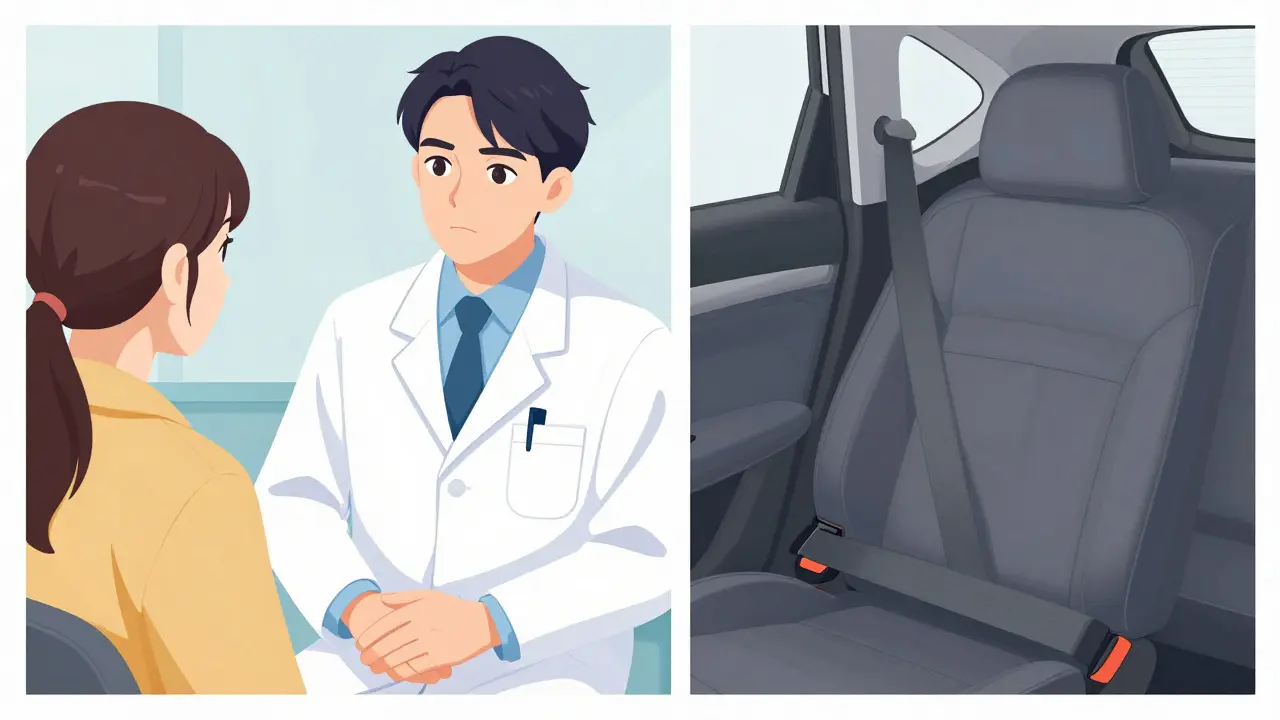
How these warnings change the way doctors prescribe
When a drug gets a boxed warning, it changes the clinical workflow. Doctors are required to review the risks and benefits with the patient before writing the prescription. It's no longer just "take this for your blood pressure"; it becomes a detailed conversation about what to watch for. These warnings have a massive impact on the pharmaceutical market. When the drug rosiglitazone received a boxed warning, its use dropped by roughly 70%. However, it's interesting to note that even with such a huge drop, millions of people continued to use it because there were no safer alternatives for their specific needs. To add an extra layer of safety, the FDA often pairs boxed warnings with REMS (Risk Evaluation and Mitigation Strategies). REMS are special programs that might require a doctor to have special certification to prescribe the drug or require the patient to undergo regular blood tests to ensure the drug isn't causing the harm warned about in the box.Common pitfalls and communication gaps
There is a frustrating disconnect between what the FDA intends and what patients actually experience. Statistics show that while nearly 80% of patients want to know about these warnings, fewer than half remember their doctor actually mentioning them. Many people first discover the "black box" by doing a Google search or reading the fine print on the pharmacy insert. This often leads to "internet anxiety," where a patient stops their medication without consulting their provider, which can be more dangerous than the side effect itself. If you find a warning on your medication, don't panic-instead, ask your pharmacist or doctor: "I saw this boxed warning; based on my health history, why is this drug still the safest choice for me?"
What is the future of drug safety alerts?
The static, printed box is starting to feel outdated in a digital world. The FDA is moving toward "dynamic labeling." Imagine a digital medication guide that updates in real-time as new safety data emerges, rather than waiting months for a physical label change. Furthermore, the agency is implementing AI-driven systems to spot safety signals. These tools are designed to identify potential risks about 40% faster than human review alone. This means warnings will be issued sooner, potentially saving lives by catching dangerous trends before they become widespread.Can a black box warning be removed?
It is very rare. The FDA only removes a boxed warning if there is substantial new clinical evidence proving the risk is much lower than previously thought. Since 2000, only about 12 warnings have been completely removed.
Who is the primary audience for these warnings?
While patients read them, they are primarily designed for healthcare providers (prescribers). The goal is to alert the doctor so they can make an informed decision and monitor the patient more closely.
Are black box warnings only for prescription drugs?
Yes, they are most common on prescription medications, though the FDA can use them for over-the-counter drugs if a serious, life-threatening risk is identified.
Does a black box warning mean the drug is unsafe?
Not necessarily. It means the drug has a known risk of a serious side effect. Whether it is "safe" for you depends on your individual health and whether the benefit of the treatment outweighs that specific risk.
How do I find out if my medication has a boxed warning?
You can check the physical medication guide (the folded paper) that comes with your prescription. Look for a bold border surrounding the text. You can also search the FDA's official drug database or ask your pharmacist.
Next steps for patients and caregivers
If you've just discovered a boxed warning on your medication, here is how to handle it based on your situation:If you are currently taking the medication: Do not stop taking it abruptly. Some drugs cause dangerous withdrawal symptoms. Schedule a brief call with your doctor to discuss the risk and why it is managed in your specific case.
If you are starting a new medication: Ask your provider directly: "Does this drug have any boxed warnings? If so, what symptoms should I look for that would indicate a problem?"
If you are a caregiver: Familiarize yourself with the specific "red flag" symptoms listed in the warning. Knowing exactly what to look for allows you to report changes to the doctor immediately, which is often the best way to prevent a serious reaction from becoming a crisis.