
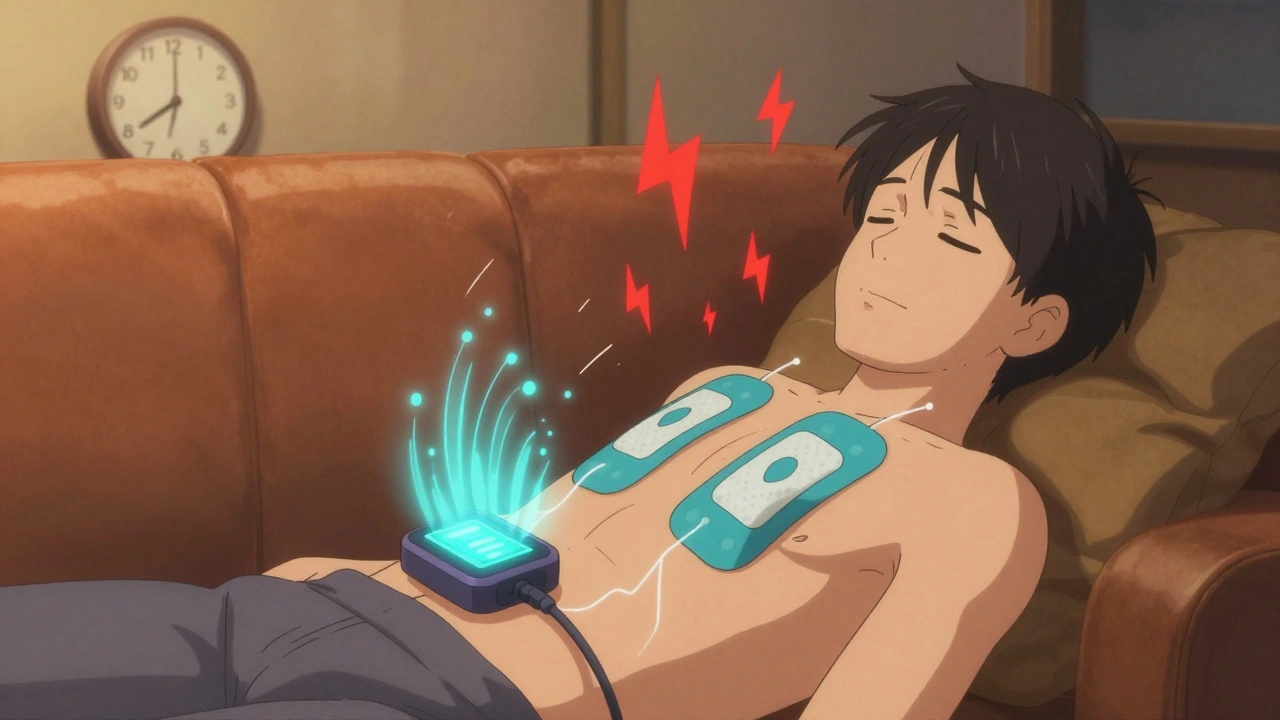
When your back flares up, your knees ache, or labor contractions hit hard, reaching for a pill isn’t always the best or safest option. That’s where TENS therapy comes in - a simple, non-drug way to manage pain using mild electrical pulses. No prescriptions. No opioids. Just a small device, some sticky pads, and a few minutes of your time.
What Is TENS Therapy?
TENS stands for Transcutaneous Electrical Nerve Stimulation. It’s a technique that sends tiny electrical currents through your skin to your nerves. These pulses don’t heal anything - but they can stop pain signals before they reach your brain. The science behind it dates back to 1965, when researchers Ronald Melzack and Patrick Wall proposed the Gate Control Theory of Pain. Think of your nerves like a gate. When pain signals try to get through, TENS activates other nerves - the ones that feel tingling or buzzing - and shuts the gate. It’s like turning on a loud radio to drown out a whisper. Modern TENS units are handheld, battery-powered, and easy to use at home. Most cost between $50 and $200. You stick two or four adhesive electrodes on your skin near the painful area, connect them to the device, and adjust the settings. Within minutes, you might feel a tingling or massaging sensation - and the pain starts to fade.How TENS Actually Stops Pain
Not all TENS is the same. The way it works depends on the settings you use.- High-frequency TENS (50-100 Hz): This is the most common setting. It creates a strong tingling feeling without pain. It works fast - often within seconds - by blocking pain signals in your spinal cord. Best for sudden, sharp pain like a sprained ankle or post-surgery soreness.
- Low-frequency TENS (2-5 Hz): This setting uses stronger pulses that feel like a deep muscle twitch. It doesn’t block pain right away. Instead, it triggers your body to release natural painkillers - endorphins and enkephalins. Think of it like your body’s own morphine. This type works better for long-term, dull aches like arthritis or chronic lower back pain.
- Burst mode: A mix of both. It delivers quick bursts of high-frequency pulses every few seconds. This gives you both immediate relief and longer-lasting endorphin release. Many users find this the most comfortable for all-day use.
What Conditions Does TENS Help With?
TENS isn’t a cure-all, but it’s been shown to help with specific types of pain:- Post-surgical pain: One 2018 study showed patients using TENS needed 27% less opioid medication after surgery. They also had less nausea and drowsiness.
- Osteoarthritis: Especially in the knees and hands. A 2015 review found TENS reduced pain by 36% compared to placebo - that’s better than many over-the-counter creams.
- Lower back pain: For acute flare-ups, TENS can give quick relief. But for long-term chronic pain, it’s less effective than physical therapy or exercise.
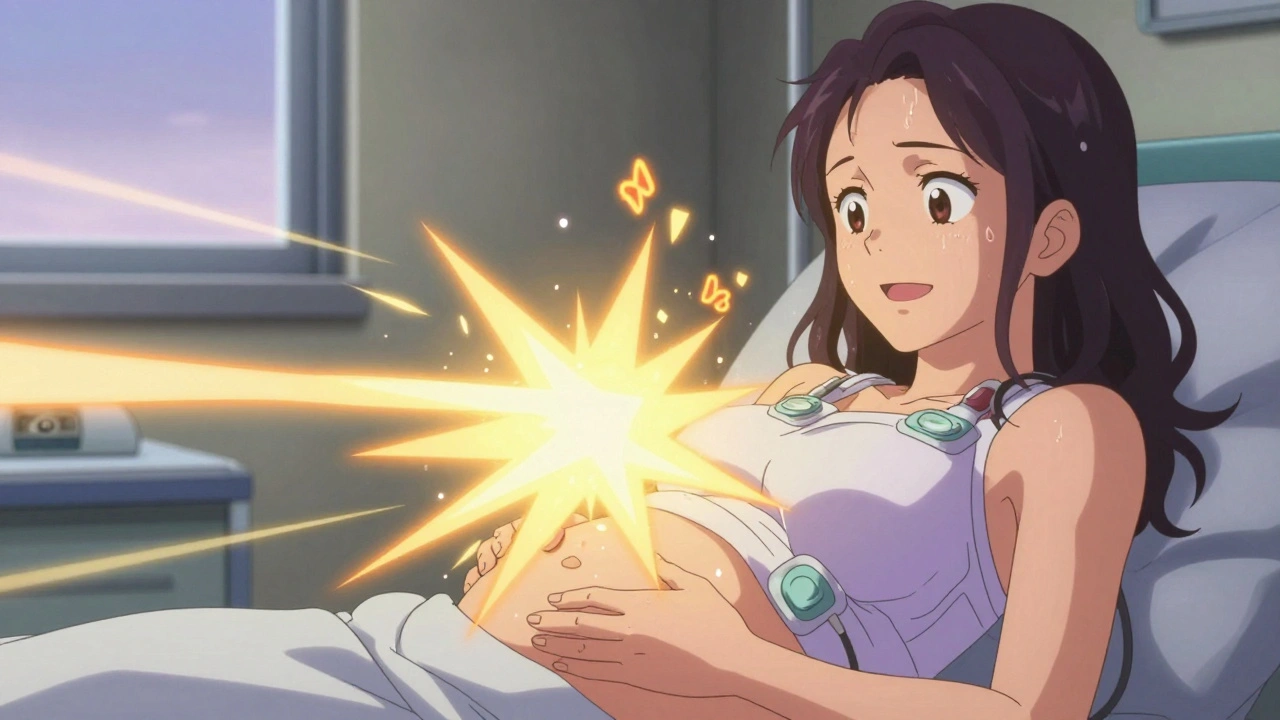
- Labor pain: A 2020 Cochrane Review found women using TENS during childbirth reported 31% more pain reduction than those using no treatment. Many say it helps them feel more in control.
- Neuropathic pain: Like diabetic nerve pain or sciatica. Results vary, but many users report fewer sharp, shooting pains.
Real User Experiences
People who use TENS regularly have strong opinions - mostly positive. On Amazon, over 1,200 reviews highlight the same things: immediate relief, no side effects, and the freedom to move around while using it. One user wrote: “I use mine every morning before work. My shoulder pain used to keep me from lifting my kids. Now I can pick them up without wincing.” But it’s not perfect. Common complaints:- Skin irritation: About 1 in 3 users get redness or itching under the pads. Using conductive gel or switching to hypoallergenic electrodes helps.
- Inconsistent results: If you move around too much, the pads can lose contact. That’s why some people tape them down or use wrap-around bands.
- Battery life: At high settings, most units last 1.5 to 2 hours. You’ll need spare batteries or a rechargeable model.
- Hard to find the right setting: Too low = nothing. Too high = painful. It takes trial and error.
How to Use TENS Correctly
Getting it right matters more than the brand you buy.- Place electrodes near the pain: Put them within 2-3 cm of the sore spot. For lower back pain, place one on each side of your spine. For knee pain, put one above and one below the kneecap.
- Don’t place them over broken skin, metal implants, or your neck/head: Avoid the front of your neck, eyes, or chest if you have a pacemaker.
- Start low, go slow: Turn the device on and slowly increase until you feel a strong but comfortable tingling. If it hurts, turn it down.
- Use it for 20-30 minutes at a time: You can use it up to 3 times a day. Don’t leave it on overnight.
- Try different modes: If high-frequency doesn’t help after 3 sessions, switch to low-frequency or burst mode.
TENS vs Other Pain Treatments
Here’s how TENS stacks up:| Method | Speed of Relief | Duration | Side Effects | Cost (per month) |
|---|---|---|---|---|
| TENS Therapy | Immediate (seconds to minutes) | Hours (after use) | Minimal (skin irritation) | $0-$10 (device amortized) |
| NSAIDs (Ibuprofen) | 30-60 minutes | 4-6 hours | Stomach upset, kidney risk | $10-$25 |
| Opioids | 15-30 minutes | 4-8 hours | Drowsiness, addiction, constipation | $50-$200+ |
| Physical Therapy | Days to weeks | Weeks to months | None | $80-$150 per session |
| Topical Creams | 10-20 minutes | 2-4 hours | Skin rash, smell | $15-$40 |
Who Should Avoid TENS?
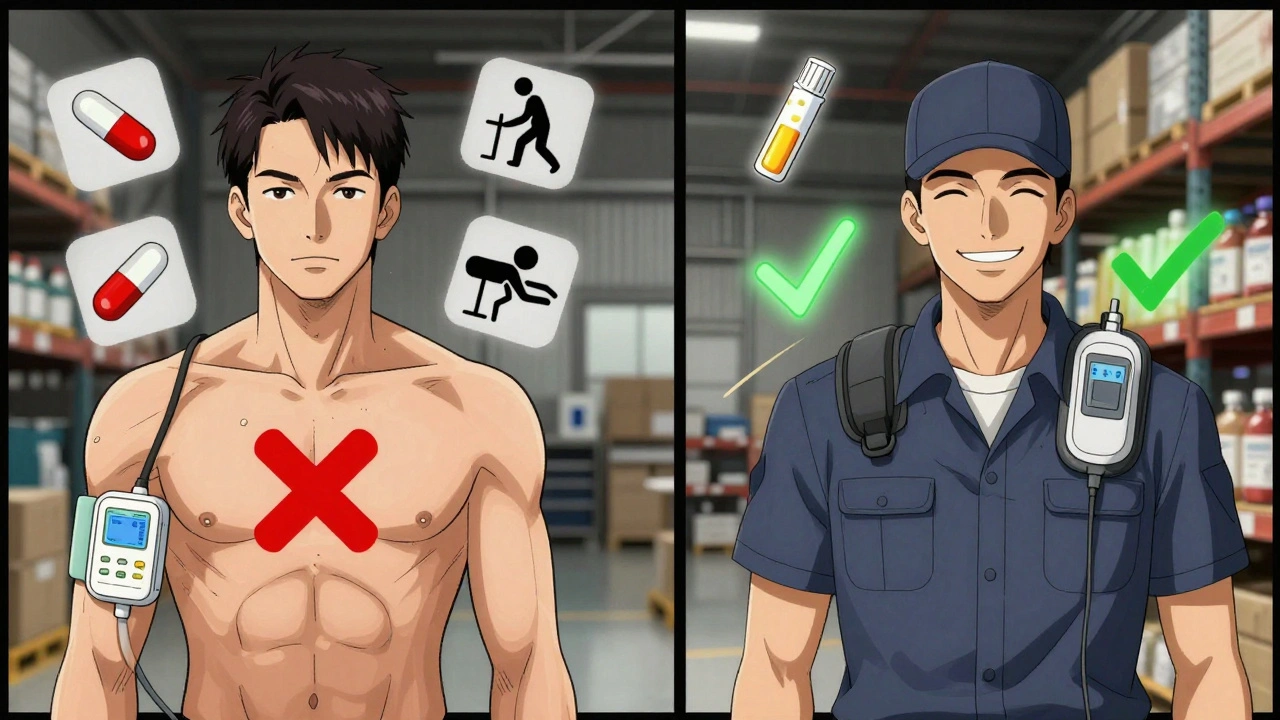
TENS is safe for most people - but not everyone.- Don’t use if you have a pacemaker or implanted defibrillator: The electrical pulses can interfere with the device.
- Avoid during pregnancy: Unless approved by your doctor. Don’t place pads on your abdomen or lower back while pregnant.
- Don’t use on open wounds, rashes, or swollen areas: It can irritate the skin or spread infection.
- People with epilepsy: Some experts warn against using TENS on the head or neck.
- If you’re on opioid medication: Low-frequency TENS may not work as well. Your body’s natural painkillers are already blocked.
The Future of TENS
TENS isn’t stuck in the 1970s. New tech is making it smarter. In May 2023, the FDA cleared the first AI-powered TENS device, NeuroLoop AI. It uses sensors to detect your pain level and adjusts the settings automatically. Early trials showed 44% better pain relief than traditional units. Researchers are also testing “smart electrodes” that monitor your skin’s resistance and adjust the current in real time. No more guessing if the pads are working. The CDC now recommends TENS as a first-line treatment for chronic pain - especially as opioid use declines. By 2025, they predict a 35% rise in TENS use among doctors. Major companies like Amazon are already using TENS in warehouses to reduce work-related injuries. One company reported a 19% drop in lost workdays after handing out TENS units to employees.Final Thoughts
TENS therapy isn’t magic. But it’s one of the few pain tools that’s safe, affordable, and works right away. If you’re tired of pills, worried about side effects, or just want more control over your pain - it’s worth trying. Start with a basic unit. Learn where to place the pads. Be patient. It might take a few tries to get it right. But for millions of people, it’s the difference between spending the day on the couch - and getting up to do what matters.Can I use TENS every day?
Yes, most people use TENS up to three times a day for 20-30 minutes per session. There’s no evidence that daily use causes harm. Just avoid using it for more than 6 hours total per day. If your skin gets red or irritated, take a break for a day or switch to different electrodes.
Does TENS help with nerve pain?
It can, especially for localized nerve pain like sciatica or diabetic neuropathy. High-frequency TENS helps block sharp, shooting pains. Low-frequency TENS may reduce burning or tingling by triggering your body’s natural painkillers. Results vary - about 38% of people with nerve pain get significant relief. It’s not a cure, but many users find it helps them reduce medication use.
Is TENS covered by insurance?
In the U.S., Medicare and some private insurers cover TENS devices under code E0720 if prescribed by a doctor for specific conditions like chronic low back pain or post-surgical pain. Reimbursement is around $150 per unit. You’ll need a prescription and documentation showing it’s medically necessary. Most consumer units aren’t covered - only those sold through medical suppliers.
How long does it take for TENS to work?
High-frequency TENS works almost instantly - often within 10-30 seconds. You’ll feel the tingling and pain reduction right away. Low-frequency TENS takes longer - 20-40 minutes - because it relies on your body releasing endorphins. For best results, use it for at least 20 minutes per session. Don’t give up after one try.
Can I use TENS with other pain treatments?
Yes, TENS works well alongside physical therapy, stretching, heat packs, and even some medications. It’s often part of a multimodal plan. But avoid using it with other electrical stimulation devices like EMS (muscle stimulators) at the same time. Also, if you’re on opioids, low-frequency TENS may be less effective. Talk to your doctor if you’re combining treatments.
Do I need a prescription to buy a TENS unit?
No, you can buy TENS units over the counter at pharmacies, online, or medical supply stores. But if you want insurance to cover it, you’ll need a prescription from your doctor. Even without a prescription, it’s smart to ask a physical therapist or pain specialist how to use it properly - placement makes all the difference.
Hamza Laassili
December 13, 2025 AT 01:11Constantine Vigderman
December 13, 2025 AT 04:43Michael Gardner
December 14, 2025 AT 10:48John Fred
December 14, 2025 AT 23:05Harriet Wollaston
December 15, 2025 AT 23:17Lauren Scrima
December 16, 2025 AT 16:31nina nakamura
December 16, 2025 AT 18:42Jamie Clark
December 17, 2025 AT 01:30Scott Butler
December 17, 2025 AT 15:37