

Medication Safety Calculator
This calculator estimates your potential medication safety improvement with telepharmacy based on rural access, medication complexity, and high-risk conditions. Data from studies in the article shows telepharmacy can reduce errors by 15-20% in rural settings.
Your Medication Safety Assessment
Traditional Pharmacy Error Rate: 0.0%
Telepharmacy Error Rate: 0.0%
What Telepharmacy Really Does for Medication Safety
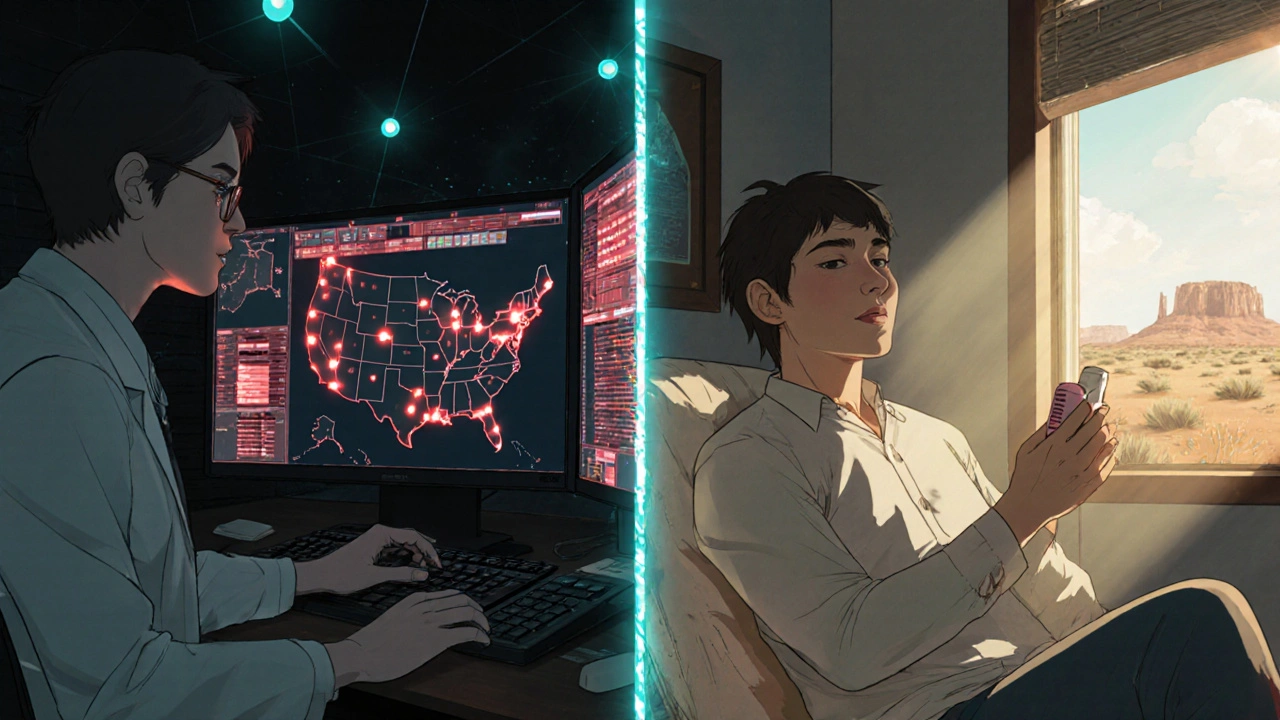
Imagine living in a small town where the nearest pharmacy is 40 miles away. You take warfarin, a blood thinner that needs careful monitoring. Missing a dose or getting the wrong amount can land you in the hospital. Now imagine you can video chat with a licensed pharmacist from your kitchen table, get your prescription filled the same day, and have your dosage reviewed in real time. That’s telepharmacy - and it’s not science fiction. It’s happening right now, in rural clinics, tribal health centers, and remote towns across the U.S.
But here’s the real question: Is it safe?
Early adopters thought telepharmacy was just about convenience. But the data tells a different story. Since 2020, studies have shown telepharmacy isn’t just filling gaps in access - it’s actively improving safety in ways traditional pharmacies can’t always match.
How Telepharmacy Works - And Why It’s Different
Telepharmacy isn’t just a Zoom call with a pharmacist. It’s a full system. At its core, it uses secure video links, electronic prescriptions, automated dispensing machines, and remote verification tools. Most setups follow a hub-and-spoke model: a central pharmacy with trained pharmacists oversees multiple remote locations, often in rural clinics or small retail stores.
Here’s how it works in practice: A patient walks into a clinic with a prescription. A pharmacy technician loads the medication into an automated dispenser. The pharmacist, miles away, reviews the script, checks for interactions, confirms the patient’s identity via video, and approves the fill. The machine releases the bottle. The pharmacist then walks the patient through how to take it - all in 10 to 15 minutes.
Compare that to traditional pharmacies in rural areas, where staffing is sparse and after-hours fills can take hours or even days. One 2021 study found telepharmacy cut approval times from over two hours down to 14-20 minutes. That’s not just faster - it’s life-saving for someone with an urgent infection or a new blood pressure med.
The Safety Numbers Don’t Lie
Let’s cut through the noise. What do the actual studies say about medication errors?
A 2021 systematic review of six major studies - led by Dr. Shweta Pathak and published in the Journal of Health Care for the Poor and Underserved - found telepharmacy matched traditional pharmacies in accuracy. Both hit error rates between 0.1% and 0.7%. That’s not a fluke. It means telepharmacy isn’t risking safety to gain access. It’s achieving the same standard, even in places with no pharmacist on-site.
And here’s where it gets interesting: Telepharmacy actually caught more errors than expected. One South Dakota hub reported catching 1.2 errors per 100 prescriptions. That’s on par with urban pharmacies. But because telepharmacy serves high-risk populations - elderly patients on five or more meds, people with diabetes or kidney disease - those catches matter more.
One 2023 study in JAMA Network Open showed telepharmacy sites reduced medication errors by 15-20% compared to before they were implemented. That’s not just statistical noise. That’s real people avoiding falls, ER visits, or dangerous drug reactions.
Where Telepharmacy Beats Traditional Pharmacy
It’s not just about matching performance. Telepharmacy outperforms in access - and access is a safety issue.
Before telepharmacy, over 1,000 U.S. counties had no pharmacy at all. These are called “pharmacy deserts.” A 2023 study found that states with strong telepharmacy laws saw a 4.5% drop in these deserts within a year. That’s not a small number. It means thousands of people who once went without meds now have reliable access.
And the impact? A 2021 cohort study in Telemedicine and e-Health tracked 3,782 patients. Those with telepharmacy access had a 12.9% increase in hospitalizations over a year. Those without? A 40.2% jump. That’s more than three times higher. Why? Because they missed doses, couldn’t refill, or didn’t get counseling on side effects.
One patient in rural Montana told a Reddit thread: “Being able to video chat about my warfarin dosing without driving two hours has probably prevented at least two ER visits.” That’s not anecdotal. That’s the pattern.
The Hidden Risks - And How They’re Being Fixed
But telepharmacy isn’t perfect. And pretending it is would be irresponsible.
Some studies point to a key weakness: non-verbal cues. A pharmacist can’t see if a patient is shaking, sweating, or avoiding eye contact - signs of anxiety, confusion, or possible substance misuse. Dr. Jerry Fahrni warned in the Journal of the American Pharmacists Association that this gap could lead to missed red flags.
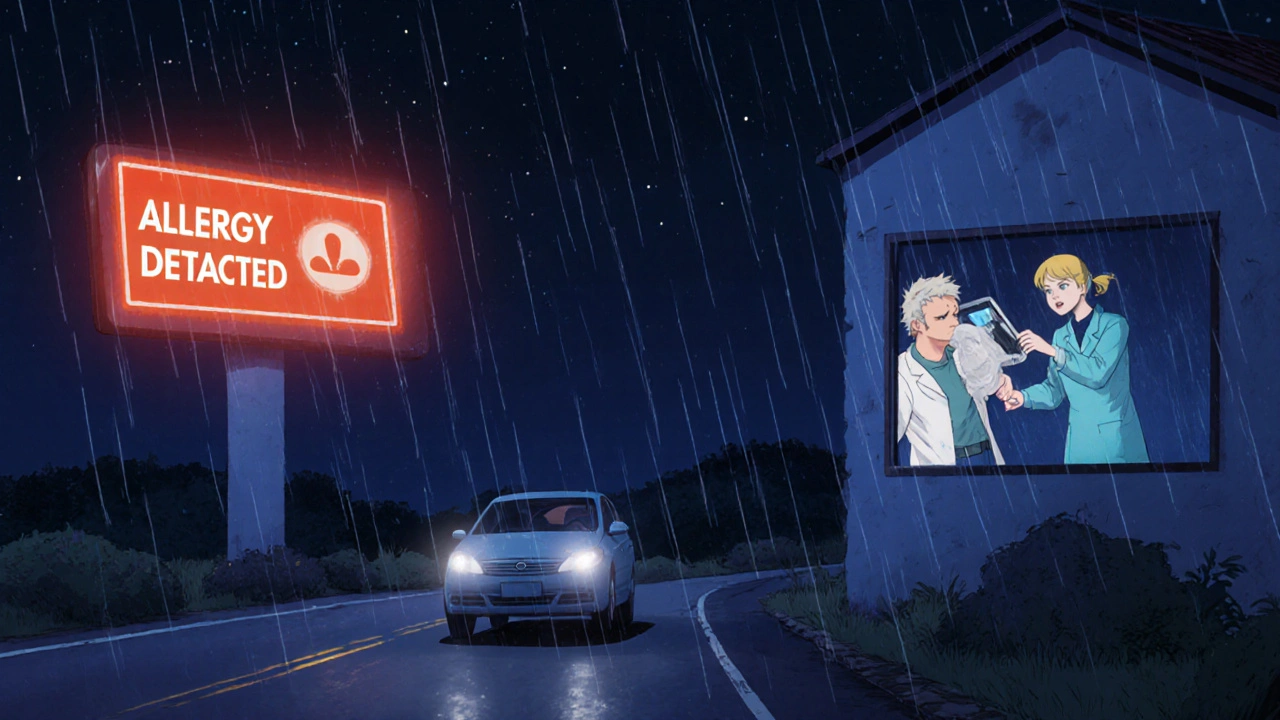
Then there’s tech. A user in North Dakota reported an allergic reaction because the video feed was blurry during their first consultation. The technician didn’t see the rash on their neck. Poor internet. Bad lighting. Simple human error.
That’s why training matters. The American Society of Health-System Pharmacists (ASHP) now recommends 16-24 hours of special training for telepharmacy staff. Sites that followed this saw 22% fewer errors. The Indian Health Service’s program for Navajo Nation communities uses dual verification for high-risk drugs like insulin and opioids. Their error rate? 0.45%. Below the national average.
It’s not the tech that fails. It’s the lack of protocol.
What’s Changing Right Now
Telepharmacy is moving fast - and so are the rules.
In 2022, Medicare expanded reimbursement for telepharmacy services under Part D. That means more clinics can afford to install the systems. In 2023, the FDA launched a national safety monitoring project to track adverse drug events tied to telepharmacy. The Patient-Centered Outcomes Research Institute (PCORI) is funding a $3.2 million, three-year randomized trial across 12 rural communities - the first of its kind to compare safety head-to-head.
And AI is stepping in. Companies like MedsAI are building tools that flag risky prescriptions before they’re even sent to the pharmacist. Early trials show an 18.7% improvement in predicting adverse events. Think of it as a safety net that catches what even the best human might miss.
By 2026, industry analysts predict telepharmacy will reach safety parity with traditional pharmacies. But that’s only if we fix the gaps - broadband access, training, and regulation.
Who Benefits Most - And Who’s Still Left Behind
Telepharmacy isn’t for everyone. It works best where the problem is access, not complexity. A diabetic patient in rural Montana? Perfect candidate. A cancer patient needing complex IV infusions? Not so much.
The biggest winners are elderly patients, low-income families, and Indigenous communities. In the Navajo Nation, where clinics are hours apart, telepharmacy cut refill delays from 72 hours to 20 minutes. That’s not a convenience. It’s dignity.
But here’s the hard truth: 22 states still have no clear telepharmacy laws. And in places with poor internet - parts of Appalachia, the Deep South, and Native reservations - the tech just doesn’t work. No video. No connection. No safety.
Until broadband is treated like electricity - a public utility - telepharmacy will remain a patchwork. It saves lives where it works. But it can’t fix the root problem: inequality in healthcare infrastructure.
What This Means for You
If you’re a patient in a rural area - or caring for someone who is - telepharmacy might be your best option for consistent, safe medication care. Don’t assume it’s less reliable. The data says otherwise.
If you’re a pharmacist or provider, the message is clear: Training and protocols are non-negotiable. Don’t just install the tech. Build the system around it.
If you’re a policymaker, the evidence is loud: Expand reimbursement. Fund broadband. Standardize training. This isn’t a luxury. It’s a public health imperative.
Telepharmacy isn’t replacing pharmacists. It’s extending their reach. And when done right, it’s making medication safety more equitable than ever before.
Is telepharmacy as safe as a regular pharmacy?
Yes, when properly implemented. Multiple studies show telepharmacy matches traditional pharmacies in medication accuracy, with error rates between 0.1% and 0.7%. In some cases, like rural clinics with poor staffing, telepharmacy actually reduces errors by providing consistent pharmacist oversight. The key is proper training, secure technology, and clear protocols.
Can telepharmacy catch drug interactions and allergies?
Absolutely. Telepharmacy systems are integrated with electronic health records and flag potential drug interactions in real time. Pharmacists review every prescription remotely, checking for allergies, duplicate therapies, and risky combinations. One South Dakota program caught 1.2 errors per 100 prescriptions - comparable to urban pharmacies. The limitation isn’t the system - it’s poor video quality or rushed consultations.
Do I need special equipment to use telepharmacy?
No - you just need a smartphone, tablet, or computer with a camera and internet. The telepharmacy site (like a rural clinic) handles the secure video system, automated dispensing, and pharmacy software. You simply show up, log in to the video call, and talk with the pharmacist. No downloads or special hardware are needed on your end.
Are telepharmacy pharmacists licensed in my state?
Yes. All pharmacists providing telepharmacy services must be licensed in the state where the patient is located. Many systems use pharmacists licensed in multiple states or partner with local boards to ensure compliance. If you’re unsure, ask the clinic or pharmacy provider for their licensing details - it’s required by law.
What happens if I have an emergency during a telepharmacy visit?
Telepharmacy sites have emergency protocols. If a patient shows signs of a severe reaction - like trouble breathing, chest pain, or confusion - the pharmacist immediately instructs them to call 911 or go to the nearest ER. Many clinics have direct lines to local emergency services. High-risk patients are flagged in advance, and complex cases are referred to in-person care. Telepharmacy doesn’t replace emergency response - it connects you to it faster.
Ashley Miller
November 20, 2025 AT 06:32Sherri Naslund
November 21, 2025 AT 03:38Martin Rodrigue
November 22, 2025 AT 09:51william volcoff
November 24, 2025 AT 05:18Freddy Lopez
November 24, 2025 AT 06:01Brad Samuels
November 25, 2025 AT 20:32Mary Follero
November 27, 2025 AT 02:06Will Phillips
November 29, 2025 AT 00:32Arun Mohan
November 29, 2025 AT 06:52Tyrone Luton
November 30, 2025 AT 07:14Jeff Moeller
December 1, 2025 AT 04:02Herbert Scheffknecht
December 2, 2025 AT 23:35