
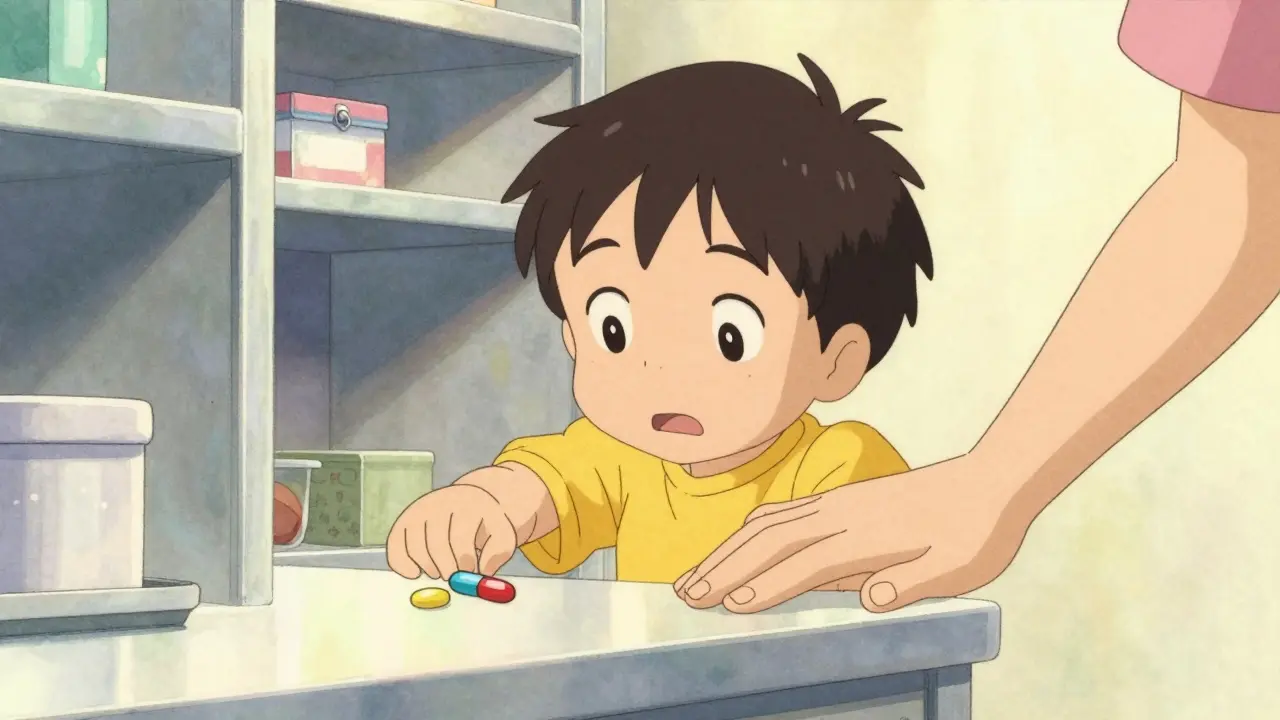
Every year, over 60,000 children under age five end up in emergency rooms because they accidentally swallowed medicine. Not because they were being rebellious. Not because they were curious about science. But because they thought it was candy.
Medicines aren’t toys. They’re not snacks. And yet, to a young child, a brightly colored pill or sweet-tasting syrup looks exactly like one. That’s why teaching kids about medication safety isn’t optional-it’s lifesaving. And it has to start early, at home and in school.
Why Kids Mistake Medicine for Candy
It’s not just about looks. Flavors matter too. Many pediatric medicines are designed to taste good so kids will take them. That’s smart from a medical standpoint, but dangerous from a safety one. A 2021 FDA study found that 78% of toddlers aged 2 to 3 copied adult behavior within a minute after seeing someone take medicine. If you pop a pill in front of your child while brushing your teeth, they’ll try to do the same.
And it’s not just home. Grandparents, babysitters, even teachers sometimes store medicine in purses, on bedside tables, or in kitchen drawers-places kids can reach. The CDC reports that 63% of grandparents keep medications in accessible bags or suitcases when kids visit. That’s not negligence. It’s habit. And habits kill.
The fix? Start with language. Never call medicine “candy.” Never say “this will taste good” or “it’s like a treat.” Instead, say: “This is medicine. It helps you feel better, but only grown-ups can give it to you.” Repeat it. Every time. Even if it feels silly.
What Kids Should Learn at Each Age
Children don’t learn safety the same way adults do. Their understanding grows with their brain. The FDA breaks it down by age, and schools are starting to follow suit.
Age 3: At this stage, kids can’t read, but they can follow simple rules. Teach them: “If you find a pill, give it to a grown-up. Don’t put it in your mouth.” Role-play it. Hide a fake pill (a colored marble works) and ask them what to do. Praise them every time they hand it over.
Age 5: Now they can recognize names and pictures. Help them put their name on their medicine bottle with a sticker. Show them how to check the label with you. Ask: “Who is this medicine for?” Let them answer. If they say “me,” they’re learning. Also, teach them to tell an adult if they feel sick after taking medicine-even if they think they did something wrong.
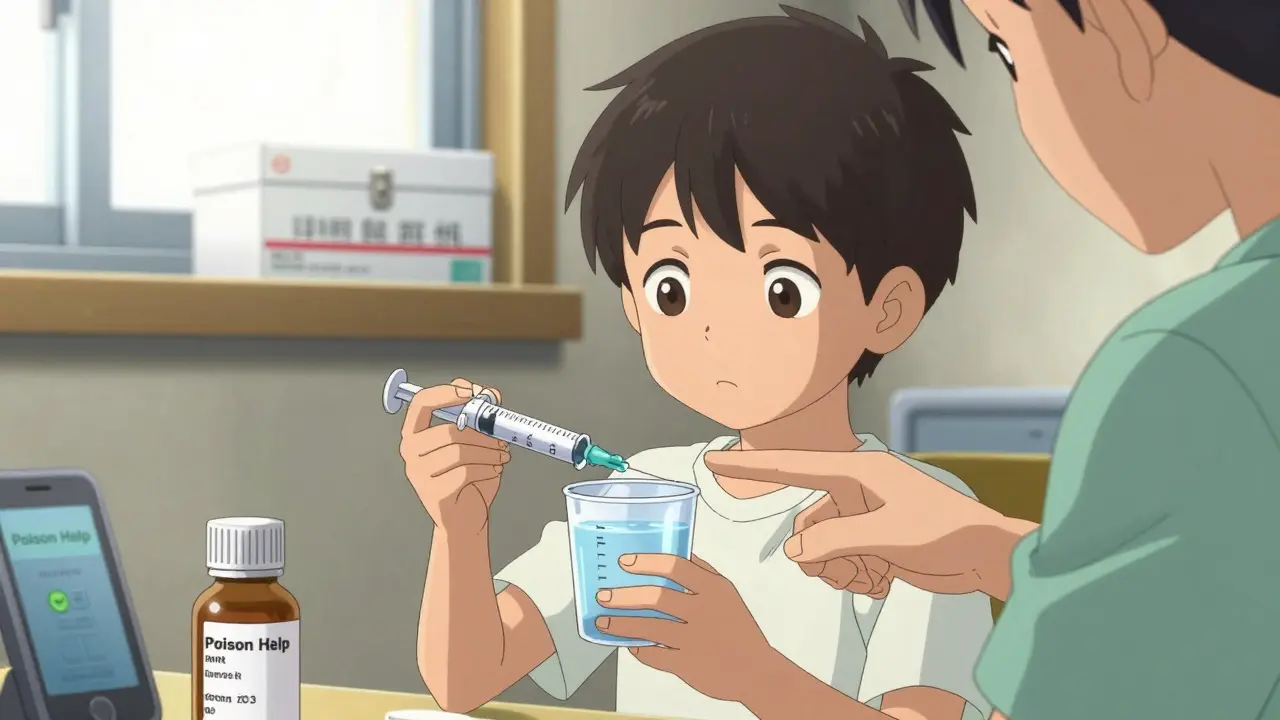
Age 6: They can start reading simple labels. Sit with them while you give medicine. Point to the dosage: “This says 5 mL. We use the syringe, not the spoon.” Show them how to read the numbers. Let them hold the syringe (empty) and practice pouring into a cup. This builds trust and control.
Age 7: They can understand school rules. Ask them: “Who gives you medicine at school?” “What happens if someone else tries to give you medicine?” Role-play a scenario where a classmate offers them a pill. Teach them to say, “No, I need to ask my teacher.”
Age 8: Weight matters. If your child takes medicine daily, tell them their weight. “You weigh 55 pounds, so we give you 10 mL, not 15.” This helps them understand why dosing isn’t the same for everyone. They’ll start to feel responsible-and they should.
How Schools Are Step by Step Getting It Right
Not every school has a nurse. In fact, only 39% of U.S. schools have a full-time one. That doesn’t mean safety stops at the classroom door. Programs like Generation Rx’s “Medication Safety Patrol” are designed for teachers-even those with no medical training.
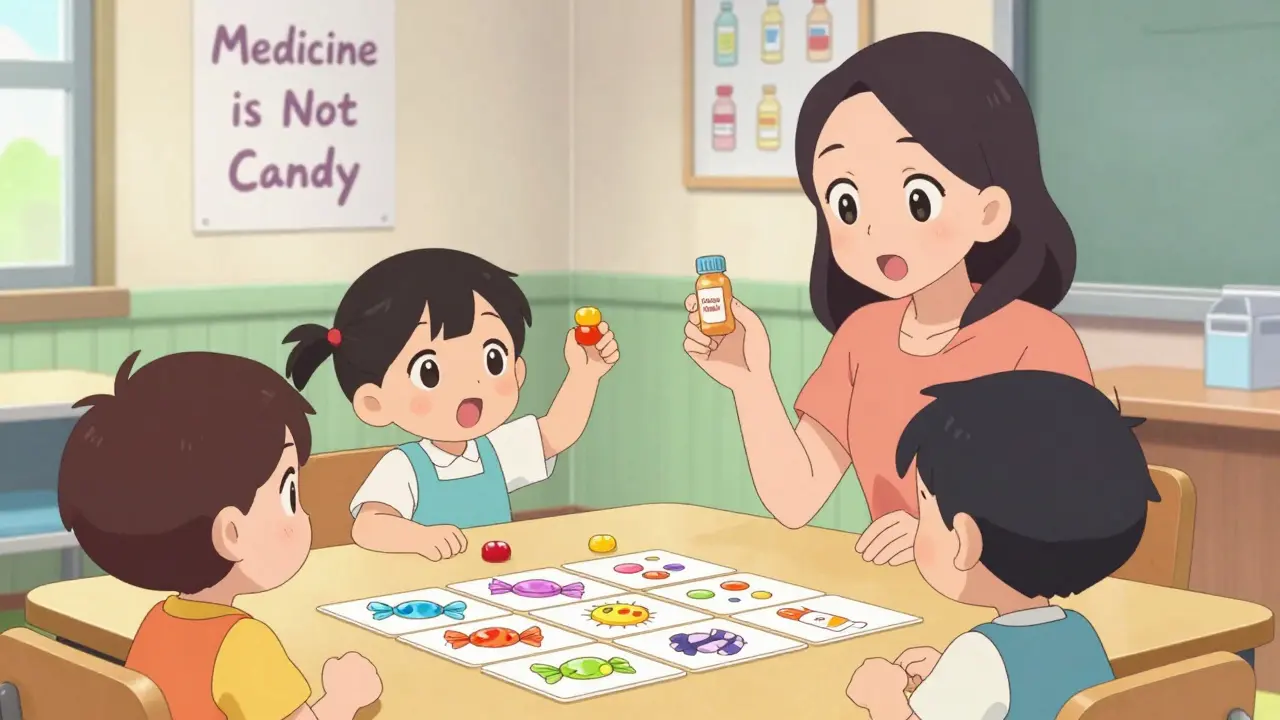
Their toolkit includes 12 activities for kindergarten through fifth grade. One game uses cards with pictures of candy and medicine. Kids sort them into two piles. Another uses a “safety detective” theme: kids find hidden medicine bottles around the classroom and identify if they’re stored safely.
Head Start programs go further. By federal law, every staff member must complete 8 hours of training on medication handling, labeling, and emergency response. They learn how to log every dose, recognize allergic reactions, and dispose of expired pills properly. These aren’t nice-to-haves. They’re required.
And it works. In Columbus City Schools, after rolling out Generation Rx’s program, medication-related incidents dropped by 34% over two years. Eighty-nine percent of students could correctly tell medicine from candy after the lessons.
Storage Is the First Line of Defense
Teaching kids not to touch medicine is important. But stopping them from ever getting to it is better.
Child-resistant caps? They’re not enough. A 2023 CDC study found that only 29% of parents who rely on those caps store medicine safely. But 86% of parents who use a locked box do.
Lock boxes don’t need to be expensive. Look for ones that meet ASTM F2057-22 standards-they’re designed to resist kids under five. Keep them up high, away from windows, and out of sight. Not on the counter. Not in the purse. Not in the bathroom cabinet.
And don’t forget the medicine cabinet in the guest bathroom. That’s often the most dangerous spot. Kids think it’s a toy box. Lock it too.
Every home should have a poison control number saved in every phone: 800-222-1222. Program it. Set it as a contact named “Poison Help.” Teach your child to call it if they think they swallowed something wrong. Even if they’re scared. Even if they think they’re in trouble. That number saves lives.
What to Do When Things Go Wrong
Accidents happen. Even the best-prepared families have moments of distraction. If your child swallows medicine they shouldn’t, don’t wait. Don’t call your pediatrician first. Don’t Google it. Call Poison Help immediately.
Ninety-one percent of calls about children’s medicine exposures happen within one hour of the incident. Every second counts. The poison control center doesn’t judge. They don’t ask why. They give you clear, step-by-step instructions.
Keep the medicine bottle handy. If they swallowed a pill, bring it with you to the ER. Know the name, the dose, and the time. Write it down. Don’t rely on memory.
And if your child is showing signs of trouble-drowsiness, vomiting, trouble breathing-don’t wait. Call 911. Don’t try to make them throw up. Don’t give them milk or water unless told to. Follow the experts’ instructions.
Where the System Still Falls Short
Most programs stop at age 10. That’s a problem.
Prescription misuse among teens is the second-leading cause of unintentional injury death for 15- to 19-year-olds. Teens aren’t taking candy. They’re taking their parents’ painkillers, ADHD meds, or anxiety pills because they think it’s harmless. Or because they’re stressed. Or because they don’t know the risks.
Current safety programs focus on accidental ingestion. But teens are making choices. And they need different lessons: how to recognize addiction signs, why sharing pills is dangerous, how to say no, and where to get help.
There’s also a gap in rural schools. In 68% of rural districts, there’s no consistent nursing staff. Teachers are left to manage insulin shots, asthma inhalers, and seizure meds with no training. The National Association of School Nurses is working on standardized competencies for elementary students, but they won’t be ready until 2025.
And then there’s the rise of flavored liquid medications. Brightly colored, candy-like syrups are behind a 45% increase in poisonings among kids under five. Experts are pushing for bitterants-tasteless, nasty additives-to be added to all pediatric liquids. It’s not a perfect fix, but it’s a step.
What You Can Do Today
You don’t need a degree in pharmacology to keep your child safe. You just need consistency.
- Lock all medicines in a high, locked box-not just the scary ones. Vitamins, cough syrup, and aspirin can kill too.
- Use an oral syringe, not a teaspoon. Household spoons can be off by up to 98%.
- Never take medicine in front of kids under 4. Even if it’s just one pill.
- Teach your child the phrase: “Medicine is not candy.” Say it every time you give it.
- Save 800-222-1222 on every phone in your house. Teach your child how to use it.
- Ask your child’s school: “Do you have a medication safety program?” If not, bring them the Generation Rx toolkit. It’s free.
Medication safety isn’t a one-time lesson. It’s a daily practice. Like buckling a seatbelt. Like washing hands. Like looking both ways before crossing the street. It’s not about fear. It’s about responsibility.
Your child doesn’t need to be a pharmacist. They just need to know: don’t touch what doesn’t belong to you. And if you’re not sure-ask an adult.
At what age should I start teaching my child about medication safety?
Start as early as age 3. Even toddlers can learn simple rules like “If you find a pill, give it to a grown-up” and “Medicine is not candy.” Use role-playing with safe objects like colored marbles to make it concrete. The goal isn’t to make them experts-it’s to build a habit of asking before touching.
Is child-resistant packaging enough to keep kids safe?
No. Child-resistant caps are designed to slow down kids, not stop them. Many children can open them in under a minute. The CDC found that only 29% of homes using child-resistant caps store medicine safely. Lock boxes that meet ASTM F2057-22 standards are far more effective-86% of parents using them keep medicine out of reach.
Can I use a kitchen spoon to measure my child’s medicine?
Never. Household spoons vary in size and can lead to 40-98% dosing errors. Always use the oral syringe that comes with the medicine. Pharmacies often give them out for free. If you don’t have one, ask for it. A wrong dose can be dangerous-even deadly.
What should I do if my child swallows medicine they shouldn’t have?
Call Poison Help immediately at 800-222-1222. Don’t wait for symptoms. Don’t try to make them vomit. Don’t give them milk or water unless told to. Have the medicine bottle ready when you call. Ninety-one percent of poisonings are reported within an hour-speed saves lives.
Do schools have to teach medication safety?
Not all do, but 32 states now require some form of medication safety education in elementary health classes. Programs like Generation Rx offer free, ready-to-use lesson plans for teachers. If your school doesn’t have one, ask for it. The materials are designed for classrooms without nurses and take less than an hour to implement.
Why is it dangerous to take medicine in front of young children?
Children under 4 learn by copying. A 2021 FDA study showed that 78% of toddlers imitated medication-taking behavior within 60 seconds of watching an adult. Even if you think they’re not paying attention, they are. Always take medicine out of sight. Use a locked box. Model the behavior you want them to learn.
Are vitamins safe for kids to take without supervision?
No. Many children’s vitamins look like candy and come in bright colors and fruity flavors. A single bottle of gummy vitamins can contain enough iron to be toxic to a toddler. Store them the same way as prescription meds-in a locked box, out of reach. Treat all supplements like medicine.
What’s the biggest mistake parents make about medication safety?
The biggest mistake is assuming their child won’t get into medicine. It’s not about being careful-it’s about being prepared. Most poisonings happen in homes where parents think they’re safe. The fix isn’t perfection. It’s systems: locked storage, clear language, and constant reminders. Make it part of your routine, like locking the door at night.
Medication safety isn’t a topic you cover once and forget. It’s woven into everyday life-how you store pills, how you talk about them, how you respond when things go wrong. The goal isn’t to scare your child. It’s to give them the power to stay safe. And that’s something no app, no gadget, no school program can replace. Only you can do that.
jeremy carroll
December 15, 2025 AT 12:39man i never thought about how candy-flavored meds are basically a toddler trap. my niece took my ibuprofen because it tasted like grape soda. we got lucky. never again.
Sinéad Griffin
December 16, 2025 AT 19:57THIS. IS. NON-NEGOTIABLE. 🇺🇸 If you don’t lock your meds, you’re playing russian roulette with your kid’s life. No excuses. My sister lost her 3-year-old to a gummy vitamin overdose. It wasn’t a mistake. It was negligence. We need mandatory storage laws. Period.
Thomas Anderson
December 17, 2025 AT 12:38use the syringe. always. i used a teaspoon once. my kid got double the dose. ended up in the er. never again. simple fix, huge difference.
Daniel Wevik
December 18, 2025 AT 07:51The data is unequivocal: 78% of toddlers under age three mimic medication ingestion behavior within 60 seconds of adult exposure. This is not anecdotal-it’s neurodevelopmental. The FDA’s behavioral modeling studies confirm that children under four lack the prefrontal inhibition to distinguish therapeutic intent from reward-based consumption. Therefore, pharmacological containment protocols must be institutionalized at the household level. Lockboxes compliant with ASTM F2057-22 are not optional-they are the baseline standard of care. Additionally, language framing must be rigorously controlled: avoid terms like ‘treat’ or ‘sweet’ in pediatric pharmacotherapy discourse. Replace with ‘medication,’ ‘prescribed,’ and ‘adult-only.’ This is not parenting. This is risk mitigation.
Jonny Moran
December 20, 2025 AT 05:04Love how you broke it down by age. My daughter’s preschool just started the ‘Safety Detective’ game from Generation Rx. She came home pointing at the teacher’s purse like, ‘That’s not safe!’ I almost cried. These little things stick. Keep pushing this in schools. It works.
Rich Robertson
December 21, 2025 AT 04:25Just got back from visiting my cousin in rural Kansas. Their school has no nurse. The teacher gives insulin shots with a printed chart and a prayer. We’re talking about life-or-death stuff here, and we’re letting underfunded districts wing it. This isn’t just about kids swallowing pills-it’s about systemic abandonment. We need federal funding for school-based med safety training, not just free toolkits. Real support. Now.
Tim Bartik
December 21, 2025 AT 11:31you people are so overreacting. my grandma kept her pills on the nightstand for 40 years and never had a problem. kids are smart-they know candy from medicine. also, why are we teaching 3-year-olds to read labels? they can’t even tie their shoes. this whole thing is woke overkill. just shut the damn cabinet and stop making everything a crisis.
Daniel Thompson
December 22, 2025 AT 12:22While I appreciate the intent behind this post, the underlying assumption that children are passive vessels of behavioral mimicry neglects the cognitive autonomy emerging in children as young as age 4. Recent peer-reviewed studies in developmental psychology (e.g., Journal of Child Psychology and Psychiatry, 2023) suggest that children can internalize safety protocols not through rote repetition, but through narrative framing-i.e., stories that position them as guardians of their own health. The phrase ‘Medicine is not candy’ is effective, yes, but only when embedded in a broader moral framework: ‘You are the protector of your body.’ This shift from compliance to agency may yield longer-term behavioral retention. Consider integrating child-led safety role-play, where the child becomes the instructor. This is not a flaw in the system-it’s an evolution.