
Personal Medication List: Why Keeping One Saves Lives and Reduces Errors
When you’re taking multiple medications, a personal medication list, a simple, up-to-date record of all the drugs you take, including dosages, reasons, and start dates. Also known as medication reconciliation list, it’s not just paperwork—it’s your lifeline in emergencies, doctor visits, and pharmacy visits. Think about it: if you end up in the ER unconscious, do you know what’s in your system? Do the doctors? Most people don’t. That’s where this list becomes critical.
A personal medication list, a simple, up-to-date record of all the drugs you take, including dosages, reasons, and start dates. Also known as medication reconciliation list, it’s not just paperwork—it’s your lifeline in emergencies, doctor visits, and pharmacy visits. is the foundation of medication safety, the practice of preventing harmful errors when prescribing, dispensing, or taking drugs. It connects directly to avoiding drug interactions, dangerous combinations that can cause organ damage, falls, or even death—like mixing blood thinners with herbal supplements, or stacking sedatives with painkillers. You’ll find posts here about how benzodiazepines, anxiety meds like Xanax that can become deadly when mixed with alcohol or opioids cause ER visits, how feverfew, a natural remedy that increases bleeding risk when taken with warfarin silently raises danger, and how proton pump inhibitors, long-term acid reflux drugs linked to bone fractures and B12 deficiency need careful monitoring. None of this matters if you can’t tell your doctor exactly what you’re taking.
Pharmacists and nurses see it every day: a patient says they take "the blue pill for blood pressure," but they’re actually on three different pills, one expired, one stopped six months ago. That’s not confusion—it’s a pharmacy error, a preventable mistake in dispensing or advising on medication waiting to happen. Your list stops that. It also helps with medication adherence, sticking to your prescribed regimen. If you’re forgetting doses or skipping pills because the regimen is too complicated, your list becomes your reminder system. You’ll find guides here on using DailyMed to verify labels, how telepharmacy reduces mistakes in rural areas, and how automated dispensing cabinets in clinics rely on accurate patient data to work safely.
There’s no app, no smart pillbox, no AI assistant that replaces the simple act of writing down what you take, why, and when. You don’t need fancy tech—you need clarity. Keep it printed. Keep it in your wallet. Update it every time your doctor changes something. Share it with every provider, even if they say they already have it. Because in medicine, the most dangerous thing isn’t the drug—it’s the unknown.
Below, you’ll find real-world guides on how to build and use your list effectively—backed by studies, real cases, and expert advice. No fluff. Just what works.
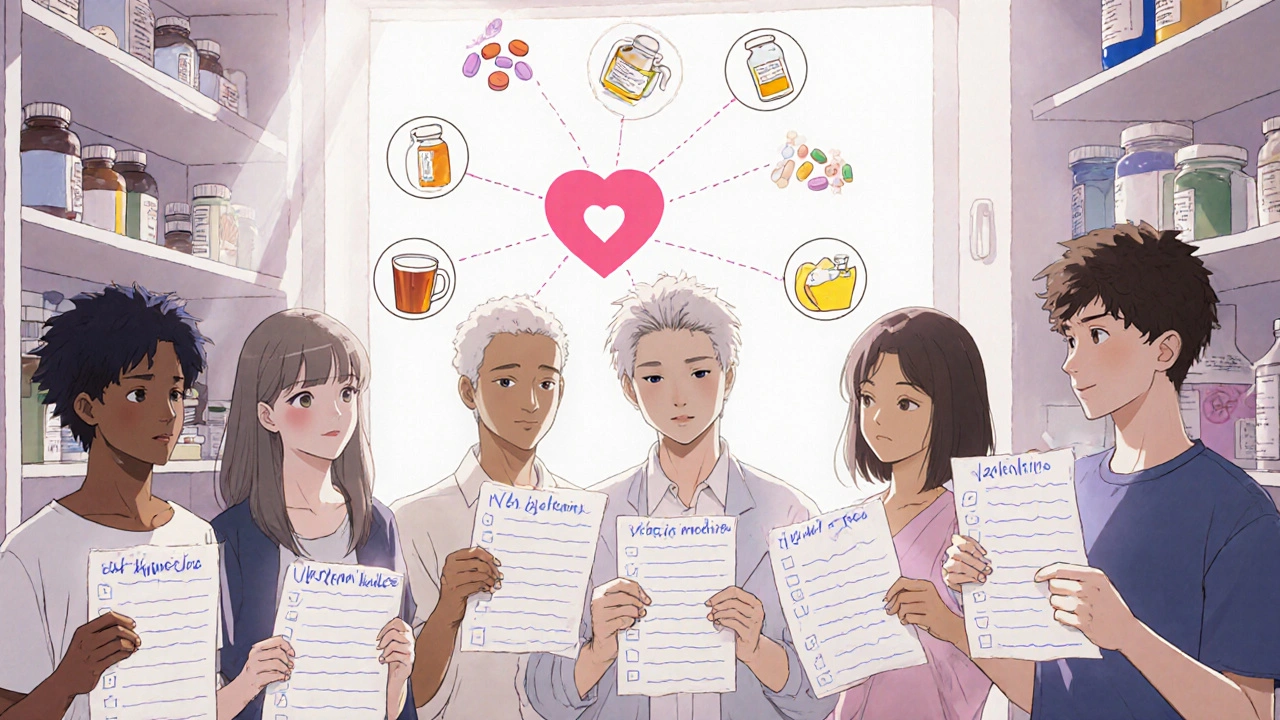
Creating Your Personal Medication List: What to Include for Safety
A personal medication list saves lives by preventing dangerous drug interactions. Learn exactly what to include-prescriptions, OTC drugs, supplements, allergies-and how to keep it updated for maximum safety.