

For decades, if you were pregnant and prescribed a medication, you probably saw a single letter on the label: A, B, C, D, or X. It was simple. But it was also misleading. That old system told you almost nothing about what really mattered - how safe a drug is for you and your baby. The FDA changed all that in 2014 with the Pregnancy and Lactation Labeling Rule, or PLLR. This isn’t just a paperwork update. It’s a complete overhaul of how drug safety info is shared with doctors and patients. If you’re pregnant, planning to be, or breastfeeding, this rule affects the advice you get - and the choices you make.
What the PLLR Replaced - and Why It Failed
The old pregnancy letter categories were meant to simplify things. Category A? "Safe." Category X? "Don’t even think about it." But real life doesn’t work that way. A drug labeled "C" could mean one thing for a woman with severe depression and something completely different for someone with a mild headache. The system didn’t tell you whether the drug had been tested, how much was in breast milk, or what happened when women stopped taking it. Worst of all, many doctors treated Category B drugs - those with no proven risk in humans but some risk in animals - as safer than Category C drugs, even if the Category C drug had decades of real-world use and clear benefit. That’s backwards. The PLLR fixed this by scrapping the letters entirely.The Three New Sections You Need to Know
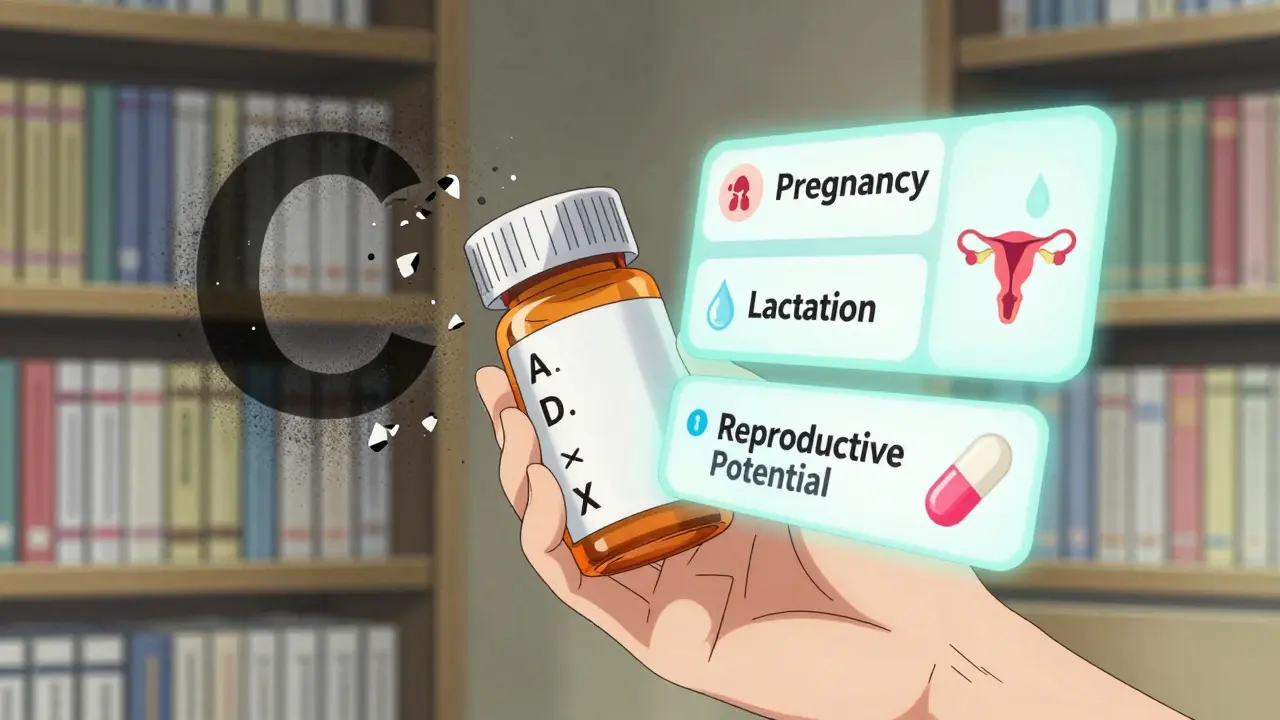
Under the PLLR, every prescription drug label now has three clear subsections under "Use in Specific Populations." You won’t find them on the bottle, but your doctor should be using them to guide your care.- 8.1 Pregnancy - This section breaks down risks to the fetus. It doesn’t say "probably safe." It tells you: What birth defects or complications have been seen? How does timing matter? Does taking the drug early in pregnancy cause different problems than taking it later? What happens if you stop it suddenly? Is there a pregnancy registry tracking outcomes?
- 8.2 Lactation - This isn’t just "can I breastfeed?" It answers: How much of the drug gets into your milk? Does it affect milk supply? Are there documented effects on the baby? Is there data from real mothers who used this while nursing? The answer might be "very little passes into milk" - or it might be "this drug is linked to drowsiness in 3 of 12 infants in a small study."
- 8.3 Females and Males of Reproductive Potential - This one often gets overlooked. It covers whether you need a pregnancy test before starting the drug, what kind of birth control is recommended (and whether the drug interferes with it), and if the drug affects fertility. It’s not just about pregnancy - it’s about planning.
Each of these sections follows the same structure: a Risk Summary, Clinical Considerations, and Data. The Risk Summary is the headline. Clinical Considerations tell you what to do - like "monitor amniotic fluid levels" or "avoid breastfeeding for 4 hours after dose." The Data section shows you the science behind it - animal studies, human case reports, registry numbers.
What’s Actually in the Risk Summary?
This is where the PLLR shines. Instead of saying "Category C: Risk cannot be ruled out," the Risk Summary gives you real context. For example, if a drug causes oligohydramnios (low amniotic fluid), the label might say: "Use of this drug during pregnancy has been associated with decreased amniotic fluid index. In reported cases, amniotic fluid levels returned to normal after discontinuation. Discontinuation should be considered if oligohydramnios is detected." It doesn’t just say "risk." It tells you what the risk looks like, how to spot it, and what to do if it happens. That’s huge. It turns vague warnings into actionable medical guidance.Another key change: the PLLR now requires mention of untreated illness. If you have epilepsy and stop your seizure medication because you’re scared of the drug, the label now reminds your doctor: "Untreated seizures carry a higher risk of fetal injury than this medication." That context was missing before. Now, you’re not just weighing drug risks - you’re weighing drug risks against the risks of doing nothing.
How Lactation Info Changed - And Why It Matters
Before the PLLR, lactation info was often an afterthought. Now, it’s required. The label must include:- Drug concentration in breast milk (compared to maternal plasma)
- Effects on milk production
- Reported effects on the breastfed infant
- Whether a registry exists for data collection
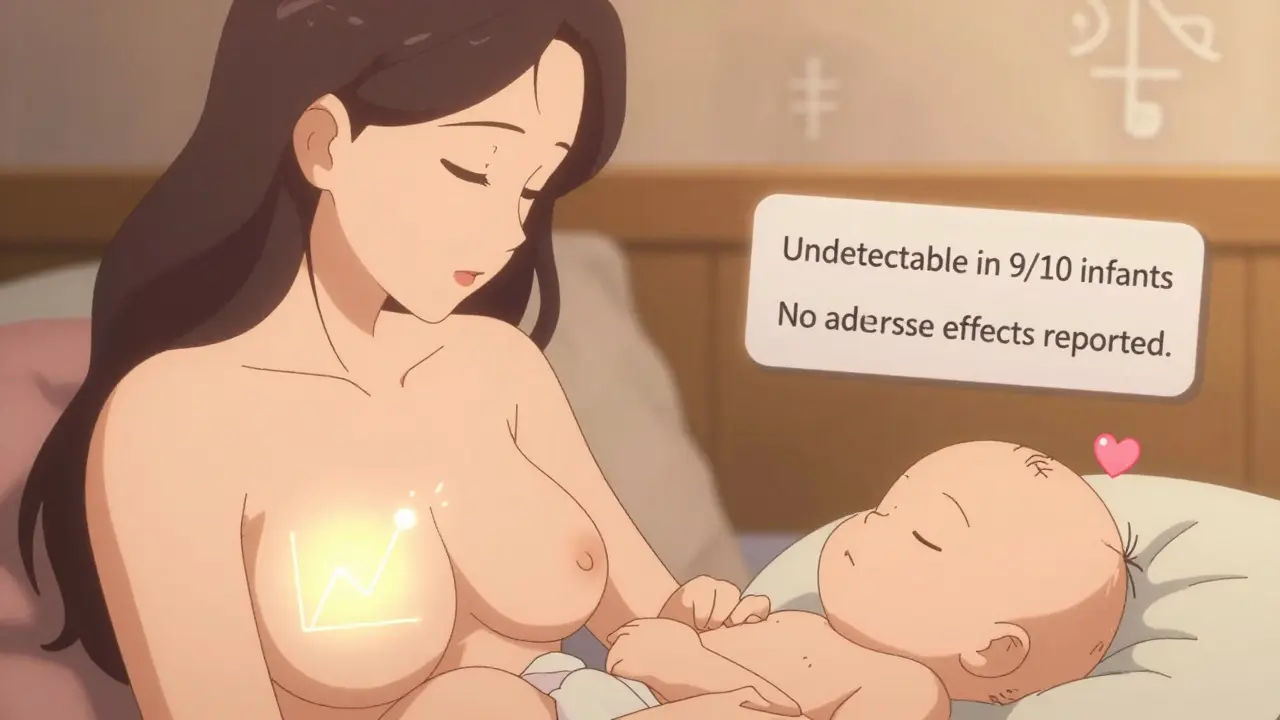
For example, a drug might say: "Infant serum levels were undetectable in 9 of 10 mothers. No adverse effects were reported in infants. One case of transient drowsiness was noted." That’s far more useful than "may pass into breast milk." It tells you the odds, the symptoms to watch for, and whether it’s rare or common.
Some drugs now even say: "Avoid breastfeeding for 2-4 hours after dosing." That’s specific. That’s helpful. That’s the kind of detail you need to make a real decision.
Why This Matters - Numbers Don’t Lie
About 6 million pregnancies happen in the U.S. every year. And on average, each pregnant woman takes three to five prescription drugs. That’s not rare. That’s routine. Many of those drugs weren’t studied in pregnancy - not because they’re dangerous, but because ethics prevent testing on pregnant women. The PLLR acknowledges that. Instead of pretending we have data we don’t, it uses what we have: real-world reports, animal studies, pharmacology, and registry data.Before the PLLR, if a drug caused a rare birth defect, it might take years for that to show up on the label - if ever. Now, manufacturers must update the label when new data comes in. And they’re required to track outcomes through pregnancy exposure registries. These registries collect data from women who take the drug during pregnancy - voluntarily. That’s how we learn what’s safe, what’s risky, and what we still don’t know.
What’s Missing? What’s Still Confusing?
The PLLR isn’t perfect. Some labels still use vague language. "Potential risk" or "limited data" are still common. And not all manufacturers interpret the rules the same way. The FDA and European Medicines Agency (EMA) use different wording - and studies show 70% of the time, their descriptions of the same drug don’t match.Also, the PLLR doesn’t cover over-the-counter drugs, supplements, or herbal products. If you’re taking melatonin, ibuprofen, or a prenatal vitamin with extra ingredients, you’ll still have to ask your doctor. The rule only applies to prescription drugs and biologics.
And while the new format is clearer, many patients still don’t see it. The info is in the prescribing information - not on the pill bottle. That means your doctor needs to know how to read it. If your provider says "it’s safe," ask: "What does the PLLR section say? Can you show me?"
What Should You Do?
If you’re pregnant or breastfeeding and taking medication:- Don’t assume a drug is safe just because you’ve taken it before. The label may have changed.
- Ask your doctor: "What does the PLLR say about this drug?" Request to see the "Use in Specific Populations" section.
- Ask about pregnancy registries. If one exists, consider joining - your data helps others.
- If you’re breastfeeding, ask: "How much gets into my milk? What signs should I watch for in my baby?"
- Don’t stop medication without talking to your provider. The risks of untreated illness are often higher than the drug’s risk.
The PLLR didn’t just change labels. It changed the conversation. It moved us from guesswork to evidence. From fear to informed choice. And for the millions of women who take medication during pregnancy and breastfeeding, that’s not just better labeling - it’s better care.
What drugs are covered by the PLLR?
The PLLR applies only to prescription drugs and biological products regulated by the FDA. This includes medications approved since June 30, 2001. Older drugs had until 2017 to update their labels. Over-the-counter medicines, supplements, vitamins, and herbal products are not covered by the PLLR.
Do I need to read the PLLR section myself?
You don’t need to read the full prescribing information, but you should ask your doctor to explain what it says. The PLLR section is written for clinicians, not patients. But you have the right to know what it says about risks, benefits, and what to watch for. If your provider says "it’s safe," ask them to show you the Risk Summary and Clinical Considerations.
Is a drug labeled "no known risk" in the PLLR completely safe?
Not necessarily. "No known risk" usually means there’s no clear evidence of harm - not that it’s proven safe. Many drugs have limited human data because pregnant women are rarely included in clinical trials. The PLLR tells you what’s known and what’s not. If data is limited, it will say so. That’s better than pretending we have answers we don’t.
How do I find the PLLR section for my medication?
Look up the drug’s full prescribing information on the FDA website or the manufacturer’s site. Search for "Prescribing Information" or "Package Insert." Then scroll to Section 8: "Use in Specific Populations." You’ll see the three subsections: Pregnancy, Lactation, and Females and Males of Reproductive Potential.
Why do some drug labels still have old pregnancy letters?
Drugs approved before June 30, 2001 were given until December 2017 to remove the old letter categories. Some older drugs may still carry them if the manufacturer hasn’t updated the label yet. However, all new labels - and any revised labels since 2015 - must follow the PLLR format. If you see a letter category, ask your doctor if the label has been updated.
Manish Singh
March 19, 2026 AT 16:45Stephen Habegger
March 21, 2026 AT 15:19Justin Archuletta
March 22, 2026 AT 17:13Shameer Ahammad
March 24, 2026 AT 01:59Nilesh Khedekar
March 25, 2026 AT 18:31Robin Hall
March 26, 2026 AT 17:57jared baker
March 27, 2026 AT 02:04Aileen Nasywa Shabira
March 28, 2026 AT 16:12Kendrick Heyward
March 29, 2026 AT 18:14lawanna major
March 30, 2026 AT 15:51Ryan Voeltner
March 31, 2026 AT 01:12Linda Olsson
March 31, 2026 AT 04:20Ayan Khan
April 1, 2026 AT 04:50