

Waking up to a beautiful spring morning only to spend the rest of the day with itchy eyes and a runny nose is a frustrating cycle for millions. Whether it's the early tree blossoms or the mid-summer grass, the invisible cloud of allergens can turn a planned hike or a backyard BBQ into a medical emergency. The good news is that you don't have to stay indoors until autumn. By using pollen forecasting is a specialized meteorological service that predicts airborne pollen concentrations to help people with allergies time their outdoor activities, you can actually dodge the worst of the peaks and keep your symptoms under control.
The Science of Predicting Pollen
Pollen forecasting isn't just a guess based on the calendar; it's a mix of botany and meteorology. To understand a forecast, you first need to know what a pollen count is. It is a measure of the average number of pollen grains per cubic meter of air. Scientists typically use a rotorod technique-basically greased silicone rods that spin and collect particles over 24 hours-to get a baseline of what's in the air.
Modern models have moved far beyond simple counting. Systems like the Copernicus Atmosphere Monitoring Service (CAMS) and AI-driven platforms now integrate real-time data. They look at "chilling units" (temperatures between 0-7°C) and "heat units" (temperatures above 10°C) to predict exactly when a plant will release its pollen. Today, some of these machine learning models hit an accuracy rate of 82-89% for daily predictions, which is a massive jump from the local monitoring stations we relied on decades ago.
How Weather Directly Impacts Your Allergies
If you want to play "amateur forecaster," you just need to look at the weather app. There are a few iron-clad rules about how meteorology moves pollen around. For instance, temperature is a huge driver; a 2-3°C increase in temp often leads to a 15-20% jump in pollen counts. Humidity works in the opposite direction-when the air gets drier (a 10% drop in humidity), pollen counts can spike by 25%.
Wind is the most chaotic variable. A 10 mph breeze can increase pollen dispersal by 40%, carrying allergens from forests miles away right into your neighborhood. On the flip side, rain is your best friend. A small rainfall event (about 0.1 inch) usually scrubs the air clean, reducing counts by 30-50% within just two hours. If you see a light rain in the forecast, that's usually your golden window to get outside.
| Level | Grains per m³ | Typical Impact |
|---|---|---|
| Low | ≤50 | Minimal symptoms for most |
| Moderate | 51-149 | Mild to moderate symptoms |
| High | 150-499 | Significant distress for sufferers |
| Very High | ≥500 | Severe symptoms; high risk of asthma |

Strategic Planning for Outdoor Activities
Knowing the count is one thing, but timing your day is where the real magic happens. Most allergens follow a diurnal pattern, meaning they peak at different times of the day. If you're fighting seasonal allergic rhinitis, you can significantly lower your distress by avoiding these specific windows:
- Tree Pollen: Usually peaks between 5 AM and 10 AM. This happens right after the morning dew dries, releasing a burst of particles.
- Grass Pollen: These are midday monsters, peaking from 10 AM to 4 PM.
- Weed Pollen (like Ragweed): These tend to peak in the late afternoon, between 4 PM and 8 PM.
For athletes, this is a game-changer. Research shows that runners who shift their training to the early morning (5-7 AM) or evening (7-9 PM) window experience up to 45% fewer respiratory symptoms. Instead of fighting through a noon run in May, try a sunset jog when counts are typically 30-50% lower.
Choosing the Right Forecasting Tool
Not all pollen apps are created equal. Some give you a general city-wide average, while others provide "hyperlocal" data. For example, BreezoMeter uses a 1.5km resolution, accounting for things like urban microclimates-the fact that a park in the center of town might have vastly different counts than a residential suburb. Free services like Pollen.com are great for a general idea, but they often operate on a 10km resolution, which can miss a localized "pollen pocket."
If you're highly sensitive, the best strategy is cross-verification. Check at least two sources. If one app says "Moderate" and another says "High," lean toward the higher estimate to be safe. Also, remember that most models struggle with weed pollen; only about 12% of models accurately forecast ragweed, so be extra cautious in late August.
The Danger Zone: Thunderstorm Asthma
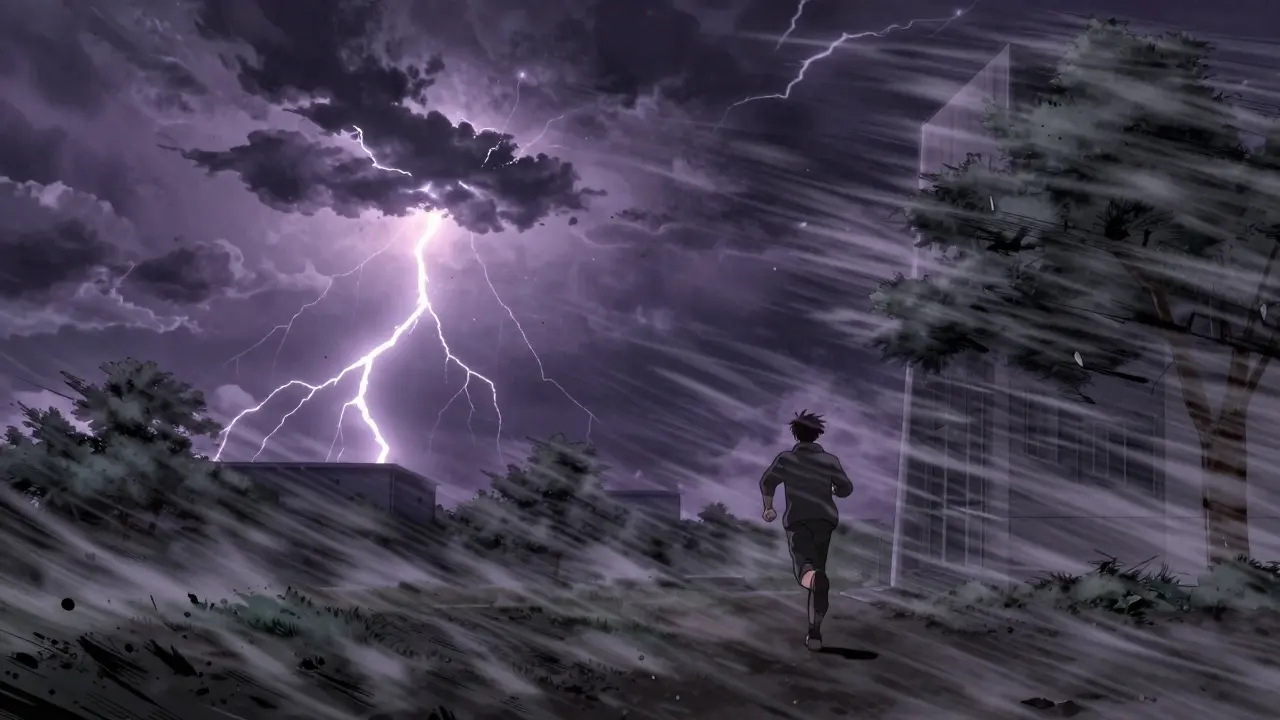
While forecasts are great for daily planning, there is one event they currently can't predict well: thunderstorm asthma. This happens when a storm breaks pollen grains into tiny fragments that can travel deeper into the lungs. In cities like Melbourne, this has led to massive spikes where pollen counts jump 300% in under 30 minutes.
If you see a sudden, violent thunderstorm rolling in during peak pollen season, head indoors immediately. Even if your app says "Moderate," the atmospheric instability can turn a manageable day into a respiratory crisis. This is the primary gap in current AI models, though researchers are currently working on incorporating atmospheric instability indices to predict these events.
When is the best time of day to go outside during peak season?
Generally, the early morning (5-7 AM) and late evening (7-9 PM) are the safest windows. Tree pollen peaks early (5-10 AM), grass peaks midday (10 AM-4 PM), and weeds peak late afternoon (4-8 PM). Timing your activity around these dips can reduce symptoms by over 40%.
How accurate are pollen forecasts really?
High-end machine learning models achieve between 82% and 89% accuracy for daily concentrations. However, accuracy drops for long-term forecasts; a 24-hour forecast is usually 85% accurate, while a 72-hour forecast drops to around 65% because it depends on the accuracy of the weather forecast.
Does rain actually help with pollen allergies?
Yes. Rainfall acts as a natural scrubber, pulling pollen grains out of the air and onto the ground. A light rain event typically reduces airborne pollen counts by 30-50% for about 2 to 4 hours after the rain stops.
What is the difference between a pollen count and a pollen forecast?
A pollen count is a measurement of what is currently in the air (usually based on 24-hour samples from a rotorod). A forecast uses that data, along with temperature, wind, and humidity, to predict what the levels will be in the coming days.
Why do I still have symptoms when the app says pollen is low?
This often happens because of "localized stirring." For example, if you mow your lawn or walk through a field, you are manually kicking up pollen that the general atmospheric forecast doesn't account for. Additionally, urban microclimates can cause counts to vary by 300% between a city center and a park.
Goodwin Colangelo
April 4, 2026 AT 12:11Shifting your runs to those early morning or late evening windows is definitely the move. I've seen a lot of athletes struggle with the midday grass pollen peaks, and just moving the schedule by a few hours can totally change the experience. If you're still feeling it, try showering and changing your clothes immediately after coming inside to get the residue off your skin and hair.
Divine Manna
April 6, 2026 AT 07:53The reliance on machine learning models with an 89% accuracy rate is quaint, yet it ignores the fundamental epistemological gap between a statistical probability and the actual lived experience of a biological organism. One must realize that a 'moderate' count in a curated dataset does not equate to a moderate physiological response in a human system. The nuance of individual sensitivity renders these broad meteorological generalizations nearly obsolete for the truly discerning sufferer.
Joseph Rutakangwa
April 7, 2026 AT 04:52good tips for everyone
Will Baker
April 8, 2026 AT 21:59Oh sure, because staring at a phone app is exactly how we should spend our limited time on earth. I love how we've reached a point where we need a 'hyperlocal' 1.5km resolution just to step outside without sneezing. Maybe the real problem is that we've forgotten how to just exist in nature without treating it like a biohazard zone. But hey, keep checking those apps while the world passes you by.
Joey Petelle
April 9, 2026 AT 15:38Imagine thinking a 1.5km resolution is actually 'precise' in a country as vast and glorious as the US. It's absolute comedy. These little apps are just digital pacifiers for people who can't handle a bit of dust in the air. Truly a first-world tragedy that we need an AI to tell us when the wind is blowing grass around. Absolutely precious.
Dee McDonald
April 10, 2026 AT 14:22WE NEED MORE OF THIS DATA! If we can push that 89% accuracy even higher, we can basically eliminate the dread of spring for everyone! People need to stop complaining and start using these tools to optimize their lives! Why are some people still relying on 'feeling' the air when the science is right there in their pocket? Get on board or get left behind in a cloud of ragweed!
Sakshi Mahant
April 10, 2026 AT 15:07It is very interesting to see how different regions handle this. In my experience, the types of flora vary so much that the forecasting tools must be very specific to the local ecology to be useful. I appreciate the mention of thunderstorm asthma as it highlights a critical safety concern that is often overlooked in general guides.
HARSH GUSANI
April 10, 2026 AT 15:18Who cares about these apps? 🙄 My country has better ways of dealing with nature than just looking at a screen! These Western tools are just trying to sell us more gadgets. Just go outside and be strong! 🇮🇳💪