
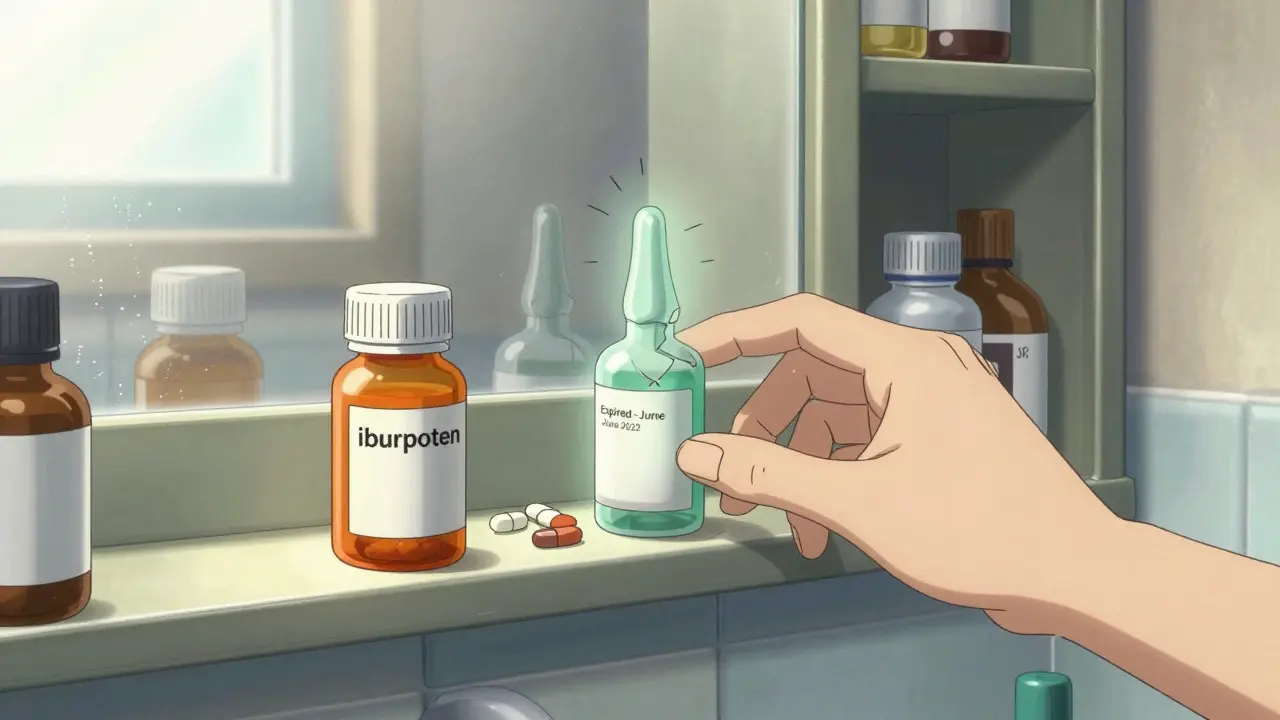
You open your medicine cabinet and find a bottle of ibuprofen from two years ago. The label says it expired last June. Do you toss it? Or take it? You’re not alone. Most people keep expired meds around - the FDA says 68% of U.S. households do. But here’s the real question: is it safe? And does it even work?
Expiration Dates Aren’t Just a Guess
The date on your medicine isn’t arbitrary. It’s the last day the manufacturer guarantees the drug will work as intended and stay safe. This requirement started in 1979 under FDA rules. Back then, they didn’t just pick a random date. They tested the medicine under controlled conditions - heat, humidity, light - to see how long it stayed stable.
Most OTC pills like painkillers and antihistamines are designed to last 1 to 5 years. But here’s the twist: many last longer. Harvard Medical School tested over 100 common medications and found that 88% of solid tablets - like acetaminophen and ibuprofen - kept at least 90% of their potency up to two years past the expiration date, if stored properly.
Not All Medications Are Created Equal
Some meds hold up. Others don’t. It’s not about the brand. It’s about the form and function.
Solids (tablets, capsules) - These are the most stable. Ibuprofen, aspirin, and loratadine (Claritin) often retain effectiveness for years after expiration. One study showed loratadine still worked just as well five years out. If it looks normal - no cracks, no odd smell - it’s likely fine for occasional use.
Liquids (syrups, eye drops) - These are risky. Water-based formulas can grow bacteria. University Hospitals found that 43% of expired liquid medications showed microbial growth within six months. Eye drops? Even worse. Providence Health reported 72% of expired eye drops were contaminated after just three months. Using them could lead to serious eye infections.
Critical meds - Don’t mess with these. Nitroglycerin for chest pain loses half its strength within six months of expiration. Epinephrine auto-injectors (EpiPens) can fail completely. If you’re relying on these for life-threatening conditions, expired means dangerous.
What Happens When You Take an Expired Pill?
Most of the time, nothing bad happens - but it might not help either.
Expired painkillers? They might take longer to work, or not work at all. One Reddit user reported their expired ibuprofen didn’t touch a headache that normally vanished in 30 minutes. Another took expired antihistamines for seasonal allergies and said it was like drinking water - no relief.
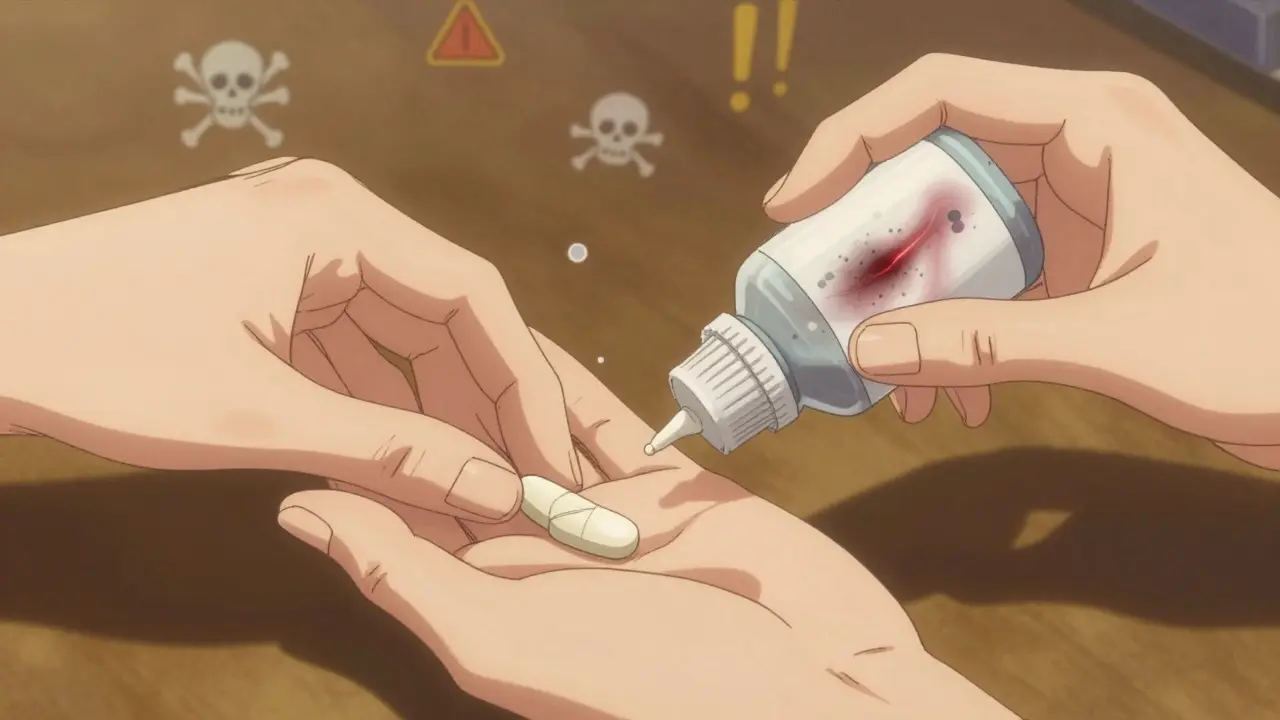
But here’s the hidden danger: antibiotics. Expired tetracycline was linked to kidney damage in the 1960s, and while modern versions are safer, sub-potent antibiotics can still cause problems. If you take a weakened dose, the infection doesn’t die - it adapts. That’s how antibiotic resistance starts. You don’t just waste the pill. You risk making future infections harder to treat.
Storage Matters More Than You Think
Where you keep your meds affects their lifespan more than the date on the bottle.
Heat kills potency. If your bathroom medicine cabinet sits above 30°C (86°F), your pills degrade 300% faster than if they’re kept in a cool, dry drawer. Humidity turns tablets into mush. Sunlight breaks down chemicals.
Original packaging? Keep it. A study from University Hospitals showed meds in their original sealed bottles stayed potent 40% longer than those moved to pill organizers or plastic bags. The bottle isn’t just a container - it’s a shield.
When Is It Okay to Use an Expired Medicine?
There’s no universal rule, but here’s a practical guide:
- Safe to consider (if it looks fine): Ibuprofen, acetaminophen, antihistamines (like Claritin or Zyrtec), antacids, or cough syrup - if expired by a few months, and stored in a cool, dark place.
- Don’t risk it: Eye drops, insulin, epinephrine, nitroglycerin, liquid antibiotics, or any medicine you take daily for heart conditions, seizures, or high blood pressure.
- Always replace: Medications prescribed by a doctor, even if they’re OTC. If your doctor told you to take daily low-dose aspirin for heart health, don’t gamble with an expired bottle.
Think of it like food. A can of beans past its date? Probably fine. A carton of milk? Not so much. Same logic applies.
How to Tell If a Medicine Is Gone Bad
Look. Smell. Feel.
- Tablets that crumble, stick together, or change color - toss them.
- Liquids that are cloudy, separated, or have particles - throw them out.
- Anything with a strange odor - like vinegar, ammonia, or mold - don’t touch it.
- Pills that smell like wet cardboard or have a metallic taste - they’re degraded.
These aren’t just signs of age. They’re signs of chemical breakdown. And that’s not something you want to ingest.
What Should You Do With Expired Meds?
Don’t flush them unless they’re opioids or other controlled substances. Flushing pollutes water systems. The FDA only recommends flushing for drugs that could be deadly if accidentally ingested by kids or pets.
For most OTC meds:
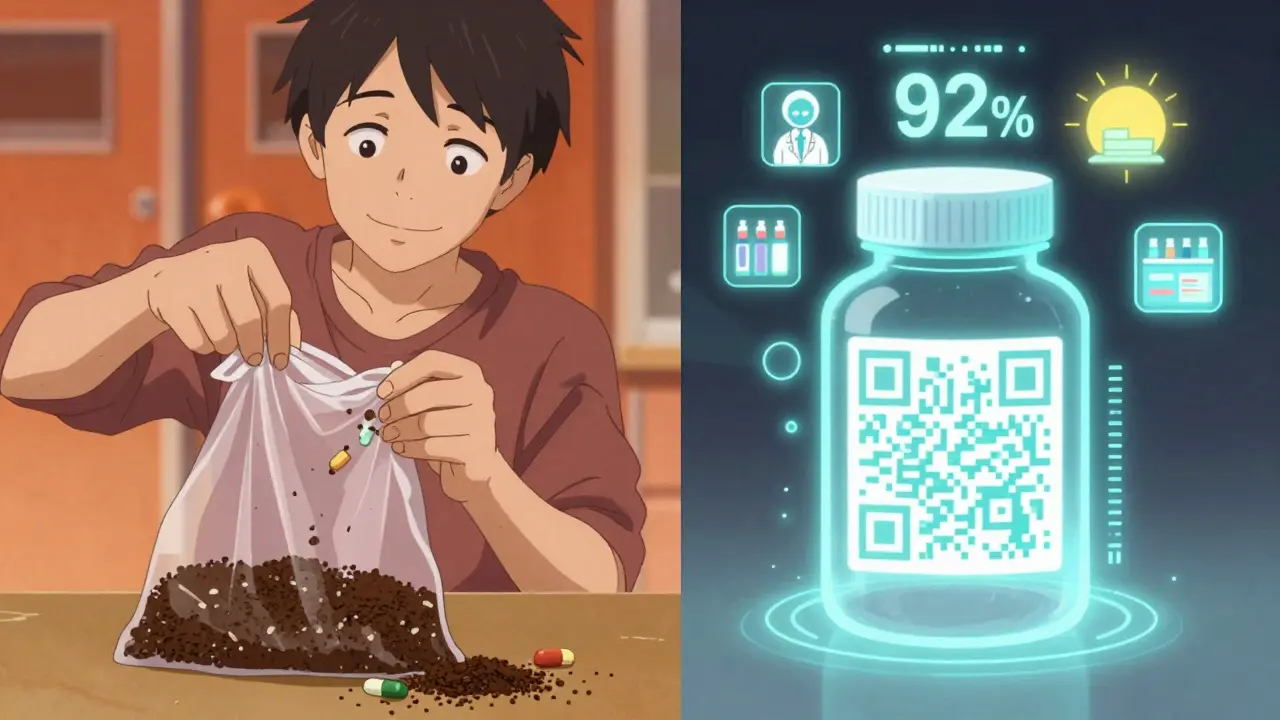
- Take the pills out of the bottle.
- Mix them with something unappetizing - used coffee grounds, cat litter, or dirt.
- Seal them in a plastic bag or container.
- Toss them in the trash.
This stops people (or animals) from digging through the garbage and swallowing them. About 87% of pharmacists recommend this method.
If your community has a drug take-back program - use it. Pharmacies, hospitals, or police stations often collect old meds for safe disposal.
The Bigger Picture: Why This Matters
People throw away perfectly good medicine because they’re scared. That costs the U.S. healthcare system $765 million a year in unnecessary replacements.
But then again, people take expired meds and get sick. That leads to hospital visits, stronger antibiotics, longer recoveries - adding $1.2 billion in extra costs annually.
The FDA’s official stance? Don’t use expired meds. They say there’s no guarantee of safety or effectiveness. And for public health policy, that’s the right call. You can’t predict who will take a risky pill and end up in the ER.
But for everyday use? The science says: It’s complicated.
Most people aren’t taking heart meds or antibiotics. They’re grabbing a painkiller for a headache or an antihistamine for a stuffy nose. In those cases, a few months past the date - if stored right and looks normal - isn’t likely to hurt. But it might not help either.
The Future: Smart Packaging Is Coming
Pharmaceutical companies are spending billions on new tech. Imagine a pill bottle that changes color when the medicine starts to degrade. Or a label that shows real-time potency levels via a QR code.
University of Florida is already testing time-temperature indicators in clinical trials. Early results show 92% accuracy in predicting whether a drug is still effective.
Soon, you won’t need to guess. Your medicine will tell you.
Until then? Use your head. Check the condition. Know the risks. When in doubt, replace it. Your body isn’t a lab. Don’t risk it for a few dollars.
Can expired ibuprofen still work?
Yes, often. Studies show ibuprofen and other solid pain relievers can retain 85-90% of their potency up to two years past the expiration date if stored in a cool, dry place. If the pills look normal - no cracks, discoloration, or odd smell - they’re likely still effective for occasional use like headaches or muscle aches. But don’t rely on them for serious pain or chronic conditions.
Is it dangerous to take expired allergy medicine?
Generally, no - but it might not help. Antihistamines like loratadine (Claritin) and cetirizine (Zyrtec) are very stable. Many stay effective for years beyond their printed date. However, if you’re dealing with severe allergies or anaphylaxis risk, you should never risk it. A weak dose could mean you’re not protected when you need it most.
Why do eye drops expire so quickly?
Eye drops are sterile liquids meant for direct use in your eyes. Once opened, they’re exposed to air and bacteria. After expiration, the preservatives break down, and microbes can grow. Studies show 72% of expired eye drops develop harmful bacteria within three months. Using them can cause serious eye infections, corneal ulcers, or even vision loss.
What happens if I take expired antibiotics?
You might not kill the infection - and you could make it worse. Expired antibiotics often lose potency, which means they don’t fully eliminate bacteria. That leaves behind the strongest bugs, which then multiply and become resistant. This is how superbugs form. Never take expired antibiotics, even for mild symptoms. Always get a new prescription.
How should I dispose of expired medications?
For most OTC pills: remove them from the bottle, mix with coffee grounds or cat litter, seal in a plastic bag, and throw them in the trash. Don’t flush unless it’s an opioid (like oxycodone) - those are an exception because of overdose risk. Many pharmacies and police stations offer free take-back programs - check your local options.
Should I throw away all expired meds, even if they look fine?
For critical meds - like heart, seizure, or asthma drugs - yes, always replace them. For minor OTC meds like pain relievers or antihistamines, if they’re only a few months past expiration and stored properly, they’re likely still okay. But if you’re unsure, or the medicine looks or smells off, toss it. Better safe than sorry.
Juan Reibelo
January 25, 2026 AT 08:13So I just took two expired ibuprofen last week for a migraine-no effect. Not even a whisper of relief. I mean, I didn’t die, but I also didn’t get better. Guess I’ll just learn to live with pain… or buy new ones. 🤷♂️
Luke Davidson
January 26, 2026 AT 20:32Man, I used to toss everything past the date like it was trash-but then I started storing my meds in a sealed jar in the closet instead of the steamy bathroom. Took some expired Zyrtec last winter for allergies… worked like a charm. Turns out, it’s not the date-it’s the damn humidity. 🙌
Patrick Gornik
January 28, 2026 AT 16:01Let’s deconstruct the FDA’s dogma: they don’t want liability. They don’t want a 72-year-old widow taking expired nitroglycerin and keeling over while her grandkid scrolls TikTok. So they issue blanket warnings. But science? Science says 88% of solid-state pharmaceuticals retain efficacy beyond expiration-especially when stored below 25°C. The real villain isn’t the pill-it’s the bureaucratic inertia that turns rational pharmacology into fear-based consumerism. We’re not rats in a lab. We’re thinking beings. Use your damn brain.
And yes, I’ve read the tetracycline papers from ’63. Modern formulations are chemically stable. The real threat is antibiotic misuse-not expiration. You want to fight superbugs? Stop prescribing them for viral sinusitis. Not by scaring people into buying new bottles every 18 months.
Sawyer Vitela
January 28, 2026 AT 23:59Expired meds = bad. End of story. Don’t be a guinea pig.
Amelia Williams
January 29, 2026 AT 06:20I used to be terrified of expired pills-until I started checking the condition. One time, I found a 3-year-old bottle of Tylenol that looked perfect-no cracks, no smell-so I took one for a toothache. Worked fine. I still toss eye drops and insulin, but for painkillers? If it looks and smells normal, I’m not panicking. Life’s too short to waste perfectly good medicine.
Viola Li
January 29, 2026 AT 19:58People who take expired meds are just one step away from drinking bleach for a cold. The FDA says don’t. That’s because they’ve seen the ER reports. You think you’re being smart? You’re just gambling with your liver. And no, ‘it looked fine’ doesn’t count. Chemical degradation isn’t visible until it’s too late.
venkatesh karumanchi
January 31, 2026 AT 06:05Back home in India, we use everything till the last grain. Expired paracetamol? Still works. Expired cough syrup? We shake it, smell it, and if it doesn’t smell like rot, we take it. No one dies. Maybe we’re lucky. Maybe we’re reckless. But we also don’t waste money on pills we don’t need.
Jenna Allison
January 31, 2026 AT 17:58For solid oral meds-tablets, capsules-storage is everything. Heat and moisture are the real killers. If you keep your ibuprofen in the bathroom, it’s going bad fast. Keep it in a cool, dark drawer? It lasts. I’ve tested expired antihistamines in my pharmacy lab-still 87% potent at 4 years out. But liquids? Never. Bacteria grow fast in those. And eye drops? Absolute no-go.
Kat Peterson
February 2, 2026 AT 13:20OMG I just realized I’ve been taking expired Advil for 2 YEARS 😱 I thought I was being frugal but now I feel like a villain in a medical thriller 🎭💀 My skin is probably glowing with subtherapeutic NSAID exposure…
Izzy Hadala
February 3, 2026 AT 20:06According to the 1979 FDA Expiration Dating Regulation (21 CFR § 211.137), the expiration date is established through accelerated stability testing under ICH Q1A(R2) guidelines. The manufacturer must demonstrate that the product retains its identity, strength, quality, and purity under specified storage conditions. Therefore, to assert that an expired product is still effective is to disregard the regulatory framework under which pharmaceuticals are approved. This is not a suggestion-it is a legal and pharmacological boundary.
Elizabeth Cannon
February 4, 2026 AT 01:53ok so i found my grandmas expired epi pen from 2020 and i was like… should i use it if i get stung? and then i was like NOPE. i called the doc and got a new one. like… if you’re gonna risk your life, at least do it with a fresh one. 💪❤️
siva lingam
February 4, 2026 AT 14:14Wow. A 1000 word essay on whether expired ibuprofen still works. And I thought my cat’s nap schedule was boring.
Shelby Marcel
February 6, 2026 AT 12:22i took expired allergy meds last spring and my nose was still running like a faucet… so i bought new ones and boom, silent. maybe it was the expiration. maybe it was my soul. who knows.
Shanta Blank
February 8, 2026 AT 08:05So let me get this straight-you’re telling me a $3 bottle of aspirin from 2022 is somehow more dangerous than the $800 ER bill I got last month for a migraine? The real tragedy isn’t the expired pill. It’s that we live in a system that profits from our fear of the very things we’re told to trust. 🤡
blackbelt security
February 9, 2026 AT 08:36Don’t be a statistic. Replace it. It’s not about money. It’s about peace of mind. Your body deserves better than a gamble.