
Medication-Induced Orthostatic Hypotension Risk Calculator
Your Information
Risk Assessment
0
Low Risk
Recommended Actions:
- Check your blood pressure when lying down and standing up
- Review all medications with your doctor
- Stay hydrated and avoid hot environments
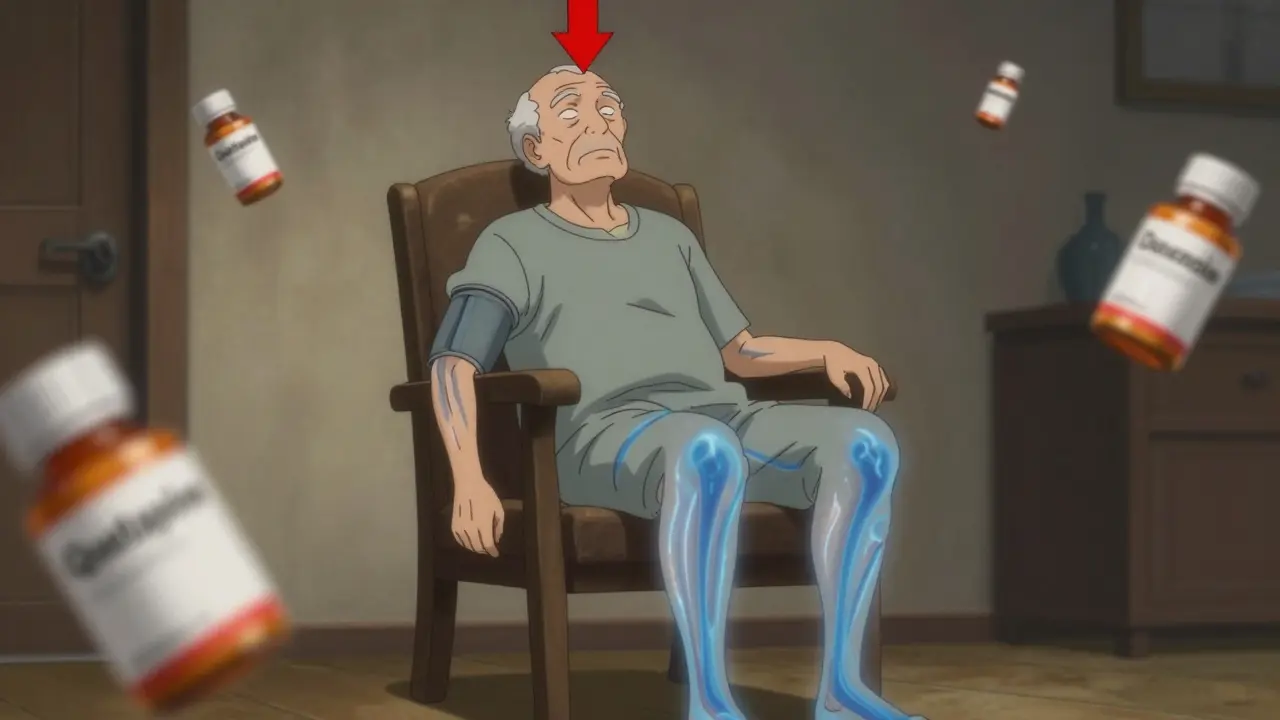
Standing up and feeling lightheaded isn’t just something that happens when you’re tired. For many people, especially those on medications, it’s a warning sign of something more serious: orthostatic hypotension. This isn’t just a quick spell of dizziness. It’s your body struggling to keep blood flowing to your brain when you change position - and it’s often caused by the very drugs meant to help you.
What Exactly Is Orthostatic Hypotension?
Orthostatic hypotension, also called postural hypotension, happens when your blood pressure drops too much within three minutes of standing up. The medical standard is clear: a drop of 20 mm Hg in systolic pressure (the top number) or 10 mm Hg in diastolic pressure (the bottom number). That’s not a small change. It’s enough to starve your brain of oxygen, making you feel dizzy, blurry, or like you’re about to pass out. It’s not rare. About 5% to 30% of older adults experience it, depending on their health and meds. And up to 30% of those cases are directly tied to medications. That means for nearly one in three people with this problem, the cause isn’t aging or nerve damage - it’s something they’re taking.Which Medications Cause Dizziness on Standing?
Not all drugs do this, but some are notorious for it. Here are the big offenders:- Antipsychotics - Drugs like clozapine, quetiapine, and chlorpromazine can cause orthostatic hypotension in 20% to 40% of users. One Reddit user reported fainting twice after starting quetiapine for anxiety. Their blood pressure dropped from 128/82 to 92/61 in just two minutes.
- Opioids - Morphine, oxycodone, and other painkillers affect the nervous system’s ability to tighten blood vessels. About 15% to 25% of elderly patients on opioids get dizzy on standing. The risk spikes even higher if they’re also taking benzodiazepines or drinking alcohol.
- Alpha-blockers - Used for high blood pressure and enlarged prostate, drugs like doxazosin and terazosin relax blood vessels. They’re a top cause of OH in older men. Studies show a 2.8 times higher risk compared to those not taking them.
- Diuretics - Hydrochlorothiazide and furosemide reduce fluid volume. Less fluid means less blood pressure. One patient had repeated falls until their doctor removed hydrochlorothiazide - symptoms vanished in 72 hours.
- Tricyclic antidepressants - Amitriptyline and nortriptyline interfere with nerve signals that control blood pressure. Risk increases 3.2 times compared to non-users.
- Levodopa - For Parkinson’s, this drug helps movement but often crashes blood pressure. Up to half of patients on levodopa develop orthostatic hypotension.
Why Does This Happen?
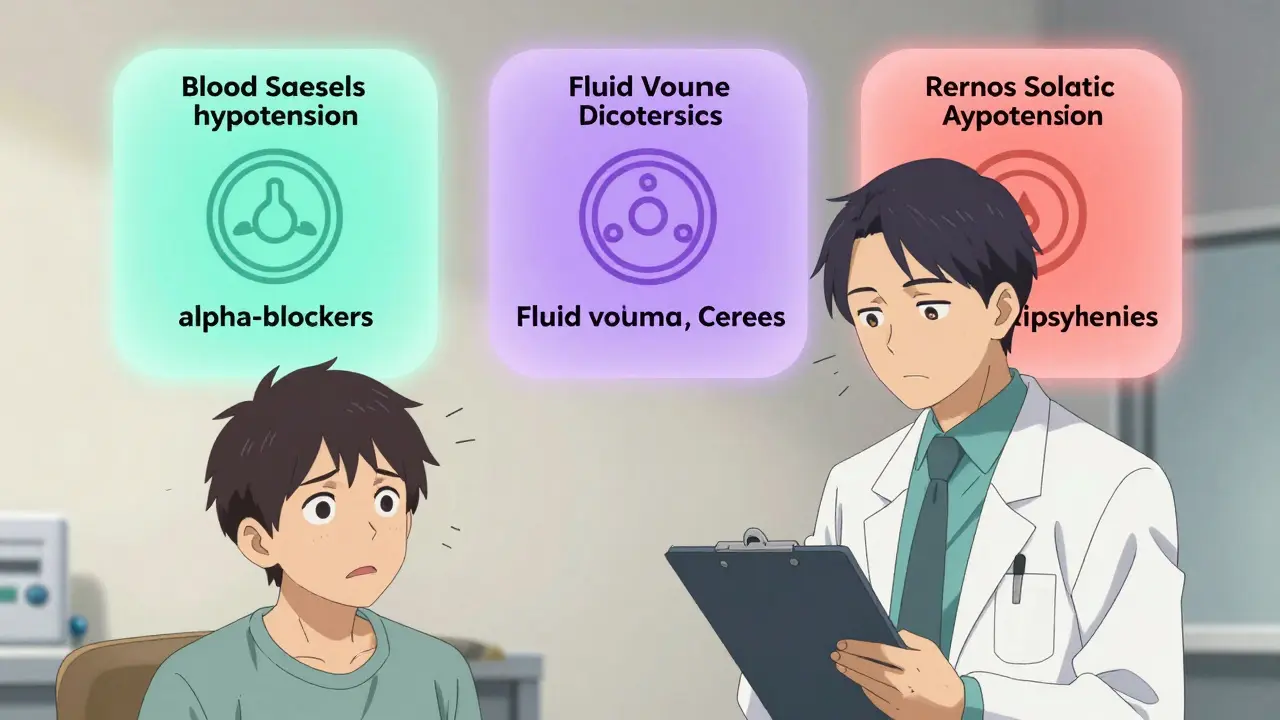
When you stand, gravity pulls blood down into your legs. Normally, your body reacts instantly: blood vessels tighten, your heart beats a little harder, and your blood pressure stays steady. That’s the autonomic nervous system at work. Medications mess with this system in different ways:- Some block adrenaline receptors (alpha-blockers), so vessels can’t tighten.
- Others reduce fluid volume (diuretics), so there’s less blood to pump.
- Some depress the brain’s ability to send signals (antipsychotics, opioids).
- Some interfere with neurotransmitters that control vascular tone (tricyclics).
Who’s Most at Risk?
It’s not just about the drug. It’s about who’s taking it.- Age 70+ - Your body’s natural blood pressure control slows down. Risk jumps 3.2 times compared to younger adults.
- Taking 4+ medications - Polypharmacy is the biggest red flag. People on four or more drugs have 5.7 times higher risk of OH.
- Dehydrated or overheated - Even mild dehydration makes OH worse. Hot weather or saunas can trigger symptoms.
- Already have heart or nerve problems - Conditions like diabetes, Parkinson’s, or heart failure make the system more fragile.
What Should You Do If You Feel Dizzy Standing Up?
Don’t ignore it. Don’t assume it’s just “getting older.” Here’s what to do:- Check your blood pressure - Measure it while lying down, then again after standing for 1 and 3 minutes. A drop of 20/10 or more confirms orthostatic hypotension.
- Review your meds - Bring a full list of everything you take - including supplements and OTC drugs - to your doctor. Ask: “Could any of these be causing my dizziness?”
- Don’t stop meds on your own - Some drugs can’t be stopped suddenly. Work with your doctor to adjust dosages or switch to safer alternatives.
- Use non-drug fixes - Drink 2 to 2.5 liters of water daily. Wear compression stockings. Stand up slowly. Avoid hot showers. Cross your legs or squeeze your thighs if you feel lightheaded.
Can It Be Fixed?
Yes - and often quickly. In 65% to 80% of cases, symptoms improve after adjusting or removing the culprit drug. One study showed 78% of patients felt better within one to two weeks of a medication change. For some, lifestyle changes alone aren’t enough. In those cases, doctors may prescribe midodrine - a drug that tightens blood vessels. It’s not perfect, but it helps about 65% of people who still struggle after other steps.
Why This Matters More Than You Think
This isn’t just about feeling dizzy. Orthostatic hypotension increases your risk of:- Falls - 15% to 30% higher chance, especially in older adults.
- Bone fractures - Hip fractures from falls can be life-changing.
- Cognitive decline - Reduced blood flow to the brain over time may contribute to memory problems.
- Mortality - Studies show a 24% to 32% higher risk of death over 10 years.
paul walker
January 29, 2026 AT 01:57Man, I thought I was just getting old until I read this. Started taking quetiapine for anxiety and nearly took out my coffee table twice. Blood pressure dropped so bad I had to sit back down. Doc didn’t even mention this side effect. Thanks for the wake-up call.
Now I stand up like a slow-motion ninja. One foot at a time. Like I’m defusing a bomb. Works like a charm.
Paul Adler
January 30, 2026 AT 11:47This is an exceptionally well-researched and clearly articulated piece. The clinical data presented, particularly the 5.7x increased risk with polypharmacy, underscores a systemic issue in geriatric pharmacotherapy. The disconnect between prescriptive intent and physiological consequence warrants broader institutional attention.
Kristie Horst
February 1, 2026 AT 07:45Oh, so THAT’S why I’ve been doing the ‘wobbly walrus’ shuffle every morning? Thanks for confirming my suspicion that my meds are less ‘miracle cure’ and more ‘slow-motion tumbleweed.’
Also, 31 billion dollars spent on falls? Wow. So we’re not just killing people with pills-we’re bankrupting the system while we’re at it. Brilliant.
Next up: ‘Why Your Blood Pressure Meds Are Making You Fall Asleep in the Shower.’
Andy Steenberge
February 2, 2026 AT 20:20Orthostatic hypotension is one of the most underdiagnosed and undertreated iatrogenic conditions in primary care. The fact that it’s directly tied to medications in up to 30% of cases means clinicians are missing a massive opportunity for harm reduction.
It’s not just about prescribing- it’s about re-evaluating. Many older patients are on multiple antihypertensives, antidepressants, and antipsychotics without ever having their regimen reviewed holistically.
My grandmother went from falling three times a week to zero after we stopped her hydrochlorothiazide and started her on a lower-dose ACE inhibitor. Simple. Safe. Effective.
Doctors need to ask: ‘What are you taking?’ and ‘Do you feel dizzy when you stand?’ before they write another script.
This isn’t just medical knowledge-it’s a public health imperative.
Laia Freeman
February 4, 2026 AT 13:19OMG YES!! I was like ‘why am I so dizzy??’ and my doc was like ‘oh you’re just dehydrated’ and I was like ‘I drink 3 LITERS of water a day’ 😤
Turns out my amitriptyline was wrecking my BP. I cut the dose in half and now I don’t feel like I’m gonna pass out when I go to the bathroom. I love my brain but I hate my meds sometimes. 🙃
Also compression socks are the MVP. I wear them to Target now and look like a superhero. 💪
rajaneesh s rajan
February 6, 2026 AT 02:25Medications are the new religion. We worship the pill, then blame the body when it collapses under the weight of our faith.
In India, we call this ‘doctor’s arrogance’-prescribing ten pills for one problem, then acting shocked when the patient becomes a ghost of themselves.
My uncle took four BP meds, a diuretic, and a tricyclic. He fell. Broke his hip. Died in six months.
Not because he was old. Because he was overmedicated.
Less is more. Always.
Laura Arnal
February 6, 2026 AT 17:09This is so important!! 💙 I’ve been telling my mom for months to get her BP checked when standing-she kept saying ‘it’s just aging.’ Now I’m printing this out and handing it to her with a cup of tea and a hug. You’re helping so many people!! 🙌
Jasneet Minhas
February 8, 2026 AT 06:02It is ironic, is it not, that the very substances engineered to restore homeostasis often induce dysregulation? The pharmaceutical industry, while technologically advanced, remains remarkably blind to the complexity of human physiology.
One might argue that we are treating symptoms with substances that create new symptoms-like applying glue to a cracked vase and expecting structural integrity.
Eli In
February 9, 2026 AT 01:57As someone who grew up in a family where ‘just stand up slowly’ was the only advice we got… this is a game-changer. I’m sharing this with my Filipino auntie who’s on 7 meds and keeps falling. She thinks it’s ‘bad luck.’ Now she’ll know it’s fixable. 🙏❤️
Megan Brooks
February 10, 2026 AT 11:21The ethical implications of prescribing medications with known orthostatic risks to elderly populations without adequate patient education are profound. Informed consent must extend beyond the signed form-it must include clear, accessible communication regarding potential functional consequences.
Further, the normalization of dizziness as ‘part of aging’ represents a dangerous clinical bias that perpetuates preventable morbidity.
Ryan Pagan
February 10, 2026 AT 21:53Let’s be real-this isn’t ‘side effect.’ This is a full-blown medical betrayal. You’re handed a magic bullet and told it’s safe… then you wake up on the floor with your dignity and your hip in pieces.
Doctors treat meds like they’re candy. ‘Take one, feel better.’ But they don’t tell you the side effects are basically ‘becoming a human tumbleweed.’
My cousin got off hydrochlorothiazide and went from needing a walker to hiking the Rockies. That’s not luck-that’s justice.
LOUIS YOUANES
February 12, 2026 AT 17:02How quaint. A blog post about orthostatic hypotension. As if the real problem isn’t that we’ve turned human beings into pharmacological test subjects. The fact that you’re still surprised this happens speaks volumes about your detachment from reality.
Of course your meds make you dizzy. You’re basically running a chemical experiment on yourself. And you’re surprised when it blows up?
Alex Flores Gomez
February 13, 2026 AT 00:51Bro I thought I was just clumsy. Turns out my ‘accidental floor kisses’ were actually a drug side effect. I’ve been on doxazosin for 3 years and never knew. Now I’m off it. No more falling. No more ‘oops I’m fine’ lies to my kids.
Also I spelled ‘hypotension’ wrong 3 times in this comment. I’m not a doctor. But I am a survivor.