
Buying medications online sounds simple: click, pay, wait, get your pills. But behind that ease is a dangerous gray zone. In 2025, online pharmacies are a $74 billion industry in the U.S., and nearly 8 out of 10 websites selling drugs aren’t legal or safe. You might think you’re saving money with a 90% discount on your cholesterol med, but you could be risking your life. The FDA found that 97% of medications from unverified sites are fake, contaminated, or dangerously mislabeled. And it’s not just about empty bottles or sugar pills - some contain 200% more active ingredient than labeled, causing overdoses. Others have none at all.
What Makes an Online Pharmacy Legitimate?
Not all online pharmacies are scams. There are thousands of legitimate ones, but they follow strict rules. The gold standard is the VIPPS (Verified Internet Pharmacy Practice Sites) seal from the National Association of Boards of Pharmacy (NABP). Less than 20% of the 35,000 online pharmacies operating today have this certification. So what does VIPPS actually mean?- They require a valid prescription - no exceptions. Legit sites won’t let you buy controlled substances like Adderall or oxycodone without a real doctor’s note.
- They have a U.S. physical address you can verify. Not a PO box. Not a foreign warehouse. A real building with a licensed pharmacist on-site.
- They employ licensed U.S. pharmacists available 24/7 to answer your questions.
- They’re licensed by the state pharmacy board where they operate - and you can check this yourself on the NABP website.
If a site skips even one of these, walk away. The FDA’s BeSafeRX campaign says these four things are non-negotiable. Legit pharmacies like HealthWarehouse.com or CVS Caremark have been VIPPS-accredited for over a decade. Their customers report consistent quality, real pharmacist consultations, and reliable delivery. No mystery pills. No silent payments.
How Fake Pharmacies Trick You
Scammers are getting smarter. They copy the look of real pharmacy websites. They use fake seals, professional logos, and even fake customer reviews. One site called MediSaveOnline.com had 117 people report receiving empty pill bottles after paying. Another, QuickPharmaRX, shipped mislabeled diabetes meds - causing dangerous low blood sugar episodes in 89 users.They lure you with prices that sound too good to be true. A 90% discount on insulin? A $10 bottle of Viagra? That’s not a deal - it’s a trap. Legitimate online pharmacies offer generics at 40-60% off retail. That’s still a big saving. But unverified sites promise 70-90% off because they’re selling chalk, aspirin, or worse - toxic chemicals.
Some even fake the prescription process. You answer a few online questions, click “approve,” and suddenly you’re handed a prescription for a controlled drug. That’s illegal. The Ryan Haight Act of 2008 requires an in-person or verified telehealth visit before any controlled substance can be shipped. Even with pandemic flexibilities still in place through late 2025, telemedicine platforms must now register with the DEA and verify your identity - something fake sites ignore completely.
The Hidden Danger in Generic Medications
Generics are safe - when they’re real. The FDA approves them to be just as effective as brand-name drugs. But online, the rules change. A 2024 USP study found that 97% of unverified generics failed quality tests. Some had too little active ingredient - like sertraline with only 18% of the labeled dose, according to a Reddit user who had it lab-tested. Others had too much - up to 200% more. That’s not a typo. One patient in Florida had a seizure after taking a fake generic blood pressure pill that contained five times the intended dose.Temperature control is another silent killer. Many online pharmacies ship meds in regular boxes, no cooling packs, no tracking. The American Pharmacists Association found that 83% of non-compliant shipments had degraded medication after just 72 hours in heat above 77°F. Insulin, epinephrine, and even antidepressants can become useless - or dangerous - when exposed to extreme temps. Legit pharmacies use temperature-controlled packaging and track shipments. Fake ones don’t care.
How to Verify a Pharmacy Before You Buy
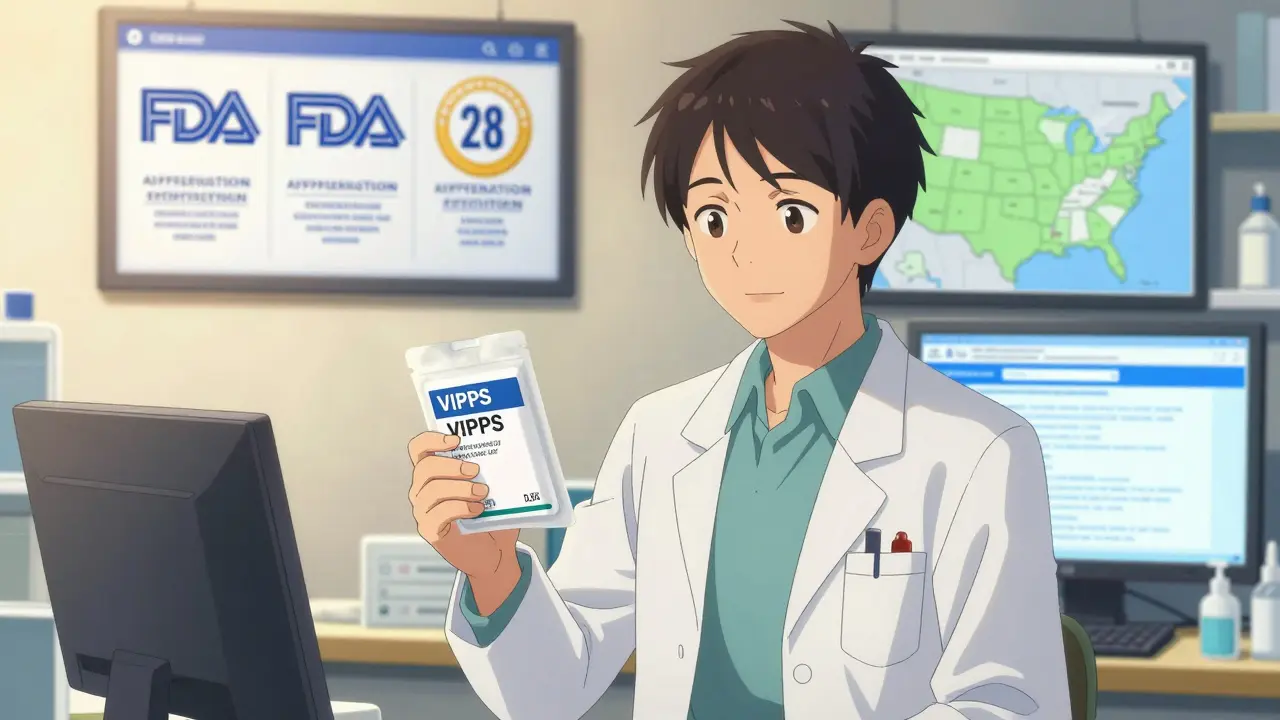
It takes five minutes. But that five minutes could save your life.- Check for the VIPPS seal. Click it. It should link directly to the NABP verification page. If it just shows a graphic, it’s fake.
- Go to the NABP website (nabp.pharmacy) and search the pharmacy’s name. If it’s not listed, don’t buy.
- Look for a U.S. physical address and phone number. Call them. Ask if they’re licensed in your state. If they hesitate or can’t answer, walk away.
- Make sure they require a prescription. If they offer “no prescription needed,” that’s a red flag the DEA and FDA flag immediately.
- Check Trustpilot or Reddit reviews. Legit pharmacies average 4.3 stars from over 100,000 reviews. Fake ones average 1.8 stars, with comments like “received sugar pills” or “no one ever responded after I paid.”
Use tools like GoodRx. It filters only VIPPS-accredited pharmacies and shows real prices. Over 48 million Americans use it monthly. It doesn’t just compare prices - it blocks unsafe sites automatically.
State Laws Are Getting Tighter
In 2025, more states are cracking down. Massachusetts now requires every out-of-state pharmacy shipping to its residents to get a state license - and enforcement started May 1, 2025. Missouri’s new rules, effective December 30, 2024, force pharmacies to notify customers about temperature risks and shipping integrity. Maryland’s rules are coming in 2028. These aren’t bureaucratic hoops - they’re safety nets.Even the DEA got involved. In January 2025, they launched a new registration system for telemedicine platforms. Now, any site that connects you to a doctor for a prescription must be registered with the DEA. That means fewer anonymous prescription mills. It also means more accountability.
What Happens If You Buy From a Fake Site?
You might feel fine at first. But the damage isn’t always immediate. Substandard generics can cause long-term organ damage, antibiotic resistance, or treatment failure. A 2024 Johns Hopkins study linked 47 serious adverse events - including hospitalizations and deaths - to online-purchased generics. One patient in Ohio developed kidney failure after taking a fake generic statin that contained lead.And you won’t get help. Fake pharmacies don’t have customer service. They disappear after payment. No refunds. No recalls. No accountability. Meanwhile, legitimate pharmacies report adverse events to the FDA and work with regulators to fix problems. They’re part of the system. Fake ones are outside it.
What Should You Do Instead?
If you’re looking to save money on prescriptions, here’s what works:- Use GoodRx or SingleCare to compare prices at local and verified online pharmacies.
- Ask your doctor if a generic version is available - and if it’s covered by your insurance.
- Use mail-order pharmacies through your insurer (like CVS Caremark or Express Scripts). They’re VIPPS-accredited and often cheaper than retail.
- If you’re in a rural area or have mobility issues, stick to pharmacies that are part of your health network. They’re regulated, tracked, and safe.
There’s no shortcut to safety. The cheapest option isn’t always the best. Sometimes, the most expensive thing you can buy is a fake pill.
How can I tell if an online pharmacy is real?
Look for the VIPPS seal from the NABP, a U.S. physical address, a licensed pharmacist you can contact, and a requirement for a valid prescription. Verify the pharmacy on the NABP website. If any of these are missing, it’s not safe.
Are generic medications from online pharmacies safe?
Yes - but only if they come from a verified pharmacy. Legitimate online pharmacies sell FDA-approved generics that are identical in effectiveness to brand-name drugs. Unverified sites sell counterfeit versions that may contain no active ingredient, too much, or toxic fillers. The FDA found 97% of unverified generics fail safety tests.
Can I get prescription drugs without a doctor’s note online?
No - not legally. The Ryan Haight Act requires a valid prescription from a licensed provider for any controlled substance. Sites that offer “instant prescriptions” without a real consultation are breaking federal law. Even telemedicine platforms must now register with the DEA and verify your identity.
What should I do if I bought medicine from a fake pharmacy?
Stop taking the medication immediately. Contact your doctor to discuss potential risks. Report the site to the FDA using their online reporting system - they processed over 14,000 reports in early 2025. Also file a complaint with the FTC. Do not trust any future claims from that site.
Why do fake pharmacies still exist if they’re so dangerous?
They operate overseas or use shell companies to hide their location. Many are based in countries with weak drug regulations. They target people desperate for low prices - especially those without insurance or living in rural areas. Enforcement is hard because they change domains constantly and use cryptocurrency payments. But the FDA and DEA are using AI to track them faster - warning letters rose 33% in 2025.
Joe Kwon
December 30, 2025 AT 10:35Let’s cut through the noise: VIPPS isn’t just a seal, it’s a compliance stack. If a site doesn’t have NABP validation + state licensure + 24/7 pharmacist access, it’s not a pharmacy - it’s a crypto-adjacent shell corp. The FDA’s 97% failure rate on unverified generics? That’s not a statistic, it’s a public health emergency. And don’t get me started on temperature degradation - insulin denaturation in non-climate-controlled shipments is a silent killer. Real pharmacies track humidity, not just tracking numbers. If your meds arrive warm, you’re not saving money - you’re gambling with your liver.
Louis Paré
December 30, 2025 AT 19:13So we’re supposed to trust Big Pharma’s approved channels because they’re ‘regulated’? Lol. The same institutions that let OxyContin flood the country now want us to bow to their ‘verified’ online partners. It’s a monopoly dressed in white coats. If you’re paying $400 for insulin, you’re not being safe - you’re being exploited. The real problem isn’t fake pharmacies, it’s a broken healthcare system that leaves people no choice. Stop blaming the desperate. Fix the system.
Marie-Pierre Gonzalez
December 31, 2025 AT 08:01Oh my gosh, this post is SO important!!! 🙌 I just last month ordered some metformin from a site that looked legit but didn’t have the VIPPS seal (oops 😳) and my pharmacist caught it when I brought the bottle in - turns out the label was misspelled ‘metformin’ as ‘metforin’!! I almost took it!! Thank you for warning us!! I’m sharing this with my mom’s book club!! 💕
Janette Martens
January 1, 2026 AT 17:25Canada’s got it right. We don’t let American scam sites ship here. If you’re buying meds online, you better be using a Canadian pharmacy with a .ca domain and a real license. Anything else is treason against public health. Stop feeding these US-based fraud rings with your credit card. We’ve got safe, affordable generics here - use them.
Manan Pandya
January 2, 2026 AT 10:53Very well-structured breakdown. One thing missing: the role of pharmacists in verifying authenticity. In India, we’ve seen counterfeit drugs enter through third-party distributors - same issue. But the solution is always the same: traceability. Legit pharmacies use batch-level serialization. Ask if they can provide the lot number and expiration trace. If they can’t, it’s not just unsafe - it’s untraceable. And untraceable = unaccountable.
Aliza Efraimov
January 2, 2026 AT 19:14I had a friend die from a fake blood pressure pill. Not ‘maybe’ - DEAD. She bought it because she didn’t have insurance and the site said ‘90% OFF’ and had a nice logo. She didn’t know the difference between VIPPS and a stock photo of a stethoscope. This isn’t about saving money. This is about not becoming a statistic in a Google ad. Please. Please. Please. Check the NABP. I’m begging you.
Tamar Dunlop
January 4, 2026 AT 10:31While I wholeheartedly endorse the necessity of regulatory compliance and verification protocols, I must respectfully underscore the ethical imperative of accessibility. The systemic inequities that compel individuals to seek pharmaceutical alternatives online are not remedied by admonitions to ‘check the seal.’ One cannot eat a VIPPS certificate. The solution lies not only in enforcement, but in the democratization of healthcare infrastructure - particularly in rural and underserved communities. Safety must not be a privilege of socioeconomic status.
Emma Duquemin
January 5, 2026 AT 21:54Y’all are acting like fake meds are some new horror story. Nah. I’ve been buying generics online since 2018. I’ve had 3 different meds from 4 different sites - all legit because I checked the NABP like a boss. The REAL drama? When your insurance forces you to switch to a generic that’s 80% cheaper but you don’t know if it’s the same stuff. That’s the real trauma. So yeah - check the seal. But also, ask your pharmacist to cross-check the pill imprint code. They’ve got databases for that. It’s like a barcode for your brain pills. 🔍💊
Kevin Lopez
January 7, 2026 AT 02:0497% failure rate. No prescription = illegal. VIPPS = non-negotiable. Stop scrolling. Check the site. Done.
Duncan Careless
January 8, 2026 AT 00:03Bit of a tangent, but I’ve been using GoodRx for my dad’s statin - saved him £80/month. The site flagged a ‘suspicious’ vendor that looked exactly like a legit one. Turned out it was a copycat with a .xyz domain. GoodRx blocked it automatically. Honestly? I didn’t even know that was a thing. Thanks for the reminder - I’ll be sharing this with my mum’s group chat. She’s still buying from ‘CanadaPharmaOnline’… sigh.