

Heart Failure Medication Monitoring Tool
This tool helps you create a personalized monitoring schedule based on the heart failure medications you're taking. Proper monitoring is crucial to avoid serious complications while maximizing treatment benefits.
Select your medications above to see your personalized monitoring schedule.
Your Monitoring Schedule
Select your medications to see your personalized monitoring schedule.
Risk Assessment
Based on your selected medications, your most important monitoring priorities are:
- Weekly potassium checks if taking MRAs
- Daily weight tracking with SGLT2 inhibitors
- Blood pressure monitoring with ARNIs
What to Monitor & When
Important: Monitoring is crucial for heart failure medications. Missing tests can lead to serious complications like hyperkalemia, low blood pressure, or fluid overload. Never skip recommended checks.
Heart failure isn’t just about a weak heart-it’s about a system that’s struggling to keep up. And the medications used to treat it? They’re powerful. But they’re not harmless. Take the four cornerstone drugs of guideline-directed medical therapy (GDMT): ARNIs, beta-blockers, MRAs, and SGLT2 inhibitors. Each one can save your life. But each one also needs careful watching. Skip the monitoring, and what’s meant to help can hurt.
Why Monitoring Isn’t Optional
More than 6 million Americans live with heart failure. Every year, 1 million end up in the hospital because their meds weren’t managed right. It’s not that doctors don’t know what to do. It’s that monitoring is messy. It takes time. It needs follow-up. And too often, it gets skipped.
Here’s the truth: taking a pill isn’t enough. You need to know how your body is responding. Blood pressure. Heart rate. Potassium levels. Kidney function. These aren’t just numbers on a lab sheet-they’re warning signs. Miss one, and you could end up back in the ER.
Beta-Blockers: Slowing Down to Survive
Beta-blockers like carvedilol, bisoprolol, and metoprolol succinate don’t speed up your heart-they slow it down. And that’s exactly why they work. In heart failure, your heart beats too fast, too hard, and burns out. Beta-blockers calm it down.
But here’s the catch: you have to get to the right dose. Most people start low. Then, over weeks or months, the dose goes up. Why? Because the benefits come with time. A resting heart rate of 50-60 beats per minute is the sweet spot. If you’re still hitting 70 or higher, your heart is still under stress.
That’s where ivabradine comes in. If you can’t tolerate higher beta-blocker doses, ivabradine can help lower your heart rate without dropping blood pressure. But it’s not for everyone. If you have chest pain from heart disease, ivabradine raises your risk of heart attacks by 28%. And if you’re over 75 or have a slow heart rhythm, you need a lower dose-2.5 mg twice a day, not 5 mg.
Monitoring? Check your pulse weekly. Track your blood pressure. And don’t stop the drug just because you feel tired at first. Side effects often fade. But if your heart rate drops below 50 and you’re dizzy or fainting, call your doctor.
MRAs: The Potassium Trap
Mineralocorticoid receptor antagonists-spironolactone and eplerenone-are among the most effective drugs for reducing death in heart failure. They cut mortality by 30%. But they also raise potassium levels. And high potassium? That can stop your heart.
Before you start an MRA, your doctor checks your potassium and kidney function. Then, within 3 to 7 days, they check again. Why so soon? Because potassium can spike fast. Especially in older adults, people with kidney disease, or non-Caucasian patients, who are 75% more likely to develop dangerous high potassium levels.
After that, checks every 3 to 6 months are standard. But here’s what happens in real life: 68% of eligible patients never even get an MRA. Why? Fear of hyperkalemia. But here’s the irony: the risk is manageable. With proper monitoring, most people stay safe. And without it? You’re missing out on a drug that could add years to your life.
Also watch your diuretics. If you’re on furosemide or bumetanide, your potassium might drop. Then you start an MRA, and it shoots back up. It’s a balancing act. Your doctor needs to adjust both meds together.

SGLT2 Inhibitors: The New Kid on the Block
SGLT2 inhibitors-dapagliflozin, empagliflozin, canagliflozin-were originally for diabetes. Then they proved they could help heart failure patients even without diabetes. Now, they’re recommended for nearly everyone with heart failure, including those with preserved ejection fraction (HFpEF).
They work by making your kidneys flush out sugar and salt. That reduces fluid overload. But they also cause volume loss. In older adults, that can mean dizziness, falls, or even kidney injury. And while they’re generally safe, watch for genital yeast infections. In trials, nearly 12% of patients got them-more than double the placebo group.
Here’s the surprise: diabetic ketoacidosis. Yes, even if your blood sugar is normal. It’s rare-less than 1%-but it happens. If you feel nauseous, have deep breathing, or feel unusually tired, get checked. Don’t wait.
Monitoring? Check your weight daily. Watch for dry mouth or lightheadedness. Get a kidney function test before starting and again in 1-2 months. After that, every 6 months is fine unless you’re sick or dehydrated.
ARNIs: The Blood Pressure Balancing Act
ARNIs-like sacubitril-valsartan-replace older ACE inhibitors. They’re more effective at reducing death and hospitalizations. But they’re also more likely to cause low blood pressure.
In the PARADIGM-HF trial, 14% of people on sacubitril-valsartan had symptomatic low blood pressure. That’s higher than with enalapril. So when you start, your doctor checks your blood pressure within 1-2 weeks. If you’re dizzy, weak, or your BP drops below 90/60, the dose might need to be lowered.
Women are especially sensitive. Studies show they have 30% higher drug levels than men. That means lower starting doses and slower titration. And if you’re switching from an ACE inhibitor, you need a 36-hour washout period. Take them too close together? You risk swelling in your face or throat-a rare but serious reaction called angioedema.
Special Populations: One Size Doesn’t Fit All
Heart failure isn’t the same for everyone. Your age, gender, race, and other conditions change how you respond to meds.
- Older adults (75+): Lower doses of ivabradine. Watch for dehydration with SGLT2 inhibitors. Be cautious with MRAs-kidney function declines with age.
- Women: Higher drug exposure to ARNIs. Need slower titration. More prone to low blood pressure.
- Non-Caucasian patients: Higher risk of hyperkalemia with MRAs. Need closer potassium checks.
- People with kidney disease: Avoid or reduce MRAs and SGLT2 inhibitors if eGFR is below 30. Monitor closely.
- Those on multiple meds: 37% of heart failure patients take four or more drugs. That’s a recipe for interactions. Check for CYP3A4 inhibitors (like clarithromycin or grapefruit juice) if you’re on ivabradine-they can spike levels dangerously.
What’s New in Monitoring
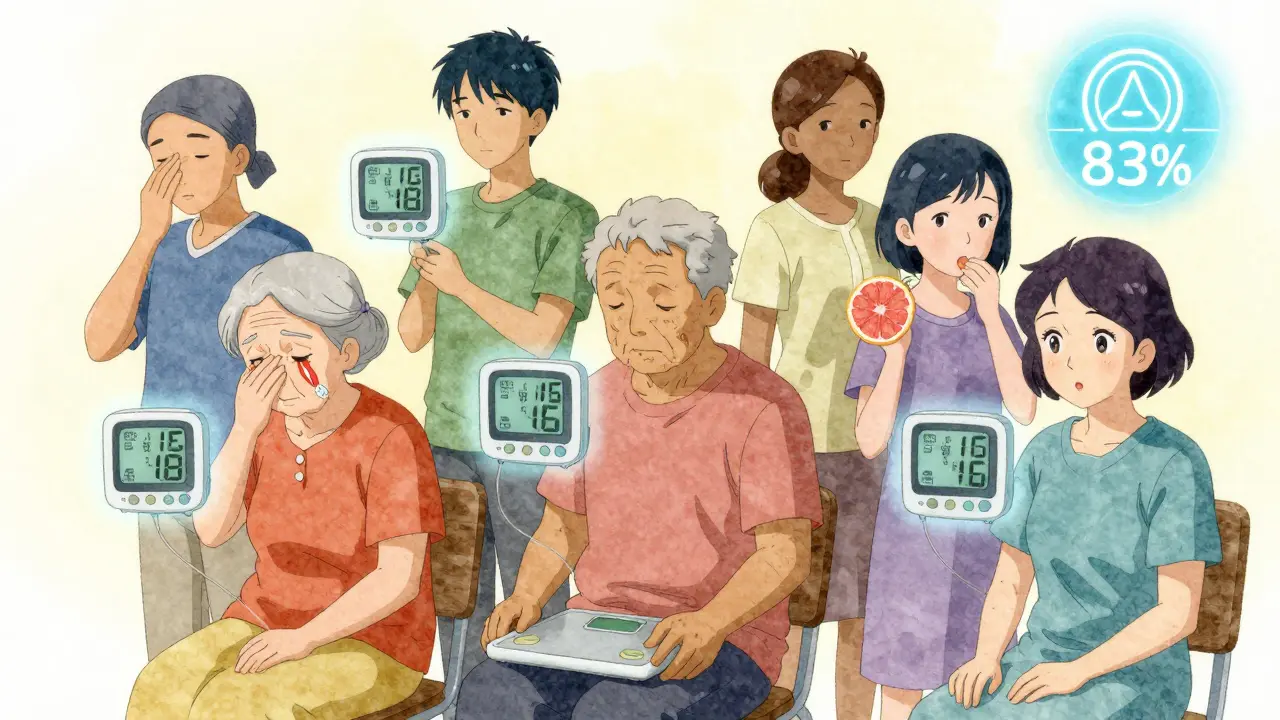
Technology is catching up. AI tools now predict high potassium risk with 83% accuracy by scanning your lab results and meds. Smart apps remind you to take pills and log your weight-improving adherence by 27%. And some hospitals now use remote monitors that track your lung pressure through an implantable device. In trials, this cut hospital visits by 30%.
But here’s the gap: only 1.2% of eligible patients have these devices. Why? Cost. Access. Lack of training. Most clinics still rely on phone calls and lab visits.
Pharmacist-led programs are filling the gap. In one study, when pharmacists managed titration, patients reached target doses 63% of the time-up from 28%. Electronic alerts in EHRs cut MRA discontinuations by 35%. These aren’t fancy gadgets. They’re simple systems. And they work.
The Bottom Line
Heart failure meds are life-saving-but only if they’re managed right. Too many patients get the drugs but never get the monitoring. That’s like giving someone a fire extinguisher and never teaching them how to use it.
Know your numbers. Track your weight. Report dizziness. Ask for potassium checks. Push for dose titration. If your doctor isn’t checking your labs or adjusting your meds, speak up. You’re not just taking pills-you’re managing a complex system. And you deserve a plan that’s as careful as it is effective.
By 2030, heart failure care will be personalized-based on your genes, your age, your kidney function, your lifestyle. But for now? The best tool you have is awareness. And consistency. Don’t let a missed lab test or skipped check-up cost you your health.
How often should potassium levels be checked when taking an MRA for heart failure?
Before starting an MRA like spironolactone or eplerenone, your potassium and kidney function should be checked. Then, repeat the test within 3 to 7 days after starting or increasing the dose. After that, monitoring every 3 to 6 months is standard-if your kidney function is stable and you’re not on other drugs that affect potassium. More frequent checks are needed if you’re elderly, have kidney disease, or are taking diuretics.
Can I take SGLT2 inhibitors if I don’t have diabetes?
Yes. SGLT2 inhibitors like dapagliflozin and empagliflozin are now approved for heart failure patients regardless of diabetes status. They work by helping your kidneys remove extra salt and fluid, which reduces heart strain. Clinical trials show they lower hospitalizations and improve survival even in people with normal blood sugar. The FDA approved them for heart failure with preserved ejection fraction (HFpEF) in 2023, expanding their use to about half of all heart failure patients.
Why is my doctor hesitant to prescribe an MRA?
Many doctors avoid MRAs because of fear of high potassium (hyperkalemia), which can be dangerous. But studies show that with proper monitoring-checking potassium before and within a week of starting-most patients stay safe. In fact, 68% of eligible patients never even get an MRA, even though it cuts death risk by 30%. Pharmacist-led programs and EHR alerts have shown they can reduce unnecessary discontinuations by 35%. If you’re a good candidate, ask about a monitoring plan.
What should I do if I feel dizzy after starting a new heart failure medication?
Dizziness is a red flag-especially after starting ARNIs, beta-blockers, or diuretics. It often means your blood pressure dropped too low. Check your blood pressure at home if you can. If it’s below 90/60 or you feel faint, skip your next dose and call your doctor. Don’t just wait it out. Your dose may need to be lowered. This is especially common in women and older adults. Never ignore dizziness-it can lead to falls or worse.
Is it safe to take ivabradine with other heart medications?
Ivabradine can interact with certain drugs that affect liver enzymes, especially strong CYP3A4 inhibitors like clarithromycin, itraconazole, or grapefruit juice. These can raise ivabradine levels by 2.5 to 3 times, increasing the risk of slow heart rate or dizziness. If you’re prescribed ivabradine, tell your doctor about every other medication-including over-the-counter and herbal supplements. If you’re on one of these inhibitors, your ivabradine dose must be cut to 2.5 mg twice daily. Also, avoid ivabradine if you have angina-it increases heart attack risk by 28%.
Next Steps: What to Do Today
- If you’re on heart failure meds, ask your doctor: “Am I on the right dose?” and “When is my next potassium check?”
- Start tracking your weight daily. A 2-pound gain in one day or 5 pounds in a week means fluid is building up.
- Keep a list of all your meds, including doses and when you take them. Bring it to every appointment.
- If you’re over 65, ask if you’re on the right ivabradine dose-2.5 mg, not 5 mg.
- Use a pill organizer or app. One study showed medication adherence improved by 27% with simple reminders.
Heart failure treatment has never been more effective. But it’s only as good as the care behind it. Don’t let a missed lab test or ignored symptom undo all the progress. Stay informed. Stay involved. Your heart is counting on it.
Gray Dedoiko
December 23, 2025 AT 16:54Been on an MRA for a year now. My potassium spiked to 5.8 once-scared the hell out of me. But my pharmacist caught it during a routine check and we dropped the dose. Now I’m stable. Don’t let fear stop you, but don’t ignore the labs either. This stuff is serious business.
Jillian Angus
December 24, 2025 AT 21:07I track my weight every morning. If I gain 3 lbs overnight, I skip my diuretic and call my doc. Simple. Works. No fancy apps needed.
CHETAN MANDLECHA
December 25, 2025 AT 21:51My cardiologist in Delhi told me to avoid MRAs because I’m Indian and ‘at higher risk’ for hyperkalemia. I pushed back. Got the drug. Now I’m on a strict 7-day lab schedule. No issues in 14 months. Don’t let bias dictate your care.
EMMANUEL EMEKAOGBOR
December 26, 2025 AT 17:07As someone from Nigeria where access to labs is a luxury, I appreciate this post. We don’t have remote monitors or AI alerts. We have family members reminding each other to take pills and walking 10km to the clinic every three months. The system fails us daily. But we still survive. We have to.
Aurora Daisy
December 28, 2025 AT 09:53Oh wow, another ‘heart failure is complex’ lecture. Did you also write a 10-page PDF on how to breathe? The real problem? Doctors who think ‘monitoring’ means writing a prescription and hoping for the best. No wonder people die.
Charles Barry
December 29, 2025 AT 11:39Let’s be real-this whole ‘GDMT’ thing is a pharmaceutical marketing scheme. ARNIs cost $1,200 a month. Beta-blockers? A dollar. And yet they push the expensive stuff because Big Pharma owns the guidelines. They don’t care if you’re dizzy or broke. They care about the bottom line.
And don’t get me started on SGLT2 inhibitors. ‘They work for non-diabetics’? Sure. Until you’re one of the 12% who get yeast infections and your doctor blames you for ‘poor hygiene’.
This isn’t medicine. It’s a revenue stream with a stethoscope.
Rosemary O'Shea
December 30, 2025 AT 05:42I’m frankly appalled that this article treats patients like passive recipients of care. We’re not lab rats. We’re human beings with lives, jobs, and dignity. And yet here we are-told to weigh ourselves daily, track potassium, avoid grapefruit, and beg our doctors for titration. Meanwhile, the system rewards inaction.
My cardiologist told me to ‘wait six months’ for a potassium check. I did. I ended up in the ER. Don’t wait. Advocate. Or die quietly.
Isaac Bonillo Alcaina
December 31, 2025 AT 20:58There’s a grammatical error in the third paragraph: ‘Every year, 1 million end up in the hospital because their meds weren’t managed right.’ Should be ‘medications’ or ‘their meds weren’t managed properly.’ Also, ‘dizziness’ is misspelled as ‘dizzyness’ in the SGLT2 section. This is amateur hour. How can we trust medical advice from someone who can’t proofread?
Bhargav Patel
January 1, 2026 AT 15:14Heart failure is not merely a physiological condition-it is a metaphysical negotiation between the body’s fragility and the mind’s insistence on continuity. We take pills not just to extend life, but to postpone the existential confrontation with our own impermanence. Each lab result is a whisper from the universe: ‘Are you still willing to fight?’
And yet, the system reduces this sacred struggle to checkboxes and algorithms. We are not data points. We are stories. We are the trembling hands that hold the pill organizer, the silent tears shed after a missed appointment, the quiet courage of waking up every day knowing the heart may not keep pace.
Perhaps the most powerful medication is not ARNI or MRA, but the human connection-the doctor who remembers your name, the nurse who calls just to ask how you slept, the pharmacist who explains why grapefruit is not just a fruit, but a silent saboteur.
Technology can monitor, but only compassion can heal. Let us not mistake efficiency for care.