
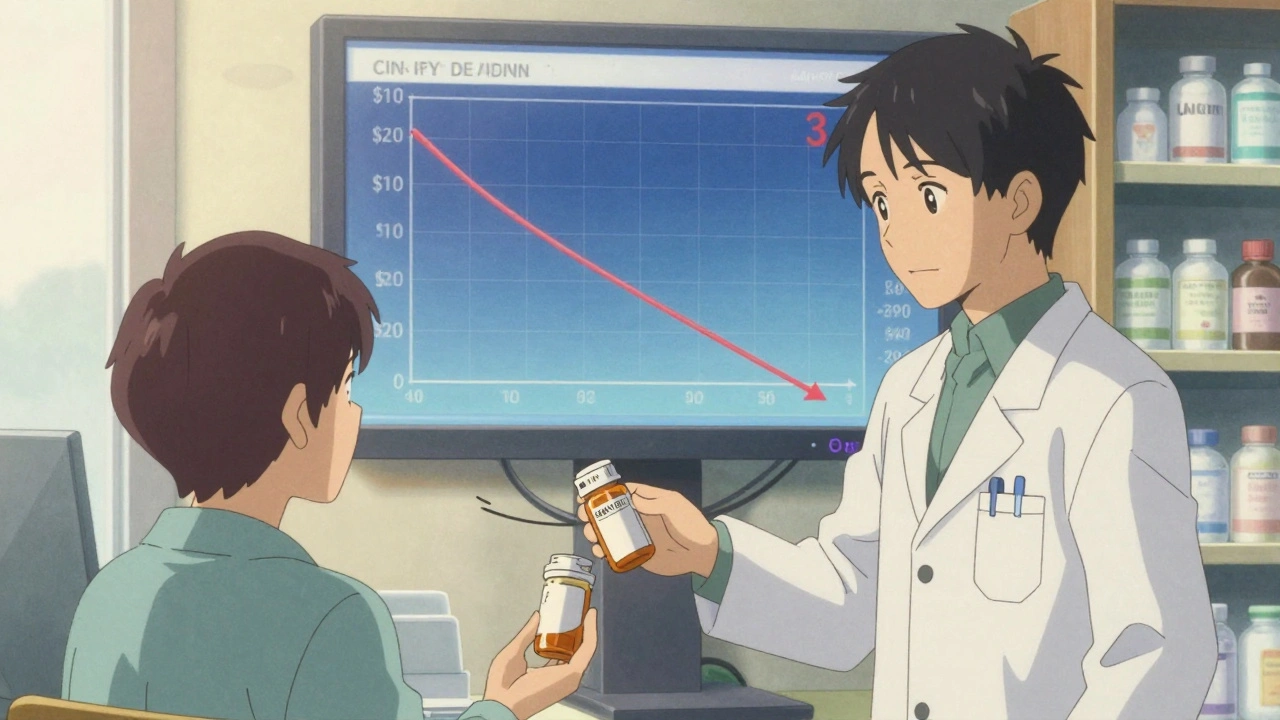
Medicaid spends billions on prescription drugs every year - but most of that money isn’t going to brand-name pills. In fact, generic drugs make up 84.7% of all Medicaid prescriptions, yet they account for just 15.9% of total drug spending. That’s the power of generics. But even with these massive savings, states are still looking for ways to cut costs further. With drug prices rising and shortages growing, state Medicaid programs are getting creative - and sometimes controversial - in how they manage generic drug spending.
How Medicaid Saves Money on Generics (It’s Not What You Think)
The federal Medicaid Drug Rebate Program (MDRP) is the backbone of generic drug pricing. Since 1990, drug makers have been required to give Medicaid a rebate on every generic drug they sell. For generics, that rebate is either 13% of the Average Manufacturer Price (AMP) or the difference between AMP and the best price they offer to other buyers - whichever is higher. Sounds simple, right? But here’s the catch: states can’t negotiate extra discounts on generics like they can with brand-name drugs. The rebate formula is locked in by federal law.
So how do states squeeze out more savings? They don’t fight the rebate. They fight the price at the pharmacy counter. That’s where Maximum Allowable Cost (MAC) lists come in. Forty-two states use MAC lists to set a cap on how much they’ll pay for a generic drug. If a pharmacy tries to bill Medicaid for $10 for a common blood pressure pill, but the state’s MAC is $5, the state pays $5. The pharmacy eats the rest - or finds a cheaper supplier.
Thirty-one of those states update their MAC lists quarterly or more often. That’s critical. Generic drug prices swing wildly. A drug might drop from $8 to $3 overnight after a new manufacturer enters the market. If a state updates its list slowly, pharmacies get stuck with losses - and patients might face delays or denials.
Generic Substitution: The Default Move
Nearly every state - 49 of them - requires pharmacists to substitute a generic version when it’s available, unless the doctor says no. This isn’t just policy. It’s routine. When you walk into a pharmacy with a prescription for Lipitor, the pharmacist will hand you atorvastatin unless you specifically ask for the brand. Medicaid programs lean on this rule hard. It’s the cheapest, easiest way to cut costs without changing a single law.
But it’s not foolproof. Some patients report side effects switching between generic brands. One study found that 1 in 5 patients on antiseizure meds had issues after switching between different generic manufacturers. Medicaid programs don’t track this closely. They track dollars. And dollars are falling.
Therapeutic Interchange and Preferred Drug Lists
Some states go further. Twenty-eight states have preferred drug lists - essentially, a shortlist of generics they’ll pay for without extra paperwork. If your doctor prescribes a drug that’s not on the list, you or your provider have to jump through hoops to get it approved. Sometimes, that means switching to a cheaper alternative in the same drug class.
For example, if a doctor prescribes a brand-name cholesterol drug, the state might say: “Use simvastatin instead.” It’s the same effect, cheaper price. This is called therapeutic interchange. It works - until it doesn’t. Patients with complex conditions sometimes need a specific formulation. When states push too hard, they risk disrupting care.
Price Gouging Laws: Targeting Unfair Hikes
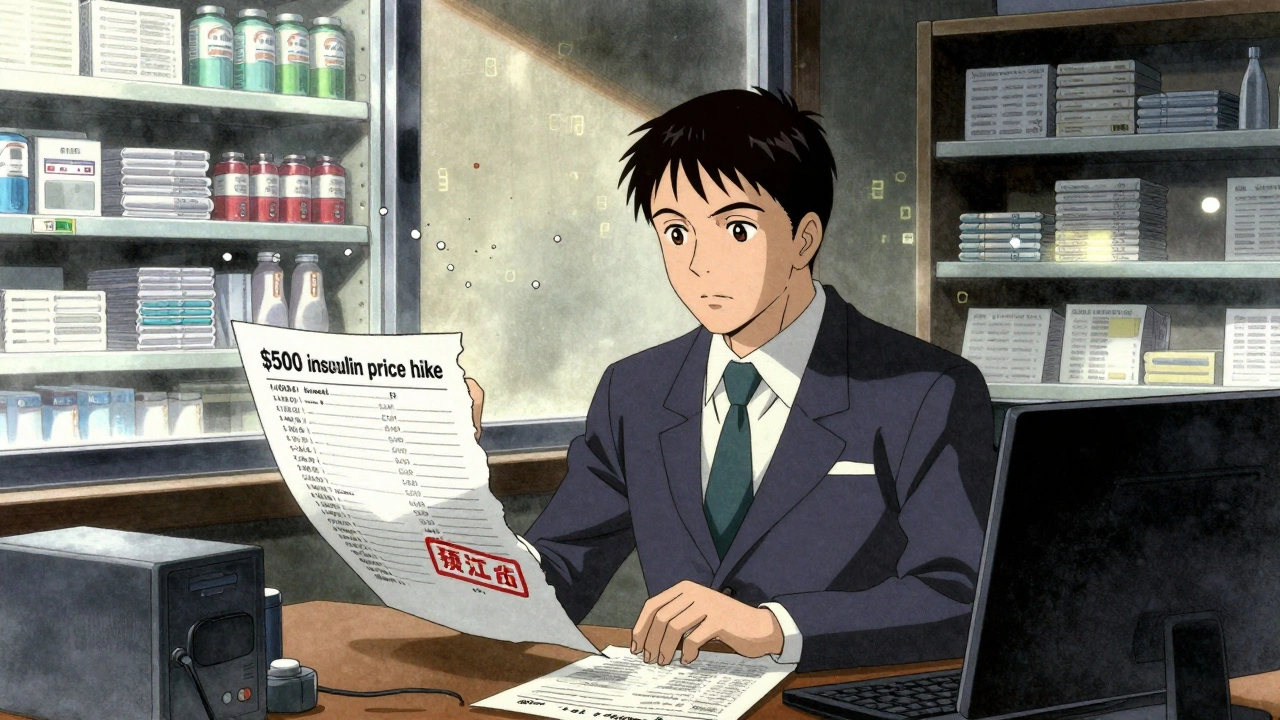
Here’s where things get spicy. In 2020, Maryland passed a law making it illegal for manufacturers to jack up prices on generic drugs without new clinical data. If a drug that’s been on the market for 15 years suddenly jumps from $0.50 to $5 per pill, the state can step in. Other states like California and Colorado followed suit.
This targets the worst offenders - companies that buy old, off-patent drugs, sit on them, then raise prices 500% overnight. One infamous case: a generic version of a diabetes drug that went from $10 to $1,200 in three years. Maryland’s law slapped a $50,000 fine on the company. It’s rare, but it sends a message.
Not everyone agrees. The Pharmaceutical Care Management Association says these laws scare manufacturers away. If a company thinks a state might punish them for raising prices, they might just stop making the drug. And that’s how shortages start.
The Shortage Problem: Saving Money vs. Getting Medicine
Twenty-three states reported shortages of critical generic drugs in 2023. The average shortage lasted 147 days. That’s almost five months without access to a basic medication like insulin, antibiotics, or heart pills.
Why? Because making generics is a low-margin business. If a drug costs $0.10 to produce and sells for $0.25, there’s little incentive to keep making it - especially if raw materials get expensive or regulations tighten. When one manufacturer quits, others don’t always jump in fast enough.
Twelve states introduced new laws in 2024 to fix this. They’re creating strategic stockpiles. Oregon and Washington are teaming up with other states to buy bulk generics in advance. Texas is carving out special funding for high-risk drugs. The goal: have a six-month buffer so when a shortage hits, patients don’t go without.

Pharmacy Benefit Managers: The Hidden Middlemen
Thirty-three states hire companies like OptumRx or Magellan to handle their pharmacy benefits. These Pharmacy Benefit Managers (PBMs) negotiate prices, process claims, and set reimbursement rates. Sounds helpful - until you realize they take a cut.
Here’s how it works: A pharmacy buys a generic drug for $2. It bills Medicaid $10. The PBM keeps $5 as a “service fee.” The pharmacy gets $5. But Medicaid’s MAC list says the drug shouldn’t cost more than $3. So Medicaid pays $3. The pharmacy gets $3. The PBM gets nothing. And now the pharmacy is out $2. That’s why 74% of independent pharmacies say they’re getting delayed payments or claim denials because of MAC list mismatches.
Twenty-seven states have responded by forcing PBMs to disclose what they actually pay for drugs. Nineteen states now require transparency on acquisition costs. That’s a big shift. It’s like finally seeing the receipts.
What’s Next? The Future of Generic Drug Control
States aren’t slowing down. The Congressional Budget Office predicts 15 more states will pass laws targeting generic drug prices in 2025. Some are looking at price caps tied to international benchmarks. Others are exploring state-run generic manufacturing - like Vermont’s plan to make its own naloxone.
But the biggest looming issue? GLP-1 drugs for obesity. These new medications - like Ozempic and Wegovy - cost $12,000 a year. Thirteen state Medicaid programs cover them, but only with strict rules: patients must try other treatments first, show they have diabetes or severe obesity, and meet strict BMI thresholds. If the federal government requires Medicaid to cover these drugs for obesity without restrictions, it could add $1.2 billion to state budgets in a single year.
That’s why states are doubling down on generics. If they can’t control the cost of new drugs, they have to make sure the old ones stay cheap. The strategy is simple: use generics to absorb the shock.
Can States Really Save Money Without Hurting Access?
The numbers say yes. The Congressional Budget Office estimates state drug policies could cut generic spending by 5-8% annually - that’s billions saved. By 2027, those savings could hit $3.8 billion a year.
But there’s a flip side. If states push too hard - if MAC lists are too low, if rebates are changed, if manufacturers get scared off - they risk shortages. And when shortages hit, patients get sicker. Hospitals get busier. Costs go up.
The best-performing states are the ones that balance both. They update MAC lists monthly. They track shortages in real time. They force PBMs to be honest. And they don’t punish manufacturers for small price changes - only for blatant gouging.
It’s not about lowering prices at all costs. It’s about making sure the system works - for patients, pharmacies, and the state budget.
Dan Cole
December 6, 2025 AT 09:53Let’s be real-this whole system is a house of cards built on accounting tricks and corporate loopholes. States think they’re saving money by capping MAC prices, but they’re just pushing the pain downstream: pharmacies go bankrupt, patients get denied meds, and the real villains-PBM middlemen-keep taking their 50% cut while pretending they’re ‘efficiency experts.’ The rebate formula? A joke. The federal government lets manufacturers game the system by inflating AMPs while offering ‘best prices’ to private insurers. It’s not broken-it’s designed this way.
And don’t get me started on therapeutic interchange. You think a diabetic on insulin glargine can just swap to a ‘bioequivalent’ generic because a state bureaucrat says so? One batch from a different manufacturer, and their glucose spikes. No one tracks adverse events because ‘it’s the same drug.’ Same drug? Tell that to the guy who had a seizure after switching generic seizure meds. The state doesn’t care. They care about the $0.03 per pill they saved.
Max Manoles
December 6, 2025 AT 18:12There’s a quiet revolution happening in state Medicaid programs, and it’s not getting enough attention. The real win isn’t the MAC lists or the rebates-it’s the transparency laws forcing PBMs to disclose acquisition costs. For years, these companies operated like black boxes, siphoning off billions under the guise of ‘administrative fees.’ Now, states like California and Oregon are publishing what they actually pay per pill. That’s accountability. That’s power shifting back to the public. It’s not sexy, but it’s the most meaningful reform in decades.
And the stockpiling initiatives? Brilliant. Oregon and Washington aren’t just reacting to shortages-they’re preventing them. This isn’t hoarding. It’s strategic resilience. We’ve seen what happens when supply chains collapse. This is the kind of pragmatic, long-term thinking we need more of.
Katie O'Connell
December 8, 2025 AT 00:55It is, indeed, a matter of considerable scholarly interest that the Medicaid Drug Rebate Program, established in 1990, has remained functionally static while the pharmaceutical landscape has undergone radical transformation. The structural inflexibility of the rebate mechanism-predicated upon Average Manufacturer Price and Best Price differentials-renders it increasingly anachronistic in an era of volatile generic pricing dynamics. Furthermore, the absence of state-level price negotiation authority constitutes, in my estimation, a profound policy failure.
It is also noteworthy that Pharmacy Benefit Managers, as non-regulated intermediaries, have assumed a quasi-monopolistic role in the distribution chain, extracting rents with minimal oversight. The recent legislative movements toward cost transparency are, therefore, not merely prudent but ethically imperative. One might posit that the future of public health finance lies not in punitive price controls, but in structural re-engineering of the reimbursement architecture.
Clare Fox
December 9, 2025 AT 21:26Akash Takyar
December 10, 2025 AT 15:27It is truly commendable that state Medicaid programs are taking proactive steps to ensure affordability and accessibility of essential generic medications. The implementation of Maximum Allowable Cost lists, coupled with real-time price updates and strategic stockpiling, reflects a balanced and responsible approach to public health stewardship.
Moreover, the transparency mandates imposed on Pharmacy Benefit Managers are a significant milestone in restoring trust in the system. By requiring disclosure of acquisition costs, states are empowering stakeholders and reducing exploitative practices. Such initiatives exemplify how policy, when grounded in data and compassion, can serve the greater good without compromising safety.
Let us continue to support these efforts with diligence, as the health of our citizens depends on thoughtful, evidence-based governance.
Arjun Deva
December 10, 2025 AT 17:35Inna Borovik
December 11, 2025 AT 19:04Let’s not pretend this is about patients. It’s about control. States don’t care if you have a seizure because they switched your generic. They care that the pharmacy got paid $5 instead of $10. The MAC lists? Arbitrary. The ‘preferred drug lists’? Gatekeeping dressed up as efficiency. And don’t even get me started on PBMs-they’re not middlemen, they’re parasites. They take 50% of the reimbursement and then deny claims because the ‘cost exceeds MAC’-even when the pharmacy paid $2 and the state’s MAC is $3. That’s not savings. That’s theft.
The ‘transparency’ laws? Too little, too late. And the stockpiles? A Band-Aid on a hemorrhage. The real solution? Nationalize drug manufacturing. Let the government make generics. No profit motive. No PBM cuts. No price spikes. But no, that’s too radical. Let’s keep playing with spreadsheets while people die.
Jackie Petersen
December 13, 2025 AT 06:42So let me get this straight-we’re letting foreign countries dictate our drug prices? The article mentions international benchmarks like it’s a good thing. What’s next? We import our insulin from China and our antibiotics from India because they’re cheaper? We’re not just losing money-we’re losing sovereignty. This isn’t healthcare policy. It’s surrender. And now we’re supposed to thank the states for ‘saving’ us by rationing medicine? No. We need American-made generics. Made by Americans. Paid for by Americans. Not some algorithm on a spreadsheet in Sacramento.
Annie Gardiner
December 13, 2025 AT 19:42Wait, so the real villain here is… the patients who need the drugs? The ones who can’t tell the difference between generic brands? The ones who get confused when their blood pressure med suddenly tastes like chalk? No, no-the villain is the state that tried to save money. The villain is the pharmacist who substituted the pill. The villain is the doctor who didn’t write ‘dispense as written.’
It’s all so obvious now. This isn’t about cost control. It’s about punishing the vulnerable. If you can’t afford to pay $10 for a pill, you shouldn’t be allowed to take it. The system works perfectly. The poor get sicker. The rich get Ozempic. The state gets its 8% savings. Everyone wins. Except the people. But who cares about them?
Rashmi Gupta
December 14, 2025 AT 18:19Andrew Frazier
December 16, 2025 AT 11:45Dan Cole
December 18, 2025 AT 10:38Re: Max Manoles’ comment about transparency-yes, it’s a step. But it’s like putting a seatbelt on a sinking ship. You’re still going under. The real issue? No one’s holding manufacturers accountable for *why* prices spike. A company buys a 30-year-old drug, sits on it for five years, then raises it 1,200% overnight. No R&D. No innovation. Just greed. And the states? They slap a $50,000 fine and call it justice. That’s less than two hours of profit for that company. It’s not a deterrent. It’s a tax.
And now they’re talking about state-run manufacturing? Finally. But why wait? Why not start now? Why let another patient die waiting for insulin because a PBM’s algorithm says the MAC is $2.50 and the only available batch costs $2.75? We don’t need more lists. We need a public option. For generics. For everything.