
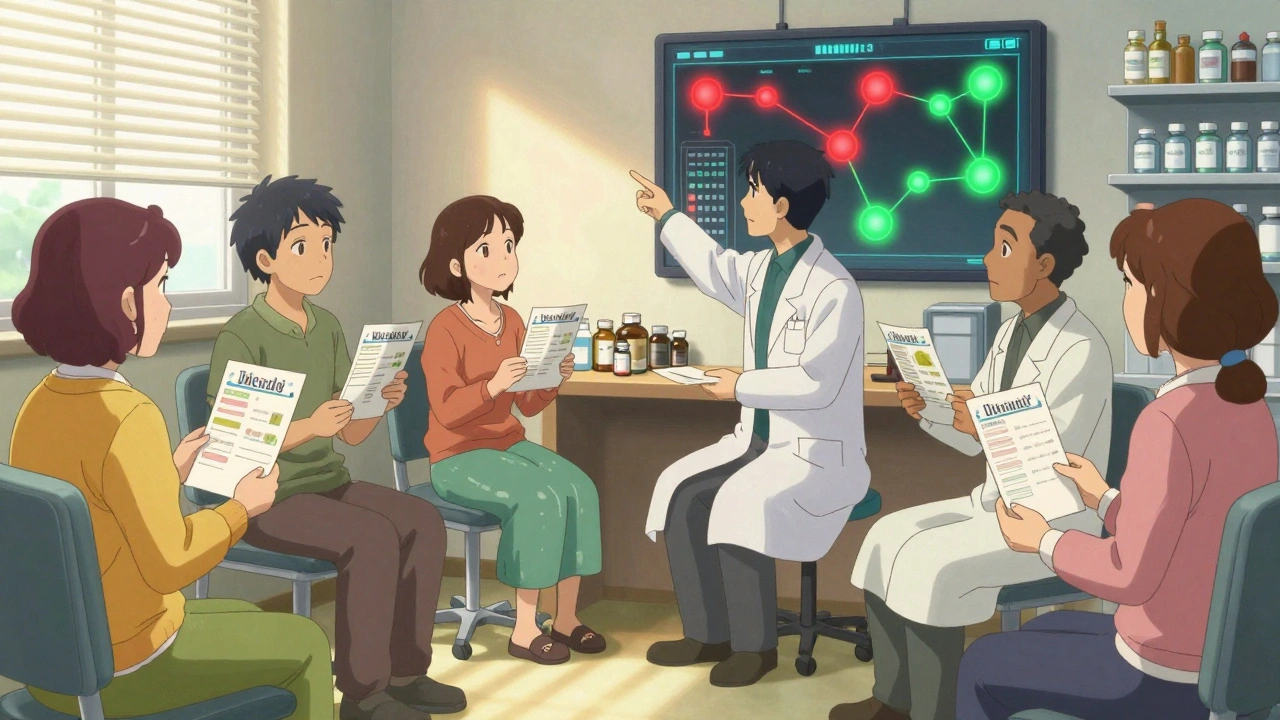
Every year, more than 1.3 million people in the U.S. are injured because of medication errors. Many of these mistakes happen because no one took the time to look at the full picture - all the pills, doses, and interactions - together. Your pharmacist can do that. And most people don’t even know they can walk in and ask for it.
Pharmacy consultation services aren’t just for people on dozens of meds or with complex conditions. If you take even two or three medications regularly - including over-the-counter drugs, vitamins, or supplements - you’re at risk for hidden interactions. Your pharmacist has the training to spot them. And they’re available more often than your doctor.
Why Your Pharmacist Is Your Best Medication Safety Partner
You visit your pharmacy an average of 17 times a year. You see your primary care doctor about 9 times. That means your pharmacist sees you more than twice as often. They’re the one holding your prescription, checking your refill history, and watching for changes in how you’re taking your meds.
Pharmacists don’t just count pills. They look at the whole picture: What’s the purpose of this drug? Is it working? Are you having side effects? Is it clashing with your blood pressure med or your fish oil? A 2023 study showed that pharmacist-led reviews prevented 87% of severe adverse drug events in VA hospitals. That’s not luck - it’s expertise.
Community pharmacists conduct an average of 12.7 consultations per day. Each one lasts about 15 minutes. That’s enough time to go through every medication you’re taking, check for duplicates, spot allergies you forgot to mention, and explain why you’re supposed to take that pill with food - not on an empty stomach.
What Happens During a Medication Consultation?
A real consultation isn’t a quick chat at the pickup window. It’s a structured review. Here’s what it typically includes:
- Medication list update - You bring in everything: prescriptions, OTC painkillers, herbal teas, magnesium supplements. The pharmacist writes it all down in one place.
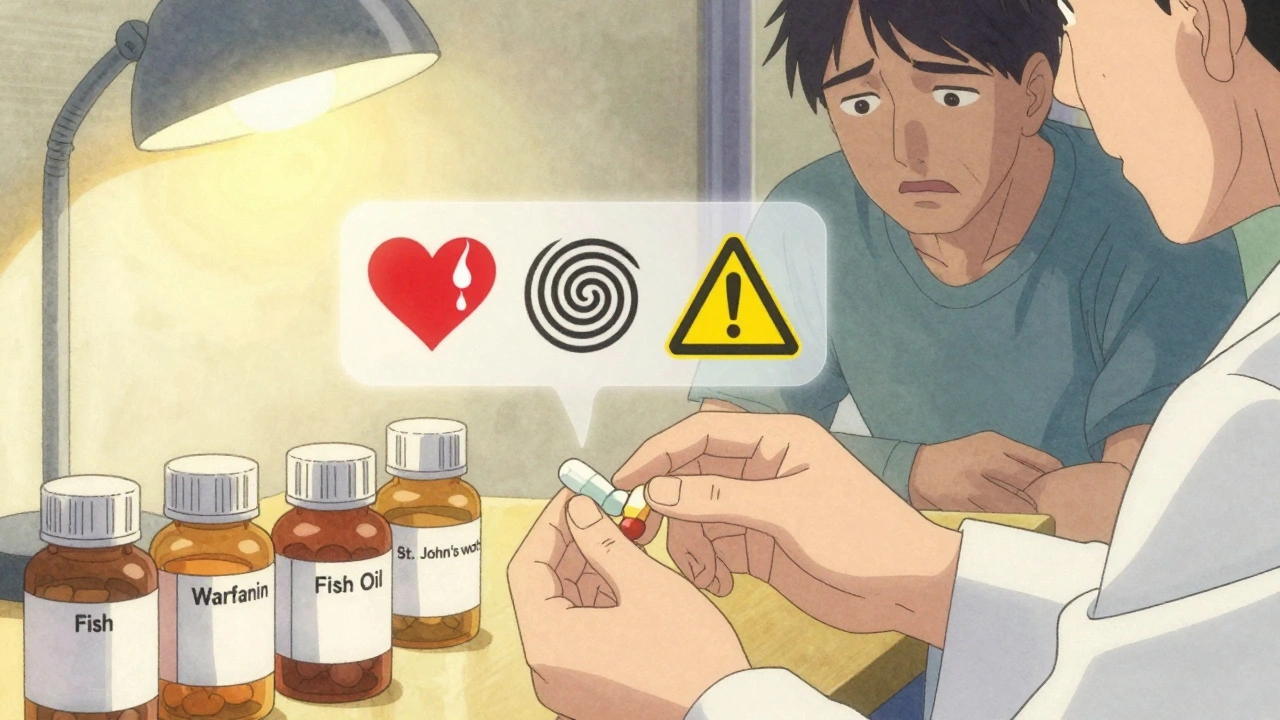
- Drug interaction check - They run your list through clinical databases to find conflicts. For example, mixing blood thinners with certain NSAIDs can cause internal bleeding. Many patients don’t realize this until it’s too late.
- Adherence review - Are you skipping doses because the pill is too big? Are you confused about when to take it? Pharmacists can suggest pill organizers, reminder apps, or even switch you to a different formulation.
- Cost-saving options - Did you know a $300/month med might have a generic equivalent that costs $40? Pharmacists know about patient assistance programs, coupons, and alternative brands you can’t find online.
- Follow-up plan - They don’t just hand you a sheet and send you on your way. They schedule a check-in, call your doctor if something’s off, or even set up a telehealth review if you can’t come in.
A 2022 survey found that 89% of patients who had a full consultation said they understood their meds better. And 76% said they took them more consistently. That’s not just peace of mind - it’s fewer hospital visits and lower bills.
Who Qualifies for Free or Covered Consultations?
If you’re on Medicare Part D and take three or more chronic condition medications (like diabetes, high blood pressure, or heart disease), you’re eligible for free Medication Therapy Management (MTM) services. That’s not a perk - it’s a requirement. All 100% of Medicare Part D plans must offer it.
But you don’t need Medicare to get help. Many private insurers now cover consultations too - though only 43% of commercial plans do so fully as of 2023. Even if your plan doesn’t cover it, most pharmacies offer a basic consultation for free. No insurance? No problem. Ask.
Some pharmacies have dedicated MTM hours - often early mornings or weekends - when pharmacists aren’t busy with prescriptions. Call ahead. Ask if they have a private consultation room. If they don’t, they should. Over two-thirds of community pharmacies now have one.
How to Get the Most Out of Your Consultation
Don’t just show up and hope for the best. Come prepared.
- Bring a list - not just a phone photo. Write down every medication, including dosage and frequency. Include supplements like CoQ10, turmeric, or melatonin.
- Write down your biggest concerns. Are you dizzy after lunch? Is your knee pain getting worse? Did you stop taking something because it made you sick?
- Ask: “Is this the right dose for me?” “Is there a cheaper option?” “Could this be causing my fatigue?”
- Don’t be shy. If you’re embarrassed about forgetting to take your pills, say it. Pharmacists hear it every day.
- Ask for a copy of your updated medication list. Keep it in your wallet or phone. Show it to every new doctor.
One patient in Perth told her pharmacist she’d been taking ibuprofen daily for back pain. The pharmacist noticed she was also on a blood thinner. That combo can cause serious bleeding. They switched her to acetaminophen and scheduled a follow-up. She avoided a trip to the ER.
Common Barriers - And How to Overcome Them
Not every pharmacy makes it easy. Here’s what gets in the way - and how to fix it.
- “I can’t get an appointment.” - 38% of patients report difficulty scheduling. Call during off-peak hours (mid-morning or after 4 p.m.). Ask for the pharmacist on duty. Say you want a “medication review.” That triggers the right system.
- “They only have 5 minutes.” - Pharmacists are stretched thin. But if you ask for a “comprehensive review,” they’ll make time. Some pharmacies now offer 20-minute slots for new patients.
- “I don’t think they care.” - Most pharmacists do. But they need you to speak up. If you feel rushed, say: “I’d really like to make sure I’m taking everything safely. Can we set aside 15 minutes?”
- “My doctor didn’t tell me to do this.” - You don’t need a referral. You’re allowed to ask. Pharmacists are licensed health professionals. You don’t need permission to use their expertise.
One major issue? Pharmacists spend only 22% of their time on patient care. The rest is filling scripts, managing inventory, and dealing with insurance. That’s why you need to be proactive. Don’t wait for them to come to you.
What’s Changing in 2025?
The system is improving. In 2023, Medicare expanded eligibility to include patients taking three chronic condition meds - not just two - adding nearly 5 million more people to the free consultation program.
More states are letting pharmacists prescribe certain meds - like blood pressure pills or thyroid meds - under collaborative agreements with doctors. That means your pharmacist can adjust your treatment without waiting for a doctor’s appointment.
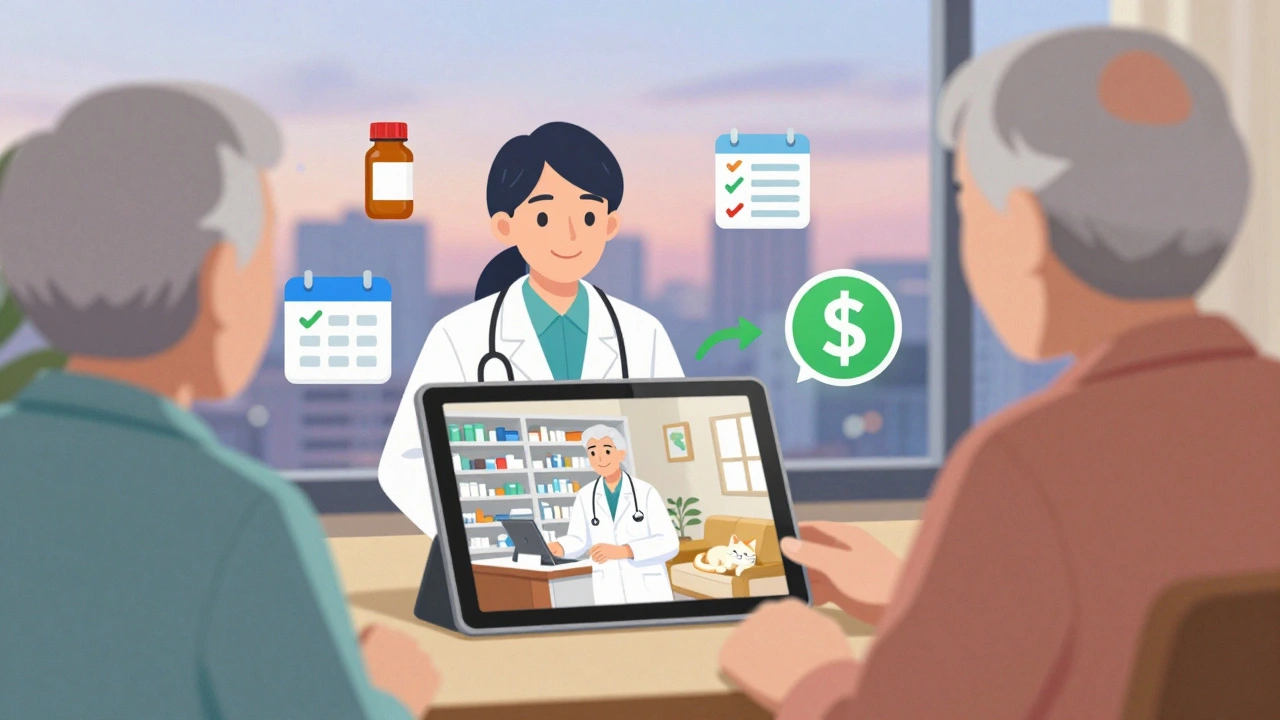
Telehealth consultations are now offered by 62% of pharmacies - up from just 18% before the pandemic. If you’re homebound or live far from town, you can do a video consult. Bring your meds on camera. Show your pill bottles. Ask your questions.
And pharmacists are getting better trained. Over 28,000 have completed the Pharmacists Patient Care Process certification since January 2023. That means they’re not just dispensing - they’re managing care.
Real Results, Real Stories
Here’s what patients have actually saved:
- A 72-year-old man was taking four blood pressure meds - two of which did the same thing. His pharmacist cut one, saved him $180/month, and lowered his dizziness.
- A woman on antidepressants started taking St. John’s Wort for sleep. The pharmacist caught it - that combo can cause serotonin syndrome. She stopped it before she got sick.
- A veteran with diabetes was on a high-dose insulin regimen. His pharmacist noticed the dose hadn’t been adjusted after weight loss. They called his doctor. He avoided a life-threatening low blood sugar episode.
These aren’t rare cases. They’re the norm when pharmacists are given the time and tools to do their job.
Next Steps: What to Do Today
Don’t wait until something goes wrong. Here’s your action plan:
- Write down every medication and supplement you take - including doses and times.
- Call your pharmacy. Ask: “Do you offer a free medication consultation?”
- Schedule a time. Say you want a full review. Don’t settle for a quick chat.
- Bring your list and your pill bottles.
- Ask: “Is there a cheaper version?” “Is this still right for me?” “Could any of these be causing my side effects?”
- Get a copy of your updated medication list. Save it. Show it to your doctor next visit.
Your pharmacist isn’t just there to hand you pills. They’re your last line of defense against dangerous drug mistakes. Use them.
Do I need a referral from my doctor to get a pharmacy consultation?
No, you don’t need a referral. You can walk in or call your pharmacy and ask for a medication review. Pharmacists are licensed healthcare providers, and you have the right to use their expertise. Many pharmacies even proactively reach out to patients who qualify for free services under Medicare Part D.
Is a pharmacy consultation really free?
If you’re on Medicare Part D and take three or more chronic condition medications, yes - it’s completely free. Many private insurers also cover it, and even if yours doesn’t, most community pharmacies offer a basic consultation at no cost. Always ask. There’s no downside to finding out.
What if my pharmacy doesn’t have a private room?
A private space makes consultations more effective, but it’s not mandatory. If there’s no room, ask if you can schedule your consultation during a quieter time - like early morning or after 4 p.m. You can also request a phone or video consultation. Many pharmacies now offer telehealth options, especially for patients who are homebound or live far away.
Can pharmacists change my prescriptions?
In most cases, no - but they can recommend changes. If they spot a problem - like a dangerous interaction or an outdated dose - they’ll contact your doctor. In 22 U.S. states, pharmacists now have expanded authority to adjust certain medications under collaborative agreements. Even if they can’t prescribe, they’re still your best advocate for safe, effective treatment.
How often should I get a medication review?
At least once a year - but more often if you’ve had a hospital stay, started or stopped a medication, or noticed new side effects. After any major health change, schedule a review. Your medication needs evolve. So should your plan.
patrick sui
December 2, 2025 AT 16:42Pharmacists are the unsung heroes of the healthcare ecosystem - MTM isn’t just a service, it’s a paradigm shift in clinical decision-making. The Pharmacists Patient Care Process (PPCP) framework enables longitudinal, patient-centered medication therapy management that reduces polypharmacy risks by up to 62% in longitudinal cohorts. We’re talking about real-time pharmacovigilance at the point of dispensing. Why are we still treating pharmacists as clerks? They’re clinical gatekeepers with doctoral training.
Conor Forde
December 3, 2025 AT 22:06OMG this is the most overhyped thing since ‘organic’ kale chips 😤
My pharmacist once tried to sell me ‘herbal immune boosters’ while I was picking up my blood pressure med. She didn’t even know what ‘CYP3A4 inhibition’ meant. Don’t fall for the white coat marketing. They’re just overworked retail clerks with a fancy title. 🤡
Declan O Reilly
December 5, 2025 AT 05:37You know what’s wild? We trust pharmacists to hand us life-altering chemicals every day - but we treat them like they’re just the guy who rings up our toothpaste. 🤔
It’s like hiring a brain surgeon to hand you a Band-Aid and then acting surprised when they notice your skull’s cracked. They see your meds more than your doctor. More than your therapist. More than your mom. Why aren’t we building systems around that?
James Steele
December 5, 2025 AT 09:49Let’s be honest - the entire MTM initiative is a regulatory arbitrage play disguised as patient care. The CMS reimbursement model incentivizes volume over value, and pharmacists are now incentivized to ‘consult’ rather than cure. The 87% adverse event reduction statistic? Cherry-picked from VA data where providers are salaried and patient loads are capped. In community pharmacies? They’re running on fumes and 12-minute slots. It’s performative medicine dressed in white coats.
Louise Girvan
December 6, 2025 AT 05:02Shannon Gabrielle
December 8, 2025 AT 03:06Wow. So now we’re supposed to trust the guy who gave me expired Tylenol last week with my 10 prescriptions? 😂
My pharmacist once told me to ‘take the blue pill at night’ - I had two blue pills. One was Adderall. One was melatonin. He didn’t notice. He was on his third espresso. This isn’t safety. It’s a lottery.
ANN JACOBS
December 8, 2025 AT 17:09I just want to say - thank you for this incredibly thoughtful, deeply researched, and compassionately written piece. As someone who has spent 17 years navigating the labyrinth of chronic illness, I can tell you with absolute certainty that the pharmacist is the only consistent, knowledgeable, and genuinely caring professional in the entire healthcare ecosystem. I’ve cried in pharmacy consultation rooms. I’ve hugged pharmacists. I’ve brought them cookies. They saved my life. And no one else even noticed I was falling apart. This isn’t just advice - it’s a lifeline. Please, everyone - do this. Don’t wait. Don’t hesitate. Your body is not a machine. It’s a miracle. And your pharmacist is its guardian.
Sean McCarthy
December 9, 2025 AT 09:46Jack Arscott
December 9, 2025 AT 20:51Just had my first consultation yesterday. Brought my whole pillbox. Asked about the dizziness I’ve had since January. Turns out my blood pressure med was interacting with my new magnesium supplement. We switched me to a different one. No cost. No hassle. They even printed out a color-coded schedule.
My wife cried. I didn’t. But I’m definitely going back. 🙏
Irving Steinberg
December 10, 2025 AT 21:38bro i just took my meds and i’m fine why do i need a 15 min lecture
also my pharmacist gave me a free lollipop last time so i think he’s cool
also i take like 3 pills a day and they’re all blue so how hard can it be
also i don’t trust anyone who calls it ‘medication therapy management’ like it’s a startup
just give me the pills and i’ll be good
thanks for the post tho i guess 😅
Lydia Zhang
December 11, 2025 AT 17:08Kay Lam
December 11, 2025 AT 17:27I’ve been a pharmacist for 22 years and I’ve never seen a post like this that actually gets it. We don’t just count pills. We watch for the quiet signs - the patient who stops refilling their insulin because they’re scared of needles, the grandmother who’s taking her daughter’s blood pressure med because she doesn’t want to bother the doctor, the veteran who hides his PTSD meds because he thinks he’s weak. We’re the ones who remember your dog died last year and you haven’t slept since. We’re the ones who call your doctor when your numbers are off, even if it’s after hours. We’re not heroes. We’re just the ones who show up. And if you’re reading this - thank you for seeing us. We see you too.