
Keeping your prescription labels and medication leaflets isn’t just good housekeeping-it could save your life. Think about it: when you’re rushed in an emergency, or switching doctors, or trying to remember what that red pill was for, having the original label with dosage, expiration, and side effects right at hand makes all the difference. Yet most people toss these papers into a drawer or bin, only to regret it later when they need them most.
Why Prescription Labels Matter More Than You Think
Prescription labels aren’t just receipts. They’re legal documents that contain critical safety info: your full name, the exact medication name, strength, dosage instructions, prescriber details, pharmacy contact info, and expiration date. The FDA requires all prescription labels to use 18-point bold font for key details so they’re readable even in low light. That’s not an accident-it’s designed for emergencies. The Institute of Medicine found that medication errors contribute to around 7,000 deaths in the U.S. every year. A big chunk of those happen because doctors don’t know what you’re actually taking. If you can’t show them your current meds, they might prescribe something that interacts badly, or worse-duplicate a drug you’re already on. A 2022 study in the Journal of General Internal Medicine showed that having organized medication records cuts adverse drug events by 55% during hospital visits. And it’s not just about emergencies. If you’re on long-term medication-say, for high blood pressure or diabetes-you’ll likely see multiple doctors over the years. Each one needs to know your history. Without your labels, you might end up doing unnecessary blood tests or scans just to prove you’ve been taking the same dose for years. One Reddit user shared how throwing out old pill bottles cost them $1,200 in redundant testing.What’s Actually on a Prescription Leaflet (And Why You Can’t Skip It)
The little booklet that comes with your pills? That’s not fluff. It’s packed with info you need to stay safe:- How to take the medicine (with or without food, time of day)
- Possible side effects (some serious, some rare)
- Drug interactions (what not to mix with it-alcohol, other meds, even grapefruit)
- Warnings for pregnancy, liver issues, or allergies
- Storage instructions (some meds need refrigeration)
- What to do if you miss a dose
Physical Storage: The Simple, Reliable Way
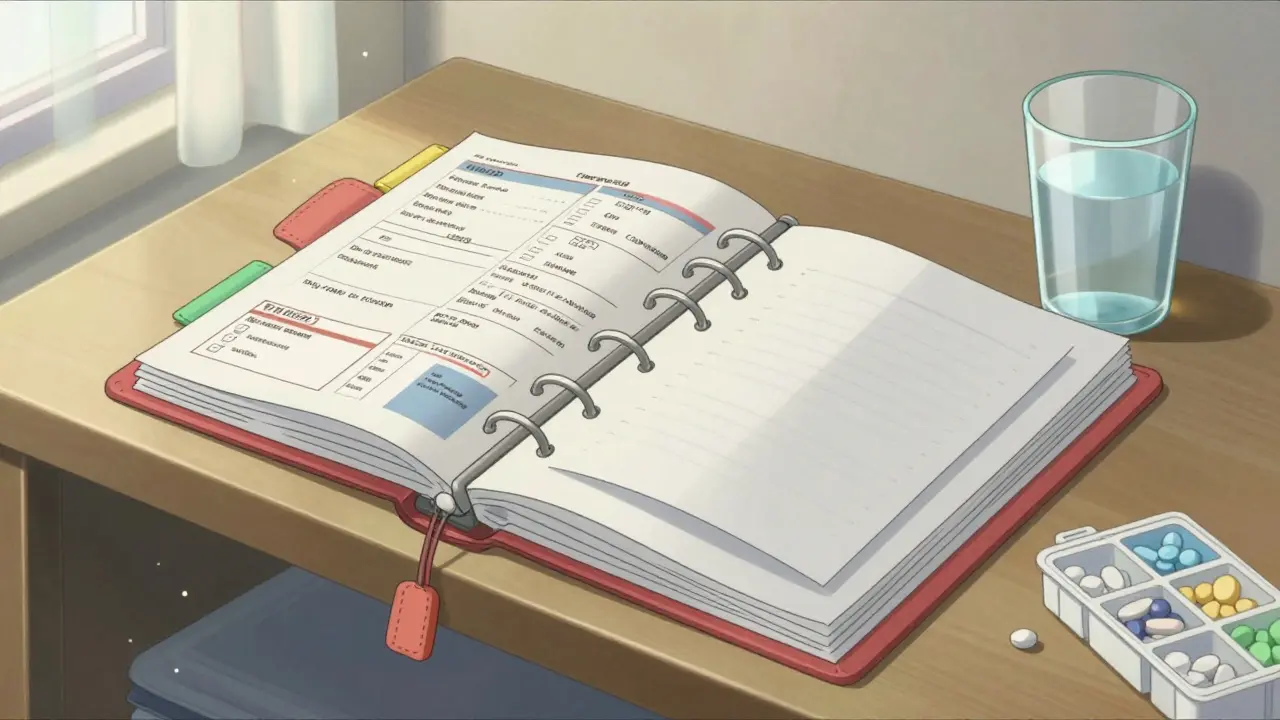
If you’re not tech-savvy or don’t trust cloud storage, a physical binder works perfectly-and it doesn’t need batteries or Wi-Fi. Start with a sturdy three-ring binder. Get acid-free, pH-neutral plastic sleeves (the kind used for archiving photos or documents). These prevent yellowing and tearing over time. Avoid regular plastic sleeves-they can trap moisture and cause ink to smudge. Organize your meds alphabetically by generic name (e.g., “Lisinopril,” not “High Blood Pressure Pill”). Use color-coded tabs: red for heart meds, blue for antibiotics, green for painkillers, yellow for antidepressants. That way, you can flip to the right section in seconds. Stick each label and its matching leaflet into a sleeve. Fold the leaflet neatly so it fits. Don’t crumple it. If the label is too big, trim the excess paper carefully-just keep all the text intact. Store the binder in a cool, dry place-like a bedroom drawer or closet shelf. Avoid bathrooms (too humid) or kitchens (heat and steam). The ideal temp is between 68-77°F (20-25°C), same as most meds. Baystate Health says 92% of medications degrade if stored outside that range. You’ll need about 1.2 linear feet of space for 10 years of prescriptions if you take an average of 28 meds a year. That’s less than a shoebox. And it costs nothing but time.Digital Storage: The Smart, Searchable Option
If you’re comfortable with apps, digital storage is faster and safer in the long run. Use only HIPAA-compliant apps like MyMedSchedule (version 3.2.1, updated Jan 2024). These apps encrypt your data end-to-end and don’t sell your info. You can scan labels with your phone’s camera-the FDA’s 18-point font requirement makes them easy to read even in low resolution. These apps auto-track expiration dates and send you alerts. Some even sync with pharmacy systems so your list updates when you refill. In 2023, users who used these tools reported 41% fewer missed doses and 33% fewer doctor visits for medication confusion. But here’s the catch: only 42% of adults over 65 feel confident using them, according to AARP. If you’re not tech-savvy, it can take 5-7 days to get comfortable. Start slow-scan just your top three meds first. Also, don’t rely on cloud storage alone. Power outages, app crashes, or account lockouts can leave you stranded. Always keep a printed backup.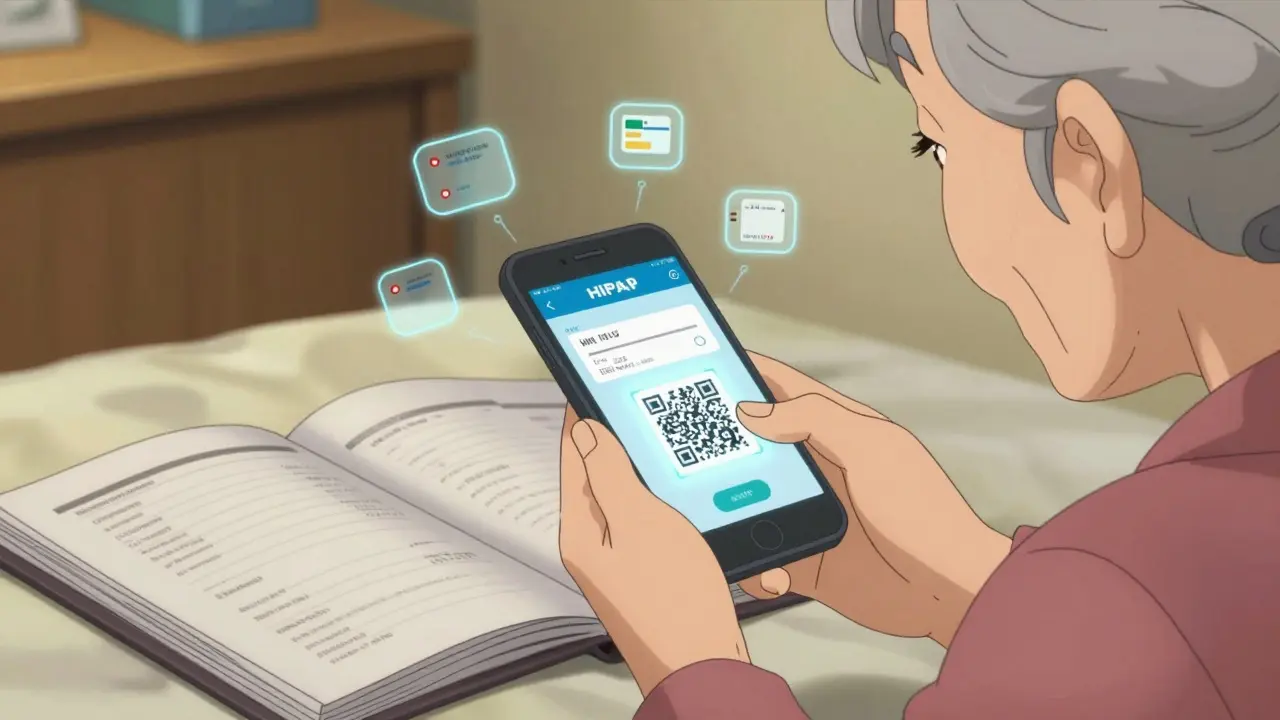
The Best of Both Worlds: Hybrid System
The smartest approach? Combine physical and digital. Keep your current medications-everything you’re actively taking-in your binder. That’s what you grab in an emergency. For older meds you’ve stopped, scan them into your app and delete the paper copy. This keeps your binder manageable. As of 2024, the FDA is rolling out QR codes on all new prescription labels. Scan one, and it takes you straight to the official drug info page. That means in a few years, you might not even need to keep the leaflet-just scan the label and get the full PDF instantly. But until that’s universal, keep the paper.What to Avoid
Don’t just dump bottles in a box. Labels fade, caps get lost, and you’ll never find anything. Don’t rely on memory. Don’t throw out old labels just because you’re “done” with the med. You might need them for insurance claims, legal records, or future diagnosis. Also, avoid storing meds and records in the same place. If your bathroom floods, you lose everything. Keep your binder in a dry, cool, out-of-reach spot-like a high shelf in your bedroom.How Often to Update
Set a reminder every three months. When you pick up a new prescription, add it to your binder and app. Delete the old one if you’ve stopped taking it. This takes 2-3 minutes per med. Do it right after your refill, not when you’re overwhelmed. If you’re on more than 10 meds, do a full review once a year with your pharmacist. They can spot duplicates, interactions, or outdated prescriptions you forgot about.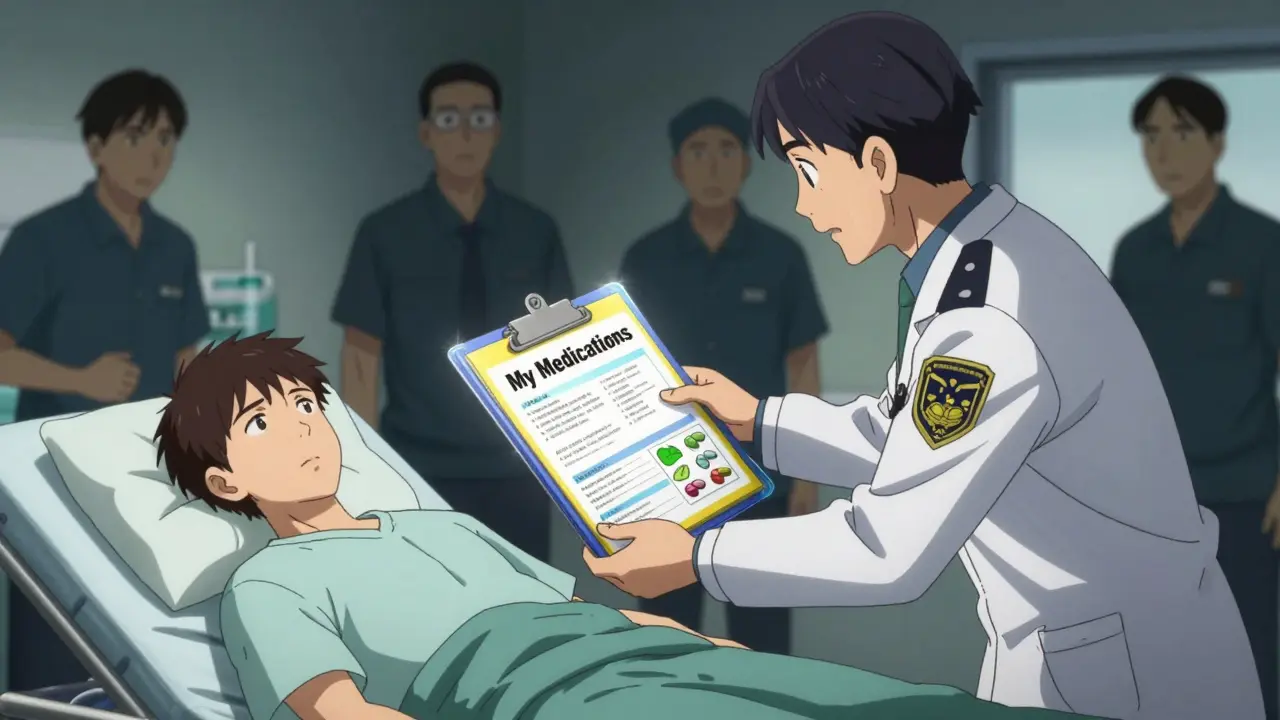
Kunal Majumder
January 10, 2026 AT 03:36Man, I used to toss these papers like trash until my dad had a bad reaction last year. Turned out he was double-dosing on blood pressure meds because the new doc didn’t know what he was on. Now I scan every label into MyMedSchedule and keep a printed backup in his drawer. Best 10 minutes I ever spent.
Jaqueline santos bau
January 11, 2026 AT 05:06OMG I CANNOT BELIEVE PEOPLE JUST THROW THESE AWAY?? Like, are you trying to kill yourself?? I keep mine in a glittery binder with color-coded tabs and a little note that says ‘DO NOT TOUCH THIS OR I WILL END YOU’ on the front. My sister tried to clean my drawer and I screamed so loud the neighbors called the cops. Worth it.
Aurora Memo
January 12, 2026 AT 21:37I started doing this after my mom had a stroke and we couldn’t find her meds list. Took us three days to piece together what she was on. Now I use a simple three-ring binder with acid-free sleeves. No colors, no drama. Just clear labels, folded leaflets, and a list of emergency contacts on the inside cover. It’s quiet, it’s reliable, and it saved my family.
Jay Amparo
January 13, 2026 AT 18:08In India, we don’t always get leaflets with our meds - sometimes just a slip of paper with the name. So I take a photo of the pill bottle, write down the dosage in my phone notes, and keep a printed copy in my wallet. My aunt still uses this method and she’s 82. No apps needed. Just a little care goes a long way.
Ted Conerly
January 14, 2026 AT 00:50Don’t forget the expiration dates. I had a bottle of antibiotics that expired in 2020 and I still kept it ‘just in case.’ Bad idea. That stuff can break down into toxins. If it’s expired, dispose of it properly - take it to a pharmacy drop-off. And update your binder every quarter. Set a calendar reminder. It’s not a chore, it’s insurance for your life.
Faith Edwards
January 14, 2026 AT 21:30It is frankly reprehensible that the average American treats their pharmaceutical documentation with the same reverence as a fast-food receipt. One cannot, under any ethical or medical pretext, justify the casual discarding of legally mandated safety disclosures - especially when the FDA has explicitly mandated 18-point bold font for legibility under duress. One must, as a moral imperative, archive these documents with the same rigor one would afford a will or a deed. My binder is housed in a fireproof safe, lined with silica gel packets, and labeled in calligraphic script. I am not being dramatic. I am being responsible.
Saumya Roy Chaudhuri
January 15, 2026 AT 22:23Everyone’s overcomplicating this. Just take a picture of the label with your phone. Done. No binders. No apps. No nonsense. If you can’t scan it, you’re not tech-savvy enough to be on meds anyway. I’ve got 14 prescriptions and I’ve never opened a binder. My phone knows everything. You’re all just nostalgic for paper.
Ian Cheung
January 16, 2026 AT 08:54My grandma kept hers in a shoebox under her bed and she lived to 96. She’d hand you the whole box if you asked what she was taking. No labels, no colors, no apps. Just a box. And she never mixed anything up. Maybe the real lesson is not how you store it but that you care enough to keep it at all. Paper or phone, it’s the intention that counts.
Lisa Cozad
January 17, 2026 AT 13:28I love the hybrid approach. I keep my current meds in a binder on my nightstand and scan the old ones into MyMedSchedule. Last month my doctor asked about a med I stopped two years ago - I pulled up the scan in 3 seconds. No drama, no panic. Just calm, organized living.
chandra tan
January 18, 2026 AT 06:50My cousin in Delhi uses a plastic pouch tied to her keychain with all her meds printed on a single sheet. She’s diabetic, hypertensive, and takes thyroid pills. No binder. No phone. Just a folded piece of paper. She says if she ever passes out, someone can read it and save her. Simple. Smart. Works for her. Maybe we don’t need fancy systems - just a little intention.