
Many people skip doses or don’t fill prescriptions because they can’t afford their meds. It’s not laziness. It’s not ignorance. It’s simple math: if your blood pressure pill costs $400 a month and you’re on a fixed income, you choose between medicine and groceries. But there’s a way to cut those costs without losing effectiveness - and it’s called therapeutic alternative medication.
Therapeutic interchange isn’t about swapping your drug for a random cheaper one. It’s about replacing your current medication with another drug in the same class that works just as well - but costs a fraction. Think of it like switching from a luxury sedan to a reliable economy model. Same destination, same safety, way less money.
What Exactly Is a Therapeutic Alternative?
A therapeutic alternative isn’t a generic version of your current drug. It’s a different chemical compound that does the same job. For example:
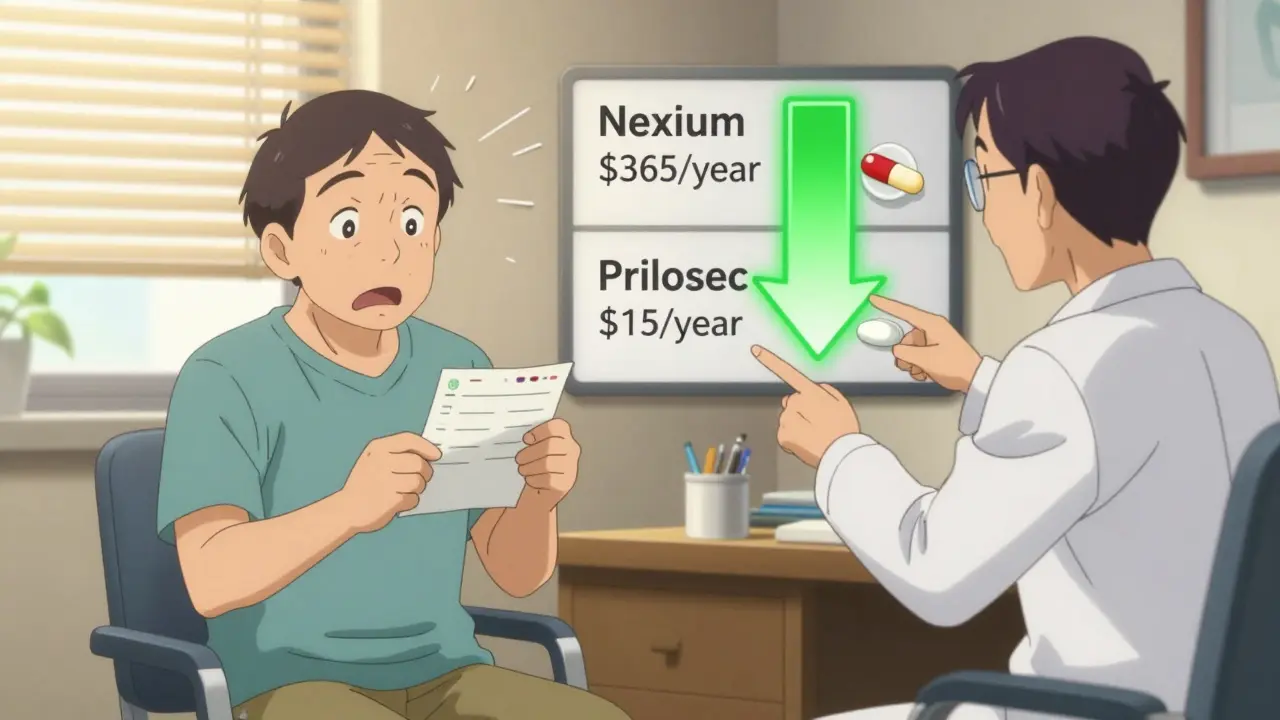
- If you’re on esomeprazole (Nexium) for acid reflux, you could switch to omeprazole (Prilosec). The cost? From $365 a year down to $15.
- If you’re taking Lyrica (pregabalin) for nerve pain, switching to gabapentin (generic) can drop your monthly bill from $450 to $15.
- Switching from Branded Eliquis to warfarin can save $450 a month - and studies show the effectiveness is nearly identical for many patients.
This isn’t theory. A 2017 study from Vanderbilt University Medical Center found that when doctors used clinical tools to suggest therapeutic alternatives, they cut costs by $17.77 per patient per month - with zero drop in health outcomes. In real terms? That’s over $200 a year saved for most people.
Why Most People Don’t Ask - and Why They Should
Only 1 in 5 patients ever bring up cost concerns during a doctor’s visit. Why? Because they assume their doctor doesn’t care. Or they’re embarrassed. Or they think the prescription is set in stone.
Here’s the truth: doctors want you to take your meds. They don’t want you skipping doses because you can’t pay. A 2023 survey by the American Academy of Family Physicians found that 78% of primary care providers regularly consider therapeutic alternatives - but only if the patient asks.
Let’s say you’re on atorvastatin (Lipitor) for cholesterol. You’re paying $120/month. But simvastatin - a different statin - costs $12/month and works just as well for most people. If you never mention the cost, your doctor has no reason to change it.
Asking isn’t rude. It’s smart.
How to Ask - The Right Way
Don’t just say, “This is too expensive.” That’s vague. You need to be specific. Here’s how to do it:
- Start with the screening question: “Do you ever have trouble affording your medications?” This is the standard opener used by clinics across the U.S. It’s neutral, non-confrontational, and gets the conversation going.
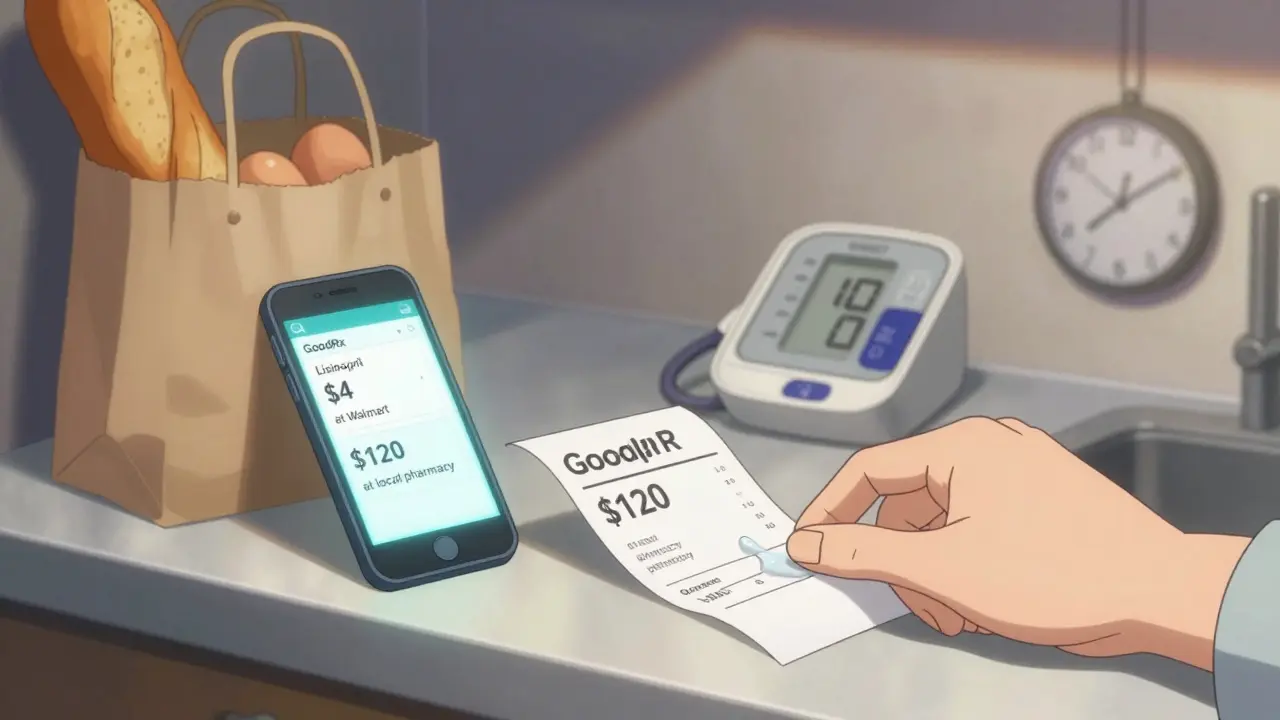
- Be ready with your numbers: Use GoodRx to check prices at nearby pharmacies. If your drug costs $300 at your pharmacy but $18 at Walmart, show it. Pharmacies often have $4 generic lists for common drugs like lisinopril, metformin, or atorvastatin.
- Name the alternative: Don’t say, “Can I get something cheaper?” Say, “Could I try omeprazole instead of esomeprazole? I saw the price difference is 96%.”
- Bring evidence: Print out a short summary from NeedyMeds or RxAssist. These sites list approved therapeutic alternatives and their cost savings. Many doctors keep these handy.
Pro tip: If your doctor hesitates, ask if they’ve seen data on therapeutic equivalence. A 2022 American College of Physicians position paper says alternatives must meet three criteria: similar effectiveness, similar safety, and similar dosing. If the drug fits, there’s no clinical reason to refuse.
What to Do If Your Doctor Says No
Some doctors resist because they’re unfamiliar with alternatives. Others worry about side effects. Here’s how to handle pushback:
- Ask for a trial: “Could we try the alternative for 30 days? If it doesn’t work, we switch back.” Many doctors will agree to this.
- Request a tiering exception: If you’re on Medicare Part D, you can file a formal request to lower your cost-sharing for a non-preferred drug. CMS requires this to be processed within 72 hours for urgent cases.
- Use manufacturer coupons: Companies like Pfizer and AbbVie offer copay cards that cut costs by 75-100%. These aren’t always obvious - you have to ask.
One patient in Perth shared how switching from Jardiance to metformin didn’t work - her blood sugar spiked. But she didn’t give up. She went back, said, “It didn’t work, but can we try empagliflozin instead?” - a different SGLT2 inhibitor that was cheaper. She got it. Saved $200/month. Stayed in control.
What Doesn’t Work - And Why
Not all cost-saving tricks are equal.
- Generic substitution - swapping your brand drug for its identical generic - saves 80-90%. But it only works if a generic exists. Many newer drugs (like Verzenio or Humira) have no generics.
- Step therapy - forcing you to try cheaper drugs first - sounds good. But it’s reactive. You have to fail first. Therapeutic interchange is proactive. You can switch at the start.
- GoodRx alone - it’s great for price comparison, but 24% of prescriptions still cost more than what pharmacies get paid from insurance. So even with a coupon, you might pay full price.
Therapeutic interchange fills the gap. It works when generics aren’t available. It works when step therapy is too slow. It works even if your insurance doesn’t cover the brand.
Real Savings - Real Stories
People aren’t just saving money - they’re staying alive.
- A 68-year-old man in Melbourne switched from Branded Xarelto to warfarin. Monthly cost: $450 → $12. He hadn’t filled his prescription in 4 months. After the switch, he took it every day.
- A woman with rheumatoid arthritis swapped Taltz (a biologic) for methotrexate - but it didn’t work. She went back. Then she asked for Enbrel instead - a different biologic with a $300 copay card. Her out-of-pocket dropped from $1,200 to $150.
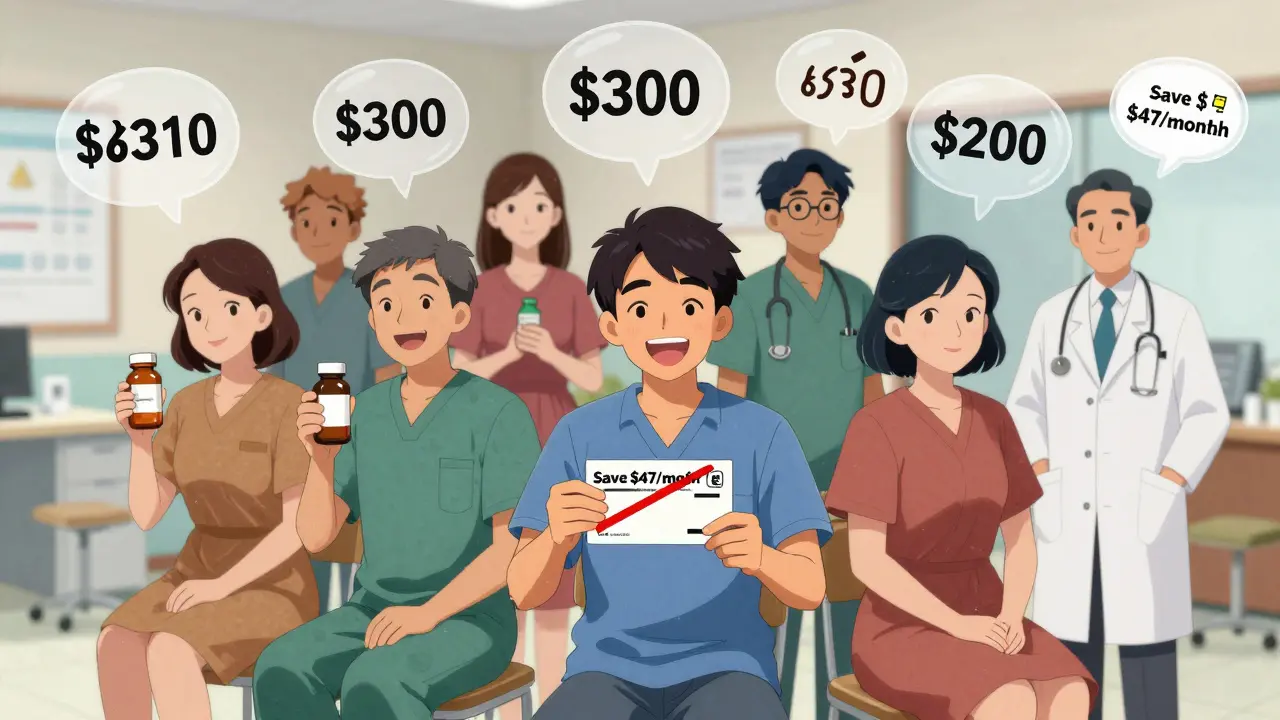
- A 2024 GoodRx survey of 12,500 patients found that 68% successfully switched to a lower-cost therapeutic alternative. The average monthly savings? $47.25. That’s over $560 a year - enough to cover a dental visit, a new pair of glasses, or a month of public transport.
These aren’t outliers. They’re people who asked. And got answers.
When Therapeutic Alternatives Don’t Work
It’s not magic. About 15% of medications - mostly specialty drugs for cancer, MS, or rare diseases - have no effective alternatives. In those cases, you need other tools:
- Co-pay assistance programs - The HealthWell Foundation and Patient Advocate Foundation help with up to $387/month in assistance.
- Manufacturer programs - Most big drugmakers have free or low-cost programs for low-income patients. You need to apply, but the process is straightforward.
- Longer prescriptions - Ask for a 90-day supply. It cuts copays by 25% and reduces pharmacy trips.
And if you’re on Medicare? You can appeal tiering decisions. The rules changed in 2022. You don’t need to be “desperate.” You just need to show that the alternative isn’t right for you.
What’s Changing in 2025
Things are getting better - fast.
- Electronic health records - Epic and Cerner now auto-suggest therapeutic alternatives at the moment of prescribing. One system saw a 15% jump in adoption just from this.
- Medicare Part D - All plans must now use standardized criteria for therapeutic interchange. No more confusing, inconsistent rules.
- AI tools - A 2024 study showed AI could identify 89% of good therapeutic swaps - better than human doctors.
But the biggest change? Patients are asking. And doctors are listening.
Can I ask my pharmacist for a therapeutic alternative?
Pharmacists can suggest alternatives, but they can’t change your prescription. Only your doctor can approve a switch. However, pharmacists are often the first to notice cost spikes. Bring your receipt, ask if there’s a cheaper option, and they’ll usually call your doctor on your behalf.
Are therapeutic alternatives as safe as my current drug?
Yes - if they’re chosen properly. The American College of Physicians requires that alternatives have proven equivalence in head-to-head trials and similar side effect profiles. But individual responses vary. A drug that works for 90% of people might not work for you. That’s why a trial period is smart.
What if my insurance denies the switch?
Most insurers require prior authorization for non-preferred drugs. If denied, your doctor can file an appeal. Include clinical notes: why the alternative is appropriate, why the original isn’t working for you financially, and any evidence of adherence issues. Medicare and many private plans must respond within 14 days. For urgent cases, they must respond in 72 hours.
Do I need to be on Medicare to use therapeutic interchange?
No. Therapeutic interchange works for any insurance - private, Medicaid, or no insurance. The tools (GoodRx, $4 lists, manufacturer coupons) are available to everyone. The key is asking your doctor.
How do I know if my medication has a therapeutic alternative?
Use NeedyMeds or RxAssist and enter your drug name. Both sites list approved alternatives with cost comparisons. You can also ask your pharmacist for the $4 generic list from Walmart, CVS, or Walgreens - many common drugs are on it.
Next Steps - What to Do Today
- Check your next prescription using GoodRx. Compare prices at your pharmacy vs. nearby stores.
- Look up your medication on NeedyMeds. See if there’s a cheaper therapeutic option.
- Write down one question to ask your doctor at your next visit: “Is there a lower-cost alternative to [medication name] that works just as well?”
- If you’re on a fixed income, apply for co-pay assistance now. Programs don’t expire - they just sit there waiting for you to ask.
Medication shouldn’t be a luxury. It should be accessible. And with therapeutic alternatives, it can be - without sacrificing your health.
Michelle Jackson
March 20, 2026 AT 22:15Suchi G.
March 20, 2026 AT 23:03becca roberts
March 21, 2026 AT 09:46SNEHA GUPTA
March 22, 2026 AT 09:45Andrew Mamone
March 23, 2026 AT 08:59gemeika hernandez
March 24, 2026 AT 07:44Nicole Blain
March 25, 2026 AT 06:28Kathy Underhill
March 25, 2026 AT 20:58Srividhya Srinivasan
March 26, 2026 AT 22:45Prathamesh Ghodke
March 28, 2026 AT 14:37Justin Archuletta
March 30, 2026 AT 09:07