

When you hand your child a spoonful of medicine, trust is involved. You trust the doctor, you trust the pharmacist, and you trust that the label on the bottle is correct. But mistakes happen. According to the Institute for Safe Medication Practices, children experience medication errors at rates three times higher than adults. Most of these involve getting the dose wrong. If you know how to read that label yourself, you become a vital part of the safety net.
This guide walks you through exactly what to look for on a prescription label, how to verify the numbers match your child’s weight, and which questions to ask when something looks off. We will skip the medical jargon and focus on practical steps you can take right now.
The Hidden Risks in Pediatric Prescriptions
Children aren’t just small adults. Their bodies process medication differently. Their livers and kidneys are still developing, meaning the window between a helpful dose and a harmful one is often very narrow. This is why Pediatric Dosing requires precise calculation methods rather than estimates.
In the last few years, safety organizations have highlighted this urgency. Data from the Pennsylvania Patient Safety Authority shows that over 90% of reviewed medication safety incidents in children involved dose calculation issues. Specifically, nearly 30% happened because the initial order was calculated incorrectly, and another 15% happened because wrong weight information was used during the math.
Most parents don’t realize that even a small decimal error in milliliters can lead to a significant overdose. For example, confusing a concentration of 160 mg per 5 mL with 80 mg per 5 mL effectively doubles the dose. Without knowing what to look for, a parent might never catch this mistake before giving the medicine.
Key Information Found on Every Label
When the pharmacy hands you the bottle, don’t just look at the brand name. There are specific data points printed on the label that act as safety markers. Prescription Labels contain critical details regarding dosage form, strength, and frequency.
- Patient Weight: Many modern pharmacies are required to print the child’s weight in kilograms directly on the label. In 2024, the American Academy of Pediatrics mandated that prescriptions must include the patient's weight to prevent conversion errors.
- Dose Amount: This should always be listed in milligrams (mg), not just milliliters (mL).
- Concentration: The strength of the liquid (e.g., 100 mg/5 mL) must be clearly visible.
- Frequency: How many times a day and at what time intervals.
If the label lacks the weight-based dose (like "20 mg/kg"), you cannot easily verify if it matches your child. Always request the pharmacist to add the child's current weight and the calculated dose in milligrams to the label if they aren't there.
Step-by-Step Verification Process
Verifying a dose sounds intimidating, but it breaks down into a few manageable math checks. You don't need to be a nurse to spot discrepancies. Here is a workflow you can follow at home before administering the medication.
Step 1: Convert Weight to Kilograms
Medical dosing is almost always calculated using metric units. If your scale uses pounds, convert them first. The exact ratio specified by drug guides is 1 kilogram equals 2.2 pounds. Divide your child’s weight in pounds by 2.2 to get kilograms.
Example: If your child weighs 22 lbs, dividing by 2.2 gives you exactly 10 kg.
Step 2: Calculate the Total Daily Dose
Use the standard dosage guideline for the specific drug. These ranges are usually found in the package insert or provided by your doctor. Multiply the weight in kg by the recommended milligrams per kilogram (mg/kg).
Example: If the antibiotic amoxicillin guideline is 40 mg/kg/day for your child’s infection, calculate: 10 kg × 40 mg = 400 mg per day total.
Step 3: Match the Dispensed Volume
This is where most errors occur. Look at the concentration on the bottle. If the bottle says 160 mg/5 mL, you need to figure out how much volume holds your target dose.
- Target dose per measurement: 200 mg (if taking twice daily).
- Concentration: 32 mg per 1 mL (since 160 mg / 5 mL = 32 mg/mL).
- Volume needed: 200 mg ÷ 32 mg/mL = 6.25 mL.
If the label says give 10 mL, but your math says 6.25 mL, stop and call the pharmacy immediately.
Avoiding Concentration Confusion
Liquid medications come in different strengths, and this is a major source of confusion. Liquid Medications vary significantly in concentration depending on the manufacturer. One common culprit is acetaminophen. You might find 160 mg/5 mL at the store, but a hospital-strength version could be 800 mg/5 mL.
A 2022 study published in BMC Pediatrics found that over 40% of preventable adverse drug events in children resulted from misunderstandings about mg/mL concentration. Parents often see "5 mL" on the bottle and assume that is the dose, not realizing that the milligram amount changes based on the bottle strength.
| Medicament Type | Common Concentration A | Common Concentration B | Risk Factor |
|---|---|---|---|
| Amoxicillin Suspension | 250 mg/5 mL | 400 mg/5 mL | 1.6x overdose risk if confused |
| Acetaminophen Drops | 80 mg/0.8 mL | 160 mg/5 mL | High risk for infants |
| Ibuprofen Suspension | 100 mg/5 mL | 100 mg/5 mL (standardized) | Lower confusion risk |
Always read the full strength line, not just the volume measure. If the label orders "Give 5 mL," ask specifically: "Is that 5 mL of the 160 mg strength or the 250 mg strength?" This clarification saves lives.

Critical Questions for Your Pharmacist
Pharmacists are trained for dual verification. They calculate independently to catch errors. When picking up a prescription, engaging them in conversation is your best defense.
Here are three non-negotiable questions asked by safety experts:
- What is the exact dose in milligrams?
- Is this dose appropriate for my child's current weight?
- Can you show me how to measure this dose with the provided device?
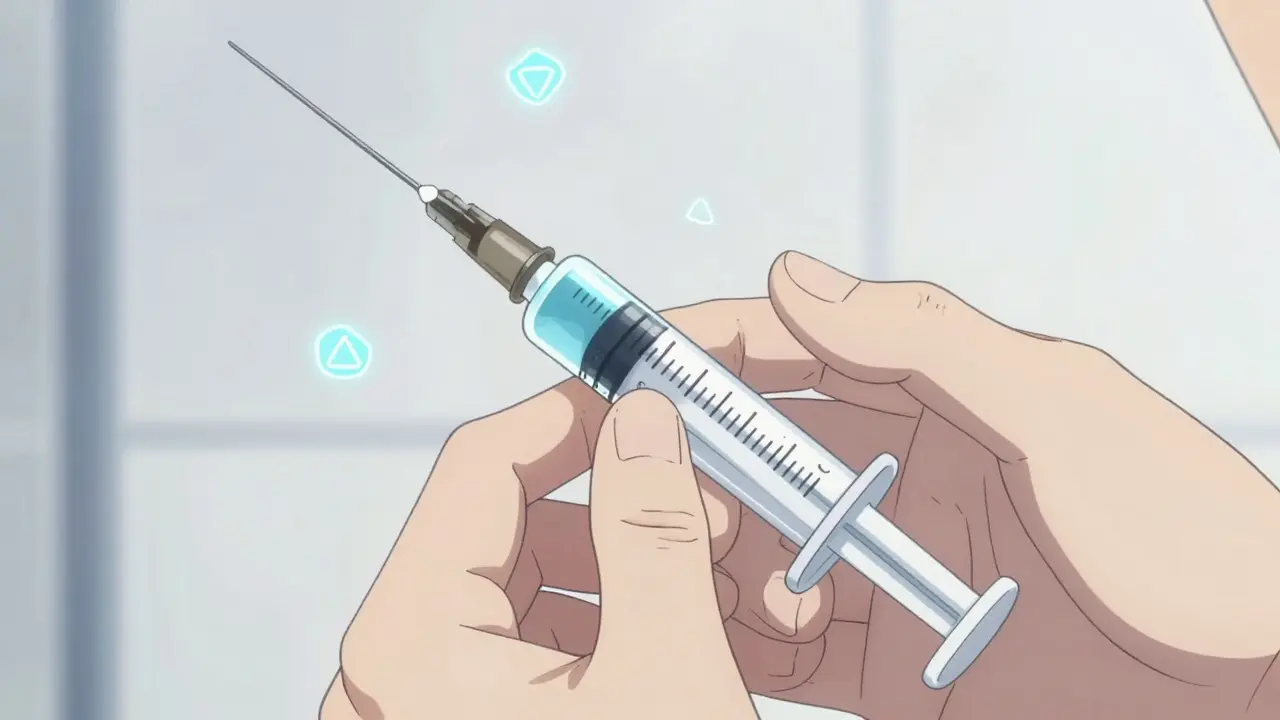
Do not accept answers that say "just 2 teaspoons." Teaspoons vary wildly in size. The Food and Drug Administration recommends that all liquid prescriptions include measuring devices designed for that specific viscosity. Syringes or oral droppers provided by the pharmacy are far more accurate than kitchen spoons.
Furthermore, watch for rounding protocols. Electronic health record systems like EPIC and Cerner often round doses to make them easier to measure (e.g., rounding to whole numbers). While convenient, rounding can introduce errors if not tracked. The 2021 PMC study notes that both systems should notify physicians when doses are rounded. Ask if rounding has been applied and what the original ordered dose was.
Future Safety Tools and Technology
The landscape of medication safety is changing rapidly. New technologies are moving from hospitals to clinics and eventually homes.
Artificial Intelligence is entering the picture. Systems like the Pediatric Safety Module now cross-reference patient weight, age, and indication against thousands of evidence-based guidelines. Early data suggests these tools have accuracy rates above 99% in clinical trials. While these are currently backend tools for doctors, the pressure they put on the system reduces the likelihood of bad orders reaching you.
We are also seeing standardization via SMART on FHIR protocols. As of Q1 2024, nearly 80% of Electronic Health Record vendors adopted these standards, allowing real-time dose checking during the prescribing process. This means fewer incorrect orders leave the doctor's office in the first place.
However, technology isn't perfect. Human vigilance remains the final layer of defense. By understanding how to confirm pediatric dosing, you ensure that no matter what system fails, you have the knowledge to spot the gap.
Why is pediatric dosing different from adult dosing?
Children have different body chemistry and organ function compared to adults. Dosing is typically calculated based on weight (mg/kg) or body surface area because their metabolism is faster and their tolerance for medication errors is much lower.
What is the most common cause of pediatric medication errors?
Conversion errors are the leading cause. This includes converting pounds to kilograms incorrectly or confusing milliliters (volume) with milligrams (strength) when reading liquid medication labels.
Should I use kitchen spoons to measure liquid medicine?
No. Kitchen spoons are not standardized and vary widely in capacity. Always use the oral syringe, dropper, or cup provided by the pharmacy with the specific medication bottle.
How do I convert my child's weight from pounds to kilograms?
Divide the weight in pounds by 2.2. For example, a 44-pound child weighs exactly 20 kilograms (44 ÷ 2.2 = 20).
What information must appear on a prescription label?
Labels should include the patient's name, weight in kilograms, the dose in milligrams, the concentration of the liquid, and the administration frequency. The FDA requires both metric and non-metric measurements on labels for liquid medicines.
Sam Hayes
April 2, 2026 AT 21:47its important to read the label carefully sometimes the pharmacy makes mistakes with the concentration so always double check the math yourself just in case
Hope Azzaratta-Rubyhawk
April 2, 2026 AT 22:55This information is vital for your child's safety you must take charge and never accept vague answers from staff demand clarity on every single detail regarding the dosage
Jenna Carpenter
April 3, 2026 AT 06:12so many people dont know how to do the math properly its sad seeing parents rely on the bottle completely when they shoudl check the mg themselves its basic stuff really
simran kaur
April 3, 2026 AT 07:52you think its just math errors but big pharma wants us confused on purpose to sell more meds i see the pattern in the rounding protocols they hide the truth behind complex systems
Brian Shiroma
April 4, 2026 AT 20:25yeah good luck getting any pharmacist to actually explain the difference between milligrams and milliliters without eye rolling
Rachelle Z
April 5, 2026 AT 18:14oh absolutely because nothing scares a customer service representative quite like an informed parent! 😂 they love explaining things! 🙄 please ignore the irony here!!!
Branden Prunica
April 6, 2026 AT 10:18It honestly brings me to tears thinking about what could happen if we slip up one tiny bit. My heart pounds every time I hold that little syringe in my hand. We are trusting strangers with the lives of our babies here. Sometimes the numbers on the label look like gibberish to me. I remember reading that study about the concentration risks and feeling sick. It is terrifying to realize a decimal point changes everything instantly. I feel like I am walking through a minefield just trying to give medicine. The pressure on mothers is absolutely insane right now. You have to be perfect or else someone gets hurt badly. I spent three hours checking the weight calculations last week myself. The stress is something most people outside of parenthood cannot fathom. Just imagine the nightmare of finding out you overdosed your child by accident. I stay up all night worrying about the pharmacy messing up again. It feels like nobody cares about these small details enough yet. We need to demand better safety standards everywhere immediately. Every parent deserves to feel secure knowing the dose is correct. It keeps me awake at night wondering if I missed something crucial somewhere. That fear never truly goes away even after years of parenting experiences. Trust has been broken so many times by these errors already. I just want peace of mind when giving medication to my kid.
Ace Kalagui
April 6, 2026 AT 18:40I understand exactly how you feel because raising children involves so much anxiety that we rarely talk about openly. The medical system does not always make it easy for families who are already stressed out. We should support each other by sharing these verification techniques to build community confidence. Your vigilance is incredibly important for everyone in this situation right now. Please know that you are doing an amazing job protecting your little one today. Many others share your fears but we can overcome them together as a team. Information like this empowers us to take control back from the process.
Mark Zhang
April 6, 2026 AT 19:50Great breakdown on the steps here. It helps to see the specific numbers written down clearly. I wish more doctors printed the weight on the labels automatically. It takes extra work but knowing the concentration saves time later.
sophia alex
April 7, 2026 AT 16:37Only in America would you find this level of confusion with medicine! 💊 Our standards used to be higher before regulations changed. We need to bring back the old ways of measuring things safely. Don't trust foreign drugs or new systems. 👎 Stick to basics!