
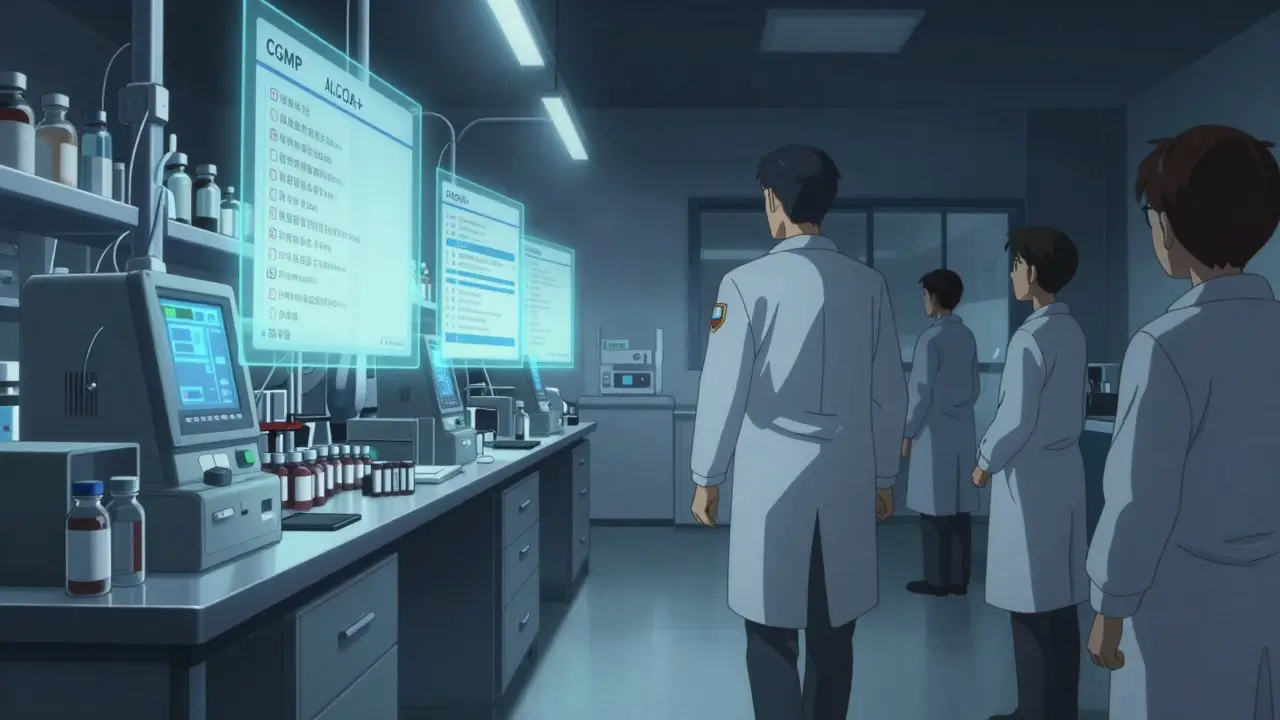
The FDA doesn't just approve generic drugs and walk away. It builds quality into every step of the manufacturing process - from the raw ingredients to the final pill in your bottle. This isn't about checking a box. It's about making sure that a generic drug works exactly like its brand-name version, every single time, no matter where it was made. And the system they use? It's one of the most detailed and demanding in the world.
Why Quality Isn't Just About the Final Product
Back in the 1960s, the FDA tested thousands of drugs and found that about 8% of them didn't deliver the right amount of medicine. Some had too much - risking side effects. Others had too little - meaning they didn't work. That moment changed everything. Instead of waiting until the last pill was made to test it, the FDA shifted to controlling the whole process. This became known as Current Good Manufacturing Practices, or cGMP. It’s not optional. It’s the foundation.
Today, every generic drug maker - whether it's a giant company or a small lab overseas - must follow the same rules. The FDA doesn’t trust luck. They don’t trust random sampling. They trust systems. If the process is solid, the product will be too.
The Five Pillars of FDA Quality Control
The FDA’s cGMP rules break down into five non-negotiable areas. Skip one, and the entire application gets rejected.
- Control of Materials - Every raw material used must be tested, tracked, and documented. Where did it come from? Who made it? How was it stored? If the paperwork is missing or unclear, the FDA shuts it down. No exceptions. This stops contaminated or mislabeled ingredients from ever reaching the production line.
- Production and Process Controls - Every step of making the drug has a written procedure. Temperature? Humidity? Mixing time? All of it is monitored in real time. If something goes off even slightly - say, the mixer runs 10 seconds too long - the batch is quarantined. The team must explain why it happened and fix it before any more product is made.
- Quality Control and Laboratory Testing - Labs don’t just test the final pills. They test the powder before it’s pressed, the liquid before it’s filled into capsules, and the finished product. All tests must follow the ALCOA+ standard: data must be attributable, legible, contemporaneously recorded, original or true copy, accurate, and also complete, consistent, enduring, and available. That means no backdating records. No erasures. No deleted files.
- Packaging and Labeling - A pill that works perfectly is useless if the label says the wrong dose. The FDA requires double-checking of labels, barcode scanning, and secure packaging to prevent mix-ups. Even the ink used on labels must be tested to ensure it doesn’t interact with the drug.
- Documentation and Record Keeping - Every action taken, every test run, every adjustment made - it all goes into a record. These records must be kept for years, sometimes decades. The FDA can show up unannounced and demand to see them. If records are incomplete or altered, the facility loses its approval.
Inspections: No Warning, No Mercy
The FDA doesn’t schedule inspections like a dentist appointment. They show up without notice. Sometimes, inspectors stay for days. They don’t just look at the machines. They talk to workers. They check training logs. They review shift handovers. They dig into the electronic systems that track every batch.
In 2023, the FDA conducted about 1,200 inspections of manufacturing sites worldwide. Roughly 17% of foreign facilities had serious violations - compared to 8% in the U.S. Why the gap? Many overseas factories lack the resources or training to meet the same standards. But the FDA doesn’t care where you’re from. If you want to sell in the U.S., you meet U.S. rules.
One manufacturer on Reddit said, “The inspections are brutal, but you know why. You’ve seen what happens when quality slips.” And they’re right. A single faulty batch can lead to recalls, lawsuits, or worse - patient harm.
What Happens Before Approval? Three Batches, One Rule
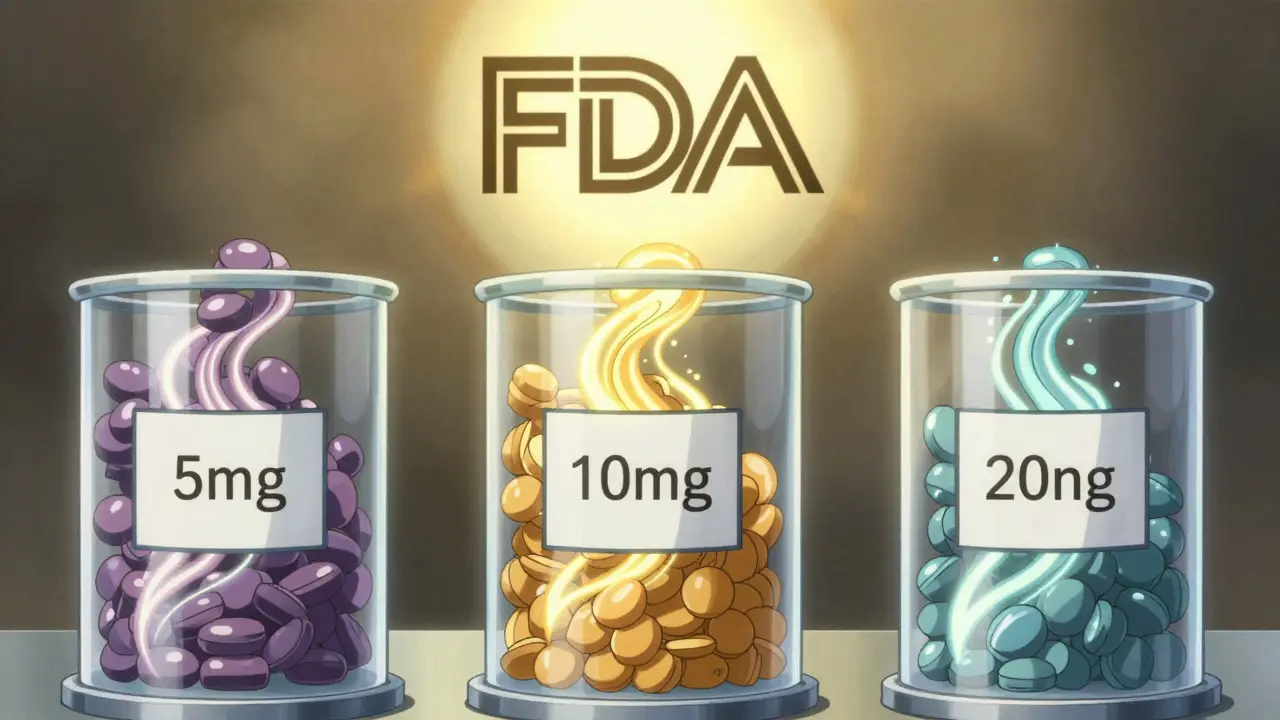
Applying for FDA approval isn’t a one-time submission. For generic drugs, companies must submit three separate batches of the same drug - called intermediate bulk granulations. One batch is used to make the standard strength. The other two? They’re used to make the lowest and highest strengths. Why? Because if a drug works at 10mg, it must also work reliably at 5mg and 20mg. The manufacturing process can’t break down just because the dose changes.
This requirement adds millions to development costs. But it prevents a real-world problem: a 5mg pill that’s too weak because the mixing process doesn’t scale properly. The FDA has seen this happen. They don’t want to see it again.
Real-World Impact: How This Keeps You Safe
Over 90% of all prescriptions filled in the U.S. are for generic drugs. That’s 6.8 billion prescriptions a year. And nearly all of them come from facilities under FDA oversight. The result? Generic drugs cost 80-85% less than brand names - but they work just as well. Studies show therapeutic equivalence in 98-99% of cases.
During the pandemic, when supply chains were breaking down, the FDA’s Office of Manufacturing Quality jumped into action. They reviewed manufacturing changes in real time, fast-tracked approvals for critical drugs, and prevented shortages of antibiotics, heart medications, and insulin. Their proactive approach - not waiting for problems to happen - saved lives.

Challenges and Criticisms
It’s not perfect. Smaller manufacturers say the documentation burden is overwhelming. One executive told Pharmaceutical Technology that up to 40% of their development time is spent just on paperwork. Some workers struggle with the ALCOA+ standards - especially when using outdated systems that don’t track data properly.
In 2022, over 40% of FDA Form 483 observations (inspection findings) were about data integrity. That means people were writing things down late, changing numbers, or not saving records at all. The FDA takes this seriously. It’s not just sloppy - it’s dangerous.
There’s also the issue of resources. The Government Accountability Office found that the FDA simply can’t inspect every facility as often as it would like. Foreign sites, especially in countries with high production volumes, sometimes go years without an inspection. But the FDA is trying to catch up. They’ve increased funding through GDUFA III - $650 million over five years - and now use remote evaluations to supplement on-site visits.
What’s Next? The Future of Drug Quality
The FDA isn’t resting. They’re moving toward smarter manufacturing. New initiatives like Pharmaceutical Quality for the 21st Century are pushing for real-time testing - where quality is checked as the drug is made, not after. Imagine a machine that detects a problem in the mixing tank and fixes it before a single pill is made. That’s the goal.
By 2025, manufacturers may be required to trace every active ingredient back to its source. No more hidden suppliers. No more gray-market chemicals. Transparency is the next frontier.
And the industry is responding. Companies are investing $2-5 million just to upgrade their quality systems before submitting their first application. Why? Because once you’re approved, you can sell to millions. But one inspection failure can cost you everything.
Bottom Line
The FDA doesn’t guarantee that every generic drug is perfect. But they guarantee that every drug made for the U.S. market had to pass through one of the strictest quality systems on Earth. It’s not about cost. It’s about control. Every step - from the raw chemical to the sealed blister pack - is monitored, tested, and documented. That’s why you can trust that a $5 generic pill works just as well as a $50 brand-name one.
Do generic drugs have the same active ingredients as brand-name drugs?
Yes. By law, a generic drug must contain the same active ingredient, in the same strength, dosage form, and route of administration as the brand-name drug. The FDA requires this before approval. The only differences allowed are in inactive ingredients - like fillers or dyes - which don’t affect how the drug works.
How often does the FDA inspect generic drug factories?
The FDA inspects about 1,200 manufacturing facilities each year - both in the U.S. and abroad. Domestic facilities are typically inspected every 2-3 years. Foreign facilities, especially high-risk ones, may be inspected more frequently. Inspections are unannounced, meaning companies never know when they’re coming.
What happens if a generic drug factory fails an FDA inspection?
If a facility fails, the FDA issues a Form 483 listing violations. If the problems are serious, the agency may issue a warning letter or block the facility from shipping products to the U.S. In extreme cases, the FDA can refuse to approve any new generic drugs from that site until the issues are fixed - sometimes for years.
Are generic drugs tested on humans before approval?
Yes - but not in the same way as brand-name drugs. Generic manufacturers must prove bioequivalence by testing their drug in healthy volunteers. These studies show that the generic drug is absorbed into the bloodstream at the same rate and to the same extent as the brand-name version. This is required before the FDA approves any generic drug.
Can a generic drug be made in the same facility as the brand-name version?
Yes. Many large pharmaceutical companies make both brand-name and generic versions in the same factory. The FDA requires strict separation and documentation to prevent cross-contamination. Even in the same building, the lines, equipment, and records for each product must be completely independent.
Why do some generic drugs cost more than others?
Cost differences come from competition, supply chain complexity, and manufacturing scale. A generic made by a large company with high-volume production will cost less than one made by a small firm with limited capacity. Also, drugs with few manufacturers or complex formulations (like inhalers or injectables) often cost more because they’re harder to produce.
Dylan Patrick
March 11, 2026 AT 18:51Kathy Leslie
March 13, 2026 AT 06:39Amisha Patel
March 13, 2026 AT 07:45Elsa Rodriguez
March 15, 2026 AT 01:00Serena Petrie
March 15, 2026 AT 19:28Buddy Nataatmadja
March 16, 2026 AT 12:00mir yasir
March 16, 2026 AT 19:40Stephanie Paluch
March 18, 2026 AT 16:28Tim Schulz
March 20, 2026 AT 09:09