
What Are Hormone Therapy Combinations?
When women go through menopause, their bodies stop making estrogen and progesterone. This drop causes hot flashes, night sweats, sleep problems, and vaginal dryness. Hormone therapy combinations-often called HRT-are medicines that replace these hormones to ease symptoms. But not all HRT is the same. The type you need depends on whether you still have your uterus, your age, and your health history.
There are two main types of hormone combinations: sequential and continuous. Sequential HRT gives you estrogen every day and adds progestogen for part of the month. It’s meant for women who are still having periods or just stopped recently. Continuous HRT gives you both hormones every day, every single day. That’s for women who haven’t had a period for a full year.
And then there’s estrogen-only therapy. This is only for women who’ve had a hysterectomy. If you still have your uterus and take estrogen alone, you’re at serious risk for uterine cancer. The lining of the uterus thickens without progesterone to balance it. That’s not a risk you can ignore.
Generic Hormone Therapies: What’s Available and How Much Do They Cost?
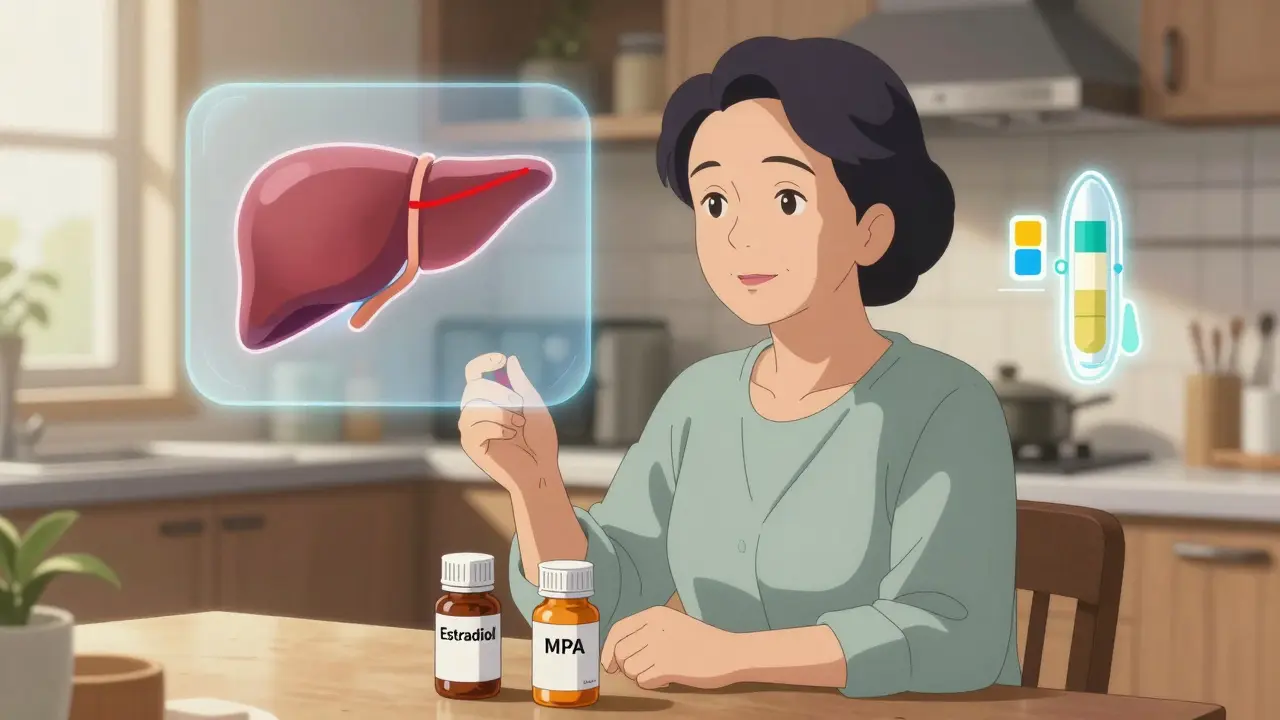
Most hormone therapy prescriptions today are generic. That’s because they work just as well as brand-name versions but cost a lot less. In the U.S., you can get generic conjugated estrogens (like Premarin generics) in doses of 0.3mg, 0.45mg, or 0.625mg. Estradiol tablets come in 0.5mg and 1mg. Progestogen options include medroxyprogesterone acetate (MPA) in 2.5mg, 5mg, or 10mg tablets.
Prices vary. A 30-day supply of generic estradiol can cost as little as $4 with a GoodRx coupon. Higher doses or combination pills might run $20-$40. Insurance often covers them, but even without it, generics are affordable. Compare that to branded patches or gels, which can cost $100+ a month.
Outside the U.S., prices are even lower. In Canada or Australia, many generics cost under $10 per month. The big difference isn’t effectiveness-it’s delivery method and formulation.
Oral vs. Transdermal: Which Delivery Method Is Safer?
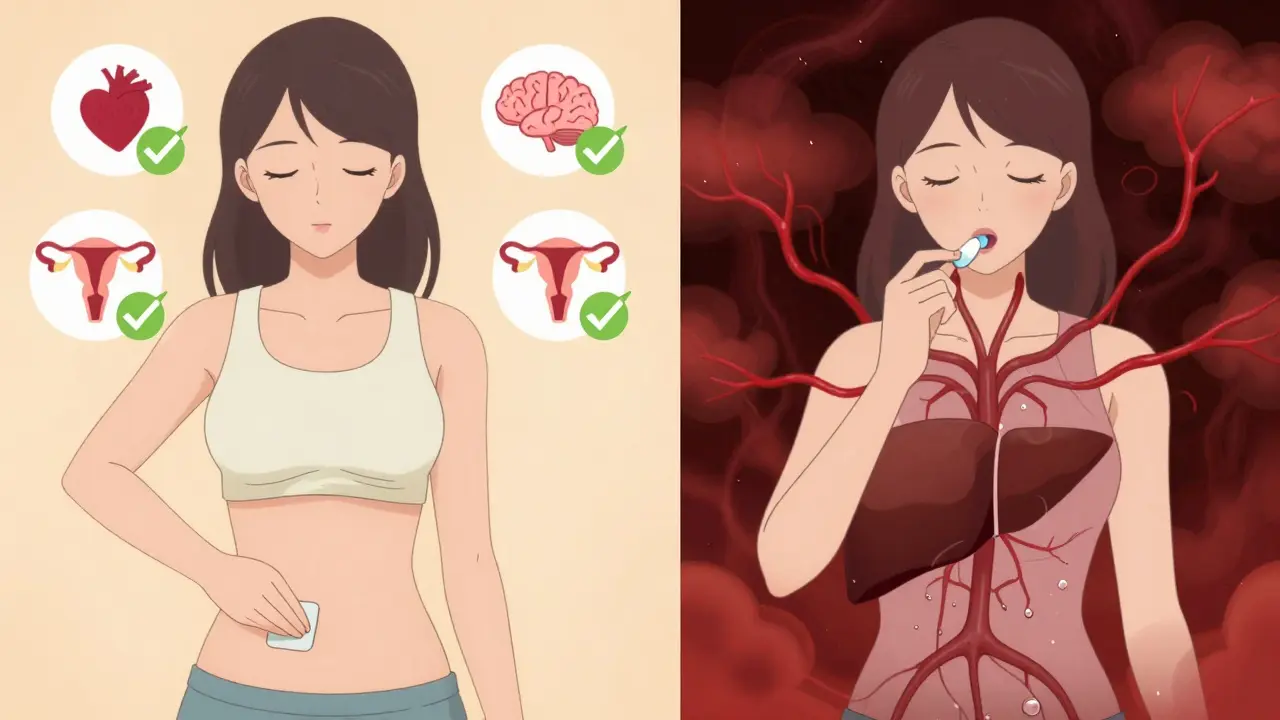
How you take your hormones matters more than you think. Most people assume pills are fine. But oral estrogen goes straight to your liver. That triggers changes in clotting factors, raising your risk of blood clots, stroke, and heart attack.
Transdermal options-patches, gels, sprays-bypass the liver. They’re absorbed through your skin. That means less stress on your body. Studies show oral HRT increases the risk of venous thromboembolism (VTE) by 2 to 3 times compared to patches or gels. The absolute risk is still small-for a healthy woman under 60, it’s about 1 in 1,000 per year-but why take the extra risk if you don’t have to?
For women over 60 or those with a history of blood clots, heart disease, or stroke, transdermal estrogen is the clear choice. The Women’s Health Initiative found oral estrogen increases stroke risk by 39% in women over 60. Patches don’t carry that same spike.
Practical tip: If you use a patch, apply it to clean, dry skin on your lower belly or buttocks. Change it twice a week. If you use gel, rub it in on your arm or thigh and wait an hour before hugging someone. Skin-to-skin contact can transfer the hormone.
Choosing the Right Progestogen: Synthetic vs. Natural
Not all progestogens are created equal. Many generic HRT combinations use medroxyprogesterone acetate (MPA), a synthetic hormone. It works to protect the uterus, but it’s linked to higher breast cancer risk.
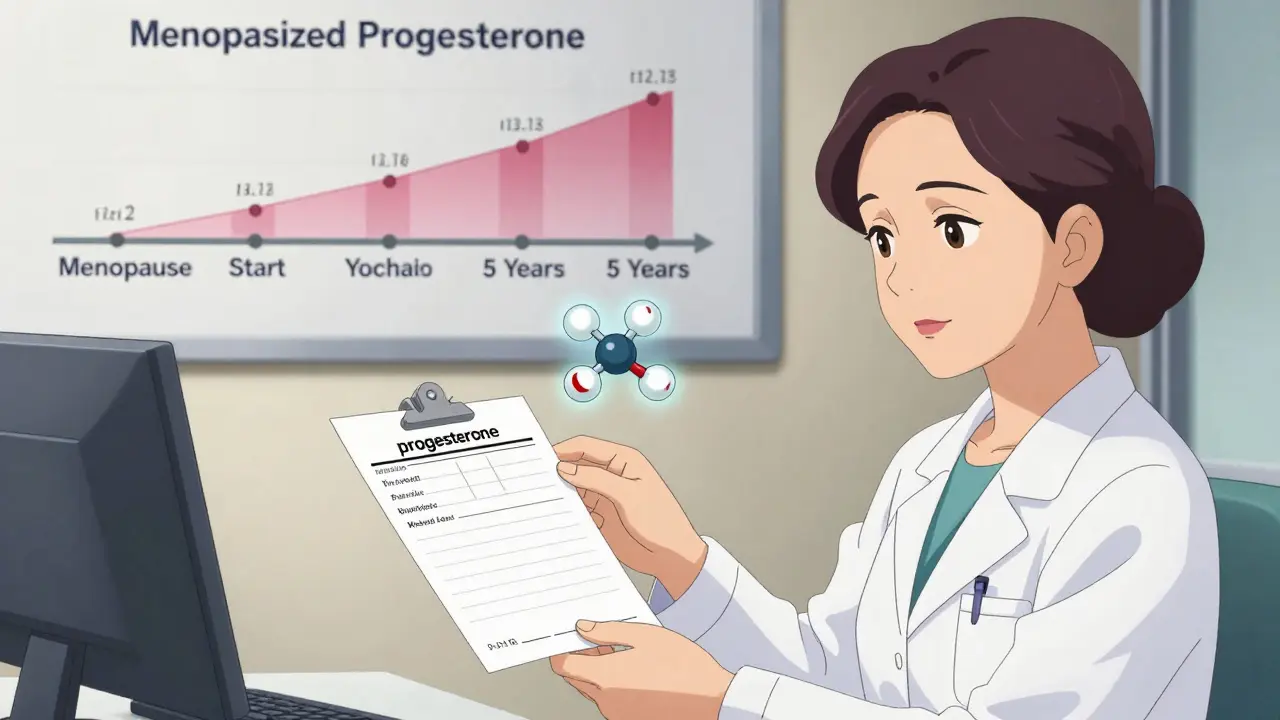
There’s another option: micronized progesterone. It’s bioidentical to the progesterone your body makes. Brands like Prometrium are branded, but generics are available too. Research from the European Menopause and Andropause Society shows synthetic progestins increase breast cancer risk by 2.7% per year of use. Micronized progesterone? Only 1.9% per year.
That difference might not sound like much, but over five years, it adds up. If you’re on HRT long-term, choosing micronized progesterone could mean avoiding one extra case of breast cancer per 100 women.
It’s not always covered by insurance, and it can cause drowsiness. But if you’re planning to stay on HRT for more than 3-5 years, it’s worth asking your doctor about.
Who Should Avoid Hormone Therapy?
HRT isn’t for everyone. If you’ve had breast cancer, liver disease, unexplained vaginal bleeding, or a history of blood clots or stroke, you should avoid it. So should women with active heart disease or a history of blood clots in the lungs or legs.
Even if you’re healthy, timing matters. The best window for starting HRT is within 10 years of your last period or before age 60. Starting after 60, especially with oral estrogen, increases your risk of dementia, heart attack, and stroke. Dr. Gutierrez from Houston Methodist puts it bluntly: ‘Throwing hormones at someone decades after menopause can be very harmful.’
And HRT isn’t a longevity drug. The American College of Obstetricians and Gynecologists (ACOG) says it’s for symptom relief-not for preventing heart disease, osteoporosis, or dementia. If you’re looking for those benefits, focus on diet, exercise, and bone-strengthening meds instead.
Managing Side Effects: Breakthrough Bleeding and More
One of the most common reasons women stop HRT? Unexpected bleeding. About 15-20% of women on sequential or continuous therapy have spotting or bleeding in the first 3-6 months. That’s normal. Your body is adjusting.
But if bleeding lasts longer than six months, or if it’s heavy, painful, or happens after sex, you need to see your doctor. It could be a sign of polyps, endometrial thickening, or something else.
Other side effects include breast tenderness, bloating, mood swings, and headaches. These usually fade after a few weeks. If they don’t, your dose might be too high. Start low. Go slow. Most doctors begin with the lowest possible dose and adjust every 3 months until symptoms are under control.
Also, don’t assume one product works forever. Your needs change. After 3-5 years, it’s time to re-evaluate. Do you still have hot flashes? Are your bones holding up? Is your breast cancer risk acceptable? The North American Menopause Society recommends annual check-ins after the first few years.
What’s New in Hormone Therapy?
The field is evolving. In 2023, the FDA approved a new transdermal patch that combines estradiol and micronized progesterone in one patch. Early data from the TWIRP study suggests this combo may lower breast cancer risk compared to old-school oral pills.
Researchers are also testing new types of hormones called TSECs (tissue-selective estrogen complexes) and SPRMs (selective progesterone receptor modulators). These are designed to give the benefits of estrogen without the cancer risk. Several are in Phase III trials and could be available by 2028.
Meanwhile, the Kronos Early Estrogen Prevention Study (KEEPS) found that starting transdermal estradiol within three years of menopause may actually protect your heart-without increasing artery plaque. That’s a big shift from the old fear that all HRT harms the heart.
Final Thoughts: It’s Personal, Not One-Size-Fits-All
Hormone therapy combinations aren’t right for every woman. But for many, they’re life-changing. They let women sleep through the night, enjoy sex again, and feel like themselves after years of fatigue and discomfort.
The key is personalization. Your uterus? Check. Your age? Check. Your risk of clots? Check. Your budget? Check. Your tolerance for bleeding? Check.
Start with the lowest dose. Choose transdermal if you can. Use micronized progesterone if you’re on it long-term. Reassess every year. And remember: HRT isn’t forever. Most women stop after 3-5 years, once symptoms fade.
If you’re considering HRT, talk to a menopause specialist-not just your GP. They know the latest data, the safest combos, and how to make it work for your body.
Can I take generic hormone therapy if I’ve had breast cancer?
No. If you’ve had estrogen-receptor-positive breast cancer, hormone therapy is not recommended. Even low doses of estrogen or progestogen can stimulate cancer cell growth. Talk to your oncologist about non-hormonal options like gabapentin, clonidine, or cognitive behavioral therapy for hot flashes.
Is transdermal HRT really safer than pills?
Yes, for most women. Transdermal estrogen (patches, gels) doesn’t increase clotting factors the way oral estrogen does. Studies show a 2-3 times lower risk of blood clots and stroke with transdermal delivery. It’s especially safer for women over 60, those with high blood pressure, or a history of migraines with aura.
How long should I stay on hormone therapy?
There’s no fixed timeline. Most women use HRT for 3-5 years to manage symptoms. If symptoms return after stopping, you can restart at the lowest dose. But long-term use beyond 5-7 years slightly increases breast cancer risk. Annual reviews with your doctor help decide if you still need it.
Do I need progesterone if I’ve had a hysterectomy?
No. If your uterus was removed, you don’t need progesterone. Estrogen-only therapy is safe and effective for you. Adding progesterone unnecessarily increases side effects without benefit. Always confirm your surgical history with your prescriber.
Can I buy HRT online without a prescription?
No. All hormone therapies require a prescription in Australia, the U.S., Canada, and the EU. Websites selling HRT without a prescription are illegal and dangerous. You could get wrong doses, contaminated products, or fake hormones. Always get HRT through a licensed provider and pharmacy.
Ambrose Curtis
January 29, 2026 AT 12:19Also, transdermal is way safer if you’re over 55. I’m 58 and went from oral to patch after reading this. No more worrying about clots. My bloodwork’s cleaner than my ex’s conscience.
Linda O'neil
January 30, 2026 AT 07:52Chris Urdilas
February 1, 2026 AT 05:39Let me guess-your doctor gets a kickback from the generic pill manufacturers. Meanwhile, real women are out here using black cohosh and yoga because they don’t trust Big HRT. I’m not saying it doesn’t work. I’m saying you’re selling snake oil with a PubMed citation.
Jeffrey Carroll
February 3, 2026 AT 04:45Irebami Soyinka
February 3, 2026 AT 12:06And why you all scared of progesterone? My aunty took MPA for 10 years, no cancer, no clot, just happy. You Americans turn every hormone into a horror movie. Chill. 🤷♀️🔥
doug b
February 5, 2026 AT 00:19Mel MJPS
February 6, 2026 AT 00:10You’re not just giving medical info-you’re giving hope.
Katie Mccreary
February 6, 2026 AT 01:34Kevin Kennett
February 6, 2026 AT 20:31This isn’t about vanity. It’s about surviving menopause without losing your mind. I’ve seen women go from bedridden to hiking again after starting low-dose patches. Don’t knock it till you’ve lived it.
Rose Palmer
February 8, 2026 AT 07:50Howard Esakov
February 8, 2026 AT 19:18Meanwhile, I’m over here on $4 estradiol and my estrogen levels are fine. Stop marketing fear. I’m not your lab rat. 🤓💊