
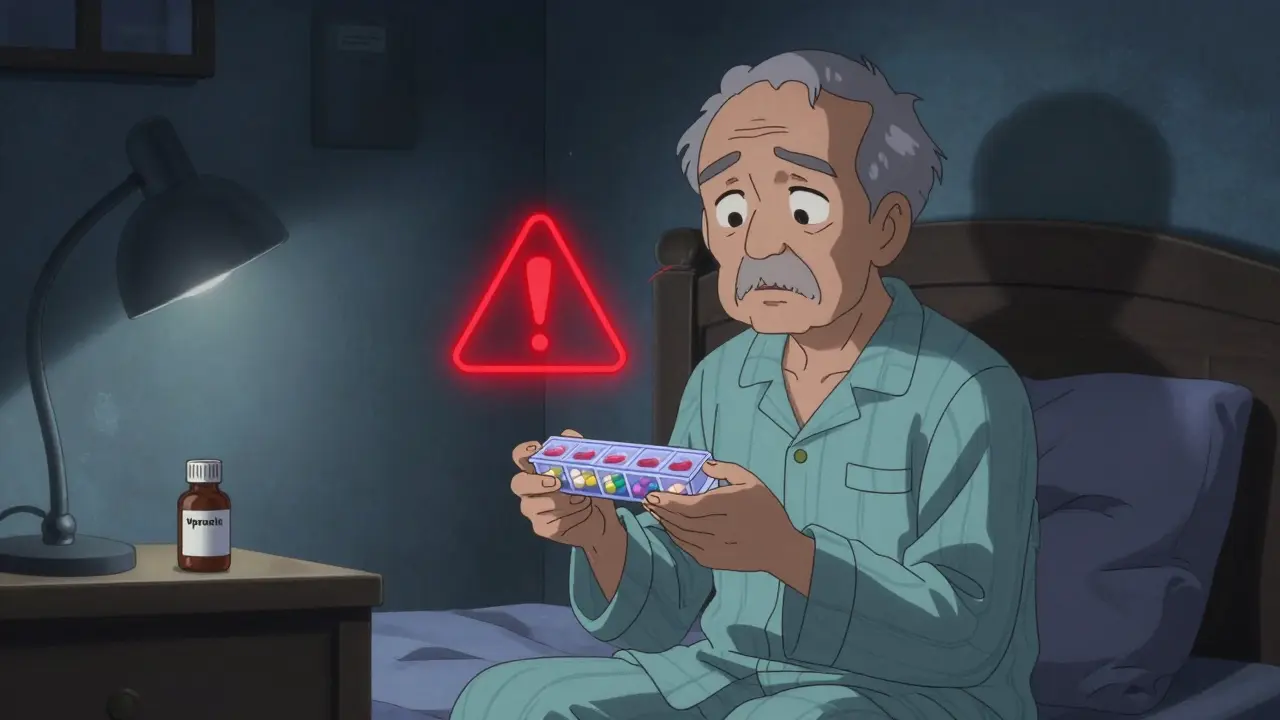
Every year, more than 100,000 people in the U.S. die from adverse drug reactions-many of them avoidable. When it comes to heart medications, the risk isn’t just from taking one drug alone. It’s from combining them without knowing the consequences. A 2023 study from the USC Schaeffer Center found that taking just two heart medications with known cardiovascular side effects doubled the risk of heart attack, stroke, or death-even in people who had never had heart problems before. When three such drugs were taken together, the risk jumped by 218%. This isn’t theoretical. It’s happening in living rooms, nursing homes, and emergency rooms across the country.
Why Heart Medications Are Especially Risky When Combined
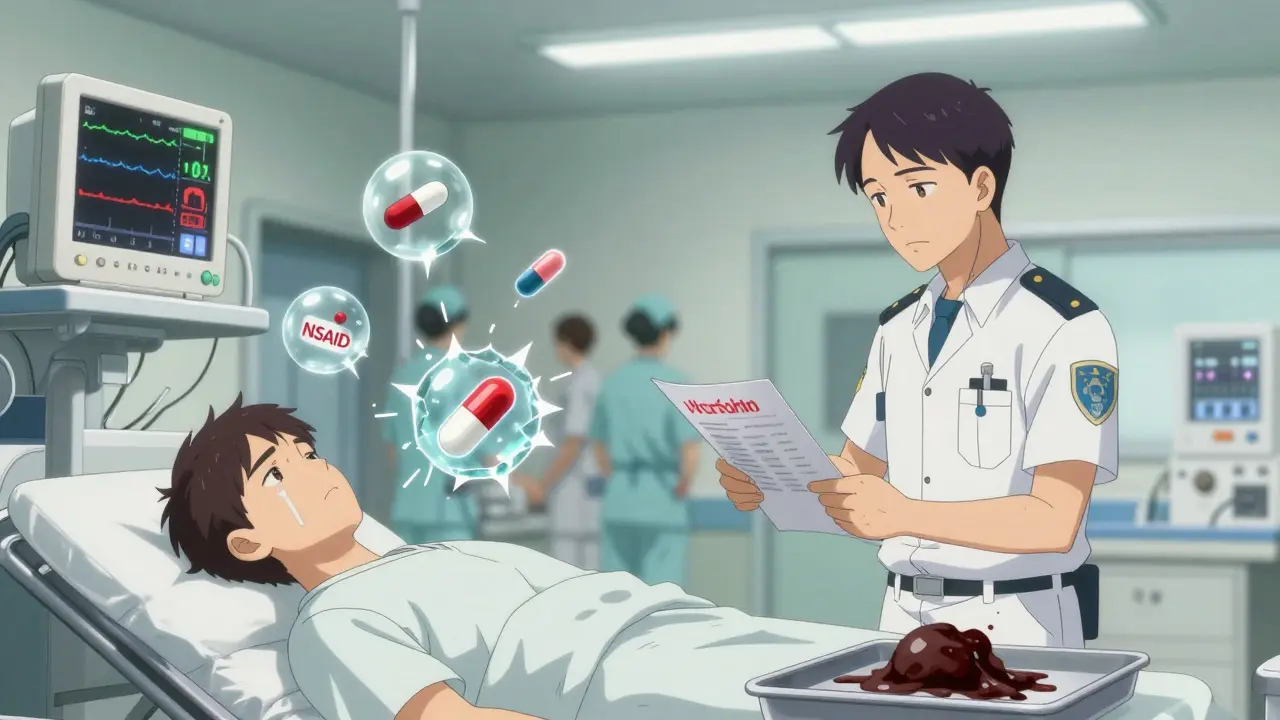
Heart medications work on delicate systems: blood pressure, heart rhythm, clotting, fluid balance. Change one part, and the whole system can go out of sync. Many of these drugs have narrow therapeutic windows-meaning the difference between a helpful dose and a dangerous one is small. When you add another drug that affects the same pathway, things can spiral fast.Take warfarin, a blood thinner. It’s commonly prescribed after a stroke or for atrial fibrillation. But when someone takes ibuprofen on top of it-even for a headache-the risk of a life-threatening stomach bleed goes up by 300%. Why? Ibuprofen irritates the stomach lining and blocks platelets, while warfarin prevents blood from clotting. Together, they create a perfect storm for internal bleeding. One patient on Reddit described waking up with black, tarry stools after taking Advil for back pain. He ended up in the ER with a hemoglobin level of 6.8-down from 14 just days before.
The 7 Most Dangerous Combinations You Need to Know
Not all drug combinations are equal. Some are far more dangerous than others. Here are the seven most critical ones backed by clinical data and real-world outcomes:- Warfarin + Ibuprofen (or other NSAIDs): Increases GI bleeding risk by 300%. Even short-term use can trigger hospitalization.
- Warfarin + Acetaminophen (long-term): Can spike INR levels by 2-3 points, making blood too thin. Many patients don’t realize Tylenol is risky here.
- PDE-5 inhibitors (Viagra, Cialis) + Nitrates (nitroglycerin): This combo can crash blood pressure below 70 mmHg. It’s caused sudden deaths during sexual activity. If you’re on nitrates for angina, never take erectile dysfunction drugs.
- Statins + Amiodarone: Amiodarone slows the breakdown of statins. This causes muscle breakdown (rhabdomyolysis), which can lead to kidney failure. One patient reported severe leg pain and dark urine after starting amiodarone-his creatine kinase levels were 10 times normal.
- ACE inhibitors + Potassium supplements: ACE inhibitors already raise potassium. Adding a potassium pill or salt substitute can push levels above 5.5 mEq/L. That’s a cardiac arrest risk. A 2021 study found 18.7% of patients on this combo had dangerous hyperkalemia.
- Digoxin + Verapamil: Verapamil blocks how the body clears digoxin. Serum levels can jump 60-75%. Symptoms? Nausea, blurred vision, irregular heartbeat. One elderly woman ended up in the ICU after her doctor added verapamil for high blood pressure without adjusting her digoxin dose.
- Opioids + Benzodiazepines: Though not always classified as heart meds, many patients on heart failure or arrhythmia drugs also take these for pain or anxiety. Together, they depress breathing to under 8 breaths per minute. CDC data shows this combo increases overdose risk by 300-500%.
What About Over-the-Counter Drugs?
People assume OTC means safe. It doesn’t. NSAIDs like diclofenac, naproxen, and ketorolac are prescribed over 70 million times a year in the U.S.-and they’re a major culprit in worsening heart failure. They cause the body to hold onto salt and water, reduce the effectiveness of diuretics by 25-30%, and raise blood pressure by increasing resistance in blood vessels.A 2022 survey by the American Heart Association found that 28% of heart patients had taken NSAIDs with their blood pressure meds without telling their doctor. One man with heart failure took ibuprofen for arthritis pain for three weeks. He gained 12 pounds of fluid, couldn’t breathe lying down, and was hospitalized. His doctor said, “You didn’t need to die from a painkiller.”
Even “natural” supplements can be dangerous. St. John’s wort, turmeric, and garlic supplements interfere with blood thinners like warfarin and clopidogrel. One patient’s INR shot to 8.2 after starting St. John’s wort for depression. He bled internally and nearly died. He didn’t think it counted as a “medication.”
What About Beneficial Combinations?
Not all combinations are bad. Some are lifesaving. Statins, aspirin, and beta blockers taken together have been shown to improve survival by 25-30% in high-risk patients after a heart attack. SGLT2 inhibitors like dapagliflozin, when added to standard heart failure therapy, reduce cardiovascular events by 14%. New fixed-dose pills combining sacubitril, valsartan, and dapagliflozin are now being rolled out-designed to simplify treatment and reduce interaction risks.The key difference? These combinations are studied, approved, and monitored. They’re not random. They’re prescribed intentionally with clear guidelines.
How to Protect Yourself
You don’t have to be a medical expert to avoid deadly combinations. Here’s what works:- Keep a current list: Write down every pill, patch, injection, and supplement you take-including dosage and frequency. Example: “Lisinopril 10 mg once daily,” not “blood pressure pill.” Update it every 30 days.
- Use one pharmacy: Pharmacists can catch interactions your doctor might miss. If you switch pharmacies, they lose the full picture.
- Ask this question at every visit: “Could any of these medications interact with each other?” Don’t wait for them to bring it up.
- Never start a new OTC drug or supplement without checking. That includes cold medicine, sleep aids, and herbal teas.
- Know your numbers: If you’re on warfarin, know your INR. If you’re on digoxin, know your kidney function. If you’re on an ACE inhibitor, know your potassium level.
Medicare Part D now covers free 20-30 minute medication reviews with pharmacists. Ask for one. It’s not just a formality-it’s a safety net.
Why Doctors Miss These Risks
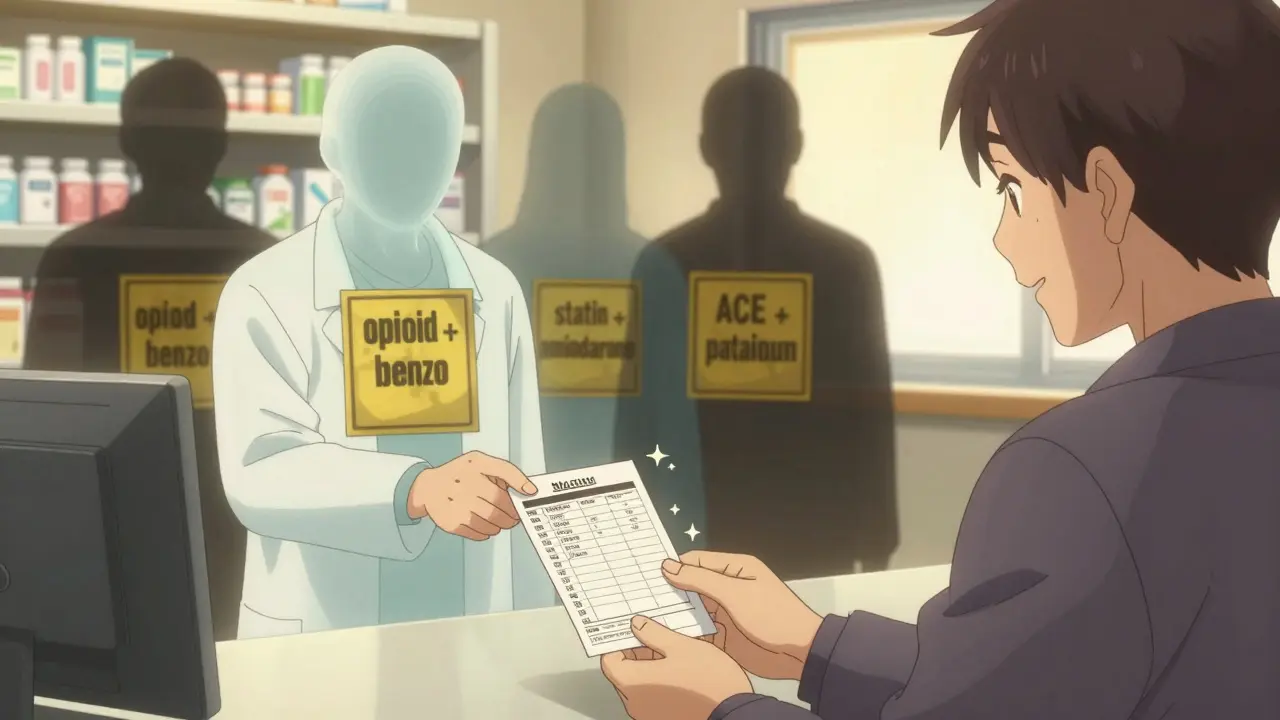
It’s not that doctors don’t care. They’re overwhelmed. The average primary care visit is 15 minutes. Patients come in with 5-10 medications. Doctors are expected to manage diabetes, high blood pressure, arthritis, depression, and sleep apnea-all in one appointment. A 2023 AHRQ report found only 37% of doctors routinely screen for dangerous combinations during medication reviews.Electronic systems can flag interactions, but they’re only as good as the data entered. If you don’t tell your doctor you take melatonin for sleep or ginger for nausea, the system won’t know. And many systems still don’t flag OTC drugs or supplements.
What’s Changing for the Better
There’s progress. The FDA now requires black box warnings on 27 cardiovascular drugs for specific dangerous combinations. Medicare is penalizing hospitals for readmissions due to medication errors. AI tools are being tested to predict interactions before they happen-early results show they could cut dangerous combos by 40-50% in five years.But the biggest change needs to come from you. You’re the only person who knows every pill you take. You’re the only one who can speak up.
Can I take ibuprofen with my blood pressure medicine?
Generally, no. Ibuprofen and other NSAIDs can reduce the effectiveness of blood pressure medications like lisinopril, losartan, or metoprolol. They also increase the risk of kidney damage and fluid retention, which can worsen heart failure. If you need pain relief, talk to your doctor about acetaminophen-but even that can be risky if you’re on warfarin long-term.
Is it safe to take St. John’s wort with warfarin?
No. St. John’s wort speeds up how your body breaks down warfarin, making it less effective. But it can also unpredictably increase bleeding risk. One patient’s INR went from 2.5 to 8.2 after starting the supplement. That’s a life-threatening level. Always tell your doctor about any supplement-even if you think it’s “natural.”
What should I do if I accidentally took a dangerous combination?
Call your doctor or pharmacist immediately. If you have symptoms like unusual bleeding, dizziness, chest pain, swelling in your legs, or confusion, go to the ER. Don’t wait. Many dangerous interactions cause damage quickly, and early intervention can prevent serious harm.
Do all heart medications have dangerous interactions?
Not all, but many do. Blood thinners, beta blockers, diuretics, ACE inhibitors, statins, and antiarrhythmics are among the most likely to interact. Even common drugs like calcium channel blockers and digoxin have known risky pairings. The key is to assume every new medication could interact-and check before taking it.
Can I rely on my pharmacy’s warning system?
Pharmacies flag many dangerous combinations, but they don’t catch everything-especially if you get prescriptions from multiple places or take supplements. Always double-check with your doctor or pharmacist yourself. Don’t assume the system will protect you.
Why don’t doctors always warn me about these risks?
Time constraints, incomplete medication lists, and lack of training on polypharmacy are common reasons. A 2023 study found that 62% of heart patients weren’t warned about dangerous OTC combinations. It’s not negligence-it’s systemic. That’s why you need to be your own advocate. Ask the question: “Could any of these interact?”
Are there any heart medications that are safe to combine?
Yes. Statins, aspirin, and beta blockers together are proven to improve survival after a heart attack. New fixed-dose pills like those combining sacubitril, valsartan, and dapagliflozin are designed to be safe and effective together. The difference? These are carefully studied combinations approved by doctors-not random mixtures chosen by patients.
How often should I review my medications?
At least every 30 days-or anytime you start or stop a medication, even if it’s over-the-counter. Medicare Part D offers free medication reviews with pharmacists. Use them. Bring your updated list to every doctor’s visit. It takes 15 minutes, but it could save your life.
June Richards
February 1, 2026 AT 13:03Lu Gao
February 1, 2026 AT 22:29Angel Fitzpatrick
February 3, 2026 AT 13:45Nidhi Rajpara
February 4, 2026 AT 01:41Chris & Kara Cutler
February 5, 2026 AT 06:03Donna Macaranas
February 5, 2026 AT 06:15Rachel Liew
February 5, 2026 AT 07:53Lisa Rodriguez
February 6, 2026 AT 17:13Lilliana Lowe
February 7, 2026 AT 18:50