

When you hear about GLP-1 agonists, you might think of diabetes. But today, these drugs are better known for helping people lose weight-sometimes over 15% of their body weight. Medications like Wegovy, Ozempic, and Zepbound aren’t just trending on social media; they’re backed by solid science and real-world results. But they’re not magic pills. They come with real side effects, high costs, and long-term commitments. If you’re considering one, you need to know what you’re signing up for.
How GLP-1 Agonists Actually Work
GLP-1 agonists mimic a hormone your body naturally makes after eating. This hormone, called glucagon-like peptide-1, tells your brain you’re full and slows down how fast your stomach empties. That’s why people on these drugs feel satisfied with smaller portions and don’t snack as much. They also help your pancreas release more insulin when blood sugar rises and reduce the amount of glucose your liver releases. For people with type 2 diabetes, that’s a win. For those looking to lose weight, it’s even bigger.
Unlike older weight loss drugs that just suppressed appetite or blocked fat absorption, GLP-1 agonists target the root of overeating: your brain’s hunger signals. Studies show they activate brain regions linked to reward and cravings, making high-calorie foods less appealing. In clinical trials, people didn’t feel hungry-they just didn’t want to eat as much. That’s why weight loss happens without constant willpower.
How Much Weight Can You Lose?
The numbers speak for themselves. In the STEP 4 trial, people taking semaglutide (Wegovy) lost an average of 15.8% of their body weight over 68 weeks. That’s not a few pounds-it’s 30 to 50 pounds for many. Tirzepatide (Zepbound), which also targets a second hormone called GIP, did even better: 20.9% weight loss in the SURMOUNT-2 trial. Compare that to older drugs like orlistat (Xenical), which averages 5-10% weight loss, or phentermine-topiramate (Qsymia), which gets you around 7-10%. GLP-1 agonists are in a different league.
What’s more, this isn’t just about the scale. People report better energy, improved blood sugar, lower blood pressure, and reduced joint pain. Many say they finally feel in control of their eating habits for the first time. One Reddit user lost 78 pounds in 10 months on Wegovy. Another said they cut their portion sizes in half without feeling deprived-something no diet ever managed.
Common Side Effects: It’s Not Just Nausea
Let’s be honest: the side effects are real. About 70-80% of people experience nausea, especially in the first few weeks. Vomiting happens in 40-50%, diarrhea in 50-60%, and abdominal pain in 30-40%. These aren’t rare reactions-they’re expected. The good news? Most get better after 8-12 weeks. The key is slow titration. Starting at 0.25 mg weekly and increasing every month gives your body time to adjust.
People who push through the first two months often report the side effects fade. One user on Drugs.com wrote: “Weeks 3-8 were brutal. I almost quit. But after I stabilized at the right dose, the nausea disappeared.” That’s common. Taking the medication with low-fat meals, staying hydrated, and using anti-nausea meds like ondansetron (if prescribed) helps a lot.
Other less common but serious risks include gallbladder problems, pancreatitis, and potential thyroid tumors-seen in animal studies but not confirmed in humans. That’s why doctors screen for a personal or family history of medullary thyroid cancer before prescribing. Pregnant women shouldn’t use them, and you need a pregnancy test before starting.
How They Compare to Other Weight Loss Drugs
| Medication | Weight Loss (Average) | Dosing | Cost (Monthly, U.S.) | Key Risks |
|---|---|---|---|---|
| Wegovy (semaglutide) | 15.8% | Weekly injection | $1,349 | Nausea, vomiting, gallbladder issues |
| Zepbound (tirzepatide) | 20.9% | Weekly injection | $1,300-$1,400 | Nausea, diarrhea, potential thyroid risk |
| Saxenda (liraglutide) | 6.4% | Daily injection | $1,300 | Nausea, increased heart rate |
| Qsymia (phentermine-topiramate) | 7-10% | Oral daily | $100-$200 | Cognitive fog, birth defects, increased heart rate |
| Xenical (orlistat) | 5-10% | Oral three times daily | $100-$150 | Oily stools, fecal urgency, vitamin deficiencies |
GLP-1 agonists win on effectiveness, but they lose on convenience and cost. You have to inject them weekly or daily. Oral options like Qsymia or Xenical are cheaper and easier to take-but they’re less effective and come with their own issues. Qsymia can cause brain fog and isn’t safe during pregnancy. Xenical makes your bowel movements messy and can lead to nutrient deficiencies. GLP-1 agonists don’t have those problems, but their side effects are more intense at first.

Cost and Insurance: The Big Hurdle
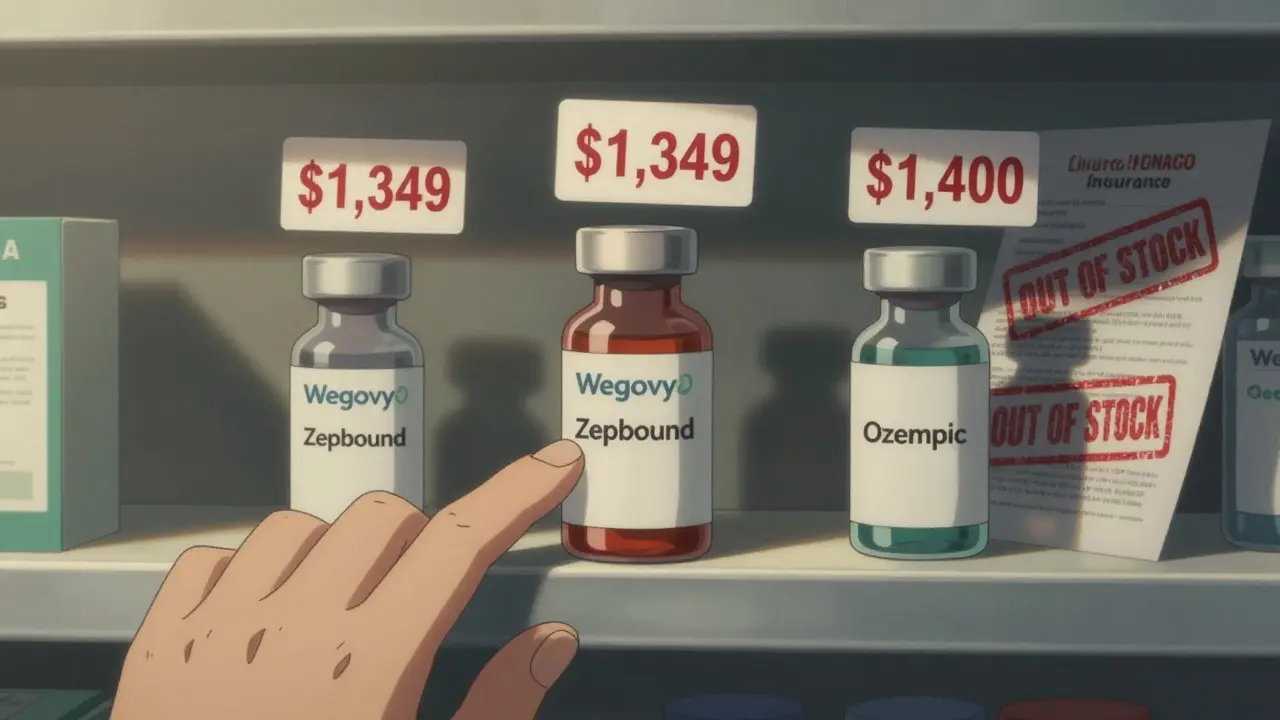
Wegovy costs about $1,349 a month without insurance. Zepbound is similar. That’s more than a mortgage payment for many. Even Ozempic, which is the same drug but approved for diabetes, costs $936 monthly-still unaffordable for most. Insurance coverage is a nightmare. Only 37% of private insurance plans in the U.S. cover Wegovy for weight loss as of 2023. For diabetes, it’s 89%. That’s a huge gap.
People with a BMI over 30 or over 27 with conditions like high blood pressure or prediabetes are eligible-but insurance companies often deny claims unless you’ve tried other treatments first. Some patients spend months appealing. Others pay out of pocket for a few months, then stop when they can’t afford it. That’s a problem, because stopping leads to weight regain.
What Happens When You Stop?
This is the part no one talks about enough. If you stop taking a GLP-1 agonist, you’ll likely regain most of the weight. In the STEP 4 trial, people who stopped after 68 weeks regained 50-70% of their lost weight within a year. That’s not failure-it’s biology. Your body fights to return to its old weight. That’s why experts say these drugs aren’t for short-term use. They’re for chronic management, like blood pressure or diabetes meds.
Dr. John Morton from Yale put it bluntly: “These medications don’t replace lifestyle changes. They support them.” If you stop the drug and go back to old eating habits, the weight comes back. But if you combine the medication with better food choices, regular movement, and sleep-then you can keep the weight off long-term.
Who Should Use Them? Who Should Avoid Them?
GLP-1 agonists are recommended for adults with obesity (BMI ≥30) or overweight (BMI ≥27) with at least one weight-related condition like high blood pressure, type 2 diabetes, or sleep apnea. The Endocrine Society gives them a top-tier recommendation based on 12 large studies.
They’re not for everyone. Avoid them if you or a close family member has had medullary thyroid cancer or multiple endocrine neoplasia syndrome type 2. They’re not approved for pregnant women, children under 18, or people with a history of pancreatitis. People with severe gastrointestinal disorders may also struggle with the side effects.
And while they’re often used by women (78% of users are female), men benefit just as much. The key is having realistic expectations and medical supervision.
What’s Next? The Future of GLP-1 Drugs
Novo Nordisk and Eli Lilly are working on oral versions of GLP-1 drugs. Pfizer’s danuglipron is in phase 2 trials and could be a game-changer if it works. If you could take a pill instead of an injection, adoption would skyrocket. The market for these drugs is expected to hit $100 billion by 2030.
More studies are underway to see if they help with heart failure, liver disease, and even Alzheimer’s. Early data is promising. But for now, their biggest impact is in weight loss and metabolic health.
Right now, the biggest barrier isn’t science-it’s access. Backorders for Wegovy lasted over 18 months in late 2023. Many patients wait months just to get a prescription. Supply is improving, but demand is still way higher than production.
Practical Tips for Starting
- Start low and go slow. The first dose is 0.25 mg weekly. Increase every 4 weeks until you hit 2.4 mg. Rushing increases nausea.
- Eat smaller, low-fat meals. High-fat foods make nausea worse.
- Stay hydrated. Drink water throughout the day.
- Use anti-nausea meds if prescribed. Ondansetron can help during the first few weeks.
- Get injection training. Most people master the technique after one demo. Inject in your belly, thigh, or upper arm.
- Don’t stop without talking to your doctor. Plan ahead for long-term use.
- Combine with lifestyle changes. Even a 500-calorie daily deficit helps maintain results.
- Check insurance coverage early. Some insurers require prior authorization or proof of diet attempts.
Do GLP-1 agonists really work for weight loss?
Yes. Clinical trials show people lose 10-21% of their body weight on average, depending on the drug. Semaglutide (Wegovy) leads to about 15.8% loss, and tirzepatide (Zepbound) to 20.9%. These are the most effective weight loss medications ever approved.
Are GLP-1 agonists safe for long-term use?
Current data shows they’re safe for long-term use in people without contraindications. Studies lasting up to 3 years show sustained weight loss and improved heart health. The main concern is what happens when you stop-not the medication itself. Regular check-ups with your doctor are essential.
Why is Wegovy so expensive?
Wegovy costs about $1,349 per month because it’s a patented biologic drug with complex manufacturing. The company sets the price based on research, development, and demand. Insurance coverage varies widely, and many plans don’t cover it for weight loss-only for diabetes. Patient assistance programs and coupons can reduce the cost, but access remains a major issue.
Can I take GLP-1 agonists if I have diabetes?
Yes. In fact, they were first approved for type 2 diabetes. Drugs like Ozempic and Mounjaro help control blood sugar while also promoting weight loss. Many people with diabetes use them for both benefits. They’re now recommended as first-line therapy for type 2 diabetes with obesity or heart disease.
How long do side effects last?
Nausea, vomiting, and diarrhea usually peak in the first 4-8 weeks and improve significantly by week 12. Most people tolerate the medication well after that. Slowing down the dose increase helps reduce side effects. If symptoms persist beyond 3 months, talk to your doctor.
Is there a pill form of GLP-1 agonist?
Currently, Wegovy and Zepbound are injections. But an oral version of semaglutide (Rybelsus) is approved for diabetes and is being tested for weight loss. Phase 3 results are expected in 2024. If approved, it could change access dramatically.
Do I need to diet while on GLP-1 agonists?
You don’t have to follow a strict diet, but eating better helps. The drugs reduce hunger, so you naturally eat less. But combining them with modest calorie reduction (like 500 fewer calories a day) and regular movement leads to better, longer-lasting results. They support behavior change-they don’t replace it.
Final Thoughts
GLP-1 agonists are the most powerful weight loss tools we’ve had in decades. They’re not perfect, and they’re not for everyone. But for those who qualify and can access them, they offer a real chance to transform their health. The key is understanding the trade-offs: powerful results, tough side effects, high cost, and lifelong commitment. If you’re serious about using one, work with a doctor who knows the science-and don’t expect it to be easy. It’s not a quick fix. It’s a long-term solution for a long-term problem.
jenny guachamboza
December 22, 2025 AT 07:47While the efficacy of GLP-1 agonists is well-documented, the ethical implications of their commercialization warrant deeper scrutiny. The pricing model disproportionately burdens low-income populations, effectively turning metabolic health into a privilege rather than a right.
Cara Hritz
December 22, 2025 AT 12:50ok so i just read this whole thing and like… did anyone else notice they said ‘semaglutide’ but spelled it wrong like 3 times?? 🤦♀️ also why is no one talking about how the ‘side effects fade’ thing is total bs? mine got worse after 3 months and my dr just said ‘you’re weak’ 😒
Tony Du bled
December 23, 2025 AT 08:24Been on Ozempic for 8 months. Lost 42 lbs. Nausea was brutal for 6 weeks. Now I eat salads like it’s my job. Still pay $1100/month out of pocket. Worth it.
Jim Brown
December 25, 2025 AT 06:43One cannot help but reflect upon the ontological paradox presented by these pharmacological interventions: we have engineered a chemical means to suppress the very biological imperatives that evolved over millennia to ensure survival. Are we healing, or are we merely silencing the voice of our ancestral physiology? The weight lost is measurable; the existential cost, less so.
Kathryn Weymouth
December 26, 2025 AT 05:50Thank you for such a thorough breakdown. I appreciate how you clarified the difference between diabetes and weight-loss indications-it’s a common point of confusion. Also, the note about weight regain after discontinuation is critical. Many assume it’s a ‘cure’ when it’s really a maintenance therapy, like statins or hypertension meds.
Nader Bsyouni
December 27, 2025 AT 12:30So let me get this straight-big pharma made a drug that makes you feel full so you stop eating and now they’re charging a mortgage payment for it? And you’re supposed to be grateful? Wake up. This isn’t medicine. It’s a luxury good for the rich and a psychological trap for the desperate
Johnnie R. Bailey
December 28, 2025 AT 22:19As someone who’s counseled patients on this for years, I’ve seen the transformation firsthand-people who couldn’t walk to their mailbox now hiking mountains. But the access gap is criminal. I had a veteran with prediabetes and depression get denied insurance five times before he paid $500 out of pocket for one month’s supply. He cried when he got it. That’s not healthcare. That’s a lottery.
Jamison Kissh
December 30, 2025 AT 21:39Interesting how the article frames this as a ‘long-term solution’ but doesn’t address the fact that most people can’t afford to be ‘long-term’ anything in this system. If you’re working two jobs and your insurance won’t cover it, what’s the alternative? Starve? Or just accept your body as it is? The science is brilliant-but the social contract isn’t.
Tarun Sharma
January 1, 2026 AT 12:17Thank you for the detailed analysis. I would like to respectfully suggest that future iterations of this content include a brief section on cultural variations in dietary behavior and their interaction with GLP-1 agonist efficacy. In many South Asian households, for instance, meals are communal and high in carbohydrates-a context where appetite suppression may require additional behavioral support.