
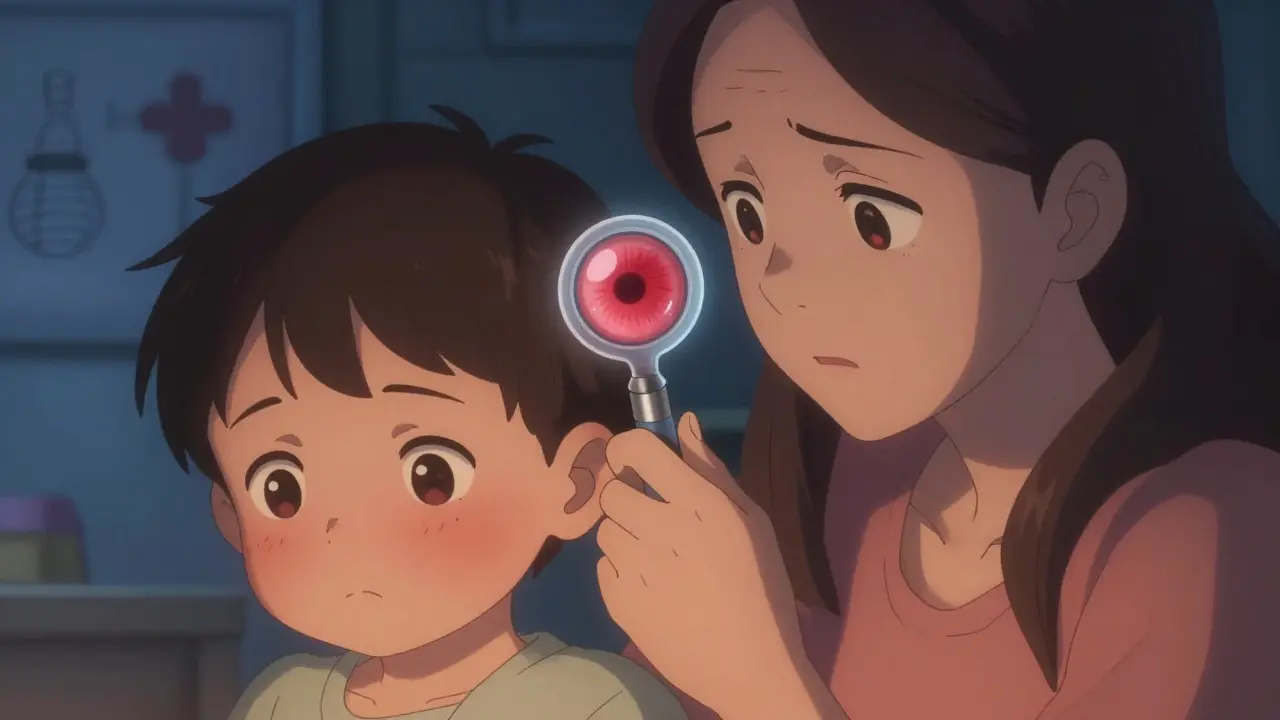
When your child pulls at their ear, cries more than usual, or won’t sleep through the night, it’s easy to panic. Is it just a cold? Or is it an ear infection? And if it is, do they need antibiotics right away-or should you wait? These are the questions every parent faces when their child gets a middle ear infection. The truth is, most of the time, ear infections in children get better on their own. But knowing when to act-and when to hold off-is key to avoiding unnecessary antibiotics, reducing the risk of resistance, and preventing long-term hearing issues.
What Exactly Is an Ear Infection?
An acute ear infection, or acute otitis media (AOM), isn’t just fluid behind the eardrum. It’s an active infection with three clear signs: sudden onset of symptoms, fluid trapped in the middle ear (seen as a bulging or stiff eardrum), and inflammation-like redness, swelling, or pus. It’s not the same as swimmer’s ear (otitis externa), which affects the outer ear canal. AOM is most common in kids between 6 and 24 months old. By age 3, about 83% of children have had at least one. It’s the number one reason kids are given antibiotics in the U.S.-and that’s a problem.
Doctors don’t just guess. They look at the eardrum with an otoscope, check for movement, and ask about symptoms like fever, irritability, or trouble sleeping. If your child has a fever over 102.2°F (39°C), ear pain lasting more than 48 hours, or is acting very sick, it’s considered severe. Mild cases? They often clear up without drugs.
Antibiotics: When They Help-and When They Don’t
Antibiotics aren’t magic pills for ear pain. They kill bacteria, but most ear infections in kids are viral or start viral. Even when bacteria are involved, the body often handles it on its own. Studies show that 60% to 80% of ear infections improve within 24 to 48 hours without antibiotics.
So when do you actually need them?
- Children under 6 months: Always treat with antibiotics. Their immune systems aren’t strong enough to fight off infection safely.
- Children 6 to 23 months with bilateral infections: If both ears are infected, 95% benefit from antibiotics right away.
- Any child with otorrhea (pus draining from the ear): This means the eardrum has ruptured-antibiotics are necessary.
- Severe symptoms: High fever, intense pain lasting more than 48 hours, or a toxic appearance? Start antibiotics.
For kids over 2 years with mild, unilateral (one ear) infections, watchful waiting is the standard. That means no antibiotics right away. Instead, you manage the pain and watch for signs of worsening.
First-line antibiotic? High-dose amoxicillin-80 to 90 mg per kg of body weight per day, up to 3 grams daily. For kids allergic to penicillin, alternatives include cefdinir, ceftriaxone, or clindamycin. Treatment length depends on age: 10 days for under 2, 7 days for ages 2 to 5, and just 5 days for kids 6 and older with mild cases.
But here’s the catch: overuse is real. In 2022, 61% of ear infection cases still got antibiotics-down from 95% in 1995. That’s progress, but it’s still too high. Every unnecessary antibiotic increases the risk of resistant infections. The CDC estimates 2.8 million antibiotic-resistant infections happen each year in the U.S. because of overprescribing.
Watchful Waiting: The Smart, Safe Alternative
Watchful waiting isn’t ignoring the problem. It’s a planned, active approach. You give your child pain relief, monitor closely, and only use antibiotics if things don’t improve in 48 hours.
According to CDC guidelines, watchful waiting is safe for:
- Children 6 to 23 months with one infected ear and mild symptoms
- Children 24 months and older with one or both ears infected, as long as symptoms are mild
During this time, you should:
- Give acetaminophen or ibuprofen every 4 to 6 hours (as needed) to control pain and fever
- Keep your child hydrated
- Watch for worsening: fever over 102.2°F, pain lasting beyond 48 hours, or pus draining from the ear
Studies show that only about 33% of kids in watchful waiting programs end up needing antibiotics. Most feel better within two days. And crucially, there’s no increase in complications like hearing loss or serious infections.
Doctors often give a “safety-net” prescription-meaning you get the antibiotic, but you’re told to fill it only if symptoms don’t improve. This reduces pressure on parents and doctors alike. One study found that using safety-net prescriptions increased appropriate antibiotic use by 22%.
Tympanostomy Tubes: For Recurrent or Persistent Cases
Some kids keep getting ear infections. If your child has had three infections in six months-or four in a year, with at least one in the last six months-your doctor might talk about tubes.
Tympanostomy tubes are tiny plastic or metal cylinders placed through the eardrum during a quick outpatient surgery. They let air into the middle ear, stop fluid from building up, and reduce infection risk. Tubes usually stay in for 6 to 18 months and fall out on their own.
They’re not for every kid who gets an ear infection. The American Academy of Pediatrics says tubes are only recommended when:
- Recurrent infections meet the above criteria
- Fluid stays in the ear for 3 months or longer and there’s documented hearing loss (at least 40 dB)
That last part is critical. Many parents think tubes are just for frequent infections. But if hearing isn’t affected, tubes may not help-and could even cause harm. A 2016 review warned that tubes are often overused in kids without hearing loss.
Studies show tubes cut infection rates in half during the first six months after placement. But after that, the benefit fades. And there are risks: scarring of the eardrum, persistent holes, or long-term drainage.
Over 667,000 tube surgeries are done each year in U.S. children under 15-costing around $5 billion. That’s a lot of procedures. And while they help kids with persistent fluid and hearing issues, they’re not a quick fix for every ear infection.
Pain Management: The Most Important Step
No matter what path you choose-antibiotics, tubes, or watchful waiting-pain control is non-negotiable.
Research shows 69% of children with ear infections have moderate to severe pain. Yet only 37% get proper pain relief.
Here’s what works:
- Acetaminophen: 10 to 15 mg per kg every 4 to 6 hours
- Ibuprofen: 5 to 10 mg per kg every 6 hours (only for kids over 6 months)
Don’t use decongestants or antihistamines. They don’t help ear infections-and they can cause drowsiness, upset stomach, or even dangerous side effects in young kids. The CDC says they offer no benefit and may do more harm than good.
Warm compresses, keeping the head elevated, and quiet rest also help. Pain relief isn’t optional. It’s the foundation of care.

Why Do So Many Doctors Still Prescribe Antibiotics?
If the guidelines are clear, why are 61% of kids still getting antibiotics?
Three big reasons:
- Parental pressure: 41% of doctors say parents expect antibiotics, even when they’re not needed.
- Time constraints: 68% of clinicians say they don’t have time to explain watchful waiting during a rushed visit.
- Diagnostic uncertainty: 33% of cases are hard to judge-especially if the child is crying, the ear looks red, but the eardrum movement is unclear.
Practices vary wildly. One study found antibiotic prescribing rates ranged from 52% in academic hospitals to 78% in private clinics-even when the same guidelines applied.
The fix? Better tools. Clinics that use electronic health record (EHR) prompts cut inappropriate prescribing by 29%. Those that use decision aids for parents see a 22% rise in correct antibiotic use. Safety-net prescriptions are now standard in 76% of watchful waiting cases.
What’s Changing? Vaccines, Guidelines, and the Future
Things are improving. Since the pneumococcal conjugate vaccine (PCV13) became routine in 2010, ear infections have dropped by 12%, and recurrent infections by 20%. That’s a huge win.
The 2013 AAP guidelines already made watchful waiting more widely accepted. The next update, expected in 2024, will likely tighten tube criteria even further-requiring documented hearing loss in all cases before surgery.
And the goal? Healthy People 2030 wants antibiotic prescribing for ear infections down to 50%. We’re at 61% now. We’re getting closer.
But the real win isn’t just fewer antibiotics. It’s fewer kids with hearing loss, fewer surgeries, fewer resistant infections, and more parents who feel confident making the right choice.
What Should You Do Next?
If your child has an ear infection:
- Check for fever, pain, and how long it’s lasted.
- Give acetaminophen or ibuprofen-right away.
- Call your doctor if symptoms are severe or if your child is under 6 months.
- If symptoms are mild and your child is over 2, ask about watchful waiting.
- If infections keep coming back, ask about hearing tests before considering tubes.
You don’t need to rush to antibiotics. You don’t need to panic. You just need to know the facts-and what’s best for your child’s health, not just what’s fastest.
Do all ear infections in children need antibiotics?
No. About 60% to 80% of ear infections in children clear up on their own within 24 to 48 hours. Antibiotics are only needed for severe cases, children under 6 months, those with bilateral infections, or if symptoms don’t improve after two days of watchful waiting.
Can ear infections cause hearing loss?
Temporary hearing loss can happen if fluid builds up behind the eardrum and stays for weeks or months. This is called otitis media with effusion. If it lasts longer than 3 months and affects hearing by 40 dB or more, it can interfere with speech and language development. That’s when doctors consider tubes. Permanent hearing loss from ear infections is rare.
Are ear tubes dangerous?
Tubes are generally safe, but they’re not risk-free. Possible side effects include scarring of the eardrum, persistent holes after the tube falls out, or ongoing ear drainage. They’re recommended only when infections are frequent and hearing is affected. For kids without hearing loss, tubes offer little benefit and may cause more harm than good.
What’s the best way to manage ear pain at home?
Use acetaminophen or ibuprofen (for kids over 6 months) at the right dose based on your child’s weight. Give it every 4 to 6 hours as needed. Avoid decongestants and antihistamines-they don’t help and can cause side effects. Warm compresses and keeping the head slightly elevated can also ease discomfort.
How do I know if my child needs tubes?
Tubes are considered if your child has three ear infections in six months, or four in a year-with at least one in the last six months-and if fluid has been in the ear for 3 months or longer and hearing tests show a loss of 40 dB or more. If hearing is normal, tubes are usually not recommended.
Can ear infections be prevented?
Yes, to some extent. The pneumococcal vaccine (PCV13) reduces ear infections by 12% and recurrent ones by 20%. Breastfeeding for at least 6 months, avoiding secondhand smoke, and limiting pacifier use after 6 months can also lower risk. Bottle-feeding while lying down increases infection risk, so feed your baby upright.
Oladeji Omobolaji
January 22, 2026 AT 20:51Been there, done that. My boy kept pulling his ear for days, fever low, just cranky. Doctor said watch and wait. Gave him ibuprofen, kept him hydrated, and boom - by day 3 he was back to climbing everything. No antibiotics needed. Parents panic too fast.
Also, warm compress? Magic. Just a warm washcloth, not hot, just enough to soothe. No drama, no pills. Sometimes simple works.
Janet King
January 22, 2026 AT 23:54It is important to emphasize that antibiotic overuse contributes directly to the global rise in antimicrobial resistance. The Centers for Disease Control and Prevention has clearly documented that inappropriate prescribing for viral infections, including acute otitis media, increases the likelihood of resistant bacterial strains in both individuals and communities.
Watchful waiting is not passive observation. It is an evidence-based clinical strategy that reduces unnecessary medication exposure while maintaining patient safety. Parents should be provided with clear instructions and follow-up plans to ensure timely intervention if symptoms worsen.
Anna Pryde-Smith
January 24, 2026 AT 04:15HOW IS THIS STILL A DEBATE?!? I had my kid on antibiotics for every ear infection until I read the AAP guidelines and realized I’d been poisoning him for no reason. Now he’s 5 and hasn’t had an infection in 18 months. No tubes, no drugs, just ibuprofen and patience.
Doctors who push antibiotics on every crying toddler are either lazy or scared of a lawsuit. And parents? Stop letting them guilt you into pills. Your kid’s microbiome isn’t a sacrifice zone.
Sallie Jane Barnes
January 25, 2026 AT 06:56I’m a pediatric nurse, and I’ve seen too many parents feel guilty for not ‘doing enough’ when their child has an ear infection. Let me say this clearly: You are not failing your child by waiting. You are protecting them.
Antibiotics don’t make pain go away - ibuprofen does. Fluid doesn’t disappear because of amoxicillin - it takes time. Tubes aren’t a trophy for frequent infections - they’re a last resort for hearing loss.
You’ve got this. Trust the science. Trust your gut. And for heaven’s sake, stop googling at 2 a.m.
Kerry Moore
January 25, 2026 AT 13:30This is one of the most balanced, well-referenced summaries I’ve seen on pediatric ear infections. Thank you for including the data on PCV13 reducing incidence by 12% - that’s a critical point often overlooked.
I’m curious: Do you have any data on how parental education interventions - such as decision aids or safety-net prescriptions - impact long-term antibiotic use patterns beyond the initial episode? It would be valuable to understand whether these strategies lead to sustained behavioral change in families.
Sue Stone
January 26, 2026 AT 15:22My daughter got tubes at 2. We did the whole 3 infections in 6 months thing. But honestly? The biggest relief wasn’t fewer infections - it was her sleeping through the night again. No more 3 a.m. screaming. No more ‘is she deaf?’ panic.
Worth it for us. But I get why it’s not for everyone. Just wish doctors talked more about hearing tests before jumping to surgery.
Dawson Taylor
January 26, 2026 AT 20:11Antibiotics are not a cure for discomfort. They are a tool for bacterial infection.
When we confuse symptoms with disease, we lose sight of healing.
Children are not small adults. Their bodies heal differently.
Patience is not neglect.
Trust is not blind obedience.
Let them rest. Let them heal. Let medicine be a last resort, not a reflex.
Laura Rice
January 27, 2026 AT 11:22ok but i just want to say… i cried when my kid got his first ear infection. like full ugly sobs. i felt like a terrible mom because i didn’t know what to do. and then i found this post and i was like… ohhh. i’m not alone. i’m not failing. i just needed to know the facts.
thank you. seriously. this is the kind of info that saves parents from panic-mode. and honestly? it saved my sanity.