
FDA Drug Recall Checker
Check if Your Medication is Recalled
Enter the name of your medication to see if it's currently under FDA recall.
Every year, hundreds of medications are pulled from shelves because of hidden dangers - contamination, dangerous side effects, or manufacturing flaws. Some of these recalls save lives. Others go unnoticed because people don’t know where to look. If you or someone you care about takes prescription drugs, knowing how to stay informed isn’t just helpful - it’s essential.
Why Drug Recalls Happen
Drugs aren’t perfect when they first hit the market. Clinical trials involve thousands of people, but real-world use involves millions. Rare side effects, interactions with other medications, or even contaminated batches only show up after widespread use. That’s why agencies like the U.S. Food and Drug Administration (FDA) have systems in place to catch these problems after approval. For example, in 2022, the FDA issued 127 drug recalls. Thirty-one of those were linked to compounded drugs - custom-made medications that aren’t subject to the same strict testing as mass-produced ones. One outbreak tied to contaminated compounded drugs in 2022 led to 753 infections across 20 states. That’s why ongoing monitoring matters. The FDA doesn’t wait for disasters. It uses data from doctors, pharmacists, patients, and hospitals to spot patterns. In 2023, over 1.3 million adverse event reports were submitted to the FDA’s MedWatch system. Most came from healthcare professionals, but patients can and should report too.How the FDA Issues Safety Alerts
The FDA doesn’t just post a notice on its website and hope people see it. It uses multiple channels to spread the word:- Drug Safety Communications (DSCs) - These are the highest-priority alerts. They warn about serious risks like heart problems, liver damage, or life-threatening interactions. In 2022, the FDA issued 37 of these. One in May 2023 updated warnings for all ADHD stimulants due to risks of psychosis and heart issues.
- Drug Alerts and Statements - Less urgent, but still important. These might warn about a recall, a manufacturing issue, or a change in dosage instructions.
- Labeling Changes - Sometimes, the fix isn’t a recall. The FDA just updates the drug’s official label to include new warnings. That means pharmacies and doctors get updated prescribing information.
How to Sign Up for FDA Alerts
You don’t need to check the FDA website every day. Here’s how to get alerts delivered to you:- Go to the FDA’s MedWatch page.
- Click “Subscribe to Email Alerts” under “Drug Safety Communications.”
- Choose the types of alerts you want - all drugs, specific categories like blood pressure meds, or even recalls only.
- Enter your email and confirm your subscription.
What to Do When You See a Recall Notice
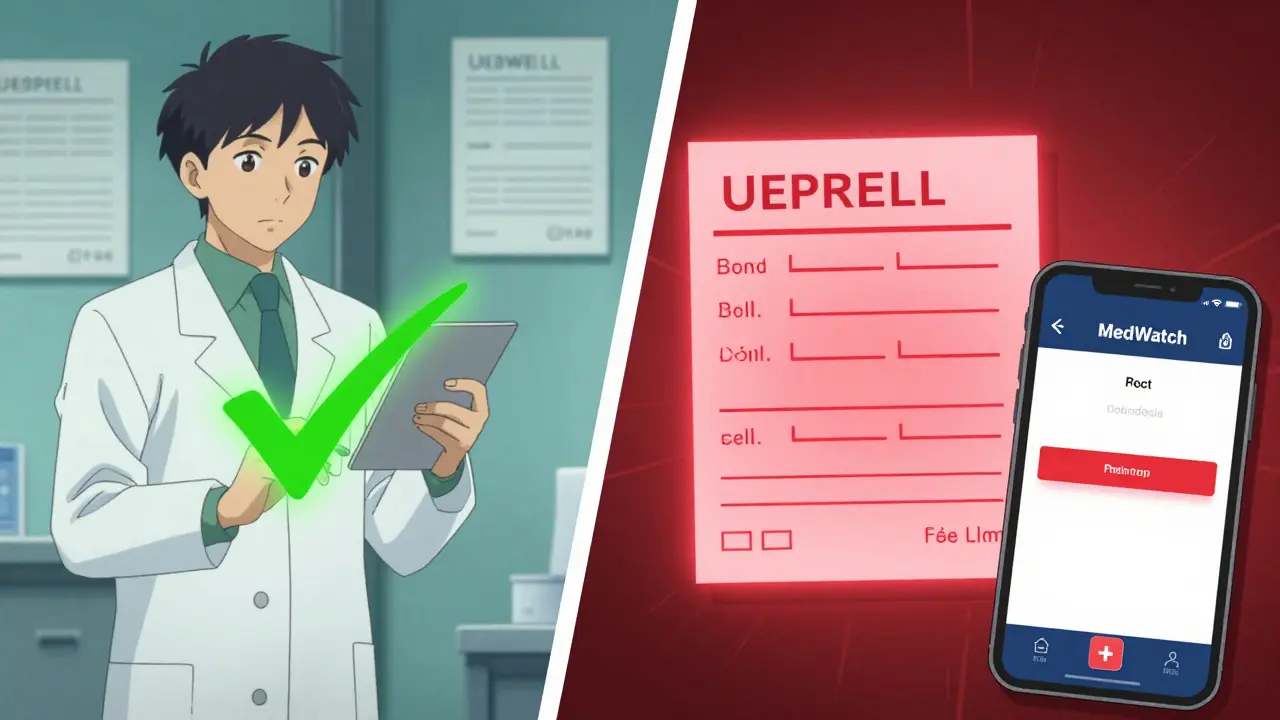
If you get an alert about a drug you’re taking, don’t panic. Don’t stop taking it without talking to your doctor. Here’s what to do:- Check the drug name and lot number - Recalls often target specific batches. The FDA alert will list lot numbers. Check the label on your bottle.
- Don’t throw it away - Even if it’s recalled, don’t dispose of it yourself. Some recalls involve contamination that could be dangerous to handle. Contact your pharmacy or the manufacturer for return instructions.
- Contact your doctor - If the drug is critical for your health (like blood thinners or insulin), your doctor may have a replacement ready. Never switch meds on your own.
- Report any side effects - Even if you didn’t take the recalled batch, if you’ve had a strange reaction to the drug, report it through MedWatch. Your report could help prevent future problems.
What the FDA Doesn’t Cover
Not all medicines are treated the same. The FDA has limited power over:- Dietary supplements - These don’t need FDA approval before sale. In 2022, there were over 2,750 adverse event reports for supplements, but only 12 formal safety alerts were issued. If you take vitamins, herbal products, or weight-loss supplements, you’re on your own for safety checks.
- Off-label uses - If your doctor prescribes a drug for something not listed on the label, the FDA doesn’t monitor that use. That’s common with older drugs, but it means you need to be extra cautious.
- International drugs - If you buy medication from outside the U.S., the FDA can’t guarantee its safety. Some online pharmacies sell fake or contaminated versions of popular drugs.
How Healthcare Providers Handle Alerts
Doctors and pharmacists get flooded with alerts - sometimes 60 or more per week. Many ignore them because too many are low-priority. A 2023 study found that clinicians override 93% of drug alerts in electronic systems. That’s why smart hospitals and clinics use tiered alert systems:- Critical - Immediate action needed. (e.g., “Do not use with warfarin”)
- Important - Review within 24 hours.
- Informational - Just for awareness.
What You Can Do Right Now
You don’t need to be an expert to stay safe. Here’s a simple action plan:- Subscribe to FDA MedWatch email alerts - Do it today. It takes two minutes.
- Download the MedWatch app - Get real-time push alerts on your phone.
- Check your pill bottles - Every few months, look up your medications on the FDA’s Recalls page.
- Ask your pharmacist - “Do you get recall alerts for the drugs I take?”
- Report side effects - Even if you’re not sure it’s related, submit a report to MedWatch. It only takes five minutes.
Global Systems and What They Mean for You
The FDA isn’t the only player. The European Medicines Agency (EMA), Health Canada, and the World Health Organization (WHO) run similar systems. If you take a drug made in Europe or Canada, you might see alerts from those agencies too. The WHO’s VigiBase holds over 35 million global reports. It’s useful if you’re traveling or taking a drug made abroad. But for most people in the U.S., the FDA is your main source. One big gap? Low-income countries report far fewer adverse events. That means global safety data is skewed. If you’re taking a drug manufactured overseas, especially from a country with weak oversight, extra caution is wise.What’s Next for Drug Safety
The FDA launched an AI system in early 2023 that scans 1.2 billion patient records to find hidden risks 40% faster than before. It’s also starting to monitor social media for mentions of drug side effects - looking at millions of posts monthly. Soon, you might get alerts not just from your doctor or the FDA, but from your phone’s health app. Apple and Google are testing features that flag dangerous drug interactions based on your profile. The goal? To make safety automatic - not something you have to remember to check.How often does the FDA issue drug recalls?
The FDA issues around 100 to 150 drug recalls each year. In 2022, there were 127 recalls - a 17% increase from the year before. Most are for specific batches, not entire drugs. Compounded drugs and manufacturing issues are the top causes.
Can I report a bad reaction to a drug myself?
Yes. Anyone can report an adverse reaction through the FDA’s MedWatch system. You don’t need to be a doctor. Just go to the MedWatch website or use the free app. Your report helps the FDA spot patterns. In 2022, over 21,000 reports came from patients like you.
Are all drug recalls serious?
No. Some recalls are for minor issues - like a mislabeled bottle or a packaging error. Others are for life-threatening risks like contamination with bacteria or cancer-causing chemicals. The FDA labels each recall with a class: Class I (most serious), Class II (moderate), or Class III (least serious). Always check the classification before deciding what to do.
What should I do if my drug is recalled but I can’t afford a replacement?
Contact your doctor and pharmacy immediately. Many drug manufacturers offer free replacements or coupons for equivalent medications. Some nonprofit organizations also help patients get affordable meds. Never skip your medication without medical advice - the risk of stopping may be worse than the recall.
Do over-the-counter drugs get recalled too?
Yes. The FDA recalls OTC drugs just like prescriptions. In 2022, several popular pain relievers and antacids were pulled due to contamination or incorrect dosing. Always check the FDA’s recall list if you notice something off about your OTC medicine - strange smell, color change, or unexpected side effects.
How can I tell if a drug alert is real or fake?
Only trust alerts from official sources: the FDA website (fda.gov), the MedWatch app, or your pharmacy. Fake alerts often come through unsolicited emails, social media posts, or text messages. The FDA never asks for personal information or payment in recall notices. If you’re unsure, call your pharmacist or visit fda.gov/drugs/drug-safety-and-availability/drug-recalls to verify.