
Medication Adherence Impact Calculator
How Adherence Affects Your Treatment
Enter your condition and missed doses to see how adherence impacts treatment effectiveness. Based on clinical studies from the article.
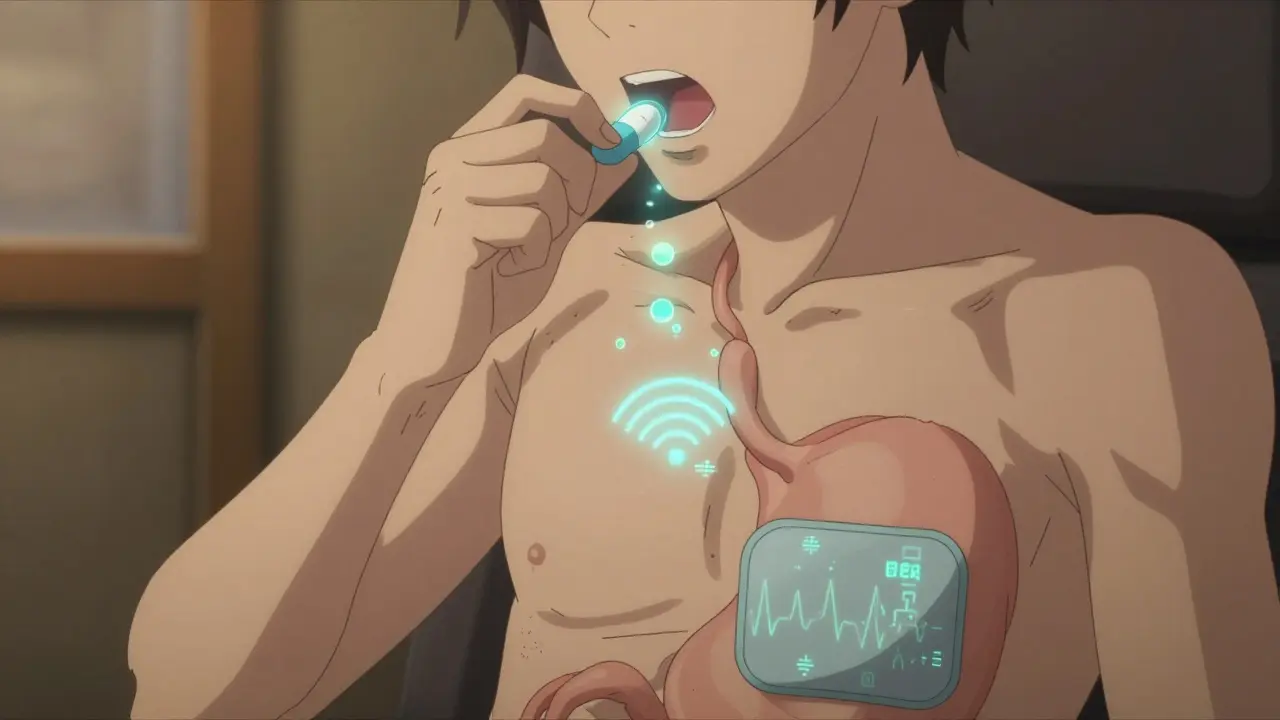
Imagine swallowing a pill and knowing, with certainty, that it reached your stomach - and that your body is reacting to it. Not just hoping you took it, but knowing. That’s the reality digital pill sensors are making possible today.
These aren’t sci-fi gadgets. They’re FDA-approved, real-world devices already being used in hospitals and clinical trials. At their core, digital pills are ordinary medications embedded with a tiny, ingestible sensor. When the pill dissolves in your stomach, the sensor activates, sends a signal to a patch on your skin, and logs the exact time you took your medicine. That data flows to your phone or your doctor’s dashboard - no guesswork, no memory lapses.
How Digital Pills Actually Work
The technology is simple, but the engineering behind it is precise. The sensor inside the pill is about the size of a grain of sand - a 5 mm disk made of silicon, with copper and magnesium electrodes. When it hits stomach acid, a tiny electrochemical reaction kicks in, generating enough power (1-2 volts) to send a unique digital signal. This isn’t a battery-powered chip; it’s powered by your own stomach fluid.
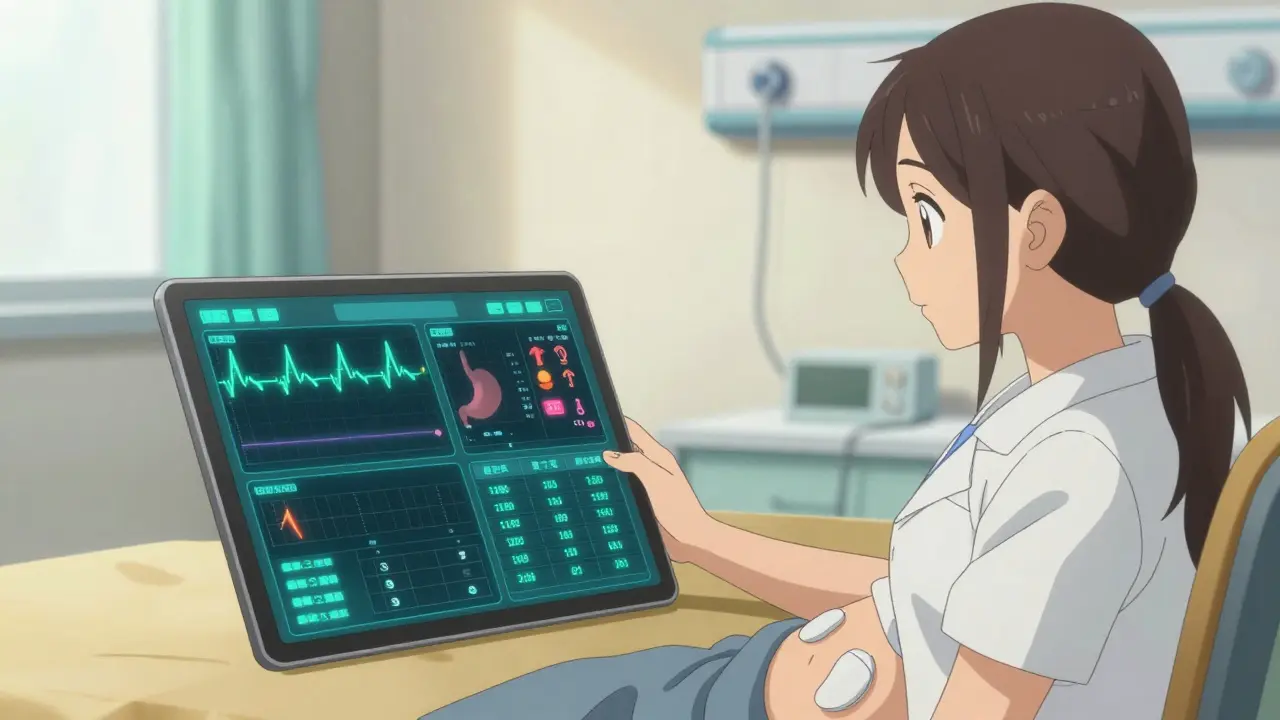
The signal travels wirelessly via Bluetooth Low Energy (BLE) to a wearable patch, usually stuck to your abdomen. This patch isn’t just a receiver - it also tracks your heart rate and daily steps. From there, data is encrypted (using AES or DES protocols) and sent to a secure cloud server. You or your healthcare provider can view it through a simple app or web portal.
Systems like Otsuka’s Abilify MyCite (for schizophrenia) and etectRx’s ID-Cap (used in research) follow this same pattern. But newer versions, like Philips’ IntelliCap, go further. They can measure stomach pH and temperature in real time - and even release drugs remotely based on conditions inside your gut. This isn’t just tracking anymore. It’s active, responsive care.
Why Adherence Matters More Than You Think
Half of all people with chronic illnesses don’t take their meds as prescribed. That’s not laziness - it’s forgetfulness, cost, side effects, confusion, or just feeling fine and thinking they don’t need it anymore. The World Health Organization says this non-adherence costs the U.S. healthcare system $100-$290 billion a year. That’s not just money. It’s preventable hospitalizations, worsening conditions, and lost years of life.
Digital pills change that. In a 12-week study of 157 people taking antipsychotics, adherence jumped from 62% to 84%. For patients with schizophrenia, seeing their own ingestion logs was eye-opening. One user on Reddit said, “I thought I was taking my pill every day. The app showed I skipped it three weekends in a row.” That kind of feedback doesn’t come from a doctor’s lecture. It comes from data you can’t argue with.
But it’s not just about remembering. It’s about catching patterns. Did you skip your blood pressure pill every time you went out for drinks? Did your insulin dose get missed after a stressful work week? The system doesn’t judge - it just shows you what’s happening. And that’s where real behavior change begins.
Side Effect Detection: Beyond Just Taking the Pill
The most exciting development isn’t just knowing you took the pill - it’s knowing how your body responded.
Older systems only confirmed ingestion. Newer ones, like those being rolled out in 2025, monitor real-time physiological changes. They track heart rate spikes, abnormal temperature shifts, or changes in stomach pH - all signs that your body might be reacting badly to the drug. For example, if a diabetes patient’s heart rate spikes 30 minutes after taking a new insulin formulation, the system flags it. That could mean an allergic reaction, an interaction with another medication, or even an early sign of hypoglycemia.
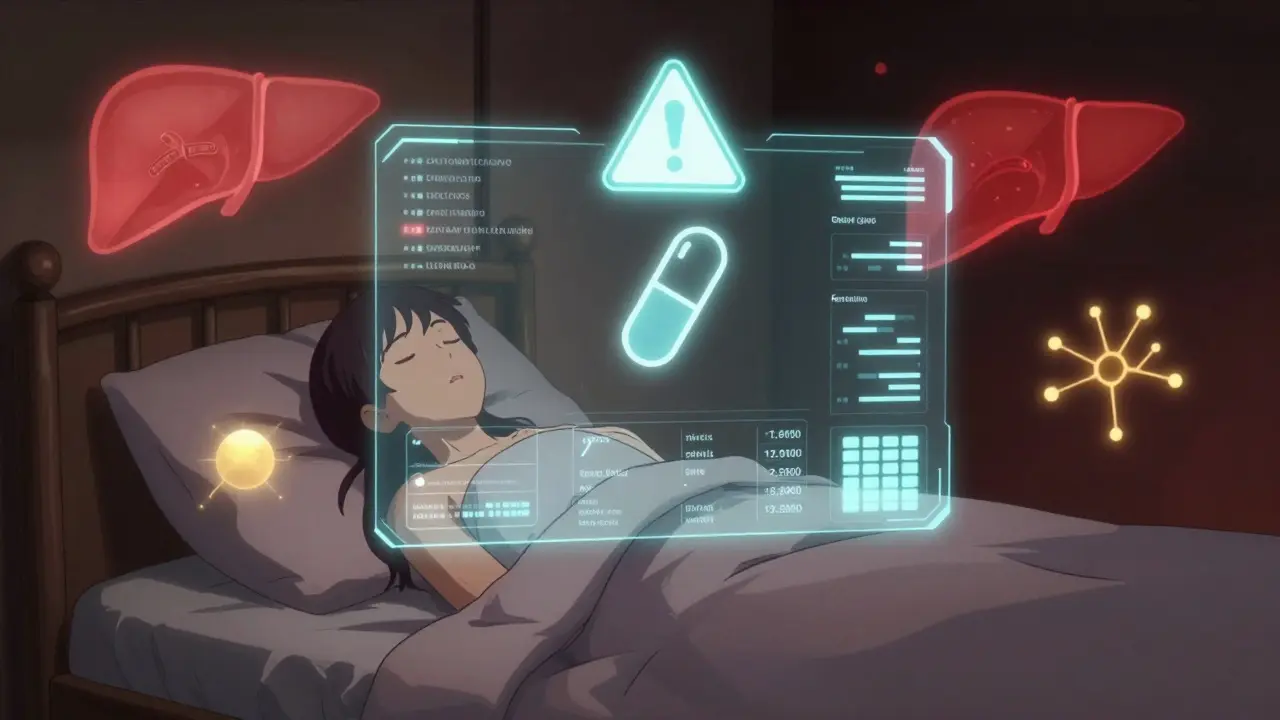
In March 2023, the FDA approved the first digital pill for tuberculosis treatment. Why? Because TB drugs have brutal side effects - liver damage, nerve pain, nausea. Doctors needed a way to catch those early. Now, with sensors monitoring liver enzyme levels indirectly through physiological signals, they can adjust doses before organ damage occurs.
Companies like etectRx are teaming up with IBM Watson Health to build AI models that predict side effects before they happen. Their algorithm, trained on thousands of patient records, now predicts adverse reactions with 82% accuracy by combining ingestion data, activity levels, sleep patterns, and heart rate trends.
Who’s Using This - And Who Isn’t
Digital pills aren’t for everyone. Right now, they’re mostly used in three areas:
- Mental health (47% of use): Schizophrenia, bipolar disorder - where missed doses can lead to hospitalization.
- HIV/AIDS (18%): Strict adherence prevents drug resistance. One missed dose can change the game.
- Cardiovascular and diabetes care (24% combined): High-risk conditions where small lapses add up over time.
For hypertension or mild depression? Not so much. Most patients aren’t willing to wear a patch and share their swallowing habits for conditions they feel they can manage on their own. A 2022 study found only 42% of hypertensive patients were open to the tech - compared to 68% for schizophrenia.
And then there’s the cost. The global market for digital pills is projected to hit $2.4 billion by 2029. But right now, insurance rarely covers it. Most systems are used in clinical trials (78% of deployments) or by pharmaceutical companies testing new drugs. Only 12% are used directly by patients outside trials.
The Real Barriers: Privacy, Comfort, and Complexity
It’s not all smooth sailing. People love the idea - until they have to use it.
Privacy is the biggest concern. Seventy-three percent of hesitant users cited fear of being watched. One patient told a researcher, “It felt like my psychiatrist was watching me swallow pills.” That’s not paranoia - it’s a real psychological burden. Even though data is HIPAA-compliant and encrypted, the idea of real-time access to your most private behaviors is unsettling.
Then there’s the patch. Some users get skin irritation. In one trial, 22% quit because the adhesive burned their skin. Elderly patients (65+) struggled with the app - 38% needed help just pairing the patch to their phone. The setup takes 15-20 minutes. The patch has a 72-hour battery. Signal fails 8-12% of the time, especially in people with higher BMI or in environments with lots of wireless interference.
And let’s not forget: the sensor only confirms ingestion, not absorption. Just because the pill reached your stomach doesn’t mean your body absorbed it. That’s a major limitation. A pill could dissolve, the sensor could ping, but the drug might be blocked by food, gut inflammation, or liver metabolism. Doctors still need blood tests to confirm effectiveness.
What’s Next? AI, Regulation, and the Road Ahead
The future is already here - just not everywhere.
By 2026, 60% of digital pill systems are expected to include side effect detection. That means your pill won’t just tell your doctor you took it - it’ll tell them if it’s making you sick. AI will flag patterns: “You took your anticoagulant, but your resting heart rate spiked 20 bpm. Could be an early sign of internal bleeding.” That’s not science fiction. It’s in development right now.
Regulators are catching up. The FDA now requires separate approval for the drug and the sensor - adding 22 months to the approval timeline. Some states have passed laws requiring explicit consent before digital pill data can be shared with insurers or employers. But reimbursement is still a mess. Until Medicare and private insurers start covering these systems, adoption will stay limited to research and high-risk cases.
Still, the trend is clear. Digital pills won’t replace all medication tracking. But for high-stakes treatments - where one missed dose can mean a relapse, a hospital stay, or death - they’re becoming essential. As Dr. Joseph Kvedar put it, “They’ll be standard for high-risk regimens within five years. For everything else? Still too expensive, too invasive.”
The technology isn’t perfect. But it’s honest. It doesn’t sugarcoat. It doesn’t assume. It just shows you what happened. And sometimes, that’s the first step to getting better.
Are digital pill sensors safe to swallow?
Yes. The sensors are made of biocompatible materials - silicon, copper, and magnesium - all approved for ingestion. They pass through the digestive system naturally and are excreted in stool within 24-72 hours. No surgery or retrieval is needed. Over 100,000 doses have been swallowed in clinical trials with no serious adverse events linked to the sensor itself.
Can insurance cover digital pill systems?
Mostly no - not yet. Only a few private insurers offer limited coverage for mental health conditions like schizophrenia. Medicare and Medicaid do not cover them. The high cost of the system (around $500-$800 per month) and lack of proven long-term cost savings mean most payers are waiting for more data. Clinical trial participants get them for free, but outside trials, patients typically pay out-of-pocket or rely on pharmaceutical sponsorships.
Do digital pills work for elderly patients?
They can, but with challenges. About 38% of elderly users (65+) needed help setting up the app or pairing the patch. The small screen, complex menus, and Bluetooth pairing were barriers. Simpler interfaces, voice-guided setup, and caregiver-accessible dashboards are being developed to improve adoption. The physical patch works fine on older skin - the main issue is tech literacy, not the device itself.
Can the sensor be hacked or misused?
Data is encrypted end-to-end using AES or DES standards, and transmitted only to authorized healthcare portals. The system doesn’t record video, audio, or location - just ingestion time and basic physiological signals. However, privacy advocates warn that if this data leaks, insurers or employers could use it to deny coverage or employment. Current HIPAA rules protect against this, but state laws vary. Always ask who owns the data and how long it’s stored.
What happens if I forget to charge the patch?
The wearable patch lasts 72 hours on a single charge. If you forget to recharge, you’ll lose real-time data for that period - but the ingestible sensor still records ingestion. Once you reconnect the patch, it syncs the stored data. However, you’ll miss out on continuous heart rate and activity tracking. For critical medications, some systems now include backup alerts via text or phone call if the patch isn’t synced within 24 hours.
Can digital pills detect if I vomited after taking the pill?
Not directly. The sensor confirms ingestion - not retention. If you vomit shortly after swallowing, the sensor may still transmit, even if the drug didn’t get absorbed. That’s a known limitation. Some advanced systems now combine ingestion data with stomach pH and temperature trends to estimate whether the pill remained in the stomach long enough for absorption. But it’s still an estimate, not a guarantee. Blood tests are still needed for confirmation.
Brandon Vasquez
February 27, 2026 AT 11:44Miranda Anderson
February 28, 2026 AT 00:26Gigi Valdez
March 1, 2026 AT 23:33Brandie Bradshaw
March 2, 2026 AT 01:54Sophia Rafiq
March 2, 2026 AT 08:04Ajay Krishna
March 3, 2026 AT 01:10Charity Hanson
March 4, 2026 AT 15:35Noah Cline
March 5, 2026 AT 18:18Angel Wolfe
March 7, 2026 AT 12:45Vikas Meshram
March 8, 2026 AT 09:01