
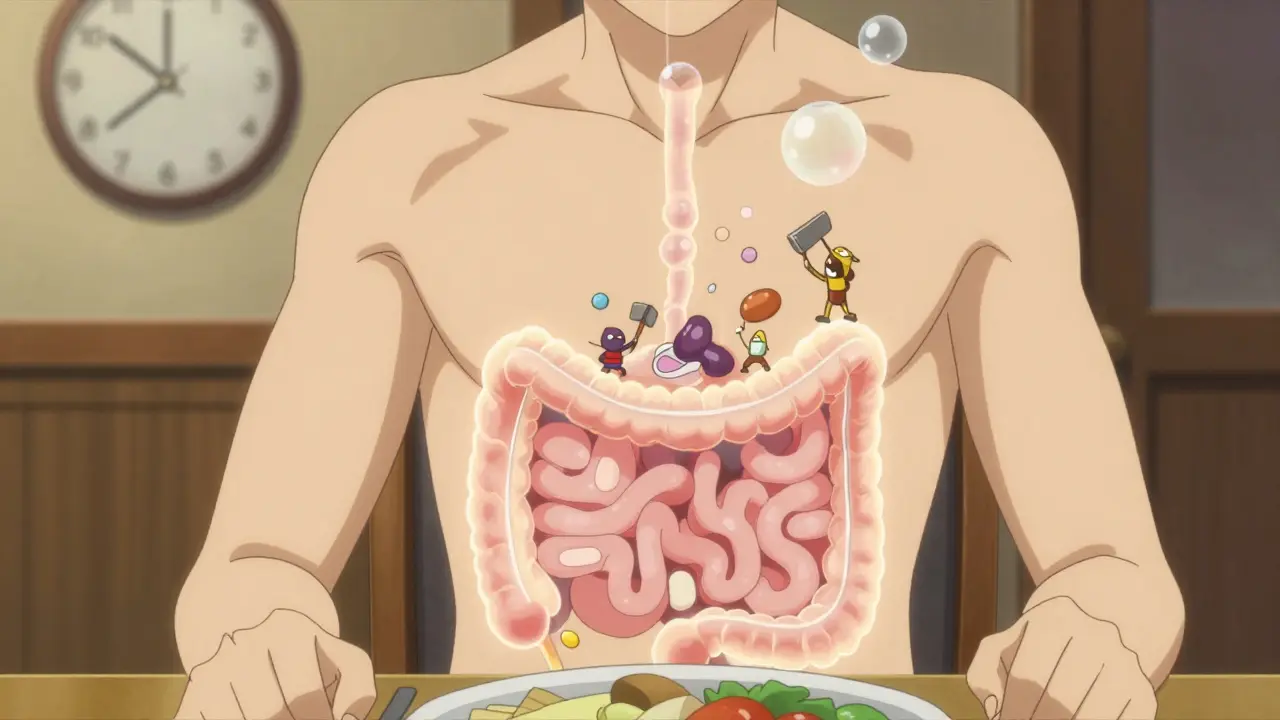
When you eat a meal and still feel bloated, gassy, or have oily stools that float, it’s easy to blame the food. But sometimes, the problem isn’t what you ate-it’s what your body couldn’t break down. Digestive enzymes are the body’s natural tools for splitting food into nutrients your gut can absorb. If your body doesn’t make enough, supplements can help. But not everyone needs them. And not all supplements are created equal.
What Digestive Enzymes Actually Do
Your body makes enzymes every day-about 800 to 1,500 milliliters of pancreatic juice packed with amylase, protease, and lipase. These break down carbs, proteins, and fats. Without them, food just sits in your gut, fermenting, causing bloating, diarrhea, or malnutrition. The pancreas is the main enzyme factory. But if it’s damaged-by chronic pancreatitis, cystic fibrosis, or pancreatic cancer-your enzyme production drops. That’s called exocrine pancreatic insufficiency, or EPI. Around 1 to 5% of the general population has it, but up to 90% of pancreatic cancer patients do.
Prescription enzyme replacements, like Creon or Zenpep, are designed for these cases. They’re made from pig pancreas, coated to survive stomach acid, and dosed precisely. Each capsule contains 10,000 to 40,000 lipase units. You take them right before meals. If you skip the timing, they won’t work.
When OTC Enzymes Might Actually Help
Over-the-counter enzyme supplements are different. They’re not regulated like drugs. Many lack enteric coating, so stomach acid kills them before they reach the small intestine. Studies show 20 to 30% of OTC brands don’t even contain the enzyme amounts listed on the label.
But here’s the twist: for conditions like IBS, lactose intolerance, or occasional bloating after beans or broccoli, OTC enzymes can make a real difference. A 2021 meta-analysis found they reduce symptoms in 50 to 60% of people with IBS-not because they fix a disease, but because they help digest hard-to-break-down carbs and sugars. Lactase enzymes, like those in Lactaid, are the most proven. People with lactose intolerance who take them report 82% fewer symptoms after dairy.
For people with FODMAP sensitivity, enzymes that target fructans (found in onions, garlic, wheat) or galacto-oligosaccharides (in beans) can reduce gas and cramping. Brands like Digestive Gold by Enzymedica, which uses microbial enzymes from Aspergillus oryzae, are often recommended by clinicians because they work across a wider pH range than animal-based enzymes.
Prescription vs. OTC: The Real Differences
Here’s a quick breakdown:
| Feature | Prescription (e.g., Creon, Zenpep) | OTC (e.g., NOW Foods, Enzymedica) |
|---|---|---|
| Regulation | FDA-approved drug | Dietary supplement (less oversight) |
| Enzyme Source | Porcine (pig) | Microbial (fungi/bacteria) |
| Enteric Coating | Yes | Usually no |
| Dosage Precision | Exact, standardized | Variable, up to 30% off-label |
| Efficacy for EPI | 70-85% reduction in fatty stools | 30-40% at best |
| Efficacy for IBS/Lactose | Effective, but overkill | 50-60% symptom relief |
| Cost per Dose | $1.50-$3.00 | $0.50-$1.00 |
| Insurance Coverage | Usually 70-90% | None |
For EPI, prescription enzymes are non-negotiable. They’re the only treatment that prevents malnutrition and weight loss. For IBS or lactose intolerance, OTC enzymes are a reasonable first step. But if you’re taking them long-term without improvement, it’s time to see a doctor. You might have SIBO, celiac, or another hidden issue.
How to Use Them Right
Taking enzymes wrong is worse than not taking them at all. Here’s how to do it:
- Timing: Take them 10-15 minutes before eating. If you wait until you’re halfway through the meal, they won’t be in place when food hits your small intestine.
- Dosing: Start low. For OTC, begin with 10,000 lipase units per meal. Increase by 10,000 units weekly until symptoms improve. Most people find relief between 20,000 and 40,000 units per meal.
- Fat matters: Lipase is key for fat digestion. A meal with 30 grams of fat needs about 15,000 lipase units. High-fat meals (pizza, fried food, cheese) require more.
- Split doses: If you eat slowly or have a large meal, take half the dose at the start and half midway through. A 2018 study showed this improved symptom control by 35%.
- Avoid PPIs: Proton pump inhibitors (like omeprazole) lower stomach acid. That might sound good, but it can prevent enzymes from activating. Talk to your doctor before combining them.
Who Should Avoid Them
Not everyone should take digestive enzymes. They’re not safe for everyone:
- People with acute pancreatitis-enzymes can worsen inflammation.
- Those with SIBO-adding enzymes can feed bacterial overgrowth, making bloating worse.
- Anyone with unexplained weight loss, blood in stool, or persistent diarrhea-these could be signs of cancer or Crohn’s, not enzyme deficiency.
- People taking blood thinners-some enzyme supplements contain bromelain or papain, which may interact with anticoagulants.
Also, don’t believe the hype. Enzymes don’t boost metabolism, burn fat, or cure “leaky gut.” The FDA has issued 12 warning letters in 2022 alone to companies making these claims. A 2020 review found 78% of OTC enzyme marketing claims had no clinical backing.
What the Experts Say
Dr. Russell Havranek, a gastroenterologist with 15 years of clinical experience, says: “For IBS or lactose intolerance, I start patients with OTC enzymes. They’re low-risk, affordable, and often effective.” He recommends Enzymedica’s Digestive Gold for its microbial enzymes and consistent results.
But Dr. Shane from the University of Miami Health warns: “OTC supplements aren’t designed to treat GI diseases. If you’re still having symptoms after a few weeks, don’t keep doubling the dose. See a doctor.”
The American Gastroenterological Association is clear: prescription PERT is strongly recommended for EPI. For everything else? “Insufficient evidence.” That doesn’t mean they don’t help-it means we don’t have large, long-term studies proving they work for IBS, functional dyspepsia, or “digestive support.”
Real Stories, Real Results
On Reddit, u/PancreasWarrior wrote: “Creon changed my life. Before, I lost 30 pounds in 6 months. After two weeks on PERT, I gained it back. No more oily, foul-smelling stools.”
u/IBSsurvivor shared: “I started taking a lactase + amylase blend after eating too many onions. Bloating dropped from 8/10 to 3/10. Not perfect, but enough to enjoy a meal without fear.”
On Amazon, 63% of users who bought NOW Foods Super Enzymes said they noticed less gas after eating beans or broccoli. But 29% said they felt nothing. That’s the reality: some people get relief. Others don’t. It depends on the cause.
What’s Next
The field is evolving. New microbial enzymes are being engineered to survive stomach acid without coating. One called AN-PEP can break down gluten in the stomach before it reaches the intestine-potentially helping people with celiac disease tolerate small amounts of gluten. A 2023 study showed an 80% reduction in gluten toxicity.
Companies like Viome are testing individual gut microbiomes to recommend custom enzyme blends. Imagine a test that tells you exactly which enzymes you’re missing-and then sends you a tailored capsule.
But for now, stick with the basics. If you have EPI, get a prescription. If you have lactose intolerance, try Lactaid. If you bloat after beans or dairy, try an OTC blend with lactase, amylase, and protease. Track your symptoms. Be patient. And if nothing changes after 4 weeks, it’s not an enzyme problem. It’s time to dig deeper.
Can digestive enzymes help with IBS?
Yes, for some people. OTC enzymes like lactase, amylase, and protease can reduce bloating, gas, and diarrhea in IBS, especially after eating high-FODMAP foods. Studies show about 50-60% of users report symptom improvement. But they don’t cure IBS-they just help manage triggers. If symptoms persist, see a doctor to rule out SIBO or other conditions.
Are OTC digestive enzymes safe?
Generally, yes-for short-term use and for the right reasons. But quality varies. Many OTC products don’t contain the enzyme amounts listed on the label. Avoid products making claims like “boosts metabolism” or “detoxes your gut”-those are unproven and often flagged by the FDA. Stick to reputable brands with third-party testing (like USP or ConsumerLab).
Do I need a prescription for digestive enzymes?
Only if you have exocrine pancreatic insufficiency (EPI), which is diagnosed through stool tests or blood work. For EPI, prescription enzymes like Creon are essential. For occasional bloating or lactose intolerance, OTC enzymes are fine. But if you’re unsure, get tested. Self-diagnosing EPI can delay treatment for something more serious.
Can digestive enzymes cause constipation?
Yes, in some cases. About 27% of users on prescription PERT report constipation, likely because fat is being absorbed more efficiently, reducing stool bulk. If you’re constipated after starting enzymes, increase fiber and water intake. If it continues, talk to your doctor-your dose may need adjusting.
How long do digestive enzymes take to work?
For immediate issues like bloating after a meal, you’ll know within hours. For chronic symptoms, it can take 2-4 weeks to find the right dose and see consistent improvement. Don’t expect overnight results. Consistency and proper timing matter more than high doses.
Can I take digestive enzymes with probiotics?
Yes, and some evidence suggests they work better together. A 2023 clinical trial found that combining lactase with Bifidobacterium reduced symptoms 45% more than lactase alone in lactose-intolerant patients. Probiotics help balance gut bacteria, while enzymes break down hard-to-digest food. They target different parts of the problem.
Robin Van Emous
January 26, 2026 AT 23:39Been using Lactaid for years after dairy made me feel like a balloon at a kid’s birthday party. Seriously, 82% fewer symptoms? That’s not a myth-it’s my Tuesday night pizza routine. Just don’t forget to take it before the first bite. I learned that the hard way.
Joanna Domżalska
January 27, 2026 AT 14:16Oh please. Enzymes? You’re telling me we’re all just broken machines that need a magic pill to digest broccoli? Next you’ll say we need enzymes to breathe air. The real problem is processed food and zero fiber. Fix your diet, not your supplements.
Nicholas Miter
January 28, 2026 AT 16:40I used to think enzymes were snake oil until I started having issues after high-fat meals post-gallbladder removal. Creon saved me. Not saying everyone needs it, but if you’ve got oily stools and unexplained weight loss? Get tested. Don’t just guess. Your gut will thank you.
Suresh Kumar Govindan
January 28, 2026 AT 23:41Pharmaceutical corporations have engineered this narrative to sell overpriced supplements. The pancreas is not a factory-it is a sacred organ. Modern diets, GMOs, and fluoride in water suppress natural enzyme production. The truth is suppressed by the FDA.
Neil Thorogood
January 30, 2026 AT 10:24OMG I just tried Digestive Gold after eating a whole pizza and… I didn’t turn into a human foghorn?! 🤯🤯🤯 Like, I actually slept through the night. No more 3am gas explosions. Thank you, fungal enzymes. I’m officially a believer. 🙏
shivam utkresth
January 31, 2026 AT 16:20Bro, I’m from Mumbai, we’ve been using ginger + black salt + ajwain after meals for centuries. No fancy capsules needed. But honestly? If you’re in the West and eating 300g of cheese daily? Maybe the enzymes aren’t the problem-your plate is.
Aurelie L.
January 31, 2026 AT 19:50I took them. Didn’t work. Now I’m on a low-FODMAP diet. Enzymes are a scam for people who don’t want to change their habits.
Geoff Miskinis
February 2, 2026 AT 17:13Let’s not romanticize OTC supplements. The lack of regulation is alarming. A 2022 study found 40% of products contained contaminants. You’re gambling with your microbiome. If you’re going to take something, make sure it’s USP-verified. Or don’t bother.
Sally Dalton
February 4, 2026 AT 03:03i just wanted to say thank you for this post!! i’ve been bloated for years and thought it was just ‘me’… then i tried the lactase + amylase blend and wow. like, i ate garlic bread and didn’t regret it. 🥲 also i spelled amylase wrong but you get it 😅
Curtis Younker
February 4, 2026 AT 12:39Okay real talk-this whole thing reminded me of when I tried to fix my sleep with melatonin for a year before realizing I was scrolling until 2am and drinking coffee at 7pm. Enzymes? Sure, they help. But if you’re eating fried chicken, beans, and ice cream for dinner every night… no enzyme in the world is gonna save you. Start with the basics: chew your food. Eat slower. Cut out the processed junk. Then, if you still feel like a balloon, *then* try the supplements. Don’t skip step one. Your gut isn’t a broken printer-it’s a living system that needs respect, not just a fix.