

When a doctor prescribes a pill that contains two or more drugs in one tablet - like a heart medication that combines a blood pressure drug with a cholesterol-lowering agent - it’s called a combination drug. These aren’t new. They’ve been around for years, especially in treating HIV, diabetes, and hypertension. But as their use grows, a big problem is emerging: can pharmacists legally swap one combination drug for another? The answer isn’t simple. It’s tangled in outdated laws, confusing medical guidelines, and real risks to patient safety.
What Makes Combination Drugs Different?
Single-drug pills are straightforward. If you’re prescribed lisinopril, a pharmacist can usually swap it for another brand or generic version because the active ingredient is the same. But combination drugs? They’re a mix. Take ATRIPLA - it combines efavirenz, emtricitabine, and tenofovir into one pill for HIV. If a pharmacist tries to replace it with a different combo - say, one that swaps out one drug or adds a new one - it’s not just a substitution. It’s a new treatment plan.
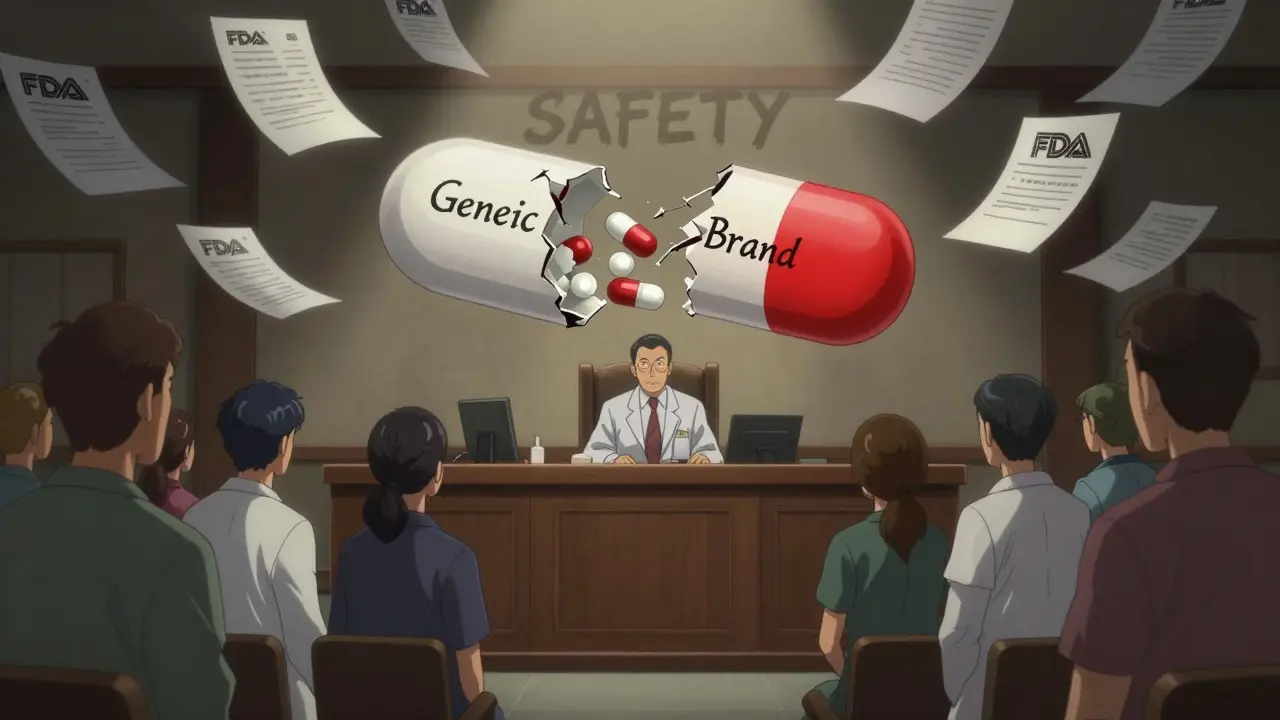
The FDA defines combination products as those containing two or more different types of regulated components: drugs, biologics, or devices. That means even if two pills have the same active ingredients, differences in how they’re released, coated, or packaged can make them non-interchangeable. A generic version of a single drug must meet strict bioequivalence standards. But for combination products? Those standards don’t exist in most places. There’s no clear way to prove that one combo pill is the same as another if the ingredients or release mechanisms differ.
Why Current Laws Don’t Work
Most U.S. states have generic substitution laws written decades ago - when most prescriptions were for single drugs. These laws let pharmacists switch out a brand-name drug for a cheaper generic, as long as the active ingredient matches. But they don’t account for combination products. That creates a legal gray zone.
For example, if a patient is prescribed a combo pill with two drugs, and the pharmacy runs out, can the pharmacist give them two separate pills - one for each drug? Maybe. But what if the combo pill has a special timed-release coating that can’t be replicated by taking two separate pills? The effect could be different. And if the pharmacist substitutes a combo pill that includes a third drug not prescribed - even if it’s commonly used - that’s technically starting a new treatment. In states like Alberta, that requires prescriber approval. Without it, the pharmacist could be breaking the law.
Even worse, some state laws allow pharmacists to swap one drug for another within the same class - like switching one beta-blocker for another. But that rule doesn’t apply to combos. You can’t swap a combo pill with a single drug. And you can’t swap one combo for another unless the exact same ingredients are present in the same amounts. Most laws don’t say that clearly.
Pharmacists Are Caught in the Middle
A 2022 survey by the National Community Pharmacists Association found that 68% of independent pharmacists ran into a combination drug substitution dilemma at least once a month. Over 40% said they refused to substitute because they weren’t sure if it was legal.
Imagine this scenario: A patient comes in for a refill of their HIV combo pill. The pharmacy doesn’t have it. The pharmacist has another combo pill on the shelf - it has two of the same drugs, but a different third ingredient. The patient’s insurance prefers the cheaper one. The pharmacist knows the patient’s doctor might approve the switch. But without written permission, swapping it could be illegal. So the pharmacist calls the doctor. The doctor’s office is closed. The patient waits. The patient leaves. The patient might skip the dose. That’s not just inconvenient - it’s dangerous.
Some pharmacists try to be helpful. They might substitute a combo pill with two separate pills. But that increases pill burden, which defeats the whole point of the combo drug: to make treatment easier. Patients forget. Patients mix them up. Patients stop taking them.

Cost Savings vs. Patient Safety
The push for substitution comes from money. Generic drugs make up 90% of prescriptions in the U.S., but only 23% of total drug spending. Combination drugs, especially newer ones, are expensive. The market for them hit $184 billion globally in 2022. Health plans and Medicare Part D want to cut costs. Replacing a branded combo with a cheaper generic version - if one existed - could save 15 to 25% per patient.
But here’s the catch: only 37 combination drug products were approved by the FDA between 2015 and 2022. That’s tiny compared to over 1,200 single-drug approvals in the same period. Why? Because developing a safe, effective combo is harder. It’s not just mixing two drugs. You have to prove they work together, don’t interfere with each other, and are stable in the same pill. That takes years. And even then, there’s rarely a generic version.
Some systems are trying. The UK’s NHS has saved £280 million a year since 2019 by carefully replacing certain cardiovascular combo pills with generics. But they did it with strict protocols - only for well-studied combos, only with physician oversight, and only after patient consent.
In contrast, the American Heart Association warns that inappropriate substitution in heart patients - especially older adults on multiple drugs - could lead to adverse events in up to 8% of cases. That’s not a small number. It’s thousands of people.
Global Differences Show No One Has It Right
Europe doesn’t have a unified rule either. Denmark allows substitution if the combination of active ingredients is identical. The UK is cautious but pragmatic. Germany requires a doctor’s okay for almost every combo switch. The European Medicines Agency explicitly warns against therapeutic substitution of complex combos without physician involvement - especially for drugs with narrow therapeutic indexes, where small dose changes can cause harm.
In the U.S., the patchwork of state laws makes it worse. A pharmacist in Texas might be allowed to do something that’s illegal in California. A patient who moves across state lines could lose access to their medication because the new pharmacy won’t substitute the same combo pill. No one has a national standard.
What’s Changing - and What’s Still Broken
The FDA released draft guidance in 2022 on how to prove therapeutic equivalence for fixed-dose combinations. That’s a step forward. The National Association of Boards of Pharmacy proposed a model law in 2023 that would create tiers: simple combos (two well-known drugs) vs. complex ones (new mechanisms, narrow therapeutic index). Only simple combos might be eligible for pharmacist substitution - and even then, only with patient consent and documentation.
But legal changes move slowly. Courts are stepping in. In the 2022 case Smith v. CVS Caremark, the 9th Circuit Court ruled that pharmacists cannot substitute a combination product that contains additional active ingredients not prescribed - even if those ingredients are commonly used. That ruling clarified one thing: you can’t add drugs without permission.
Meanwhile, experts predict that by 2025, 35% of all new drug approvals will be combination products. That means this problem isn’t going away. It’s getting bigger.
What Patients and Providers Need to Know
If you’re on a combination drug:
- Don’t assume your pharmacist can swap it for another - even if it looks similar.
- Ask if your prescription is for a specific combo pill, or if you can take separate pills.
- Keep a list of your combo drugs and their exact names. Insurance changes often - your drug might be replaced without your knowledge.
- Speak up if you notice a change in how you feel after a refill. It could be the substitution.
If you’re a prescriber:
- Write prescriptions clearly: specify the brand name or exact generic combo if it matters.
- Use the phrase “dispense as written” if substitution could be risky.
- Be aware that some states don’t allow pharmacists to switch combos at all.
There’s no easy fix. But the status quo is dangerous. Patients are being caught in the middle of laws that don’t match the science. Pharmacists are forced to guess. And the cost-saving promise of substitution is being undermined by confusion and risk.
The goal should be simple: make substitution safe, clear, and legal - without sacrificing patient care. That means updating laws to match today’s medicines, not yesterday’s.
Can a pharmacist substitute a combination drug for a single drug?
No. Substituting a combination drug (like a pill with two drugs) for a single drug is considered starting a new treatment. That requires a new prescription from the prescriber. Pharmacists don’t have the legal authority to make that change on their own.
Are generic versions of combination drugs available?
Very few. While single-drug generics are common, combination drugs face tougher regulatory hurdles. Between 2015 and 2022, the FDA approved only 37 combination drug products compared to over 1,200 single-entity drugs. Most combo pills are still brand-name, and generic versions rarely exist - especially for newer combinations.
Why can’t pharmacists just swap one combo pill for another if they have the same ingredients?
Because the ingredients aren’t always the same - even if they look similar. One combo might have a different release mechanism, inactive ingredients, or ratios that affect how the drugs work together. The FDA requires proof of therapeutic equivalence for substitution, and those standards don’t yet exist for most combination products. Without that proof, swapping could be unsafe.
Is therapeutic substitution of combination drugs legal in all states?
No. State laws vary widely. Some allow pharmacists to substitute only if the exact same combination is available. Others prohibit any substitution of combo products without prescriber approval. A few states have no clear rules at all. This patchwork creates confusion and risks for patients who move or travel.
What should I do if my combo drug is switched without my knowledge?
Check the pill label and packaging immediately. Compare it to your previous prescription. If the active ingredients, dosage, or number of pills changed, contact your pharmacist and prescriber right away. Report any new side effects or changes in how you feel. You have the right to know what you’re taking - and to be warned before any substitution occurs.
Erika Putri Aldana
December 21, 2025 AT 14:36Swapneel Mehta
December 22, 2025 AT 13:46Jay lawch
December 22, 2025 AT 21:45Christina Weber
December 24, 2025 AT 20:21mukesh matav
December 26, 2025 AT 00:03Peggy Adams
December 26, 2025 AT 09:59Sarah Williams
December 26, 2025 AT 14:12Dan Adkins
December 26, 2025 AT 23:15Grace Rehman
December 27, 2025 AT 03:08Siobhan K.
December 28, 2025 AT 05:52