

Bipolar Antidepressant Risk Calculator
This tool estimates your personalized risk of antidepressant-induced mood switching based on key clinical factors. Based on data from the International Society for Bipolar Disorders (ISBD) and American Psychiatric Association (APA) guidelines.
Enter your information to see your personalized risk assessment.
When someone with bipolar disorder feels deep depression, it’s tempting to reach for an antidepressant. After all, these drugs work well for unipolar depression. But in bipolar disorder, the story is far more dangerous-and far less clear-cut. Using antidepressants without the right safeguards can trigger mania, rapid mood swings, or even suicidal thoughts. This isn’t hypothetical. It’s backed by decades of clinical data, expert consensus, and real patient experiences.
Why Antidepressants Are Risky in Bipolar Disorder
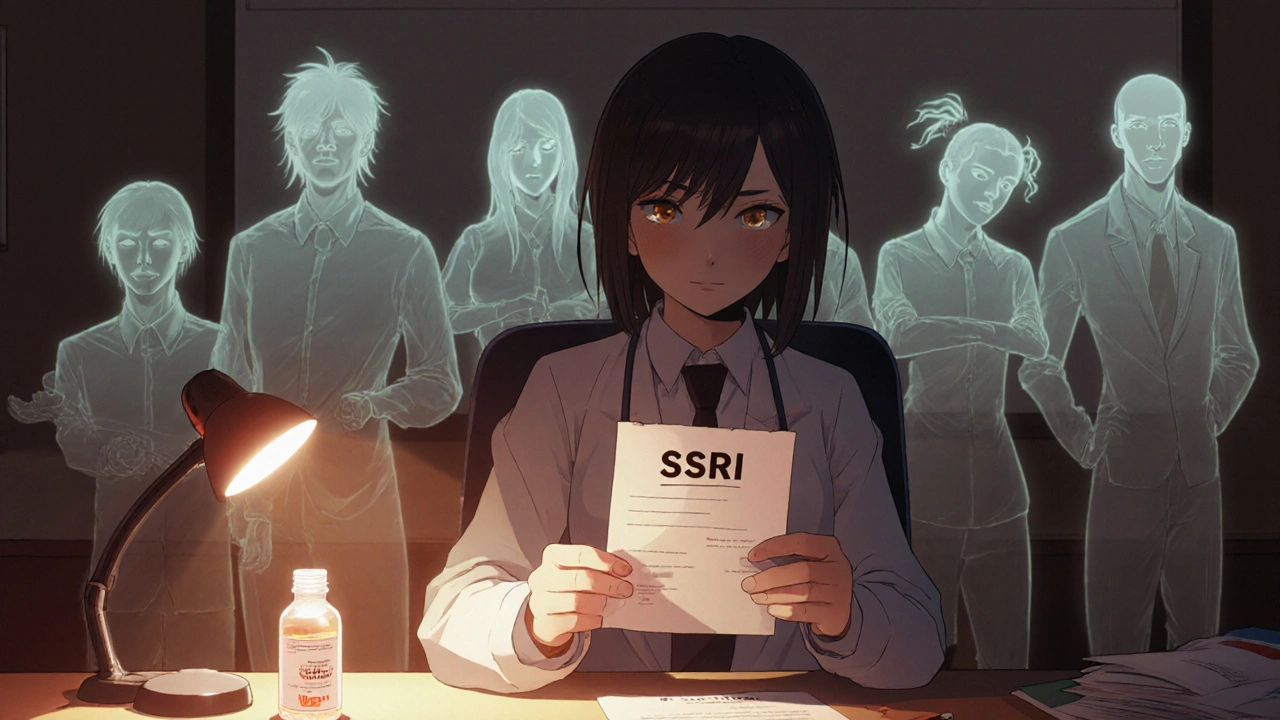
Antidepressants were never designed for bipolar disorder. They were made for unipolar depression, where the mood stays low and doesn’t swing up. In bipolar disorder, the brain’s mood regulation system is already unstable. Adding a drug that boosts serotonin or norepinephrine can push that system over the edge. Studies show that about 12% of people with bipolar disorder who take antidepressants experience a switch into mania or hypomania. That number jumps to 31% in real-world, retrospective studies where patients aren’t tightly monitored. For comparison, the natural switch rate with mood stabilizers alone is around 10.7%. That means antidepressants aren’t just adding benefit-they’re adding risk. The danger isn’t just mania. Antidepressants can also cause:- Rapid cycling (four or more mood episodes in a year)
- Mixed episodes (depression and mania at the same time)
- Increased frequency of depressive episodes over time
- Reduced effectiveness of mood stabilizers
Not All Antidepressants Are the Same
Some antidepressants carry more risk than others. Tricyclics (like amitriptyline) and SNRIs (like venlafaxine) are the worst offenders, with switch rates as high as 15-25%. SSRIs (like sertraline or fluoxetine) are safer-but still risky. Their switch rate is closer to 8-10%. Bupropion (Wellbutrin) appears to have the lowest risk among commonly used antidepressants, possibly because it works on dopamine and norepinephrine instead of serotonin. But even bupropion isn’t safe for everyone. If you’ve ever had an antidepressant trigger mania before, your risk of it happening again is 3.2 times higher. That’s not a small increase. That’s a red flag.Who’s at Highest Risk?
Not everyone with bipolar disorder reacts the same way. Some people can take antidepressants safely. Others can’t. Risk depends on several factors:- Bipolar I vs. Bipolar II: Bipolar I patients (who have full manic episodes) are far more likely to switch than those with Bipolar II (who have hypomania).
- History of antidepressant-induced mania: If it happened once, it’s likely to happen again.
- Rapid cycling: About 1 in 5 bipolar patients experience this. Antidepressants make it worse.
- Mixed features: If your depression includes agitation, irritability, racing thoughts, or impulsivity, you’re already in a mixed state. Antidepressants can make it explode.
What Do Experts Really Recommend?
The International Society for Bipolar Disorders (ISBD) and the American Psychiatric Association (APA) both say the same thing: avoid antidepressants unless absolutely necessary. Instead, they recommend FDA-approved treatments that are proven to treat bipolar depression without triggering mania:- Quetiapine (Seroquel): 50-60% response rate, less than 5% switch risk
- Lurasidone (Latuda): 50% response rate, 2.5% switch risk
- Cariprazine (Vraylar): 48% response rate, 4.5% switch risk
- Olanzapine-fluoxetine combo (Symbyax): 50% response rate, low switch risk
When Might Antidepressants Be Used-And How?
There are rare cases where antidepressants might be tried. The ISBD says only when:- The depression is severe and hasn’t responded to at least two approved treatments
- There are no mixed features or rapid cycling
- The patient is already on a stable mood stabilizer or atypical antipsychotic
- The goal is short-term relief, not long-term use
- Use only SSRIs or bupropion-never tricyclics or SNRIs
- Never use alone. Always combine with a mood stabilizer
- Monitor weekly for the first four weeks for signs of mania (sleeping less, talking fast, reckless spending, euphoria)
- Stop the antidepressant at the first sign of mood elevation
- Discontinue after 8-12 weeks, even if it’s working
Why Are Antidepressants Still Prescribed So Often?
If the risks are so clear, why do so many doctors still prescribe them? The answer is simple: inertia. Many doctors were trained to treat depression the same way, no matter the diagnosis. Patients often ask for antidepressants because they’ve heard they work. Primary care providers, who handle most mental health care, rarely have the training to distinguish bipolar from unipolar depression. In fact, 40% of bipolar disorder cases are misdiagnosed as unipolar depression at first. There’s also pressure. If a patient is suicidal or paralyzed by depression, the urge to do something-anything-is strong. Antidepressants feel like a quick fix. But they’re not. They’re a gamble. And then there’s money. Off-label antidepressant prescriptions for bipolar disorder generate over $1.2 billion a year in the U.S. alone. Pharmaceutical marketing still pushes antidepressants as the default solution, even though the science says otherwise.
What Patients Say
Real people have real stories. One woman in Perth told her psychiatrist she felt "like a ghost" during her depression. After six weeks on sertraline, she was sleeping two hours a night, spending $10,000 on online shopping, and convinced she was a genius. She ended up in the hospital. "I thought it was helping," she said. "I didn’t know it could flip me like that." Another man used bupropion for three months alongside lithium. His depression lifted. He returned to work. No mania. "It was the only thing that gave me back my life," he said. There’s no universal answer. Some people benefit. Others are ruined by it. That’s why personalized care matters more than ever.What You Should Do
If you or someone you care about has bipolar disorder and is considering an antidepressant:- Ask if the diagnosis is confirmed. Misdiagnosis is common.
- Ask if there are mixed features or a history of rapid cycling.
- Ask what FDA-approved alternatives have been tried.
- Ask about the risk of switching-and get the numbers: 12% is the baseline, but it’s higher for you.
- Insist on a mood stabilizer or atypical antipsychotic being used first.
- If antidepressants are still considered, demand a written plan: how long, how to monitor, when to stop.
What’s Next for Treatment?
The future of bipolar depression treatment is moving away from antidepressants entirely. New drugs are being developed that don’t just lift mood-they stabilize it. Ketamine derivatives like esketamine (Spravato) are showing promise: a 52% response rate in bipolar depression with only a 3.1% switch risk. Researchers are also exploring drugs that combine antidepressant and mood-stabilizing effects in one pill. Genetic testing is starting to help too. Some people carry a gene variant (5-HTTLPR LL genotype) that makes them 3.2 times more likely to switch on antidepressants. In the next few years, we may see blood tests or DNA scans used to decide who can safely use these drugs-and who absolutely shouldn’t. For now, the message is clear: antidepressants have no place in routine bipolar care. They’re not the answer. They’re the question we’re still trying to stop asking.Can antidepressants cause mania in people with bipolar disorder?
Yes. Antidepressants can trigger mania or hypomania in people with bipolar disorder, especially if used alone. Studies show a switch risk of about 12% in clinical trials, rising to 31% in real-world settings. The risk is higher with tricyclics and SNRIs, lower with SSRIs and bupropion, but still present.
Are there safer alternatives to antidepressants for bipolar depression?
Yes. The FDA has approved four medications specifically for bipolar depression: quetiapine (Seroquel), lurasidone (Latuda), cariprazine (Vraylar), and the combination of olanzapine and fluoxetine (Symbyax). These drugs treat depression without increasing the risk of mania. Response rates range from 48% to 60%, with switch risks below 5%.
What’s the difference between bipolar and unipolar depression?
Unipolar depression involves only low moods. Bipolar depression is part of a cycle that includes highs (mania or hypomania). People with bipolar disorder can have depressive episodes, but they’re at risk of switching into mania. Antidepressants, which work well for unipolar depression, can trigger those highs in bipolar patients. Misdiagnosis happens in about 40% of cases.
How long should antidepressants be used in bipolar disorder?
If used at all, antidepressants should be limited to 8-12 weeks and only as an add-on to a mood stabilizer or atypical antipsychotic. Long-term use increases the risk of rapid cycling and more frequent episodes. Most guidelines recommend stopping them even if they seem to be working.
Why do some doctors still prescribe antidepressants for bipolar disorder?
Many doctors were trained to treat all depression the same way. Patients often request them because they’ve heard they work. Primary care providers may not have the training to spot bipolar disorder, and misdiagnosis is common. Also, antidepressants are widely available and marketed heavily. Despite guidelines, about 50-80% of bipolar patients still receive them in practice.
Can I stop my antidepressant if I have bipolar disorder?
Never stop abruptly. If you’re on an antidepressant and have bipolar disorder, talk to your doctor. Stopping suddenly can cause withdrawal symptoms or rebound depression. Your doctor may recommend tapering slowly while ensuring you’re on a mood stabilizer. The goal is to replace the antidepressant with a safer, approved treatment.
Adrian Rios
November 22, 2025 AT 13:53Look, I get why doctors reach for antidepressants-it’s easy, it’s familiar, and patients beg for them. But this post? It’s the truth wrapped in clinical data and real stories. I’ve seen it firsthand: a cousin on sertraline went from crying in bed to maxing out three credit cards in three weeks, convinced she was starting a tech empire. No mania history before. No bipolar diagnosis until after the crash. The system’s broken when primary care docs are prescribing mood bombs like they’re aspirin.
And yeah, the $1.2 billion industry? That’s not an accident. It’s a business model. Pharma reps don’t show up with charts on quetiapine-they show up with free samples of Lexapro and a PowerPoint titled ‘Depression Is Depression.’ It’s lazy medicine dressed up as compassion.
Richard Wöhrl
November 24, 2025 AT 07:41Just to clarify a few things from the post: the 12% switch rate in trials is misleading because those are tightly controlled populations-patients are screened, monitored weekly, and often excluded if they have any risk factors. Real-world? 31%. That’s not ‘some people.’ That’s nearly one in three. And the fact that bupropion has the lowest risk? It’s because it doesn’t touch serotonin. Serotonin = mood instability in bipolar. Dopamine/norepinephrine? Less volatile. But even then-3.2x higher risk if you’ve switched before? That’s not a ‘maybe.’ That’s a red flag.
Also, the 40% mixed features stat? That’s huge. Most people think ‘depression’ means sadness and fatigue. But if you’re irritable, racing, impulsive, and tearful at the same time? That’s not depression. That’s a storm waiting for a match. And antidepressants? They’re the match.
Brandy Walley
November 24, 2025 AT 11:16Suresh Ramaiyan
November 24, 2025 AT 13:21Man, this hits different when you’ve lived it. I was on fluoxetine for six months after being misdiagnosed with unipolar depression. Thought it was working-until I started sleeping 2 hours a night, buying 17 pairs of sneakers I didn’t need, and texting my ex at 3 a.m. saying I was ‘the chosen one.’
Woke up in the psych ward with lithium in my IV. No memory of the last 48 hours. My mom cried. My therapist apologized. The doctor said, ‘We thought you were unipolar.’
Now I’m on lurasidone. I’m not ‘cured.’ But I’m stable. I work. I sleep. I don’t feel like I’m walking through molasses or like I’m about to launch into orbit. The trade-off? Weight gain and brain fog. But I’ll take that over mania any day.
To anyone reading this: if your doctor doesn’t ask about mania, hypomania, or family history? Find a new one. Bipolar isn’t ‘bad depression.’ It’s a different beast.
Pramod Kumar
November 25, 2025 AT 16:46Bro, I used to think antidepressants were magic pills. Then my uncle-bipolar I, never diagnosed-started taking Zoloft after his wife left him. Two weeks later, he quit his job, sold his car, bought a motorcycle, and drove to Vegas. Came back with a tattoo of a phoenix and $8,000 in debt. Thought he was ‘reborn.’
Turns out he was hypomanic. Now he’s on carbamazepine. He’s calmer. He cries sometimes. But he’s alive. Not a ghost. Not a volcano.
Doctors need to stop treating bipolar like it’s a typo of depression. It’s not. It’s a whole other language. And antidepressants? They’re the wrong dictionary.
Vivian C Martinez
November 26, 2025 AT 21:04This is such an important and under-discussed topic. Thank you for sharing the data and the lived experiences. Many people don’t realize that what feels like ‘improvement’ on an antidepressant can be the beginning of a dangerous spiral. The fact that even SSRIs carry risk-even if lower-is something every patient should know before signing a prescription.
It’s not about fear. It’s about informed choice. And right now, too many people are making that choice without the full picture.
Katy Bell
November 27, 2025 AT 17:25I’m a nurse in a psych unit. I’ve seen the aftermath of antidepressant-induced mania too many times. One guy? Bought a yacht. Actually. On a credit card he didn’t have. Thought he was ‘the next Elon.’
He didn’t even know what a yacht was before the episode.
These aren’t side effects. They’re personality overrides. And doctors? They don’t always see it coming. We do. We’re the ones cleaning up the wreckage.
John Mackaill
November 29, 2025 AT 00:41It’s not that antidepressants don’t work-it’s that they work too well in the wrong direction. Like giving a drunk person a steering wheel.
I get why they’re prescribed. I’ve been the patient begging for something to make the numbness stop. But if you’re bipolar, the goal isn’t to feel ‘better.’ It’s to stay alive. And sometimes, ‘better’ is the most dangerous word in psychiatry.
Let’s stop pretending bipolar depression is just sadness with extra steps. It’s a minefield. And antidepressants? They’re the tripwire.
Ragini Sharma
November 30, 2025 AT 17:12shreyas yashas
December 2, 2025 AT 05:27My cousin’s doc prescribed her fluoxetine for ‘severe depression.’ She had no history of mania. Two months later, she was dancing on tables at 4 a.m., convinced she’d invented time travel. Took her dad 3 days to find her in a motel in Nebraska.
Turns out she had bipolar II. The doctor didn’t ask about family history. Didn’t ask if she’d ever felt ‘too good.’ Just wrote the script.
Now she’s on lamotrigine. She says it’s like ‘waking up from a dream she didn’t know she was in.’
Doctors need to ask better questions. Patients need to know to ask for them.
Linda Rosie
December 3, 2025 AT 21:00Ross Ruprecht
December 4, 2025 AT 16:08Casper van Hoof
December 5, 2025 AT 04:12One cannot help but observe the epistemological dissonance inherent in the prevailing psychiatric paradigm: the conflation of phenomenological symptomatology with diagnostic taxonomy. The term ‘depression,’ when applied indiscriminately across the bipolar-unipolar spectrum, constitutes a semantic oversimplification that obscures the neurobiological heterogeneity of affective disorders.
It is not merely a pharmacological issue-it is a hermeneutic one. The very language we use to describe mood states encodes a monolithic model of pathophysiology, one that fails to account for the dynamic, oscillatory nature of bipolar neurochemistry. To prescribe an SSRI to a bipolar patient is to impose a linear model upon a nonlinear system.
The solution lies not in alternative medications alone, but in a paradigmatic shift: from symptom suppression to state modulation. The brain is not a light switch. It is a pendulum. And antidepressants? They are weights tied to the wrong end of the rod.
Bryson Carroll
December 5, 2025 AT 16:36Matthew Mahar
December 6, 2025 AT 10:57Author here. Thank you for all the responses-especially the ones sharing personal stories. That’s what this is really about: not just data, but lives.
To the person who said ‘I’m fine on antidepressants’-I’m glad. But your ‘fine’ isn’t the rule. It’s the exception. And the fact that you’re one of the few who didn’t switch doesn’t mean it’s safe for everyone. That’s like saying parachutes aren’t necessary because you once jumped out of a plane and landed in a haystack.
To the nurse: you’re right. You’re the ones seeing the wreckage. We need more voices like yours.
To the pseudo-philosopher: you’re overcomplicating it, but you’re not wrong. The language *is* the problem. We say ‘depression’ like it’s one thing. It’s not. It’s a thousand different storms.
To the person who said ‘I took Lexapro for 3 years and I’m fine’-I’m not saying you’re lying. I’m saying you’re lucky. And that’s not a strategy.
The goal isn’t to shame people who’ve used antidepressants. It’s to make sure no one else has to learn the hard way.